
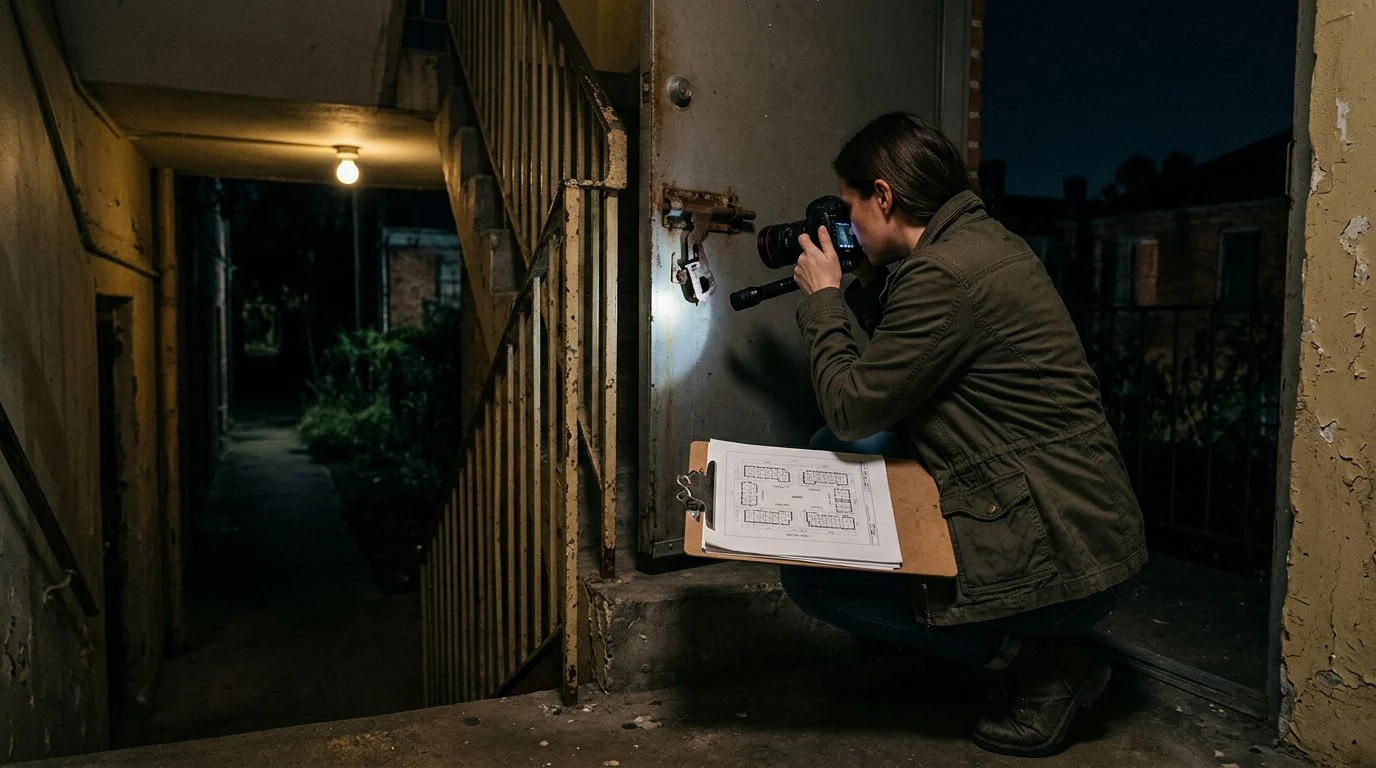
Negligent Security | New Orleans, Louisiana
When a Property Owner Fails to Protect People From Assault
Plain-language answers from New Orleans trial lawyer Przemek Lubecki on when a property owner may be legally responsible for violence that happens on its premises.
By Przemek Lubecki · Published October 17, 2026
Property owner liability for assault in New Orleans often comes down to one question: did the owner fail to use reasonable care against a crime that could have been foreseen? Sometimes the answer is yes, and sometimes it is no. This guide explains the basic rules in plain language so you know which questions to ask first.
What “Liability” Means When Someone Is Hurt on Another Person’s Property
In personal injury law, liability means legal responsibility for harm another person caused through fault. Louisiana law states the basic idea this way: every act of a person that causes damage to another obliges the person whose fault caused it to repair it, under Louisiana Civil Code art. 2315. That meaning is different from the financial liabilities on a balance sheet, which are debts a business owes.
Search results mix several meanings of the word. Some pages discuss accounting debts, environmental cleanup, or everyday speech. This page uses only the personal injury meaning.
Several people may be part of a claim after an assault. These can include the attacker, the property owner, a property manager, a contracted security company, or a business that runs the space. Each one’s role depends on who controlled the property and what they knew. The facts decide who is involved.

Not sure what your next step is?
Talk it through with our team — the first consultation is free, confidential, and carries no obligation.
Can a Property Owner Be Held Responsible for an Assault on Their Property?
A property owner may be held responsible in some situations, but not every assault on a property creates a claim against the owner. Louisiana law makes a person answer for harm caused by negligence, not only by deliberate acts. Louisiana Civil Code art. 2316 describes that responsibility for damage caused by negligence, imprudence, or want of skill.
Lawyers also look at the injured person’s relationship to the property. A tenant, a paying customer, a hotel guest, a visitor, and an employee of a tenant may stand in different positions. Those positions can affect what the owner owed. The attacker’s identity and motive matter too, but they do not end the review by themselves.
The Four Elements of Negligence in Plain Terms
Take a parking lot attack as an example. The lot operator may owe customers reasonable care. If the lights were out for weeks and a gate was left open, that could be a shortfall. The causation question is whether a working light or a closed gate would have changed what happened. Damages cover what the injured person lost because of the harm.
This example shows the framework only. Each claim turns on its own facts and its own proof.
Negligent Security: What a Property Owner May Owe to People on the Premises
Common security steps include adequate lighting, working locks, controlled entry, cameras, and patrols.
Prior notice matters. Earlier attacks on or near a property, repeated complaints, and police calls to the address can all bear on whether a later crime was foreseeable. These facts often sit in records or in people’s memories, so write down what you know early.
A quiet office building at midday is different from a late-night bar with a crowd. A gated apartment is different from a parking lot with no cameras. Each property is looked at on its own facts. Our team handles negligent security matters, and we review these questions one property at a time.
Other Parties Who May Share Responsibility
Beyond the owner, others may share responsibility. These can include property management companies, leasing or operating companies, contracted security firms, and businesses that run events or nightlife venues. The person who committed the attack may also be part of the picture.
Louisiana law counts fault across all the people involved. Louisiana Civil Code art. 2323 requires fault to be determined for all persons who caused or contributed to the injury. That includes non-parties, and it applies even when the other person’s identity is not known. Under Louisiana Civil Code art. 2324, one of several people who caused harm is not liable for more than its own share of fault.
Employers may answer for their workers. Under Louisiana Civil Code art. 2320, employers answer for damage caused by employees in the work they were hired to do. Under Louisiana Civil Code article 2320, an employer can be answerable for damage caused by an employee acting within the course and scope of the employment, so a claim may exist against a security company or property manager whose employee was at fault.
Comparative fault (shared fault) also matters (La. Civ. Code art. 2323). Under La. Civ. Code art. 2323, for claims arising on or after its effective date, a person whose own fault is fifty-one percent or more may be barred from recovering damages. Under La. Civ. Code art. 2323, the amount of damages recoverable shall be reduced in proportion to the degree or percentage of negligence attributable to the person suffering the injury, death, or loss. Naming the right parties early helps protect claims against each of them.
Common New Orleans Settings Where These Claims Arise
Three kinds of places raise these questions often: apartment complexes, bars and nightclubs, and parking garages and lots. Each has its own set of facts.
At apartment complexes, tenants often ask about locks, gates, lighting, and whether the landlord responded to earlier problems. Questions about common areas and entry points usually come up early.
Bars and nightclubs raise different questions. Late hours, crowds, alcohol, and past fights can all bear on what the venue knew and what it did. When a shooting happens inside or near a venue, the review often looks at staffing, entry control, and prior incidents.
Parking garages and lots often come up because of lighting, camera coverage, and access control. A garage that tenants or customers use every day can raise different questions than a public street.
Have questions about what happened?
Ask our team directly. The first conversation is free, confidential, and there is no obligation to continue.
Questions to Answer First After an Assault, Shooting or Robbery
Start by writing down the basic facts while your memory is fresh. These details usually matter first:
- Where exactly did the attack happen, and who owned, leased, operated, or managed that space at the time?
- Was a police report made, and what is its report number?
- Were there earlier incidents at or near the location that you know about or heard reported?
- What security measures were visible, such as cameras, lighting, gates, guards, or working locks?
- Who has the medical records and bills so far?
Also keep the names of any witnesses and copies of any messages sent to the property. Early notes help a reviewer tell what happened while details are still clear.
Evidence and Deadlines to Keep in View
Evidence often decides what can be proven. Common items include surveillance video, incident reports, witness names, photographs of the scene, medical records, and written messages with the property. Video can be overwritten or lost, so asking for preservation in writing early can matter.
Time limits matter too. That period starts on the day the injury or damage is sustained. The article has exceptions, so review the exact deadline in any matter promptly.
Proving a claim takes careful factual work. Foreseeability, causation, and each party’s role all need support. No one can predict how a matter will end at the start of that work.
When the Injured Person Dies: Wrongful Death Claims
When a violent attack on property causes death, certain family members may have a wrongful death claim. Under Louisiana Civil Code art. 2315.2, a surviving spouse and children may sue first. If there is no spouse or child, the surviving father and mother may sue. Brothers and sisters, and then grandparents, follow only when the closer classes are absent.
The same article sets timing. Louisiana Civil Code art. 2315.1 addresses the injured person’s own damages in similar terms, for the same classes of people.
Families often face many questions at once. A simple list helps. Gather the death certificate, the police report, medical records from the injury, funeral bills, and any written messages with the property. Keep copies, and keep the originals in a safe place.
Talking With Przemek Lubecki About Your Situation in New Orleans
Przemek Lubecki is the responsible lawyer for this page. The New Orleans office handles this matter, and Przemek Lubecki is licensed to practice law in Louisiana.
Our first consultation is free, confidential, and carries no obligation to continue. You may be responsible for case costs and expenses in addition to the fee. Our firm may associate or refer a case to other law firms. No result can be promised in any matter.
Can a property owner be sued after an assault in New Orleans?
Sometimes. Each negligent security situation depends on its own facts, and whether a case exists is a question that requires individual review of those facts.
How long do I have to file a claim?
A claim against a property owner, manager or security company is ordinarily a negligence claim, and in Louisiana the deadline to file most of these claims is one year from the day of injury for injuries before July 1, 2024, and two years for injuries on or after that date, though the deadline in a particular case can differ, so it is wise to have yours reviewed promptly.
What if the attacker is never identified?
Louisiana law still counts fault for everyone who caused or contributed to the injury, even when that person’s identity is not known.
If you’re weighing whether a property owner should answer for an attack that hurt you or someone in your family, you can talk through the facts with us. Call 855-LUBECKI or request a case evaluation.
Questions That Often Matter in These Cases
Where it happened
The location, lighting, access points and general condition of the property can all bear on what the owner knew and what it did about it.
Security measures in place
Locks, gates, cameras, patrols, staffing and the way entry was controlled are common subjects of review.
Prior incidents
Earlier crimes, complaints or warnings on or near the property can be important facts to gather and evaluate.
Records and reports
Police reports, incident logs, maintenance requests and surveillance footage can help show what was known and when.
Important: Act Early to Preserve Evidence
Surveillance video is often overwritten within days, and witnesses and property conditions can change quickly. If you can, write down what you remember, keep any reports or medical records, and avoid posting about the incident online while your case is being reviewed.
Want to know where you stand?
Tell us what happened and our team will walk you through the options available to you, at no cost.
Common Questions About Assault on Someone Else's Property
Who might be responsible?
Depending on the facts, claims may involve the property owner, a property manager or a security contractor. Each situation depends on its own details.
Does a crime always mean a claim?
Not necessarily. Whether a crime leads to a claim depends on what the owner knew or should have known and what reasonable precautions were taken.
How does the firm work with other lawyers?
The firm may associate or refer a case to other law firms. If that happens, we will explain the arrangement to you in advance.