
Negligent Security | New Orleans
Hurt in an Assault at an Apartment or Business? Know Your Next Steps
Getting safe, getting care and understanding your options can all start today. Przemek Lubecki and our team at American Trial Lawyer listen first and explain what comes next.
By Przemek Lubecki · Published November 9, 2026
Being attacked at an apartment, hotel, bar, store or parking lot leaves many people shaken and unsure what to do next. In short, get medical care the same day, report the assault to police, write down what happened, and keep records about the property’s security. These steps protect your health, your evidence and your options later.
This guide walks through each step in plain language. It also covers the time limits and fault rules that can affect a claim in Louisiana.
Start With Safety and Medical Care
Your first priority is getting safe and getting checked by a medical provider, even if your injuries look minor.
Move to a safe place right away. If the attacker is still nearby or the danger continues, call 911. Some head, neck and internal injuries don’t show symptoms until hours or days later. Tell the provider exactly how the injury happened, including that it was an assault and where it took place.
If you feel dizzy, confused, nauseated or unusually tired after a blow to the head, say so. Mention these symptoms even if they seem mild.
Keep every discharge paper, prescription, bill and appointment note. Those records form the medical history that links your injury to the attack. Missing or incomplete records can make the link harder to show later, so ask for copies as you go.
If you were hurt in an attack at an apartment or business and aren't sure whether the property may be responsible, our team can talk through your options with you. Talk it through with our team — the first consultation is free, confidential, and carries no obligation.

Report the Assault to Police
Make a police report as soon as you safely can, and ask for the report or incident number. That number helps you find the report later.
Describe the attacker, the location, the time, and any staff or security guards you saw. Say what you did not see instead of guessing. Accurate, limited details are more useful than a guess that later turns out to be wrong.
Ask the officer to note any witnesses and any cameras that may cover the area. A police report is a separate step from criminal charges. Filing a report does not by itself mean charges will be filed.
You can later request a copy of the report. The City of New Orleans says police reports are requested under New Orleans police reports and that released reports may be redacted to protect privacy and to comply with legal restrictions.
Write Down What Happened While You Remember It
Write a dated account of the attack as soon as you can, while details are still fresh. Notes made close to the event are easier to rely on than memories pieced together months later.
Start with a timeline. Include when you arrived, where you were, what was said, how the attack began and how it ended. Add when you left and when you first sought care.
List everyone who was present. Include names, descriptions and contact details for witnesses, and note any employees or security staff who responded. If you don’t know a name, describe the person’s clothing, height and role.
Note the conditions around you. Was the area lit? Was a door or gate locked or propped open? Was an escort, doorman or guard nearby? Keep these notes private and dated, and add to them as your memory and symptoms change. Be careful about posting details online, since posts can be read by others.
Gather Evidence From the Property
The most useful evidence often sits with the property, so ask for it in writing early.
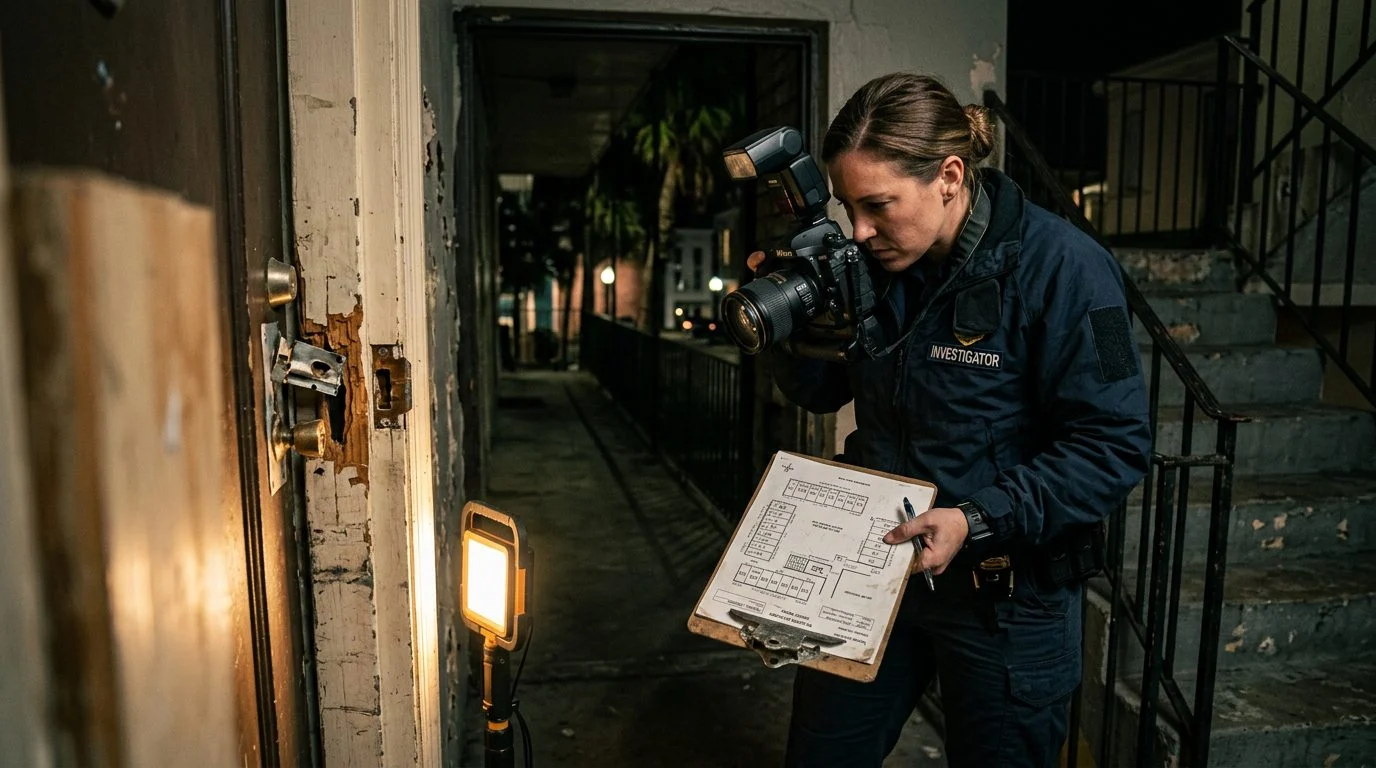
Photograph your injuries over several days, since bruising and swelling often change. Also photograph the location, any broken lock or damaged door, and any dark or poorly lit areas.
Ask the property owner or manager in writing for an incident report and a copy of any security footage. Keep a copy of your request and note the date you sent it. Video may be erased or written over, so an early written request matters.
Save texts, emails and app messages with the property, a landlord or a business about the attack. Keep your own copies of any lease, visitor agreement or receipt that shows you were lawfully on the property. These papers help show why you were there.
Keep Records of Prior Complaints and Security Problems
Write down earlier complaints about break-ins, fights, trespassers, broken gates or lights that didn’t work. Include the date, the person you told and how you told them, such as in person, by phone or in writing.
Save any written responses from the owner or manager. That includes repair requests, replies about locks or lighting, and notices about changes to security. If you don’t have a copy, note what you remember and where the document may be kept.
Note prior police calls to the address that you know about, and where you learned of them. Tenants, customers and neighbors often know more about past problems than the owner’s written records show.
These records matter because negligent security cases often ask what the owner or business knew or should have known about the risk. Organized notes make that history easier to follow.
Be Careful With Insurance Adjusters and Recorded Statements
An insurance adjuster for the property owner or business may call you quickly. That call can come before you understand the full extent of your injuries.
Keep a log of every call, letter and email from an insurer. Write the name of the person, the date, the time and what was said. Save every letter and message in one place.
Direct medical and billing questions to your own providers rather than guessing at numbers on a call. A short, honest answer such as “I’m still getting treatment” is often better than an estimate you may need to correct later.
Louisiana law gives you a right to a copy of a statement you gave. Under La. R.S. 13:3732, a person who takes a written, recorded or transcribed statement from an injured person must give that person a true and complete copy. The copy must be furnished within twenty days after written demand. The same law says a statement by an injured person is not admissible in a civil action relating to its subject matter if the person holding it refuses, on request, to provide a copy. Ask for your copy after any recorded statement.
Not sure what your next step is?
Talk it through with our team — the first consultation is free, confidential, and carries no obligation.
How a Negligent Security Claim Works in New Orleans
A negligent security claim asks whether a property owner or business failed to take reasonable care to protect people, and the answer depends on the facts. Louisiana’s general negligence rule says La. Civ. Code art. 2316 makes a person responsible for damage caused by his “negligence, his imprudence, or his want of skill.”
The facts that get looked at often include the property’s crime history, its lighting and locks, its staffing, and the security measures that were in place on the day of the attack.
The plaintiff still must prove that the employer’s negligence caused the harm.
Responsibility is also divided by fault. Under La. Civ. Code art. 2324, a joint tortfeasor is generally not liable for more than its own degree of fault, but one who conspires with another to commit an intentional or willful act is answerable in solido for the resulting damage. It is also not solidarily liable for damages attributable to another person’s fault. Under La. Civ. Code art. 2324, a person who conspires with another person to commit an intentional or willful act is answerable, in solido, with that person, for the damage caused by such act. If liability is not solidary, liability for damages caused by multiple persons is a joint and divisible obligation, and a joint tortfeasor shall not be liable for more than his degree of fault.
Timing, Unknown Attackers and Other Questions
Louisiana sets a two-year time limit for many injury claims. The La. Civ. Code art. 3493.3 rule applies to damages from an act defined as a crime of violence, and it runs from the day the injury is sustained. That article has an exception for some cases, so ask about your situation early.
Filing matters too. Under La. Civ. Code art. 3463, interruption of prescription is treated as never having occurred if a plaintiff abandons the suit, voluntarily dismisses the suit, or fails to prosecute the suit at the trial, though a dismissal pursuant to a compromise does not count as a voluntary dismissal.
Louisiana’s fault rules also count the attacker’s unknown identity. Under La. Civ. Code art. 2323, fault is determined for all persons who contributed to the injury, even if a person’s identity is not known or reasonably ascertainable.
Can you report an assault without pressing charges?
Yes. A police report and criminal charges are separate steps, and filing a report does not by itself mean charges will be filed.
How long do I have to file a lawsuit after an assault in Louisiana?
Louisiana generally allows two years from the day of injury for delictual actions (La. Civ. Code art. 3493.1), and the period does not run against minors or interdicts in permanent-disability actions brought pursuant to the Louisiana Products Liability Act or state law governing product liability. Some exceptions apply, so ask about your timing early.
Can I file a claim if the attacker was never identified?
Louisiana’s fault rules look at all persons who contributed to the injury, even when the attacker’s identity is unknown. Each case turns on its own facts.

Talk With Our New Orleans Office
If you were hurt in an attack at an apartment or business, you don’t have to sort out the next steps alone. Przemek Lubecki is the responsible lawyer for this page, and the firm’s New Orleans office handles negligent security matters.
The first consultation is free, confidential and without obligation to continue. Any fee is explained during that consultation, and you may be responsible for case costs and expenses in addition to any fee.
The firm may associate or refer a case to other law firms when that is appropriate.
To talk about your situation, contact our office to request a free case evaluation or call 855-LUBECKI.
Steps to consider after an assault
Get medical care
See a doctor or go to an emergency room, even if your injuries seem minor. Keep every record, bill and prescription.
Write down what happened
Record the date, time, location, and what you remember while it is fresh, including the names or descriptions of anyone involved.
Keep evidence and witness details
Save photos, texts, security footage requests and the names of witnesses. Ask the property owner or manager for an incident report in writing.
Talk with a lawyer
A conversation can help you understand your options, including questions about the property's security and who may be responsible.
Why talk with American Trial Lawyer
Free, confidential consultation
Your first consultation is free, confidential and without obligation to continue.
Trial lawyers who listen
Przemek Lubecki is the responsible lawyer for this page. Our team takes the time to understand what happened to you and your family.
Office in New Orleans
Our New Orleans office serves people across Orleans Parish, the New Orleans metro area and Louisiana.
Focused on people who were hurt
We focus on negligent security claims and other serious injury cases, including brain injury and wrongful death.
Be careful with recorded statements
Before giving a recorded statement or signing anything from a property owner or insurance company, consider speaking with a lawyer first. The firm may associate or refer a case to other law firms.