
Negligent Security | New Orleans, Louisiana
Hurt on Someone Else's Property? Ask Whether a Negligent Security Claim Fits.
When a lack of reasonable protection contributes to an injury, the facts of your case matter early. Here is how these claims are looked at and what to bring to a first conversation.
By Przemek Lubecki · Published November 8, 2026
Being hurt by someone you never saw clearly, or who got away, can leave you scared and full of questions. The question many people ask is whether they can sue if the attacker was never caught in New Orleans.
Here is the short answer. An attacker who was never identified can still be part of a claim against the person or business responsible for the place where the harm happened. Whether a claim fits depends on the facts of the incident and the property involved.
The short answer: an arrest is not required to bring a civil claim
Louisiana’s basic liability article says that every act of man that causes damage to another obliges him by whose fault it happened to repair it (La. Civ. Code art. 2315). That rule asks who was at fault for the harm.
Police involvement can still matter. A report can document the incident, the time, and the place. Many people feel unsure about dealing with police or prosecutors while they are still hurting. That feeling is normal.
For a broader look at these claims, read our premises assault liability guide.
If someone hurt you on a property and no one has been identified, you may still have real questions about a civil claim, and our team can talk them through with you. Talk it through with our team — the first consultation is free, confidential, and carries no obligation.
How a civil claim differs from a criminal case
A criminal case asks whether the state can prove that someone committed a crime. A civil claim asks who must repair the harm an injured person suffered.
These are two separate tracks. The state decides whether to file criminal charges. The injured person, or family after a death, decides whether to bring a civil suit in court. Each track has its own rules, its own evidence, and its own timeline.
A civil claim stands on its own facts.
The reverse is also true. Keep the two tracks separate in your mind, and the questions become easier to sort out.
Why the property owner’s conduct is often the focus
When the attacker is unknown, a claim often turns on what the property owner or manager did to protect people. Louisiana makes a person responsible for damage caused by negligence, imprudence, or want of skill (La. Civ. Code art. 2316). In plain words, carelessness can create liability even when the person who attacked you was a stranger.
Several questions usually matter:
- Did the owner know, or should it have known, about earlier crime or risk on the property?
- Did the owner respond reasonably to that risk?
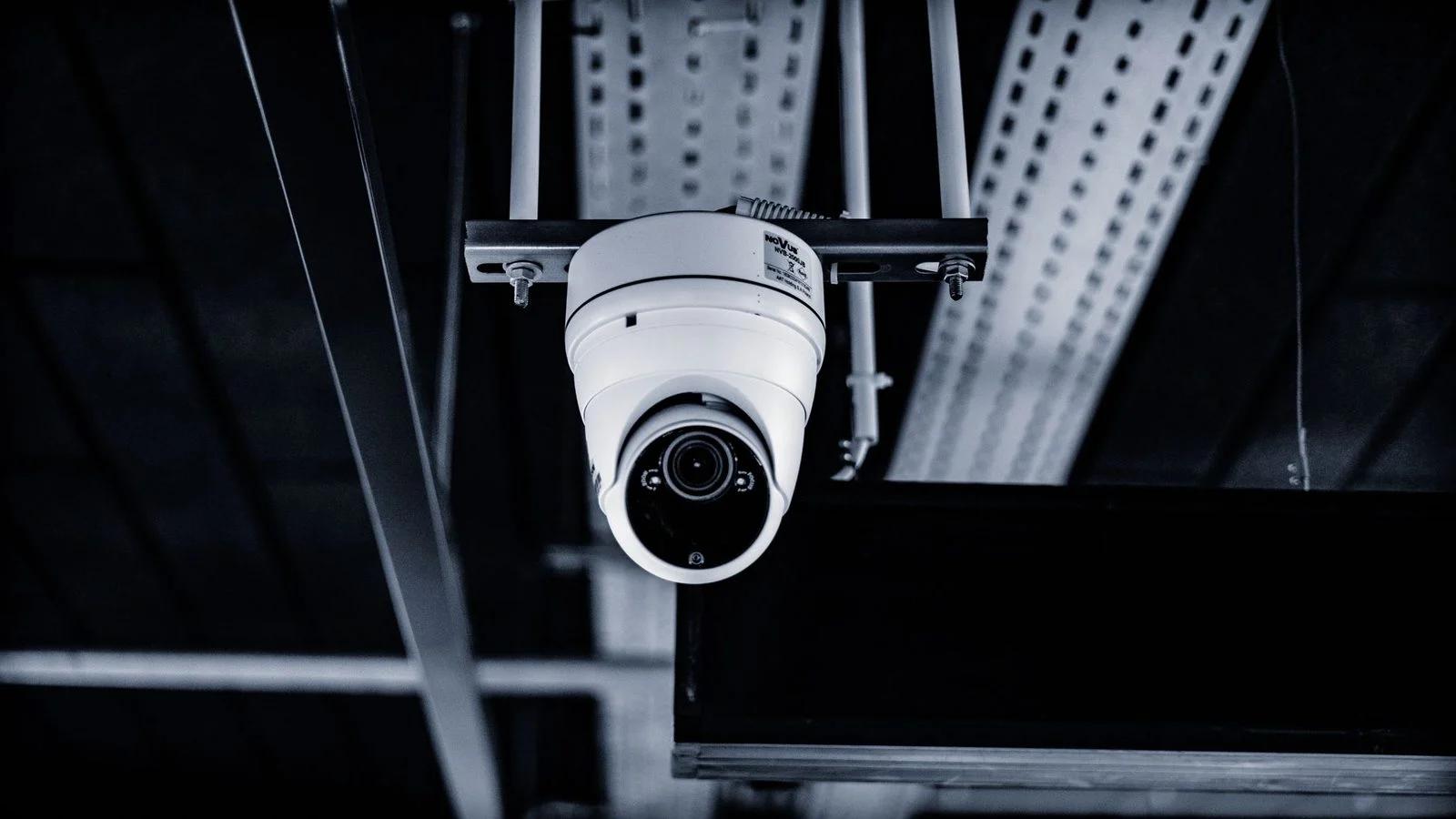
- Were basic protections such as lighting, locks, gates, cameras, and staffing in place and working?
- Did any lack of reasonable protection connect to what happened to you?
If the owner used security staff, Louisiana law treats an employer as answerable for harm caused by employees doing their assigned work. That responsibility attaches only when the employer might have prevented the act and did not (La. Civ. Code art. 2320).
Evidence that helps when the attacker is unknown
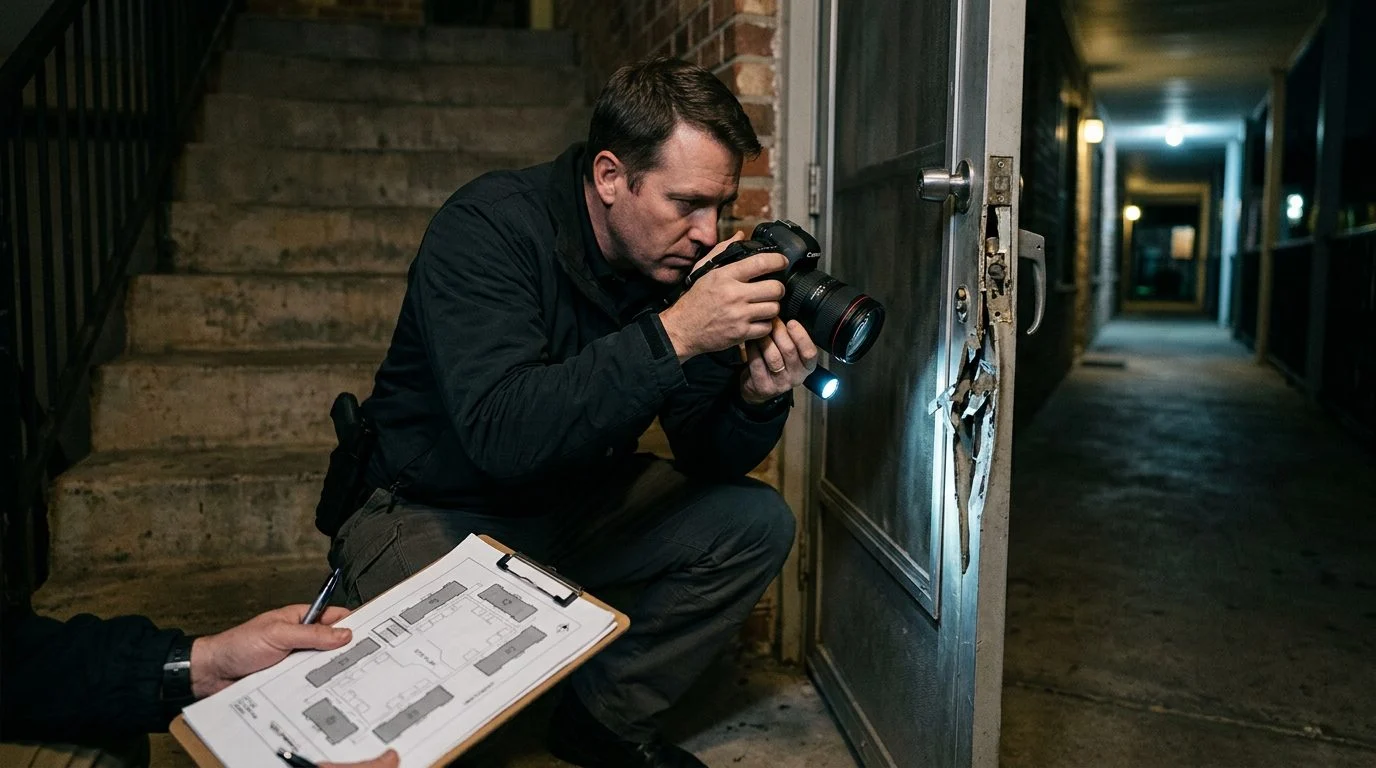
The most useful evidence is usually a record of what happened and what the property looked like at the time. Gather what you can while memories and records are still fresh. (best-practice evidence preservation)
- Police report. Ask for the report number, even if no arrest was made.
- Video and security logs. Surveillance footage, camera logs, gate records, and lighting records can show what was working. Some systems record over old footage, so early requests matter.
- Witnesses. Names and contact details help. So does what each person saw before, during, and after the attack.
- Medical records. These document the injury and the treatment that followed. A head injury can take time to evaluate, so keep every visit record.
- Prior incidents. Records of earlier crimes or complaints on the same property can bear on what the owner knew.
- Photographs. Pictures of lighting, fencing, locks, and the path you used show conditions at the scene.
Keep receipts, texts, and a written timeline of what happened. Write it down soon, while the details are clear.
Who may bring a claim and what it may cover
The injured person may bring a claim for the harm they suffered. When a person dies, certain family members may bring a wrongful death claim under Louisiana law.
Under the wrongful death article, a surviving spouse and child or children may sue first. If there is no spouse or child, the surviving father and mother may sue, or either of them if he left no spouse or child surviving; a father or mother who has abandoned the deceased during his minority is deemed not to have survived him. Brothers and sisters, and then grandparents, may sue only in the order that article sets out (La. Civ. Code art. 2315.2).
Louisiana also allows damages for loss of consortium, service, and society. Those damages are recoverable by the same family members who could bring a wrongful death claim (La. Civ. Code art. 2315).
Brain injury and other serious injuries often need longer treatment and careful documentation. That is one reason early records matter. Our team handles wrongful death and brain injury matters, and our office can talk through who in your family may qualify.
Time limits matter, so do not wait
Louisiana generally sets a two-year deadline for delictual actions, the legal term for a civil claim for harm. The two years start from the day the injury or damage is sustained (La. Civ. Code art. 3493.1).
Louisiana’s general article on delictual actions sets a two-year liberative prescription (La. Civ. Code art. 3493.1). Article 3493.3 sets a separate two-year prescriptive period for damages from an act defined as a crime of violence under Chapter 1 of Title 14 of the Louisiana Revised Statutes (La. Civ. Code art. 3493.3). Whether a particular attack fits that definition needs a close look at the facts.
For a wrongful death claim, the right of action generally lasts one year from the death or two years from the injury, whichever is longer (La. Civ. Code art. 2315.2).
Filing matters too. A suit filed in a proper court and venue interrupts the deadline while the suit is pending. If a plaintiff abandons the suit, voluntarily dismisses it, or fails to prosecute it at trial, the interruption is treated as never having occurred, but a dismissal pursuant to a compromise does not count as a voluntary dismissal (La. Civ. Code art. 3463). Start writing down what happened now.
Not sure what your next step is?
Talk it through with our team — the first consultation is free, confidential, and carries no obligation.
Common obstacles in these cases
The biggest obstacles are usually proving that the harm was foreseeable and connected to the property. Owners may argue that an attack was not foreseeable, especially if there were no prior incidents on the property. When the attacker is unknown, linking the owner’s conduct to the harm can take careful work.
Louisiana also weighs the injured person’s own share of fault. La. Civ. Code art. 2323 provides that if a person’s own negligence is equal to or greater than fifty-one percent, that person shall not be entitled to recover damages, unless the injury resulted partly from the fault of an intentional tortfeasor, in which case the claim shall not be reduced (La. Civ. Code art. 2323). Where a person’s own negligence is less than fifty-one percent, the amount of damages recoverable is reduced in proportion to that percentage of negligence, except that the claim is not reduced where the injury resulted partly from the fault of an intentional tortfeasor (La. Civ. Code art. 2323).
The same article says the fault of everyone who caused or contributed to the harm is determined. That applies even when a person’s identity is not known or reasonably ascertainable. An unknown attacker does not by itself end the fault analysis.
Our firm may associate with or refer a case to other law firms. If a case is likely to be referred, we will say so.
Next steps and the free consultation
Przemek Lubecki is the responsible lawyer for this page. Our office is in New Orleans, and we serve people across Orleans Parish and the New Orleans metro area from that office.
The first consultation is free, confidential, and without obligation to continue. Bring what you have, such as a police report number, medical records, photos, and your timeline. We can review what the records show and what questions remain.
How long do I have to file?
Louisiana generally allows two years from the day the injury is sustained, though other rules can apply (La. Civ. Code art. 3493.1).
Is the first consultation free?
Yes. The first consultation is free, confidential, and without obligation to continue.
If someone hurt you on a property and no one has been identified, you do not have to sort out the legal questions alone (Louisiana legal-aid and pro-bono options). Call 855-LUBECKI, or request a free case evaluation to talk about what happened.
Questions to Think About After a Security-Related Injury
Why early evidence matters
Incident reports, photographs, lighting and camera footage, and witness contact information can be hard to recover later. Writing down what you remember soon after the event helps.
Who may be involved
A claim can involve the property owner, a management company, or a security contractor. Each situation depends on the facts, and a lawyer can help sort out who is involved.
What a first conversation covers
You can explain what happened, share the paperwork you have, and ask questions about the process. The conversation is confidential and does not commit you to anything.
Why Start the Conversation With American Trial Lawyer
A responsible lawyer you can name
Przemek Lubecki, a trial lawyer, is responsible for the content of this page and for the matters the firm takes on.
Office in New Orleans
The firm's office is in New Orleans. We serve people in Orleans Parish, the New Orleans metro area, and across Louisiana.
Serious injury and wrongful death focus
The firm represents people seriously hurt in truck, commercial vehicle, and car crashes, and families in wrongful death cases, as well as people hurt in negligent security incidents.
A free, confidential first consultation
The first consultation is free, confidential, and without obligation to continue.
Good to Know
American Trial Lawyer may associate with or refer a negligent security case to other law firms. Any information you share during a consultation is kept confidential.