
Negligent Security Orleans Parish Lawyer
By Przemek Lubecki · Published October 18, 2026
Negligent security is a claim against a property owner or manager when someone is hurt by another person’s crime on the property. This is a plain guide to negligent security Orleans Parish cases. The main question is whether the owner failed to take reasonable steps to protect people there. Przemek Lubecki is the responsible lawyer for this page, and the firm’s office is in New Orleans.
What negligent security means under Louisiana law
Negligent security is a premises liability claim.
Louisiana’s general negligence rules apply. La. Civ. Code art. 2315 says that every act of man that causes damage to another obliges the person by whose fault it happened to repair it. La. Civ. Code art. 2316 adds that a person is responsible for damage caused by negligence, imprudence, or want of skill.
Defects in property follow a specific test. La. Civ. Code art. 2317.1 makes an owner answerable only if it knew or should have known of the defect, and could have prevented the harm with reasonable care. Broken locks or dead lights may fit this idea.
A property owner is not automatically liable just because a crime happened there.
Not sure what your next step is?
Talk it through with our team — the first consultation is free, confidential, and carries no obligation.
Where these claims arise in Orleans Parish
Negligent security claims often start where people gather, stay late, or park. Common examples include apartment complexes, condominiums, hotels, short-term rentals, bars, convenience stores, and parking lots and garages.
The type of property shapes what security is reasonable. A late-night bar with a crowded lot faces different expectations than a weekday office lobby. Hours, access controls, and location all matter.
Your relationship to the property matters too. A tenant, a hotel guest, a customer, and an employee may each have a different connection to the owner. Families dealing with a death on the property also have questions, and a lawyer can explain the options.
Many people assume a crime ends the question. It does not. What matters is what the owner knew, what it did, and what it failed to do.
Facts a lawyer typically reviews in these cases
A lawyer usually starts with what the owner knew before the attack. Then the focus shifts to the security that was in place.
Prior incidents. Police reports, prior complaints, and crimes on or near the property can matter, especially if the owner knew about them beforehand.
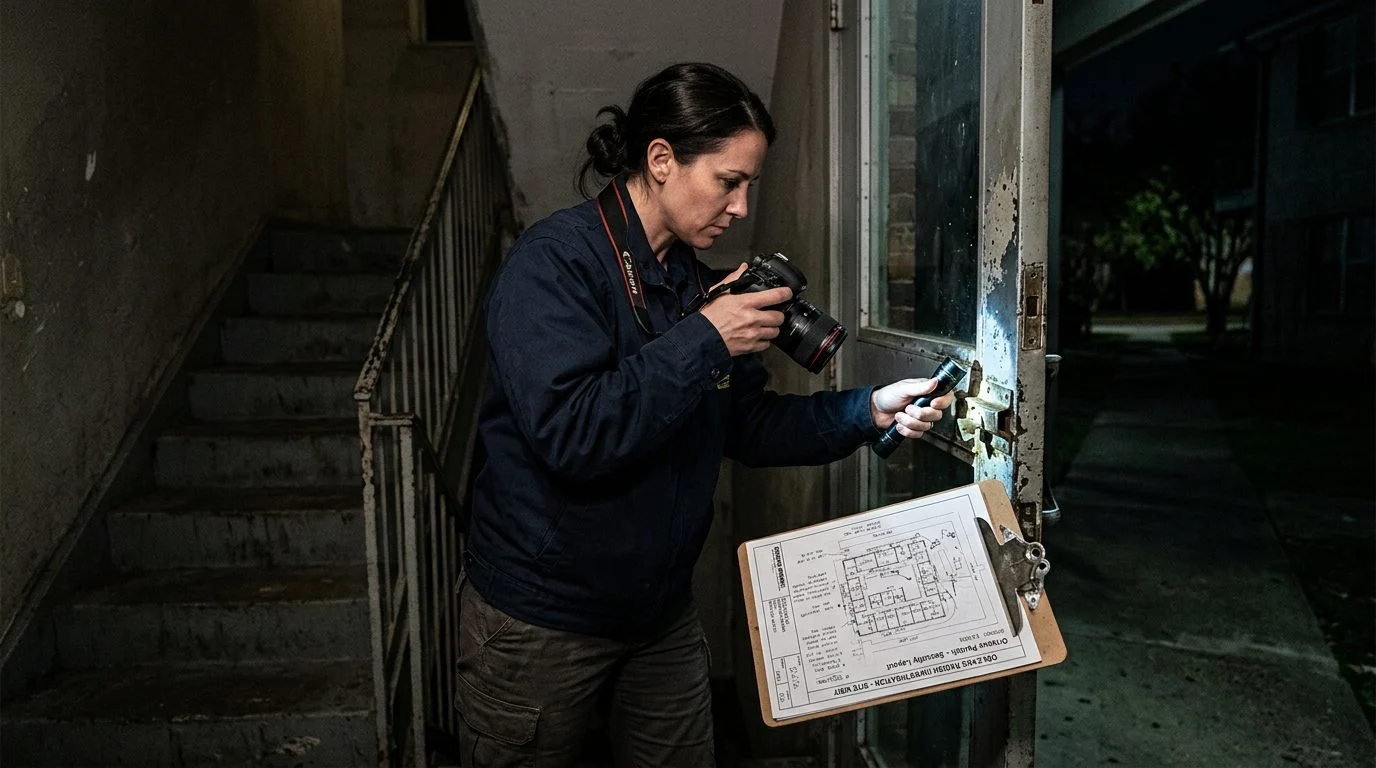
Physical security. Lighting, locks, gates, fencing, and cameras all get a close look. So does any reported broken or missing feature that stayed unrepaired.
Staffing and policies. A lawyer asks whether guards were present, trained, or scheduled, and whether the owner followed its own written security rules.
Public records. New Orleans police reports are requested under Louisiana’s public-records law. Released reports may be redacted to protect privacy, so expect some blacked-out details. See New Orleans police report requests.
Felony immunity. An owner may argue the injured person was committing a felony. La. R.S. 9:2800.10 says no person is liable for injury to a felony perpetrator during the offense. That protection does not apply if the injury results from an intentional act involving excessive force.
Evidence to keep. Photos, medical records, witness names, report numbers, leases or guest agreements, and messages with management all help.
Time limits and why acting early matters
For injuries sustained on or after July 1, 2024, Louisiana law provides a two-year period to file a delictual (tort) lawsuit, and the clock starts on the day the injury happens. Injuries sustained before that date remain subject to the prior one-year period. La. Civ. Code art. 3493.1 sets that rule in its current version, which took effect July 1, 2024.
Claims arising from a crime of violence, such as an assault or shooting, are governed by a separate Louisiana Civil Code article, La. Civ. Code art. 3493.10. That article sets two years from the day of injury too, but it has exceptions (La. Civ. Code art. 3493.1). A lawyer should confirm the date that applies to your case.
Keep records, medical follow-up, and insurance letters in one folder. Write down what you remember now, while the details are clear. Early action leaves more time to gather records before they are hard to find.
Who may be responsible and how insurers handle these claims
Responsible parties can include the property owner, a management company, or a contracted security company. Who controlled the property and its security decisions shapes the answer.
La. Civ. Code art. 2320 makes employers answerable for damage caused by their servants in the functions they are employed to perform. Responsibility attaches only when the employer might have prevented the act and did not.
La. Civ. Code art. 2323 addresses shared fault. Under La. Civ. Code art. 2323, if the degree or percentage of negligence attributable to the person suffering injury, death, or loss is equal to or greater than fifty-one percent, that person shall not be entitled to recover damages. Under La. Civ. Code art. 2323, if the degree or percentage of negligence attributable to the person suffering the injury, death, or loss is less than fifty-one percent, the amount of damages recoverable shall be reduced in proportion to that degree or percentage.
Early statements matter. La. R.S. 13:3732 says a person who takes a written or recorded statement from an injured person must provide a true copy within twenty days after written demand.
The firm may associate with or refer a case to other law firms when that is appropriate. If that happens, you will be told about the arrangement.
Speak with a lawyer about your situation in New Orleans
If an assault, robbery, or shooting hurt you or someone you love on private property in Orleans Parish, you may want to talk with a lawyer about your options. You may still be recovering, handling medical bills, or hearing from an insurance adjuster.
Przemek Lubecki is the responsible lawyer for this page. The firm’s New Orleans office handles these matters.
Frequently asked questions
Can a property owner be sued after an assault on its property?
A property owner may be responsible if it failed to take reasonable steps to protect people there.
Is an owner automatically liable if a crime happens on its premises?
No. A crime alone does not decide the claim.
How long do I have to file?
Filing deadlines for assault and shooting claims depend on the date of the injury and on which article governs the claim, as explained above. A lawyer should confirm the date for your case.
If someone you love was hurt at a property you believe was not safe, contact the New Orleans office of American Trial Lawyer, LLC by phone at 855-LUBECKI to schedule a free initial consultation, which is confidential and carries no obligation to continue. You may be responsible for case costs and expenses in addition to the fee. The first consultation is free, confidential, and carries no obligation to continue. You may be responsible for case costs and expenses in addition to any fee.
Have questions about what happened?
Ask our team directly. The first conversation is free, confidential, and there is no obligation to continue.