
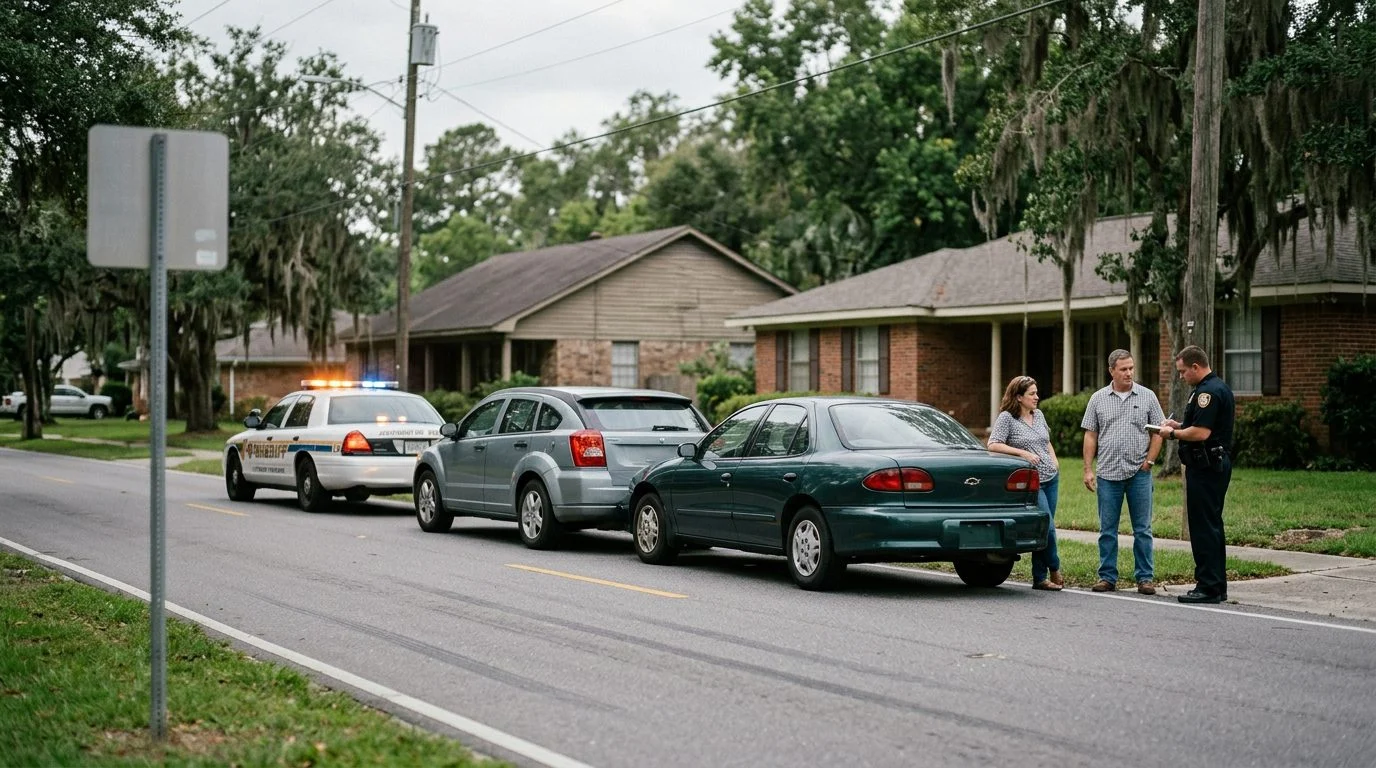
Passenger Injury Claims | New Orleans, Louisiana
Hurt as a Passenger? Find Out Who Can Be Held Responsible
Crashes with more than one driver raise questions that are easy to overlook while you are recovering. Our team at American Trial Lawyer, led by Przemek Lubecki, can help you sort through them.
By Przemek Lubecki · Published November 19, 2026
You were riding in a car when it was hit, and now you are hurt. You want to know whether you can sue both drivers. A passenger may be able to make a claim against more than one driver when each driver’s negligence (careless fault) helped cause the crash. Whether that fits your crash depends on how it happened.
This page explains the general Louisiana rules that apply. It is general information, not a prediction of how any claim will turn out.
The Short Answer: Sometimes Both Drivers Can Be Involved in a Claim
A passenger may be able to pursue both drivers when the fault of each one contributed to the injury. Passengers are usually not the ones at fault, so the real question is which driver or drivers caused or added to the harm. Louisiana law says a person whose fault causes damage must repair it. La. Civ. Code art. 2315 sets out that rule.
Because two vehicles were involved, the conduct of both drivers can be examined. Louisiana’s fault rules then decide how responsibility is shared between them and how it affects recovery. Our car accident practice page covers the broader process. The sections below walk through the key rules in plain terms.
If you were a passenger in a crash and are weighing whether to pursue both drivers, our team is ready to talk through your situation. Talk it through with our team — the first consultation is free, confidential, and carries no obligation.
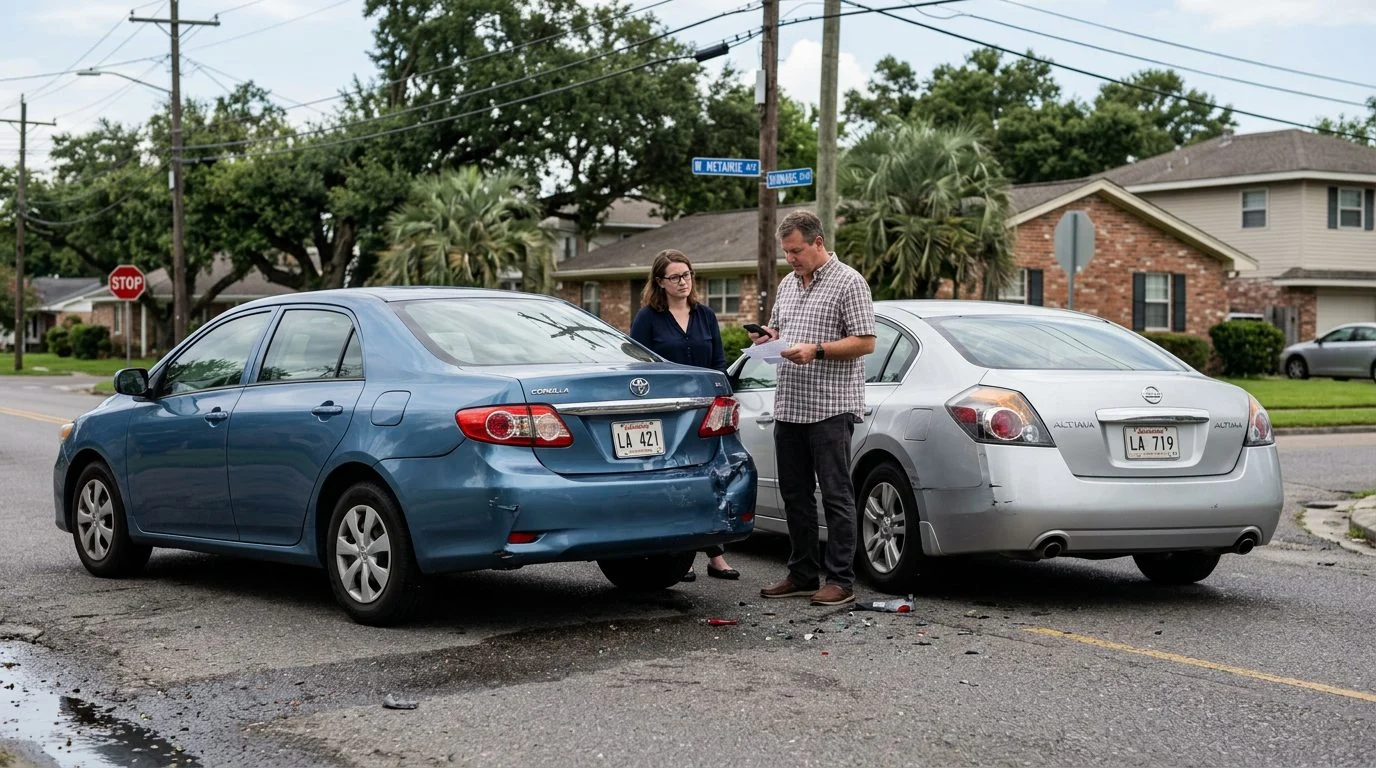
Who Can Be Responsible When a Passenger Is Hurt
A passenger can be hurt by the driver they were riding with, by the other driver, or by both. La. Civ. Code art. 2316 makes each person responsible for damage caused by their negligence, imprudence, or want of skill. Negligence is careless conduct, and it does not need to be deliberate.
Common examples that may be examined include speeding, distracted driving, failing to yield, and running a red light or stop sign. Louisiana law says every driver on the public roads must drive in a careful and prudent manner. La. R.S. 32:58 defines a failure to do so as careless operation.
Not every driver in a two-vehicle crash is at fault. That is why the facts of how the crash happened matter so much. Witness accounts, the police report, and photos can all help show who did what.
How Louisiana Divides Fault Between Two Drivers
Every case turns on its own facts, and who was at fault is one of the first questions we look at closely. For crashes on or after January 1, 2026, a person found 51 percent or more at fault cannot recover damages. A person found less than 51 percent at fault can recover, but the amount is reduced by their own share. La. Civ. Code art. 2323 sets out this rule.
Article 2323 also says the fault of every person who contributed must be determined. That applies even if a person is not a party to the lawsuit. So a claim can take both drivers’ fault into account.
Liability is shared in a specific way. Under La. Civ. Code art. 2324, two or more at-fault people, called joint tortfeasors, generally owe only their own share of fault. The main exception is a conspiracy to commit an intentional or willful act. Because of this, the number of responsible parties matters.
Suing the Driver You Were Riding With Versus the Other Driver
A passenger can make a claim against the driver they were riding with, the other driver, or both, when the facts support fault for each. Choosing who to pursue is a legal decision that needs the facts of the crash.
Suing the driver you were riding with. If your own driver made a careless choice, such as speeding or looking at a phone, that conduct can be examined like any other driver’s conduct. That driver’s fault becomes part of the full picture that a court or jury weighs.
Suing the other driver. The other driver’s conduct may have caused or added to the crash. Their share of fault is weighed along with everyone else’s.
Family and friends. Some passengers worry that naming a relative or friend will hurt a relationship. That is a personal choice, and the fault questions are the same. Insurance may be more involved in those cases, so it is worth reviewing early.
Insurance. Each possible defendant may have different insurance. The fault analysis comes first, and the coverage for each driver is reviewed after that. This order keeps the picture clear.
When the Trip Was a Rideshare
A rideshare passenger may have a claim involving the rideshare driver, the other driver, or both. The timing of the trip often matters. It helps to know when the trip began and what the driver was doing at the time of the crash.
App records, such as trip start and end times, GPS data, and the driver’s status, can help show that timeline. Records about whether the driver was logged in to the app can answer a key question. Dash camera footage, if any exists, can help too.
Write down what you remember about the trip while it is still fresh. Rideshare cases can involve more than one insurance source, so the timing of the crash is worth examining early. Our team can talk through what those records may show.
What Damages a Passenger May Pursue
A passenger may seek damages for medical bills, lost income, pain and suffering, and other losses tied to the injury. Which categories apply varies with the injury and the facts of the crash.
Louisiana law also recognizes loss of consortium, service, and society. La. Civ. Code art. 2315 says those damages can be recovered by the same family members who could bring a wrongful death claim.
Medical bills follow a specific rule. When health insurance or Medicare paid a contracted provider, La. R.S. 9:2800.27 limits recovery to the amount actually paid, plus any cost-sharing amounts. The amount billed is not the measure.
Serious injuries, including brain injury, often need long medical follow-up. Complete records of each visit help show how the injury affects daily life. Under La. Civ. Code art. 2324.1, in the assessment of damages in cases of offenses, quasi offenses, and quasi contracts, much discretion is left to the judge or jury. No amount can be predicted from general information.
If a passenger died, certain family members may have a wrongful death claim. Under La. Civ. Code art. 2315.2, a surviving spouse and children come first. Parents may sue if there is no spouse or child, but a father or mother who has abandoned the deceased during his minority is deemed not to have survived him, and abandonment is presumed when the parent has left the child for at least twelve months and failed to provide for the child’s care and support, without just cause. Siblings and then grandparents follow in the order the article sets.
Not sure what your next step is?
Talk it through with our team — the first consultation is free, confidential, and carries no obligation.
Insurance Contacts and Recorded Statements After a Two-Driver Crash
After a crash with two drivers, you may hear from more than one insurance company. An adjuster may ask for a recorded statement or an early settlement.
If you give a written or recorded statement, you are entitled to a copy. It is reasonable to ask for time to understand your situation before you give a statement.
Medicare is another piece. If you have Medicare, the claim must be reported. CMS Attorney Services guidance says beneficiaries must notify Medicare when a claim is made against an alleged wrongdoer with liability insurance. Reporting happens through the MSP Recovery Portal or the Benefits Coordination & Recovery Center. CMS secondary payer overview explains that Medicare may make a conditional payment that must be repaid from a settlement.
Deadlines: Louisiana Time Limits for Passenger Injury Claims
Louisiana law sets time limits for filing injury claims, and the timing in any particular case depends on its specific facts, so it is wise to contact our office promptly to discuss yours. La. Civ. Code art. 3493.1 sets this two-year period, which starts on the day the injury is sustained.
The article also has exceptions. It does not run against minors or interdicts in certain permanent disability claims brought under product liability law. Other rules can apply to specific claims, so the deadline should be confirmed early.
Wrongful death claims follow a different rule. La. Civ. Code art. 2315.2 sets that timeline.
Waiting can make evidence harder to gather. Under La. R.S. 32:398, crash reports are confidential and available only to the parties to the crash, parents or guardians of a minor who is a party to the crash, insurers or insurance support organizations under contract for claims and underwriting, healthcare providers who treated a party, succession representatives, the attorneys of the parties or succession representatives, and news-gathering organizations requesting documents related to a specific crash. Upon request, they must be made available within seven working days after the crash investigation is complete.
Evidence That Helps a Passenger Explain What Happened
Early evidence shows how the crash happened and who contributed to it. Start gathering it as soon as you can.
- The police crash report and the reporting officer’s contact information.
- Photos and video of the vehicles, the roadway, traffic signals, and visible injuries.
- Medical records and a list of every provider seen since the crash.
- Names and contact details for other passengers and witnesses.
- Any app records or dash camera footage.
- A written record of symptoms, missed work, and daily limits.
The crash report is a good place to start. Under La. R.S. 32:398, reports must show the persons and vehicles involved, so confirm each detail is accurate. Keep copies of everything. These records can also help show how your injuries affect you.
Talk With Przemek Lubecki About Your Crash
If you were a passenger in a crash, you may be dealing with doctor visits, insurance calls, and the question of who to pursue. You do not have to sort that out alone.
Can a passenger sue the driver they were riding with?
Yes, a passenger may be able to pursue that driver if the driver’s negligence contributed to the crash. Louisiana’s fault rules then decide how responsibility is shared.
How long do I have to file?
For most injury claims from a crash, Louisiana generally allows two years from the day of injury (La. Civ. Code art. 3493.1). Wrongful death claims follow a separate timeline.
What if an insurer asks for a recorded statement?
You can ask for time before giving one.
Przemek Lubecki is the trial lawyer responsible for this page. The firm’s office is in New Orleans. The first consultation is free, confidential, and without obligation to continue. The firm may associate or refer a case to other law firms.
If you were riding as a passenger and are weighing whether to pursue both drivers, our team is ready to talk through your crash. You can request a free case evaluation or call 855-LUBECKI for a free consultation (office in New Orleans).
How We Can Help
Clear Answers
We explain how the facts of your crash may bear on claims against each driver, in plain language.
Trial Lawyers Who Listen
Przemek Lubecki and our team take time to understand your injuries, your family's concerns and the details of the crash.
Based in New Orleans
Our office is in New Orleans, and we serve people across Orleans Parish, the New Orleans metro area and Louisiana.
A Free First Step
The first consultation is free, confidential and without obligation to continue.
Useful Things to Gather After a Crash
Who Was Driving
Note which vehicle you were riding in and the names of every driver involved, if you know them.
Keep Your Records
Save the police report, photos of the scene, ride or trip details and any messages about the crash.
Get Medical Care
Seek evaluation for any injury, even one that seems minor at first. Your records will document your condition over time.
Talk With Our Team
Bring your questions to American Trial Lawyer. We will review the facts of your crash with you at no cost to start.
Please Note
American Trial Lawyer handles passenger injury claims and may associate with or refer a case to other law firms. Any co-counsel or referring firm is independent of American Trial Lawyer, LLC. Reading this page does not create an attorney-client relationship.