
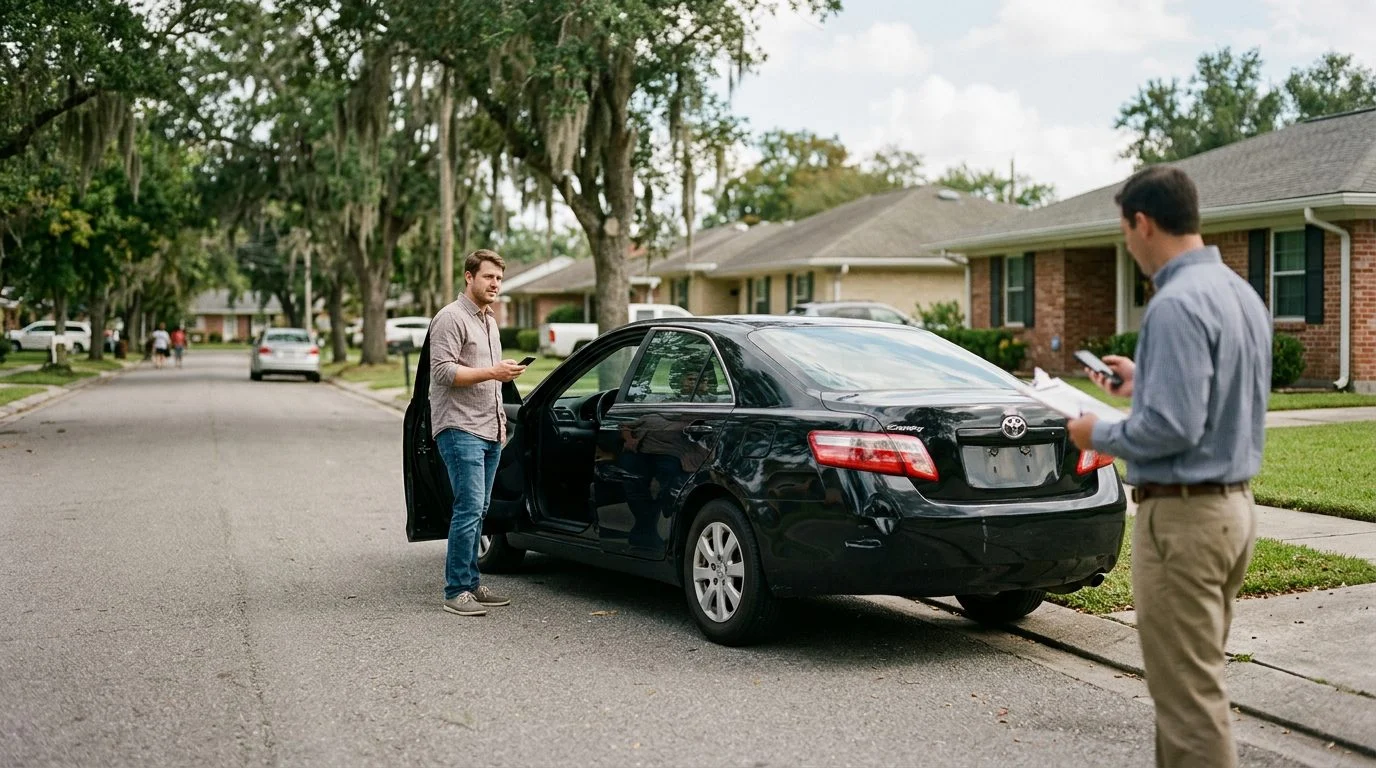
Rideshare Accidents | New Orleans, Louisiana
Hurt in an Uber or Lyft Crash? Talk With Someone Who Works for You First
An insurance adjuster may call soon after a crash. Knowing what to expect and what you can ask can help you decide how to respond.
By Przemek Lubecki · Published November 18, 2026
A crash is stressful, and a call from an insurance company can come before you have had time to think or see a doctor. If an Uber or Lyft insurance adjuster contacts you after an accident, it is reasonable to pause, understand what is being asked, and get informed before you give a statement or sign anything. The adjuster works for the insurance company, not for you.
This page gives general information for people in the New Orleans area, including Orleans Parish, Metairie, Jefferson Parish, Kenner, St. Bernard Parish and Slidell. It is not legal advice about any particular case.
Why You’re Getting Calls From an Uber or Lyft Insurance Adjuster
A rideshare company’s insurance adjuster is the claims representative for the insurer. Their job is to evaluate and resolve claims for that insurer.
Calls like this can arrive while you are still shaken, sore, or waiting for test results. Many people feel pressure to answer right away. That pressure is normal, but it is not a reason to answer before you understand the request.
A call does not mean a decision has been made about fault, coverage, or what your injuries are worth. Those questions take time, records, and facts.
Taking a moment before you answer is sensible. You can ask who is calling, which company they work for, and what information they want.
If an Uber or Lyft crash has left you hurt or worried about someone you love, our team is glad to talk it through with you. Talk it through with our team — the first consultation is free, confidential, and carries no obligation.

Who the Adjuster Works For
The adjuster works for the insurance company that employs or hires them, and that company’s interests come first in the claim.
After a crash involving a rideshare vehicle, several people and companies may reach out. These can include:
- The rideshare company, which may handle crash reports through its app.
- The driver, who may have a personal auto policy.
- The driver’s personal auto insurer.
- The other motorist’s insurer.
Keep these roles separate in your notes. A friendly voice does not change who the adjuster represents. Calls from each party can sound alike, so write down which company is calling.
Louisiana law also says a rideshare company’s coverage does not depend on a personal insurer first denying a claim, under Louisiana rideshare insurance law.
Why the App Status at the Time of the Crash Matters
The driver’s app status at the moment of the crash helps decide which insurance may apply.
Louisiana sets different minimum insurance for different phases. Under La. R.S. 45:201.6, automobile insurance during the pre-trip acceptance period must be in the amount of not less than fifty thousand dollars for death and bodily injury per person, not less than one hundred thousand dollars for death and bodily injury per incident, and not less than twenty-five thousand dollars for property damage, subject to the statute’s conditions for how this obligation may be satisfied. Under La. R.S. 45:201.6, automobile insurance during a prearranged ride must be in the amount of not less than one million dollars for death, bodily injury, and property damage, subject to the statute’s conditions for how this obligation may be satisfied.
Trip data matters too. Under La. R.S. 45:201.8, in a claims coverage investigation, within ten business days of a request for information, a rideshare company and any insurer that may provide coverage must cooperate to share relevant information with the people directly involved and any insurer of the driver. They must share the precise times the driver logged on and off the app in the twelve hours before and after the crash.
Those times can be central to which phase applies. Which phase the driver was in is a fact question, and the answer depends on the facts of your crash. Ask the adjuster to explain what they are checking and why.
Recorded Statements, Forms and Quick Offers to Be Careful With
A recorded statement is an account of the crash that the adjuster records, often by phone. Common requests include:
- A recorded statement about how the crash happened.
- Questions about your injuries and treatment.
- A medical authorization or release form.
- A quick settlement offer.
Early statements can be used when a claim is evaluated, so think before you speak. Describe only what you know, and say you don’t know when that is true. Don’t guess about speed, distances, or symptoms.
Louisiana has a rule about copies. Under La. R.S. 13:3732, a person who takes your written or recorded statement as an injured person about an accident or injury must give you a true and complete copy. Upon written demand, that copy must come within twenty days.
Read every document before you sign. A release can close off future claims. Before you accept an offer, make sure you understand the extent of your injuries. Write down the adjuster’s name, the company, the claim number, and the time and date of each call.
Your Health Comes First: Medical Attention and Records
Prompt medical care protects your health and creates records that link your injuries to the crash.
Do not wait for symptoms to become obvious. MedlinePlus on spinal cord injuries explains that motor vehicle accidents can cause spinal cord injuries that need immediate medical attention.
Medical records, imaging, and treatment notes document your injuries and when they began. Keep copies of bills, prescriptions, and receipts for care and related costs. When you speak with an adjuster, describe symptoms accurately and avoid guessing. Tell them what you know now, and tell your doctor when things change.
If you have Medicare, the rules add a layer. Medicare may make a conditional payment, which must be repaid when a settlement, judgment, or other payment is made. See CMS on Medicare secondary payer. Medicare beneficiaries also must notify Medicare when a claim is made against a party with liability insurance, as CMS case reporting rules explain.
When a Passenger, Driver or Family Member Should Get Guidance
Questions get harder when several people, several policies, or a death are involved.
A passenger may deal with the driver’s policy, the rideshare company, and another motorist’s insurer at the same time. Louisiana’s comparative fault rule can matter when more than one person shares blame. Under La. Civ. Code art. 2323, a person whose own negligence is equal to or greater than fifty-one percent is not entitled to recover damages, while Paragraph C provides that, notwithstanding Paragraphs A and B, a claim for injury resulting partly from the person’s own negligence and partly from the fault of an intentional tortfeasor shall not be reduced. Under La. Civ. Code art. 2323, when an injured person is found less than 51 percent at fault, the damages recoverable are lowered in proportion to that share of fault, except that if the injury results partly from the negligence of the injured person and partly from the fault of an intentional tortfeasor, the claim is not reduced.
Under La. Civ. Code art. 3493.1, Louisiana’s general rule for delictual (tort) actions is a two-year prescriptive period that runs from the day the injury or damage is sustained.
Family members of someone killed in a rideshare crash face their own questions. Under La. Civ. Code art. 2315, loss of consortium, service, and society may be recoverable by the same categories of persons who may bring a wrongful death claim. Ask early so you understand which questions apply to your family.
Not sure what your next step is?
Talk it through with our team — the first consultation is free, confidential, and carries no obligation.
Talking With Przemek Lubecki at the New Orleans Office
Przemek Lubecki is the responsible lawyer for this page. American Trial Lawyer, LLC has its office in New Orleans, Louisiana.
The firm handles truck, car, commercial vehicle, rideshare, motorcycle, wrongful death, brain injury, and negligent security matters. American Trial Lawyer, LLC may associate or refer a case to other law firms, and a case may be referred to another lawyer or firm.
When you call, share the basic facts: the date, the place, whether the app was on, and who has contacted you. You choose what to share.
If an Uber or Lyft crash has hurt you or someone you love, you can reach us at 855-LUBECKI or request a free case evaluation. A free consultation is confidential and comes without any obligation to continue.
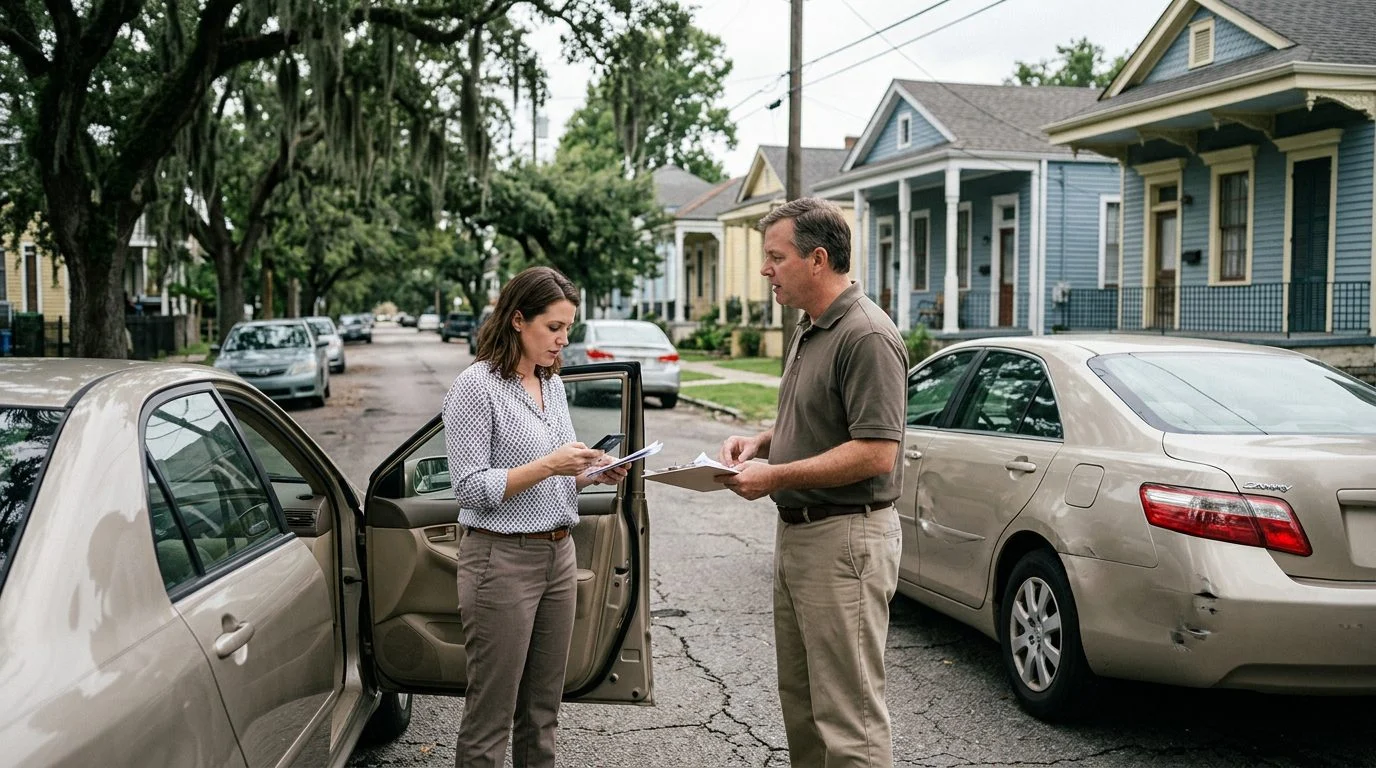
Related Information on Rideshare Accidents in New Orleans
For an overview of rideshare crash claims in Louisiana, read our rideshare accidents New Orleans guide. It covers the basics of how these claims work in the New Orleans area.
Frequently Asked Questions
Do I have to talk to the Uber insurance adjuster right away?
It is reasonable to pause, learn what is being asked, and get informed before you give a statement or sign anything.
Can I get a copy of my recorded statement in Louisiana?
Yes. Under La. R.S. 13:3732, the person who took your statement as an injured person about an accident or injury must give you a true and complete copy within twenty days after your written demand.
How long do I have to file an injury claim in Louisiana?
The two-year period runs from the day the injury or damage is sustained, subject to the exceptions set out in the article (La. Civ. Code art. 3493.1).
How American Trial Lawyer Can Help
Plain answers
We explain what an adjuster is asking for and what each request may mean for your claim.
Protection while you recover
We can review any statement, release or offer before you respond to it.
A team that listens
Przemek Lubecki and the staff at our New Orleans office focus on the people hurt in these crashes and their families.
Organized information
We help you gather the details of the crash, your injuries and your medical care in one place.
Before You Give a Recorded Statement
Take a moment to ask who is calling, what they want to know, and why. If you feel unsure, it is reasonable to pause and speak with a lawyer first.
Steps to Take Right Now
Write down what you remember
Record the date, time, location and what happened while the details are fresh.
Keep your records together
Save photos, texts, receipts, medical notes and any messages from the rideshare company.
Ask before you sign
Request a copy of any form or release, and read it carefully before you sign anything.
Get informed
Contact us for a free, confidential consultation with no obligation to continue.