
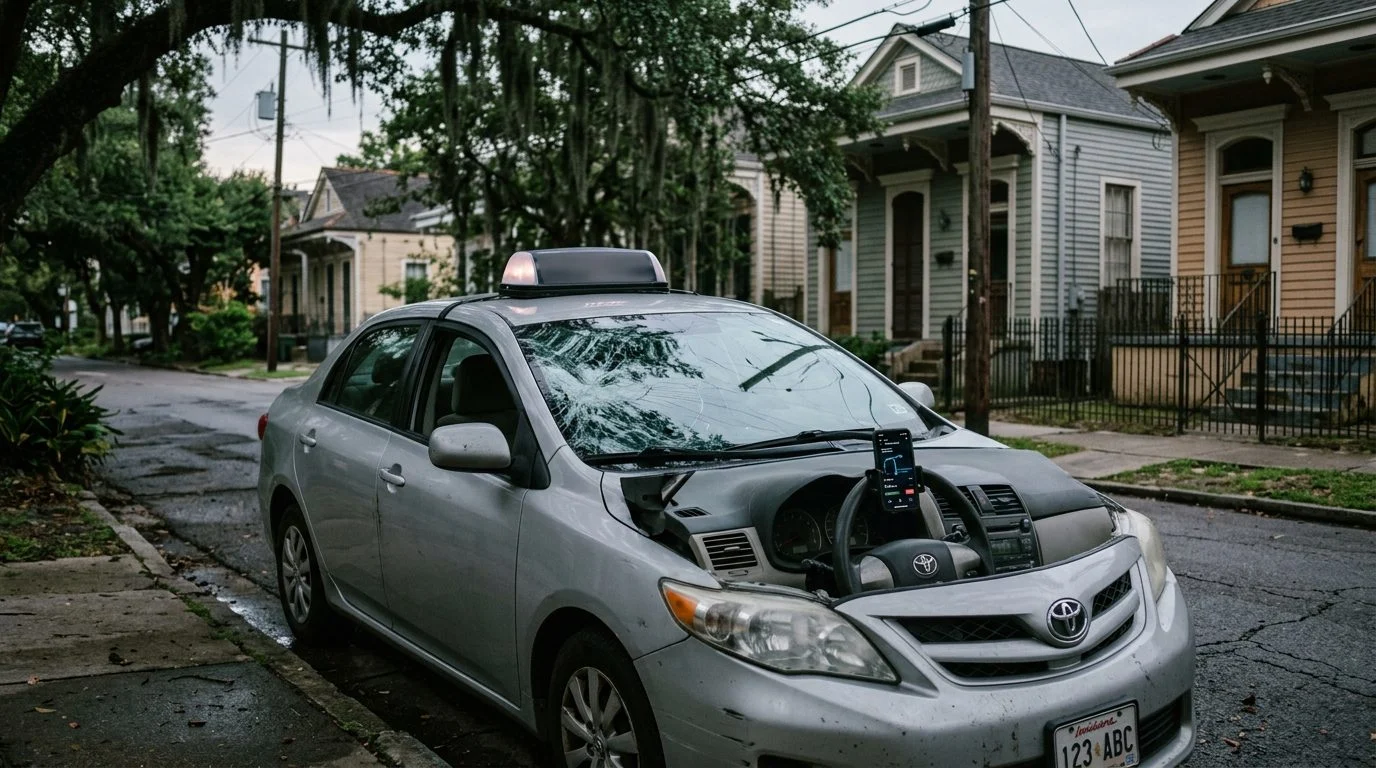
Rideshare Accidents | New Orleans
Save Your Rideshare App and Trip Data After a Crash
Your phone holds information that can help explain what happened. Here is how to protect it while you focus on getting care and getting back on your feet.
By Przemek Lubecki · Published November 18, 2026
If you were riding in an Uber or Lyft when a crash happened, or you’re helping a family member after one, you may be wondering what the app kept. Looking for an Uber trip record after an accident in Louisiana can feel like one more task on a long list.
The short answer: your rideshare account, your phone, your bank statement, and official crash reports can each hold part of the story. Save what you can now, then request official records the way Louisiana law allows.
Why App Data and Trip Records Matter After a Rideshare Crash
A rideshare trip leaves a digital trail. The trip request, pickup and drop-off points, timestamps, route, fare receipt, and any in-app messages may all be stored with the account. After a crash, that trail can help show the timeline and whether a trip was in progress.
Each record is held by a different party, and each is requested in a different way. Louisiana law also sets a cooperation duty for this kind of information. Under La. R.S. 45:201.8, a rideshare company and its insurer must cooperate in a claims coverage investigation. Within ten business days of a request, they must share the times a driver logged on and off the app in the twelve hours before and after the accident.
You don’t have to finish every step today. Start with the items that are easiest to lose, like app screens and receipts.
If you're gathering rideshare records while you heal or grieve, you don't have to face the paperwork alone. Talk with us about what to keep. Talk it through with our team — the first consultation is free, confidential, and carries no obligation.
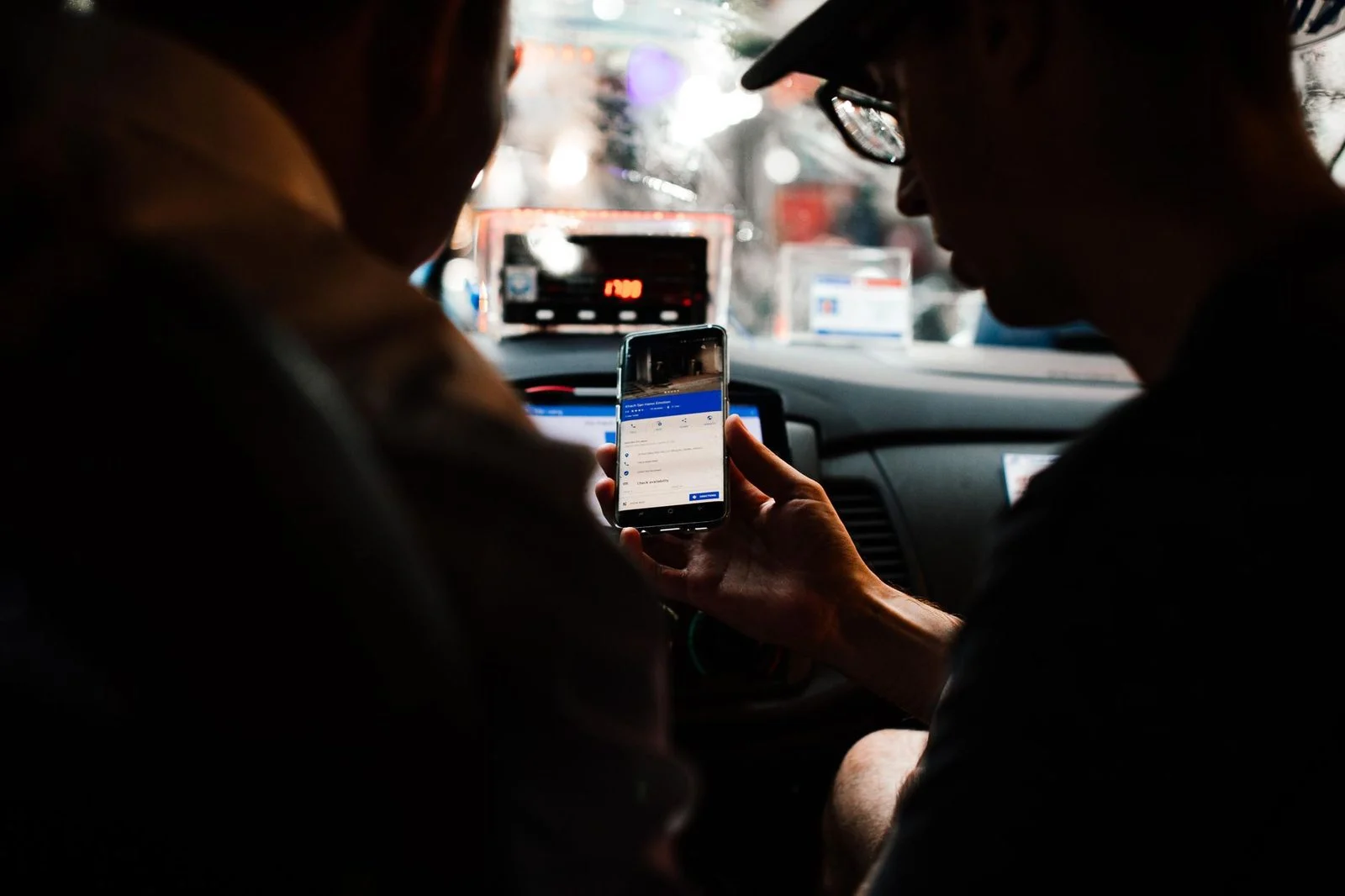
What Records a Rider or Family Member Can Save Right Away
Save the trip details now, while they’re easy to find. Screenshot each item below and keep the original files.
- The trip summary, receipt, route map, and pickup and drop-off addresses.
- The date and time, plus the driver’s first name and vehicle details shown in the app.
- Confirmation emails and any receipt emails sent after the trip ended.
- Texts, in-app messages, and call logs with the driver or company before and after the crash.
- Your own notes: the crash time as you remember it, witness names, and what your phone showed.
Louisiana law adds one more item. Under La. R.S. 32:398, a driver in a crash that causes injury must give the injured person their name, address, and vehicle registration number. Write these down at the scene if it is safe.
Store copies off your phone, in a cloud folder or on paper. If a phone is damaged or lost, the copies survive.
How to Get Older Ride History in Uber and Lyft
Check the trip history in your own Uber or Lyft account first. Older trips can be harder to find than recent ones, so gather a few details before you look.
Write down the trip date, the approximate pickup time, and any trip ID or receipt number. Then search your email for receipts from those dates. Menu names change over time, so follow what your current app shows.
Your bank or card statement is a separate record. It can show that a trip was taken and paid for, and on what date. If the trip is from a few years back, such as 2021 or 2022, these statement lines may be the easiest records to find. Keep a copy of each statement page you use.
How to Contact Uber or Lyft About an Accident
Report the crash through the app’s safety or incident tools, and keep a copy of what you send. Write down the date you filed and any case or ticket number the company gives you.
Keep a record of every statement you make to the company or its insurer. Ask for requests in writing when you can, and save every reply. Also save any message that describes the trip, the driver’s status, or the company’s findings.
Louisiana law also covers recorded statements. Under La. R.S. 13:3732, a person who takes a written, recorded, or transcribed statement from an injured person must give that person a true and complete copy. The copy is due within twenty days after a written demand.
If the holder refuses your request for a copy, that statement cannot be used in a related civil case, under the same statute.
Police Reports, Photos, and Other Evidence That Pairs With Trip Records
A police crash report can confirm the timeline that app records show. Under La. R.S. 32:398, crash reports are confidential. On request, they must be made available within seven working days after the investigation is complete.
Copies of crash reports may be available under La. R.S. 32:398. State police, local police, and sheriff’s offices shall provide copies of crash reports and may charge a fee of no more than five dollars per report that does not exceed two pages, and no more than twenty dollars, inclusive of all service fees and other charges, per report that exceeds two pages.
Photograph the vehicles, the scene, traffic signals, and visible damage as soon as it’s safe. Keep the original files, since they carry timestamps. Keep medical records, discharge papers, and bills, because visit dates help connect injuries to the crash.
Avoid posting details of the crash or trip online. Posts can be found later and read out of context.
What a Privacy Policy Does and Does Not Change
A privacy policy generally explains what data a company collects, how long it keeps that data, and when it may share it. Reading one can help you understand what a company holds.
Data a company keeps is not the same as data on your own phone. Your own copies keep a record you control. Save your copies before you change phones, switch accounts, or delete an app.
A privacy policy is separate from the Louisiana rules on crash reports and statements covered above. Don’t rely on a privacy policy to answer what a claim will require. Those questions turn on the law and the facts of each case.
Not sure what your next step is?
Talk it through with our team — the first consultation is free, confidential, and carries no obligation.
Louisiana Deadlines, Rideshare Claims, and Who May Be Involved
Louisiana generally gives two years to bring an injury claim (La. Civ. Code art. 3493.1). The clock starts the day the injury happens.
Under La. Civ. Code art. 3493.1, delictual (injury) actions are subject to a two-year prescription (time limit) that starts when injury or damage is sustained. Some exceptions exist, including for minors in certain cases.
For a wrongful death claim, La. Civ. Code art. 2315.2 says the right of action prescribes one year from the death or two years from the injury, whichever is longer. The survival rules in La. Civ. Code art. 2315.1 let listed family members pursue an injured person’s damages after death, on the same timing.
Louisiana also applies comparative fault (shared fault). Under La. Civ. Code art. 2323, a person whose own negligence is 51 percent or more cannot recover damages. Below that, damages are reduced in proportion to that share.
A rideshare crash can involve the driver’s own insurance, the company’s coverage, another driver’s insurance, or a mix. Which applies depends on the facts, such as whether the app was on and a trip was in progress.
Talking Through Your Records With American Trial Lawyer
Gathering the right records early is a practical step, and you don’t have to sort through them alone. If you’re recovering from injuries or coping with a loss, collecting receipts, screenshots, and reports can feel like a lot. Keep everything together in one folder so it’s ready when you need it.
Przemek Lubecki is the responsible lawyer for this page, and the office is in New Orleans. The firm may associate or refer a case to other law firms.
The first consultation is free, confidential, and without obligation to continue. To talk through which records to keep, call 855-LUBECKI or request a free case evaluation.

Frequently Asked Questions
Can I get my Uber trip record after a crash in Louisiana?
You can usually view your trip details, receipts, and trip history in the Uber app or your account. Records about the driver’s app activity at the time of a crash may require a formal request during a legal claim.
What information does an Uber trip record usually show?
It typically shows the pickup and drop-off locations, times, route, fare, and a trip ID number. It may not show everything about what the driver was doing on the app at the moment of the crash.
Should I save my Uber trip record after an accident?
Yes. Take screenshots, save your receipts and trip ID, and keep a written note of the date, time, and location of the crash while your memory is fresh.
How long do I have to bring a claim after a crash in Louisiana?
Because legal deadlines can affect a claim, it is important to act early.
Why the app and phone matter
Trip records can be lost
App data, trip history and messages can be deleted, changed or lost when phones are replaced, apps are updated or accounts are closed.
Details can be pieced together
Pickup and drop-off times, routes, receipts and driver messages can help show the sequence of events in a New Orleans crash.
Your own records count too
Photos, notes and a timeline you write soon after the crash can work alongside app data.
A lawyer can request the records
Records held by the rideshare company or the driver's app activity may need a formal request during a claim. Our team can help you understand what to ask for.
Do not delete or edit anything yet
Avoid deleting trip history, uninstalling the app, closing your account or posting about the crash online before you have talked through your options with a lawyer.
What to save after a rideshare crash
Trip details
Screenshots of the trip request, pickup and drop-off points, times, route and fare receipt.
Messages and alerts
Texts, in-app messages and emails from the rideshare company or driver about the trip or the crash.
Photos and injuries
Pictures of the vehicles, the scene, road conditions and your injuries, along with your medical visit paperwork.
Witness information
Names and phone numbers of anyone who saw the crash, plus the other driver's insurance and contact details.
Who may handle your case
The firm may associate or refer a case to other law firms. The initial consultation is free, confidential and without obligation to continue.