
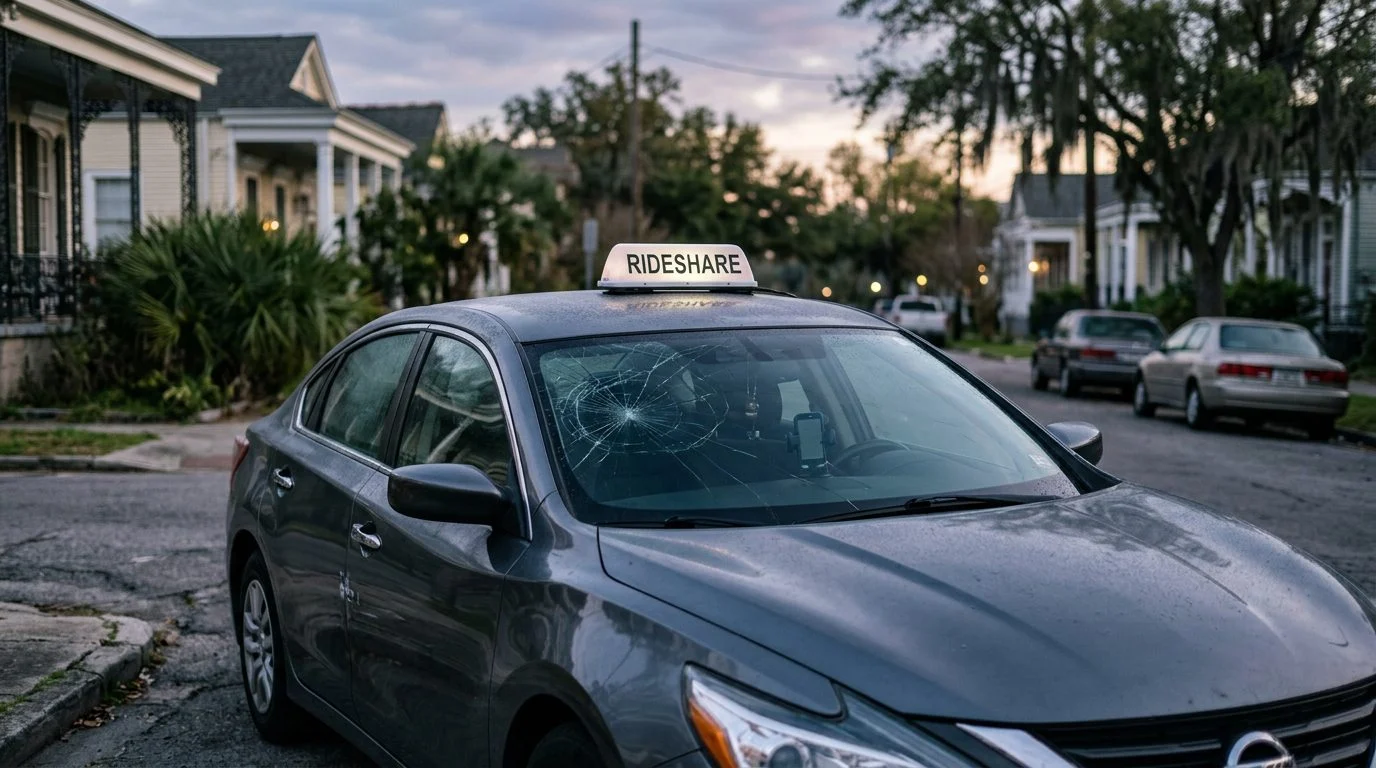
Delivery and rideshare crashes · New Orleans
Hurt in a Delivery Driver Crash? Don't Assume Your Insurance Covers You.
App-based delivery work can involve several insurance policies, and each one may answer differently. Przemek Lubecki and our team can help you sort out the questions.
By Przemek Lubecki · Published November 19, 2026
If a DoorDash or Uber Eats driver hit you in New Orleans, you may be asking whether the app’s rideshare insurance applies. A delivery app crash can raise different insurance questions than a rideshare trip that carries a passenger. The answer often turns on what the driver was doing in the app when the crash happened.
Short answer: delivery app crashes are not always handled like rideshare trips
No, not always. Louisiana’s insurance rules for app-based rides are written for transportation network companies (rideshare companies) and their rides. La. R.S. 45:201.6 sets insurance requirements for a driver during the app’s pre-trip acceptance period and during a prearranged ride.
That gap is why delivery crashes often raise more questions than people expect. Two facts usually come first: whether the app was on, and what stage of the work the driver was in at the moment of the crash. Those facts shape which insurance may be considered. For the broader picture, read our rideshare accidents overview for New Orleans.
If a delivery driver's crash left you hurt and unsure which insurance applies, you don't have to sort it out alone; call 855-LUBECKI or request a free case evaluation. Talk it through with our team — the first consultation is free, confidential, and carries no obligation.
Why app status and the work period matter
The stage of the work at the time of the crash is usually the first fact to pin down.
Drivers tend to move through a few stages. The app may be off. It may be on and waiting for a request. An order may be accepted, with the driver heading to the restaurant or pickup point. Or the driver may be carrying an order to the customer. Each stage can change the insurance picture, so the timeline matters.
Louisiana’s rideshare statute lets auto insurers exclude coverage for losses during some app periods, including the pre-trip acceptance period and a prearranged ride. La. R.S. 45:201.7 That means a personal policy may not respond the way a driver expects. Whether a delivery stage is handled the same way turns on the policy wording and the facts.
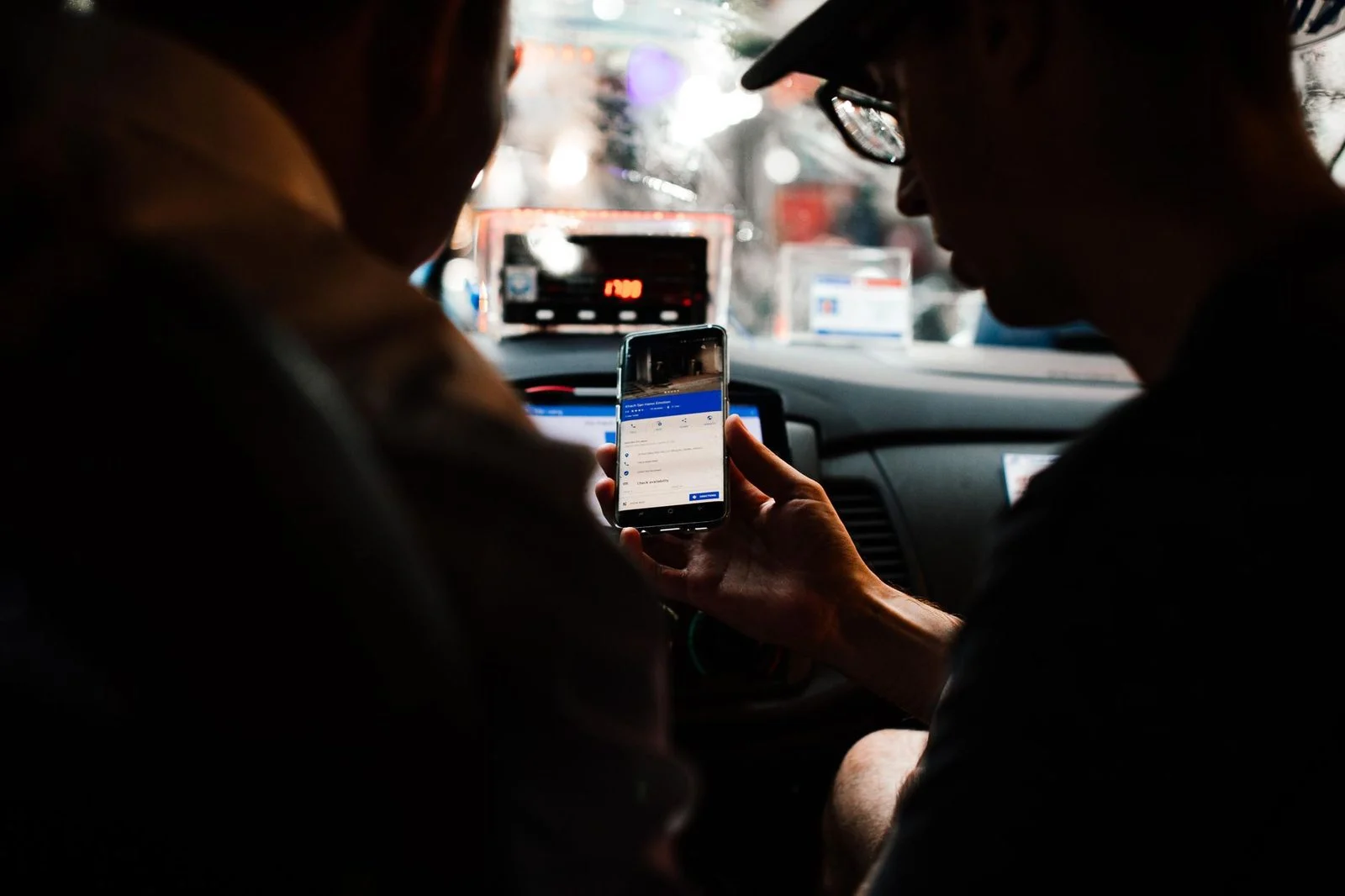
The app screen may be hard to read after a crash, so write down what you saw and when. App records and timestamps are often the evidence that shows which stage applied. Save any screenshots you can.
Who may be involved: the driver, the app company, and the other driver
Several parties may be part of a delivery app crash, not just the two drivers.
The list usually includes the delivery driver, the app company, the other driver, and the vehicle owner if that person is not the one driving. Each may have a role in the claim, and each may have its own insurance. Who did what is a question of facts, so the record matters.
Many delivery drivers are independent contractors rather than employees. That label matters. Louisiana makes employers answerable for damage their workers cause in the exercise of the functions in which they are employed, but responsibility only attaches when the employer might have prevented the act which caused the damage and did not do so (La. Civ. Code art. 2320). Whether a driver is an employee or a contractor can change who is asked to answer for the crash.
When two or more people cause the same harm, Louisiana generally holds each one liable only for his own degree of fault (La. Civ. Code art. 2324). So the other driver’s liability insurance may matter too, even when a delivery app is part of the story.
Insurance questions to raise after a delivery app crash
Three insurance sources usually come up: the driver’s personal auto policy, any coverage tied to the app, and the other driver’s liability policy.
Start with the personal policy. Louisiana’s rideshare statute keeps in force existing policy exclusions for vehicles used to carry people or property for a charge (La. R.S. 45:201.7). Read the policy wording. Ask the insurer in writing which policy it says applies and why.
Next, look at the app company’s coverage. For rideshare trips, the statute sets minimums for a driver. During a prearranged ride, automobile insurance must be in the amount of not less than one million dollars for death, bodily injury, and property damage (La. R.S. 45:201.6). A transportation network company may satisfy that insurance obligation through a policy obtained by a participating driver only if the transportation network company verifies that the policy is maintained by the driver and is specifically written to cover the driver’s use of a vehicle related to a transportation network company’s digital network (La. R.S. 45:201.6). Those amounts come from the rideshare rules.
Louisiana also applies comparative fault, which counts each person’s share of fault. Under La. Civ. Code art. 2323, a person who is 51 percent or more at fault cannot recover damages. A smaller share of fault reduces damages in proportion to that share.
Ask each insurer for its claim number and the name of the adjuster on the file. Write down what each one tells you.
What to document at the scene and afterward
Document the app status, the vehicles, and your injuries as soon as you safely can.
- Photos of the vehicles, the damage, the roadway, traffic signals, and any visible injuries.
- App details: screenshots of the app’s status and order information, with the times shown.
- Names and contacts: the police report number, the other driver’s and any witnesses’ names and contact details, and the insurance information exchanged.
- Medical and work records: visits, diagnoses, treatment notes, a simple log of symptoms, and any missed work.
Crash reports follow their own rules. Under La. R.S. 32:398, crash reports are confidential and are made available only to the parties to the crash, parents or guardians of a minor who is a party, insurers or insurance support organizations under contract to provide claims and underwriting, healthcare providers or their agents, succession representatives, attorneys for the parties or succession representatives, and news-gathering organizations that request documents related to a specific crash. Upon request, they’re available to the people entitled to them within seven working days after the investigation is complete. Under La. R.S. 32:398(D)(1), state police, local police departments, and sheriff’s offices shall provide copies of crash reports and may charge a fee not to exceed five dollars per report of two pages or less, and not to exceed twenty dollars per report longer than two pages, inclusive of all service fees and other charges.
If you gave a written or recorded statement, you can ask for a copy. Under La. R.S. 13:3732, the person who took it must provide a true copy within twenty days after written demand.
For missed pay, see lost wages after a rideshare crash. For repair records, see vehicle damage after a rideshare crash.
When to call a lawyer and why timing matters
Talk with a lawyer early if your injuries are serious, someone died, or the app status is unclear.
Louisiana’s general deadline for delictual (tort) actions is two years. Under La. Civ. Code art. 3493.1, that two-year period runs from the day the injury or damage was sustained. App records, crash reports, and medical histories take time to collect. Waiting can leave less time to work with, and memories and scene details fade.
Insurance adjusters may ask for a recorded statement early in a claim. You can speak with a lawyer before you give one. Keep in mind that you can ask for a copy of any statement you give.
If someone died in the crash, the family’s options are a separate question. A lawyer can explain which claims may apply in that situation.
Not sure what your next step is?
Talk it through with our team — the first consultation is free, confidential, and carries no obligation.
Talk with Przemek Lubecki about your delivery app crash
Przemek Lubecki is the responsible lawyer for this page, and our office is in New Orleans.
Our team at American Trial Lawyer, LLC, handles rideshare accident matters in New Orleans and across Louisiana. We can talk through the app status, the crash report, and the insurance questions in your situation. The firm may associate or refer a case to other law firms when that is appropriate.
The initial consultation is free, confidential, and without obligation to continue.
Frequently asked questions
Is a DoorDash driver covered when the app is on?
Not automatically. Coverage turns on the app stage, the policy wording, and the facts of the crash.
Can my personal auto insurer deny a claim after a delivery crash?
It may. Louisiana law keeps certain policy exclusions in force, so the policy wording matters.
Crash reports often contain details about how a collision happened.
If a delivery driver’s crash left you hurt and unsure which insurance applies, you don’t have to sort it out alone; call 855-LUBECKI or request a free case evaluation.
Why Talk With Our New Orleans Office
A trial lawyer leads the case
Przemek Lubecki is the responsible lawyer for this page and leads the firm's New Orleans office, which serves people across Orleans Parish, the New Orleans metro and Louisiana.
Plain answers about coverage
We explain which policies may apply to your crash and what the policy wording says, in language you can follow.
Care for the whole family
We understand that serious injuries and wrongful death affect work, bills and daily life, and we treat each client's situation with care.
A free first conversation
The first consultation is free, confidential and without obligation to continue.
Important: Coverage Is Not Automatic
Whether a delivery app, a personal auto policy or a commercial policy applies can depend on the app's status at the time of the crash, the policy wording and the facts of what happened. Do not rely on assumptions about coverage. Ask before you accept any offer or sign any release.
Steps to Take After a Crash
Get medical care
See a doctor even if your injuries seem minor. Some injuries, including brain injuries, may not show symptoms right away.
Document the scene
Take photos of vehicles, the road, visible injuries and any signs or conditions nearby. Note the names and contact details of witnesses.
Preserve your app records
Screenshot your delivery app, trip timeline, messages and earnings records from the time of the crash, before they change or disappear.
Talk with our team
Contact us for a free, confidential consultation. If your case is better handled by another law firm, we may associate or refer it to other law firms.