
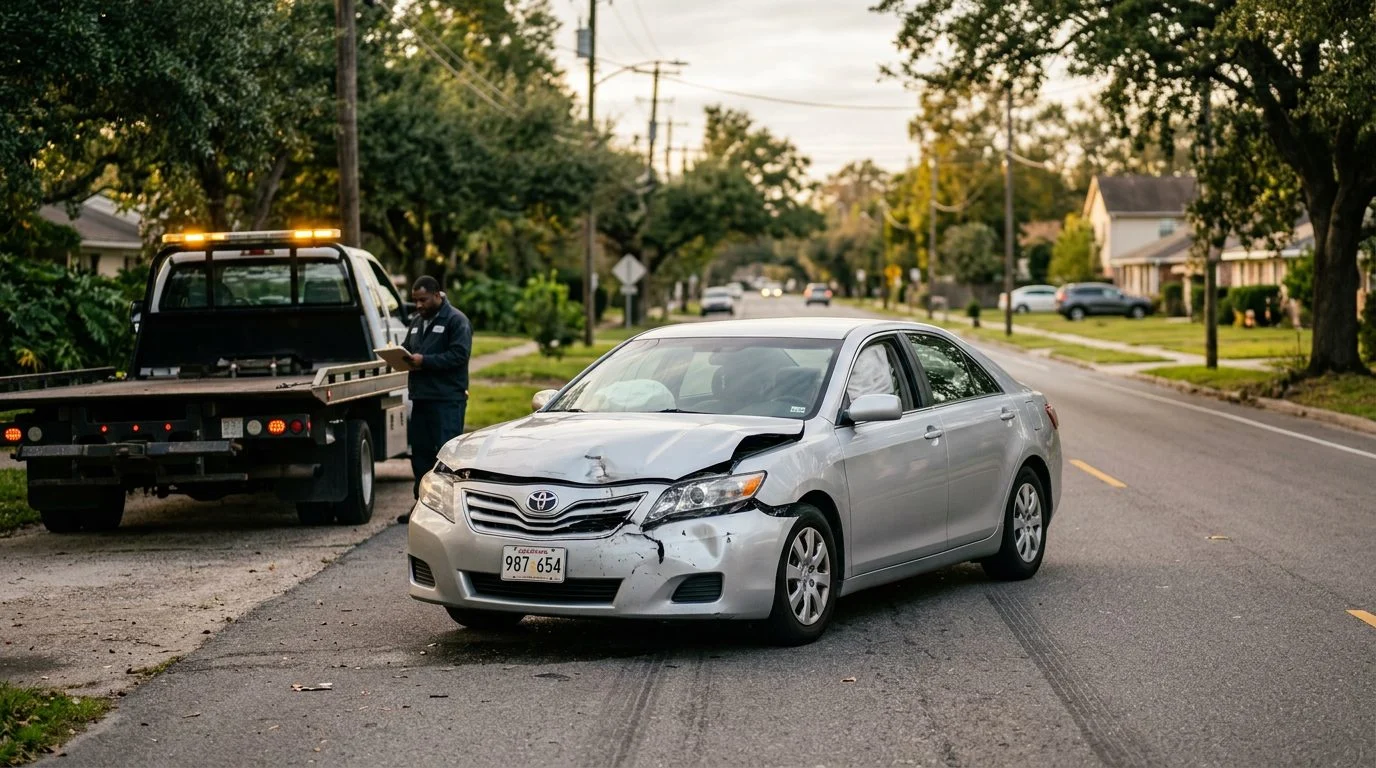
Car Accidents | New Orleans, Louisiana
Asked for a Recorded Statement After a Crash? Pause Before You Answer.
Przemek Lubecki and the team at American Trial Lawyer, LLC explain what a recorded statement is, why insurers ask for one, and how to protect yourself from our New Orleans office.
By Przemek Lubecki · Published November 6, 2026
Quick Answer: Do You Have to Give a Recorded Statement?
In most cases, you can ask for time before giving a recorded statement to the other driver’s insurance adjuster. Asking for time is a reasonable request, and you can make it politely.
The adjuster works for the insurance company. Their job is to evaluate the claim for that company and its policyholder. They do not work for you, even when the call sounds friendly and routine.
After a crash, many people feel rushed. They may be sore, shaken, or unsure what hurts yet. That is a normal reaction, and it is one reason to slow down.
This page covers four things. It explains what an adjuster does and why they ask for a recording. It shows how Louisiana fault rules can use early words. It lists common mistakes. It also offers steps for postponing the call.
Whether and how you speak depends on your injuries, the crash details, and the exact questions asked.
If an adjuster is asking you for a recorded statement after your crash, you can talk it through with our team before you answer. Talk it through with our team — the first consultation is free, confidential, and carries no obligation.
What an Insurance Adjuster Is and Why They Ask for a Recorded Statement
An insurance adjuster is a claims representative who investigates a crash for an insurance company. A recorded statement gives that company a word-for-word record of what you said about the crash and your injuries.
Adjusters often call within a day or two of a crash. Many people have not seen a doctor yet. Some do not know whether they have a neck injury, a concussion, or a back problem. Early calls happen before that picture is clear.
The adjuster may be gathering facts for a fault decision or a settlement offer. A recording can be kept and reviewed long after the call ends. Your words stay the same on the recording, even if your understanding changes later.
Louisiana gives you a right to a copy. Under La. R.S. 13:3732, a person who takes a recorded statement from an injured person must furnish a true and complete copy. The copy is due within twenty days after a written demand. A statement also cannot be used in a related civil action if the holder refused, on request, to give you a copy.
How a Recorded Statement Can Affect an Otherwise Strong Claim
A recorded statement can give the insurer words to use against your claim, even when you did nothing wrong. Louisiana law addresses how fault is attributed when more than one person may have contributed to an injury (La. Civ. Code art. 2323).
Under La. Civ. Code art. 2323, the fault of everyone who caused or contributed to an injury is determined. Louisiana Civil Code article 2323 provides that when a person suffers injury, death, or loss partly because of his own negligence and partly because of another’s fault, that person is not entitled to recover damages if the percentage of negligence attributed to him is fifty-one percent or more, unless the other fault is that of an intentional tortfeasor, in which case his claim for recovery of damages shall not be reduced (La. Civ. Code art. 2323). If the degree or percentage of negligence attributable to the injured person is less than fifty-one percent, the amount of damages recoverable is reduced in proportion to that degree or percentage (La. Civ. Code art. 2323).
Early words can be used to argue a fault percentage. Small details are easy to get wrong when you recall them days later, after a frightening event. Speed, lane position, timing, and what you did or did not see can sound different on paper than they felt at the scene.
Injury statements matter too. A statement made before a diagnosis can be used to argue that later symptoms came from something else. That can happen even when the symptoms are real.
None of this means you should be hostile. The statement is a tool for the insurer’s evaluation. You decide how much to give, and when.
Common Mistakes People Make When an Adjuster Calls
Most common mistakes come from answering too fast. Slowing down avoids most of them.
Giving a statement before you know your injuries. Saying “I’m fine” before a doctor has checked you can be quoted later. Many symptoms appear over days, not minutes.
Delaying medical care. A gap in treatment can affect your health and your claim. The care you get and the records it creates are part of what gets reviewed.
Guessing. Adjusters may ask about speed, distance, or who had the green light. If you don’t know, say so. “I don’t know yet” is an honest answer.
Posting about the crash online. Photos, check-ins, and posts about your activities may be reviewed by insurers. Keep the crash and your injuries off social media while the claim is open.
Signing a release or accepting an early payment. Ask questions before you sign anything. A release can end the claim before the full extent of your injuries is known.
What You Can Do Instead of Answering Right Away
You can politely say you are not ready to give a recorded statement today. You do not need to argue about the crash or explain every reason.
Try these steps:
- Ask for the adjuster’s full name, company, phone number, and claim number.
- Ask what the statement is for and which topics it will cover.
- Ask for the request in writing, by email or letter.
- Write down the date and time of each call and what was said.
- Keep a simple record of symptoms, doctor visits, missed work, and expenses.
If you do speak, stick to facts you know. Avoid guessing. Do not agree to a recording until you understand its purpose.
Reviewing the crash report can help you recall the facts accurately. Under La. R.S. 32:398, crash reports are confidential. They are available only to the parties to the crash, parents or guardians of a minor who is a party to the crash, insurers (or an insurance support organization under contract to provide claims and underwriting) of any party which is the subject of the report, healthcare providers or their agents who rendered services to a party, succession representatives, attorneys of the parties or succession representatives, and a news-gathering organization that requests documents related to a specific crash. Upon request, they are made available within seven working days after the crash investigation is complete. Under La. R.S. 32:398, a reasonable fee may be charged for copies of crash photographs, video recordings and audio recordings.
How Louisiana Claim Value Connects to Your Statement
The value of a car accident claim turns on the details, not on a general article. Liability, documented injuries, treatment, and how the injury affects daily life and work all play a part.
No one can predict the value or outcome of your claim from general information. What you say early can still shape how the claim is evaluated. That is why the statement matters.
Timing matters too. Keep the date of your crash in mind while talks with an insurer continue.
Some crashes involve more parties (employer liability). A commercial truck, a rideshare trip, a motorcycle, or a death can bring in more insurers and more people asking questions. In a rideshare claims coverage investigation, La. R.S. 45:201.8 requires the transportation network company and its insurers to cooperate within ten business days of a request for information.
Do I have to give a recorded statement to the other driver’s insurance?
In most cases, you can ask for time. You can ask for the request in writing and decide when to respond.
Can I get a copy of my recorded statement in Louisiana?
Yes.
What is comparative fault in Louisiana?
It is a rule that reduces recovery by the injured person’s share of fault (La. Civ. Code art. 2323). Under the version of La. Civ. Code art. 2323 in effect since January 1, 2026, recovery of damages is barred where the injured person’s negligence is equal to or greater than fifty-one percent (La. Civ. Code art. 2323).
Not sure what your next step is?
Talk it through with our team — the first consultation is free, confidential, and carries no obligation.
Who Handles Your Case and Where the Firm Is Located
Przemek Lubecki is the responsible lawyer for the content on this page. He is a trial lawyer, and the firm’s office is in New Orleans, Louisiana.
American Trial Lawyer, LLC represents people seriously hurt in truck, car, commercial vehicle, rideshare, and motorcycle crashes. The firm also represents families in wrongful death cases, and it handles brain injury and negligent security matters. It serves people in Orleans Parish, Jefferson Parish, Metairie, Kenner, St. Bernard Parish, Slidell, and across Louisiana.
The firm may associate or refer a case to other law firms. When that happens, the other lawyers are separate from American Trial Lawyer, LLC.
Talk With Our Team Before You Respond to the Adjuster
If an adjuster has called asking you to go on record about your crash, you do not have to decide on the spot. Many people in that position are still hurting, still sorting out the facts, and unsure what to say. Our team can talk through the call with you and the questions you may want to ask.
The first consultation is free, confidential, and without obligation to continue. To talk through your situation, call 855-LUBECKI to request a free case evaluation.
How We Can Help
Protecting Your Position
We help you understand what the insurer is asking and how your answers could be used in your claim.
Handling Insurer Contact
Our team can help manage communication with adjusters so you are not left to respond alone.
Reviewing Your Claim
We look at the crash report, medical records and other details that bear on your claim.
Support for Your Family
We understand that a crash can disrupt work, daily life and family routines, and we treat your situation with care.
Take Your Time
An adjuster may sound friendly and the questions may seem routine. You do not have to answer on the spot. You can ask for the request in writing and decide when you are ready to respond.
Before You Speak With an Insurer
Write Down What You Remember
Note the date, time, location and weather while the details are fresh. Keep your notes private unless you choose to share them with your lawyer.
Keep Your Answers Factual
Stick to what you saw and did. Avoid guessing about speed, distance or injuries you have not yet been evaluated for.
Ask for Time
It is reasonable to ask for a written request and time to consider it before giving a recorded statement.
How Referrals Work
American Trial Lawyer, LLC may associate or refer a case to other law firms. If we believe your matter is likely to be referred, we will tell you before you proceed.
Have Questions About a Recorded Statement?
Talk With Przemek Lubecki. Your First Consultation Is Free, Confidential and Without Obligation.