
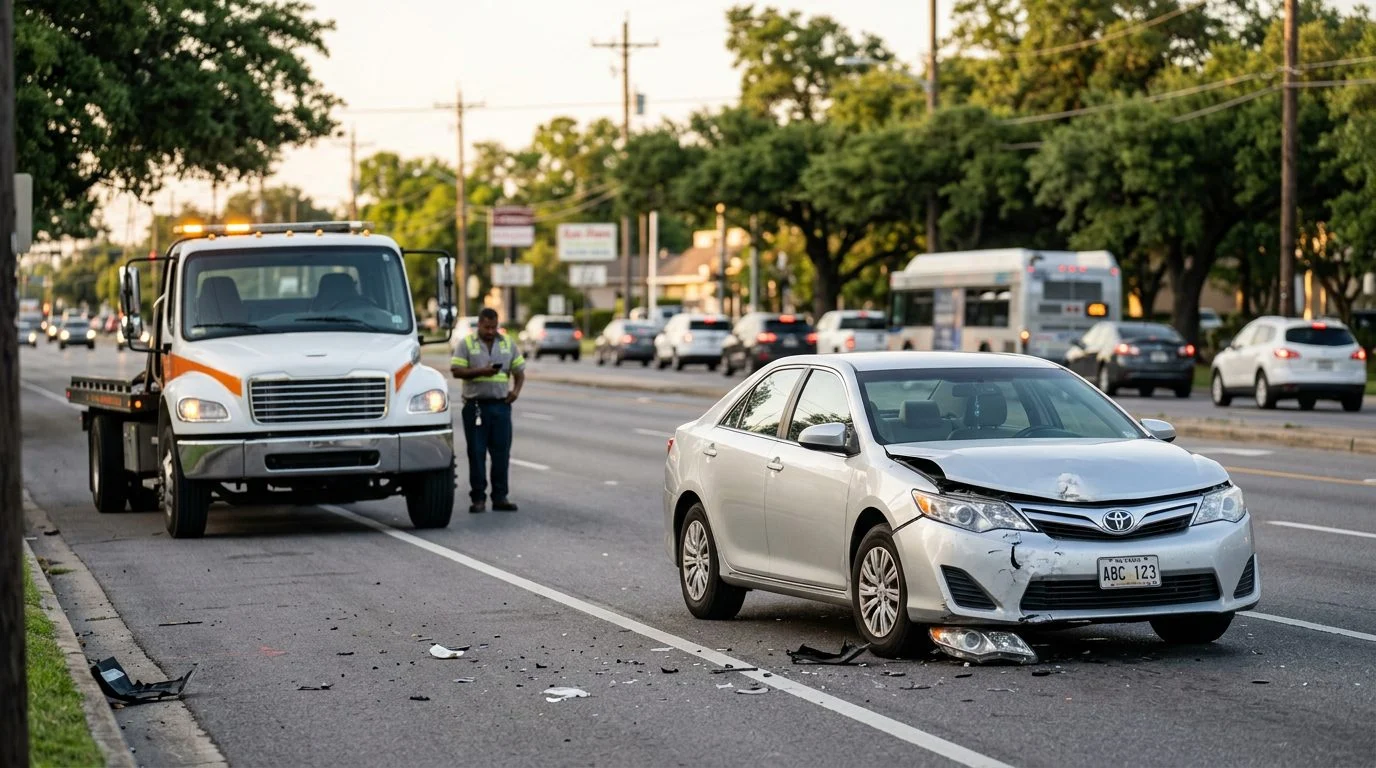
Car Accidents | New Orleans
Hurt in a Car Accident? Get Checked Early, Even If You Feel Okay
A plain-language guide from trial lawyer Przemek Lubecki on seeing a doctor after a crash in New Orleans, and why early medical records matter.
Before You Call
Free
First consultation
Confidential
Talk with us in private
No obligation
To continue after the consultation
By Przemek Lubecki · Published November 6, 2026
If you were in a car accident, see a doctor as soon as you can, ideally the same day. If a new symptom shows up later, get checked within hours, not days. People often ask how long after a car accident they should see a doctor, and the short answer is sooner than they think. This page explains why some injuries appear later, when to get emergency care, and how timing can affect an injury claim in New Orleans and across Louisiana.
How Long After a Car Accident Should You See a Doctor?
The safest answer is the same day, and any new symptom means getting checked within hours. If you’re asking how long after a car accident should I see a doctor, the answer is right after the crash, even if you feel okay.
The most common mistake is waiting to see how you feel. Adrenaline and shock after a crash can hide pain. Many people leave the scene sure they’re fine, then wake up the next morning with a stiff neck, a headache, or a sore back.
Timing also depends on the facts. A low-speed bump with no symptoms is different from a hard impact, a head strike, or a crash where airbags deployed. Treat any new symptom as a reason to be checked, and act on it promptly. Write down what you feel and when you felt it. Those notes help your doctor and anyone reviewing your case later.
Not sure what your next step is?
Talk it through with our team — the first consultation is free, confidential, and carries no obligation.

Why Some Car Accident Injuries Show Up Later
Some injuries take hours or days to cause symptoms, so feeling fine at the scene doesn’t rule out harm. Neck and back strain, often called whiplash, is a common example. So are soft-tissue injuries to muscles and ligaments, which can grow more painful over the following days.
Head injuries are easy to miss. The Virginia Department of Health training notes that a traumatic brain injury can alter mental status with or without loss of consciousness. You don’t have to pass out to be hurt. The FloridaHealthFinder concussion guidance covers concussion symptoms, recovery, and when to contact a doctor after a crash.
Spinal injuries also matter. The Christopher & Dana Reeve Foundation notes that car crashes can cause spinal cord injuries and that medical evaluation is important for diagnosis and care. Report any new symptom to a doctor, even if it appears days after the accident. Tell the doctor about the crash so the notes match what happened.
Signs You Need Emergency Care Right Away
Get emergency care right away if you have severe or worsening symptoms. Call 911 if the situation is an emergency.
Warning signs include a severe or worsening headache, confusion, repeated vomiting, loss of consciousness, numbness or weakness, trouble breathing, chest pain, or severe belly pain. Don’t drive yourself if your symptoms are severe. Ask someone else to drive, or call 911.
Even if you seem fine, get checked after a hard impact, especially if you hit your head. An emergency room can run tests and imaging the same day. You don’t need to wait for a scheduled appointment when symptoms are serious.
Emergency Room, Urgent Care, or Primary Care: Which to Choose
Choose the emergency room for severe or possibly life-threatening symptoms. Use urgent care for same-day checks of less serious injuries, and a primary care doctor for follow-up.
The emergency room fits severe symptoms and any injury that may need immediate imaging or hospital care. Urgent care can evaluate pain, stiffness, or cuts the same day when an emergency room visit isn’t required. Your primary care doctor manages follow-up care, ongoing symptoms, referrals to other doctors, and your treatment plan.
Whichever you choose, keep records. Write down the date, what you told the provider, and what treatment was recommended. Keep discharge papers and bills. Each visit becomes part of the timeline of your injury.
How a Gap in Treatment Can Affect an Injury Claim
A long gap between the crash and your first medical visit can give an insurer a reason to question whether the crash caused your injury. Insurers often look at timing when they review a claim. The effect of any delay depends on the facts of your case.
Your medical notes matter most. Notes that describe your symptoms and link them to the crash give the record a clear timeline. Ask your provider to write down how you were hurt, not only the symptoms you mention at the visit.
Medical bills can also affect recovery. When a health insurer or Medicare pays, in whole or in part, a contracted provider, Louisiana law limits recovery of past medical expenses to the amount actually paid plus your cost sharing, not the amount billed (R.S. 9:2800.27 medical expense limits). Keep every bill and every explanation of benefits from your insurer.
Reporting the Accident and Knowing Your Deadlines
Louisiana sets a two-year time limit for injury claims, counted from the day you were hurt. Under La. Civ. Code art. 3493.1, delictual (tort) actions are subject to a two-year prescription that starts when the injury is sustained. The statute has exceptions, so it’s important to know your own timing.
After a crash, the driver must give information to police at the scene or to the officer investigating it. Under La. R.S. 32:398, a driver involved in a crash resulting in injury to or death of any person, or property damage in excess of five hundred dollars, must give his name, address, and vehicle registration number to any person injured in the crash or to the driver or occupant of any damaged vehicle or property, and, upon request and if available, show his driver’s license or permit. Crash reports and their information are confidential and are made available only to the parties to the crash, parents or guardians of a minor party, insurers, or an insurance support organization under contract to provide claims and underwriting, of a party, healthcare providers who treated a party, succession representatives, the parties’ attorneys, and news-gathering organizations requesting documents about a specific crash. Upon request, they must be made available within seven working days after the crash investigation is complete. Police may charge up to $5 for a report of two pages or fewer.
However, if the other fault is that of an intentional tortfeasor, the claim is not reduced. (La. Civ. Code art. 2323)
Not sure what your next step is?
Talk it through with our team — the first consultation is free, confidential, and carries no obligation.
What to Be Careful About When Speaking With an Insurance Company
Be careful about what you say to an insurer before a doctor has checked you. Stick to facts you know. Describe what hurts and when it started. Don’t guess about speed, fault, or how serious your injury is.
Insurers may ask for a recorded statement early on. You can ask to wait until you’ve been evaluated before giving one. Under La. R.S. 13:3732, a person who takes a written, recorded, or transcribed statement from an injured person must give that person a true and complete copy. The copy must be provided within twenty days after a written demand, so ask for it in writing.
If the at-fault driver has no insurance, your own uninsured motorist coverage may matter. Under R.S. 22:1295, for an injury while occupying a vehicle not owned by you, your resident spouse, or a resident relative, the uninsured motorist coverage on that vehicle is primary. Under La. R.S. 22:1295, when an insured has uninsured motorist limits in an automobile liability policy, those limits shall not be increased because of multiple covered motor vehicles, nor when the insured has coverage under more than one uninsured motorist provision or policy. With respect to other insurance available, the policy or endorsement must set out priorities of recovery for bodily injury to an injured party occupying an automobile not owned by that party, a resident spouse, or a resident relative: the uninsured motorist coverage on the vehicle the injured party occupied is primary, and if that primary coverage is used up because of the extent of the damages, the injured occupant may recover as excess from other uninsured motorist coverage available to him, but never from more than one other uninsured motorist policy as excess.
Talk With American Trial Lawyer About Your Accident
If you’re still sore, dizzy, or unsure whether a delayed doctor visit will affect your claim after a New Orleans car crash, you don’t have to sort it out alone. Przemek Lubecki is the responsible lawyer for this page, and the office is in New Orleans. Our team offers a free, confidential consultation with no obligation to continue. You can request a free case evaluation or call 855-LUBECKI.
American Trial Lawyer may associate or refer a case to other law firms. Every case is different, and results may vary.
How long after a car accident should I see a doctor?
See a doctor the same day if you can. Get checked within hours if any new symptom appears.
Can car accident injuries show up days later?
Yes. Neck strain, soft-tissue injuries, and some head injuries may not cause clear symptoms until hours or days later.
Is there a deadline to file a car accident claim in Louisiana?
Louisiana generally sets a two-year prescriptive period for these claims, which begins to run from the day of injury, although it does not run against minors or interdicts in certain actions involving permanent disability brought under product liability law (La. Civ. Code art. 3493.1). Ask about your own timing as soon as you can.
What to Keep in Mind After a Crash
Symptoms can appear later
Neck strain, soft-tissue injuries and some head injuries may not cause clear symptoms right away. Tell your doctor about every change you notice.
Keep your records
Save visit notes, test results, prescriptions, receipts and photos of your injuries and vehicles in one place.
Who handles your case
Przemek Lubecki is the responsible lawyer for this page. The firm's office is in New Orleans. American Trial Lawyer may associate or refer a case to other law firms.
Describe the Crash to Your Doctor
Explain how the crash happened and list every symptom, even small ones. Ask that your visit notes record what you tell them. Do not wait for pain to get worse before getting checked.
Questions to Ask Yourself Today
Do I have any new pain or stiffness?
Headaches, neck or back pain, numbness, dizziness and trouble sleeping are worth mentioning to a doctor.
Have I been seen by a doctor?
If you have not been examined yet, schedule a visit as soon as you can and bring a list of your symptoms.
Did I follow my treatment plan?
Keep follow-up appointments and let your provider know if you are missing visits due to cost, work or transportation.
Do I have questions about my claim?
Our team can answer questions in a free, confidential consultation with no obligation to continue.