
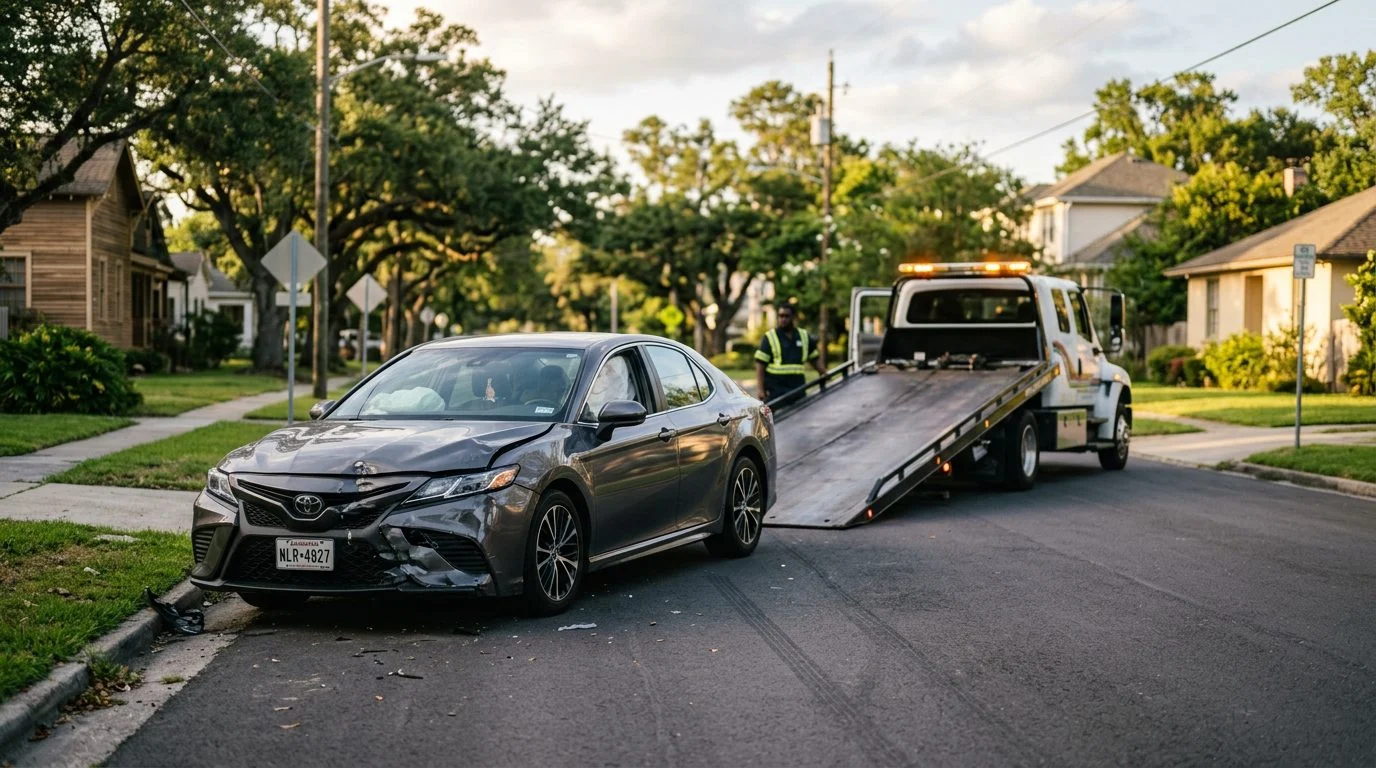
Car Accidents | New Orleans, Louisiana
How to Get a Car Crash Report in New Orleans: A Step-by-Step Guide
After a crash, the police report is one of the first documents people ask for. Here is how to request it, what to check, and how Przemek Lubecki and the team at American Trial Lawyer can help.
By Przemek Lubecki · Published November 6, 2026
If you were in a crash in New Orleans, the fastest way to get your crash report is to ask the agency that investigated it. Inside city limits, that is usually the New Orleans Police Department. Outside city limits, the state police or a sheriff’s office investigates. Louisiana law also limits who can get a crash report, so it helps to know your role before you ask. This guide explains how to get a car crash report New Orleans drivers and passengers rely on, step by step, and how to read the form once you have it.
Why a Car Crash Report Matters After a Collision
A car crash report is the official record an investigating agency creates after a collision. It lists the date, time and location, the vehicles and drivers, any passengers and witnesses, and the officer’s observations. Most reports also include a diagram.
Louisiana law requires a driver involved in a crash to make a report when the crash causes injury, death, or property damage over five hundred dollars. La. R.S. 32:398 sets out that duty. The report helps keep the basic facts of the crash in one place while details are still easy to confirm.
Many people need the report when they talk with an insurance company. A copy gives an insurer and the other parties a shared starting point.
Keep one point in mind. The report records what the officer saw, heard and was told. It is a record to review and keep. It is not a final ruling on who was legally at fault.
If you were hurt and are waiting on a crash report while an insurer asks questions, you don't have to sort it out alone; call 855-LUBECKI for a free, confidential first consultation with no obligation to continue. Talk it through with our team — the first consultation is free, confidential, and carries no obligation.
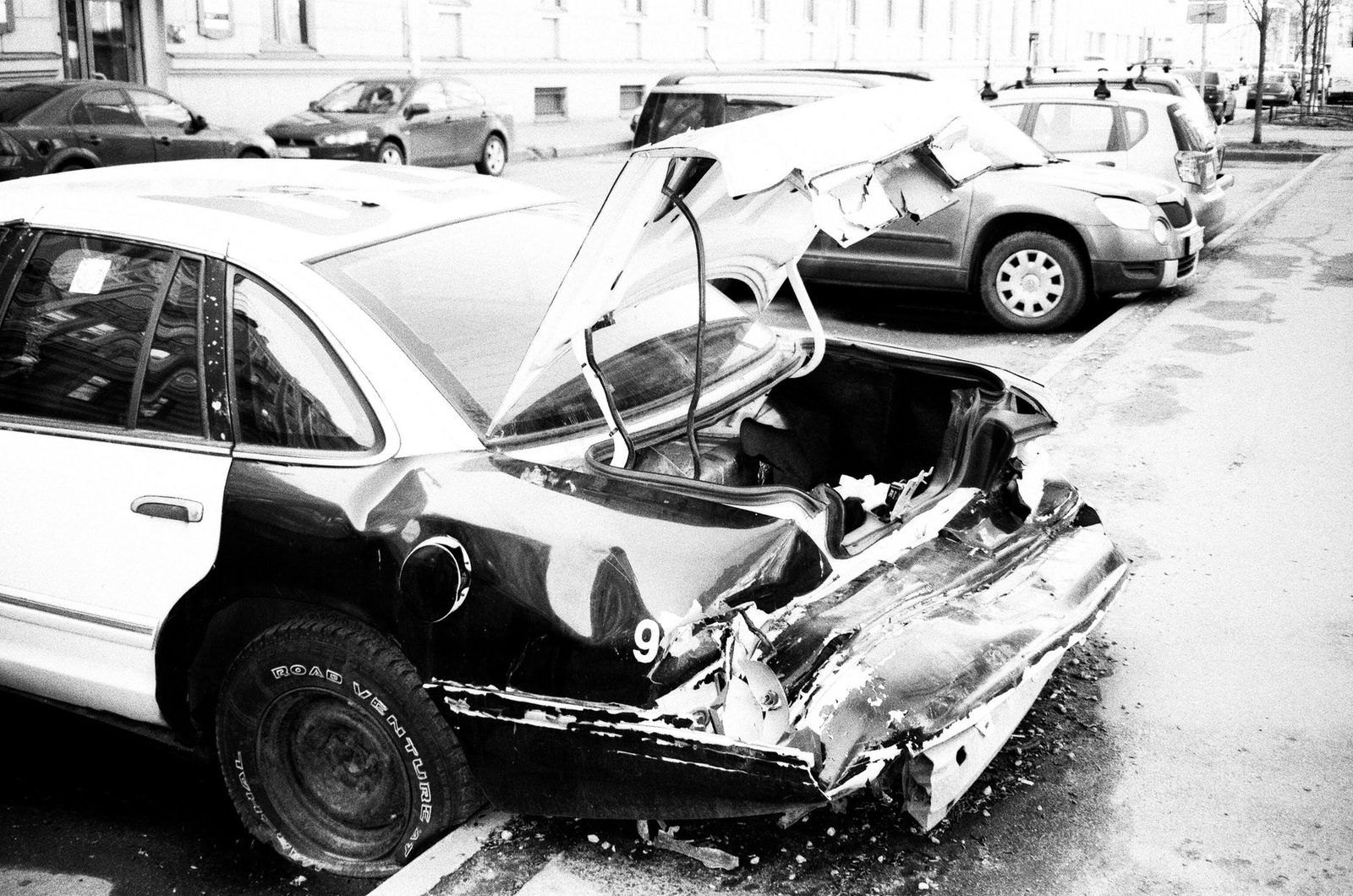
Which Agency Has Your Car Crash Report
The agency that investigated the crash holds the report, and the crash location decides which agency that is. Louisiana law splits the duty by location. A crash outside the corporate limits of a city or town is investigated by the state police or a sheriff’s office. A crash inside a city or town is investigated by that city’s police department (La. R.S. 32:398).
In the New Orleans area, that works out this way:
- Inside New Orleans city limits: the New Orleans Police Department.
- Inside another city’s limits, such as Kenner or Slidell: that city’s police department.
- Outside city limits, including unincorporated parts of Jefferson Parish, St. Bernard Parish or St. Tammany Parish: the state police or the sheriff’s office.
Which agency responded depends on the facts of your crash. Match the exact location before you make a request. Metairie, for example, is not its own city, so a crash there generally falls outside city limits.
Write down the location, date, time and any report or incident number given at the scene. These details speed up the search.
How to Request a Crash Report Online
For a New Orleans crash, start with the city’s police reports page. The New Orleans police reports page explains how to request a report. The city notes that released police reports may be redacted to protect privacy and comply with legal restrictions.
Most online requests ask for the date, the location, and the names of the drivers. A report or incident number makes the search faster. A newly filed report may take some time to appear in a search.
Louisiana law makes crash reports available to specific people, so a request form may ask how you are connected to the crash (La. R.S. 32:398).
Outside New Orleans, the Louisiana State Police crash report procedures cover who may request reports, where copies are available, and how processing works. Use the source that matches the agency that investigated your crash.
How to Request a Crash Report In Person or by Mail
You can request a report in person or in writing from the agency that investigated the crash, but crash reports are confidential and are made available only to the parties to the crash, parents or guardians of a minor who is a party, their insurers or an insurance support organization under contract to provide claims and underwriting, healthcare providers that treated them, succession representatives or attorneys, and news-gathering organizations requesting documents related to a specific crash. Bring the facts you wrote down and a photo ID.
In person: Go to the records section of the responding agency. Give the report number if you have it, plus the date, time, location and driver names. Ask for the specific crash report.
By mail or written request: Include the same facts, your return address and a daytime phone number. State that you were involved in the crash and want a copy of that report.
Photos and video are handled differently. Under La. R.S. 32:398, agencies must provide copies of crash photographs, video and audio to any interested person on request. They may charge a reasonable fee for those copies. Ask for these items separately.
Confirm current office hours, request forms and charges with the agency before you go. These can change.
Are Crash Reports Public Records in Louisiana?
No. Louisiana makes crash reports and the information in them confidential. The statute also exempts them from the general public records law (La. R.S. 32:398). A crash report is not a general public record that anyone can request.
Under the statute, the report is available only to the following, including insurance support organizations under contract to provide claims and underwriting:
- the parties to the crash
- a parent or guardian of a minor who is a party
- insurers of a party to the crash
- a healthcare provider, or its agent, that treated a party
- succession representatives of a party, or their attorneys
- a news-gathering organization asking for a specific crash
Upon request, the report must be made available to those people within seven working days after the crash investigation is complete.
Insurers and the parties to the crash are the people most likely to request the full report during a claim. Photos and video are a separate rule. Any interested person can request copies of those on request.
What to Have Ready Before You Request the Report
Gather these facts before you request the report. They help the search go faster and reduce mistakes.
- The exact date and time of the crash
- The street names or the intersection
- Vehicle makes, models and license plate numbers
- The names of the drivers and any passengers
- Any report or incident number given at the scene
- The name or badge number of the officer, if you got it
- Names and phone numbers of any witnesses
Write these facts down the same day, while they are fresh. Keep them with the report, along with photos of the scene and vehicles, the tow receipt, your insurance card and any claim number. One folder makes it easier to answer an insurer’s questions and check the report for errors later.
Not sure what your next step is?
Talk it through with our team — the first consultation is free, confidential, and carries no obligation.
How to Read a Louisiana Accident Report
A crash report is easiest to read one section at a time. Start with the header, then move to the vehicle and driver boxes, the witness information, the diagram and the officer’s narrative.
The header shows the date, time, location and investigating agency. The vehicle and driver boxes list each vehicle and driver involved. Louisiana requires crash report forms that disclose the cause, the conditions then existing, and the persons and vehicles involved in a highway crash (La. R.S. 32:398).
The diagram shows where the vehicles were as the officer recorded them. The narrative is the officer’s written account of what was observed and what people said. Read it closely. It records observations and is not a final legal conclusion.
A citation written by the officer is a separate matter from the report itself. Check the narrative to see what the officer wrote about the crash.
If you find an error in a name, plate number, lane or time, write it down right away. Keep a copy of the version you used for your claim.
When the Report Is Missing Details or Has Errors
If the report is missing details or contains an error, ask the responding agency how a correction or supplement can be requested. Put the request in writing and keep a copy.
Your own account matters too. Write down what you remember, including the time, lanes, weather and order of events. Give that account, with your photos and witness names, to your insurer.
Bring a report with errors, or a missing record for the other driver, to your insurer in writing. Keep copies of every letter and email you send or receive.
If you gave a written, recorded or transcribed statement about your injury or the crash, Louisiana law gives you a right to a copy. The person who took the statement must furnish a true and complete copy within twenty days after written demand (La. R.S. 13:3732). The statute says no more than two copies must be furnished.
Using the Report for Your Claim, and Talking It Through
The report is one part of an insurance claim. Under La. Civ. Code art. 2323, if a person suffers injury, death, or loss partly as the result of his own negligence and partly as a result of the fault of another person, and that person’s negligence is equal to or greater than fifty-one percent, that person shall not be entitled to recover damages, unless the other person is an intentional tortfeasor, in which case his claim for recovery of damages shall not be reduced. If that person’s fault is less than fifty-one percent, the amount of damages recoverable is reduced in proportion to that percentage of negligence (La. Civ. Code art. 2323).
For injuries after July 1, 2024, Louisiana generally requires a personal injury lawsuit to be filed within two years of the injury (La. Civ. Code art. 3493.1). Do not assume that a claim process will pause the deadline.
A case may be associated with or referred to other law firms. American Trial Lawyer may associate or refer a case to other law firms.
Frequently asked questions
Who can get a Louisiana crash report?
The parties to the crash, insurers of a party, and the other people listed in La. R.S. 32:398 can request one.
How long does it take to get a crash report?
Upon request, the report must be made available within seven working days after the investigation is complete.
Can I get photos from the crash investigation?
Yes. Agencies provide copies of crash photos, video and audio to any interested person on request, and may charge a reasonable fee.
Does the police report decide who was at fault?
No. The report records what the officer observed. Louisiana’s comparative fault rules decide how fault is shared (La. Civ. Code art. 2323).
If you were hurt and are waiting on a crash report while an insurer asks questions, you don’t have to work through it alone. Call 855-LUBECKI or request a free case evaluation for a free, confidential first consultation with Przemek Lubecki, the responsible lawyer at our New Orleans office. The consultation carries no obligation to continue.
Getting Your Crash Report: The Basic Steps
1. Gather what you know
Write down the date, time and exact location of the crash, the other vehicles and drivers involved, and any incident or report number the officer gave you at the scene.
2. Identify the investigating agency
The agency that responded to the crash keeps the report. In New Orleans, this may be the New Orleans Police Department or another investigating agency, depending on where and how the crash occurred.
3. Submit your request
Ask the agency how it accepts crash report requests. Have your information ready, and keep a copy of your request and any confirmation you receive.
4. Review the report carefully
Check names, insurance details, the location, the diagram and the narrative for errors. If something looks wrong, write it down and bring it up with a lawyer.
Why Bring Your Report to a Trial Lawyer
Your report, reviewed with you
We can look at your crash report alongside your medical records, photos and witness information to help you understand what it shows.
Focused on people who were hurt
American Trial Lawyer focuses on people seriously injured in truck, commercial vehicle and car crashes, and on families in wrongful death cases.
A free, confidential first consultation
Your first consultation is free, confidential and without obligation to continue.
Based in New Orleans
Our office is in New Orleans, and we represent people across Orleans Parish, the New Orleans metro area and Louisiana.
Don't Wait to Talk About Your Injuries
A crash report records what happened at the scene, but it does not show how you are feeling or what treatment you may need. Tell us what happened as soon as you can, even if you are not sure how serious your injuries are.
Have a crash in New Orleans? Talk with Przemek Lubecki.
Related practice areas
- New Orleans Car Crash Guide: Injuries, Fault, Insurance and What to Do Next
- Car Accident Doctor Visits: How Long to Wait in New Orleans