
Crash Reports | New Orleans, Louisiana
Reading Your Police Report After a New Orleans Crash
A plain-language guide to what a crash report contains, what it does not decide, and how to get help with the next steps.
By Przemek Lubecki · Published November 20, 2026
After a serious crash on the road, there is often paperwork to chase, and it can be hard to know where to begin. You may be hurt, caring for someone who is, or grieving a family member.
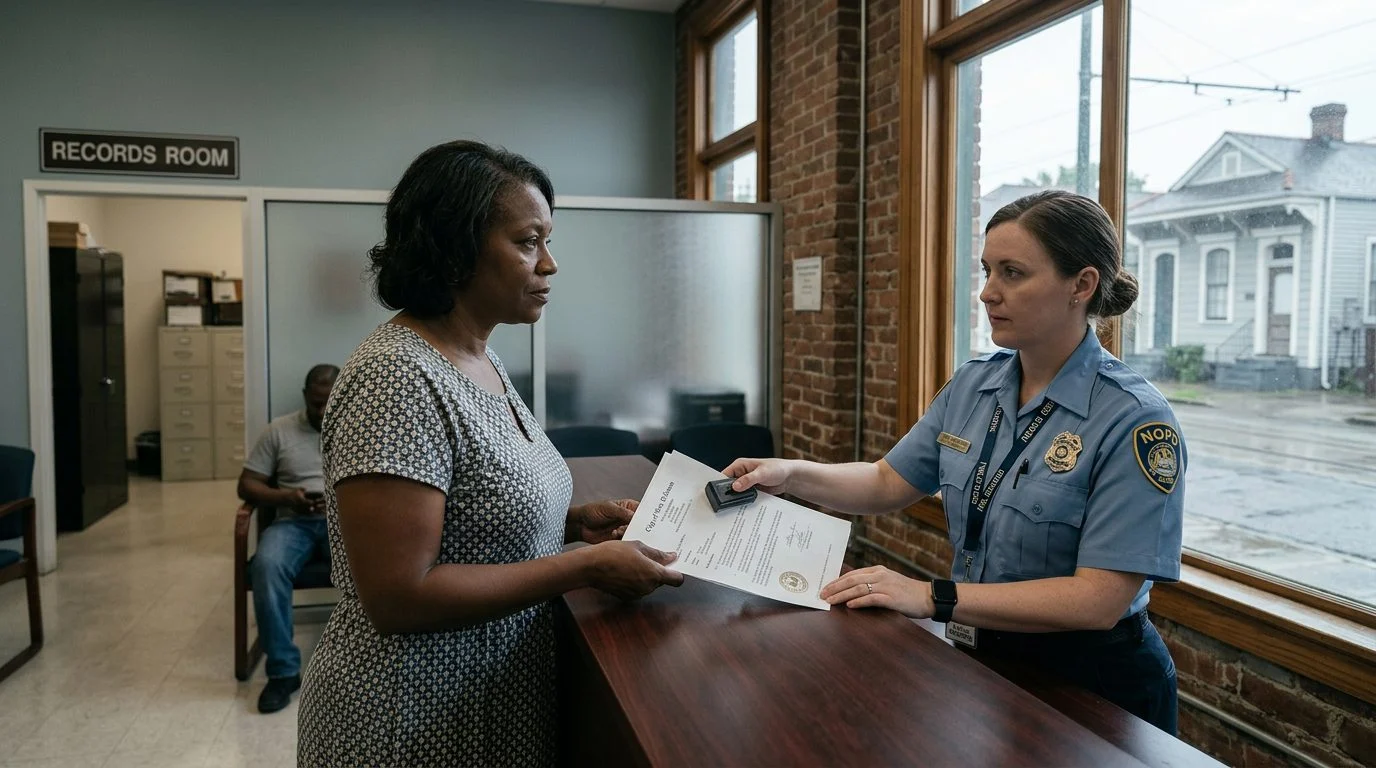
To get a copy of a police report in New Orleans, request it from the agency that investigated the crash, usually the New Orleans Police Department. Louisiana law limits who can receive a crash report, so confirm you’re eligible before you ask.
Where You Are Right Now: Why You Need This Report
A police report is one of the first official records of a crash. You may need it to keep your paperwork in order and to talk with insurers. Some people request it within days, while others wait until the investigation is finished.
This guide walks through the request process in plain steps. It is general information, not legal advice, and the facts of your situation matter.
Przemek Lubecki is the responsible lawyer for this page. Our New Orleans office handles crash injury and wrongful death cases, including truck, car, commercial vehicle, rideshare, and motorcycle crashes.
For broader context, read our guide to truck accident claims in Orleans Parish.
If you're waiting on a report while you recover from injuries or grieve a loved one, you don't have to sort out the next steps alone. Talk it through with our team — the first consultation is free, confidential, and carries no obligation.
What a Police Report Is and Why It Matters After a New Orleans Crash
A police report is the official record of a crash, and it is often the first document that shows the basic facts. Louisiana’s crash-report statute says the reporting forms should disclose the cause, the conditions at the time, and the people and vehicles involved. La. R.S. 32:398 sets out those rules.
The statute also requires a driver in a crash with injury, death, or property damage over five hundred dollars to give information to police at the scene. Details fade fast after a crash. The report keeps driver names, vehicle descriptions, and the location in one official place.
A report is a record, not a final ruling on who was at fault. It can support your account, but each crash turns on its own facts.
Crashes involving trucks or commercial vehicles can produce more records, such as paperwork from the company that operates the truck. A bicyclist struck by a truck raises similar documentation questions, covered in our bicyclist hit by truck in New Orleans guide.
Where Records of New Orleans Police Reports Are Kept
The agency that responded to the crash keeps the report. Under La. R.S. 32:398, a city’s police department investigates crashes inside its limits. State police or the sheriff’s office investigate crashes outside those limits.
This split matters for crashes near the city line. A crash just outside New Orleans goes to state police or the sheriff, unless it happens inside another city or town’s limits. A crash in Kenner or Slidell goes to that city’s police department under the same rule.
For New Orleans crashes, the New Orleans Police Department (NOPD) is the agency to ask. NOPD says eligible non-emergency property-damage incidents in Orleans Parish can be reported online, and the resulting report can be downloaded. See NOPD’s filing page.
A police report from the New Orleans Police Department (NOPD) may be one of several records that help document how a crash happened. Released reports may be redacted to protect privacy or to meet legal limits. The City of New Orleans police reports page explains both points.
If state police handled the crash, the Louisiana State Police traffic records page covers who may request reports, where copies are available, and processing delays.
How to Request a Copy of a New Orleans Police Report, Step by Step
Send the request to the agency that investigated the crash. Be ready to show that you’re allowed to receive it.
- Confirm you’re eligible. Under La. R.S. 32:398, crash reports are confidential. They go only to listed people. That includes the parties to the crash, parents or guardians of a minor party, insurers of a party or an insurance support organization under contract to provide claims and underwriting, healthcare providers (or their agents) who rendered healthcare services to a party, succession representatives of those parties, attorneys for the parties or succession representatives, and a news-gathering organization that requests documents related to a specific crash.
- Gather the details. Use the date, time, location, and names. The next section lists what helps most.
- Submit the request. For eligible non-emergency property-damage incidents in Orleans Parish, you can use NOPD’s online system. Other requests go through the City’s public-records process.
- Watch for the response. On request, crash reports must be made available within seven working days after the crash investigation is complete. Until the investigation ends, that count does not begin.
Fees also apply. The same statute covers fees for copies and for crash photographs and videos, and amounts can change. Use the figure the agency gives you when you request.
A common mistake is sending the request to the wrong agency. Confirm which agency responded before you submit.
Information to Have Ready Before You Request the Report
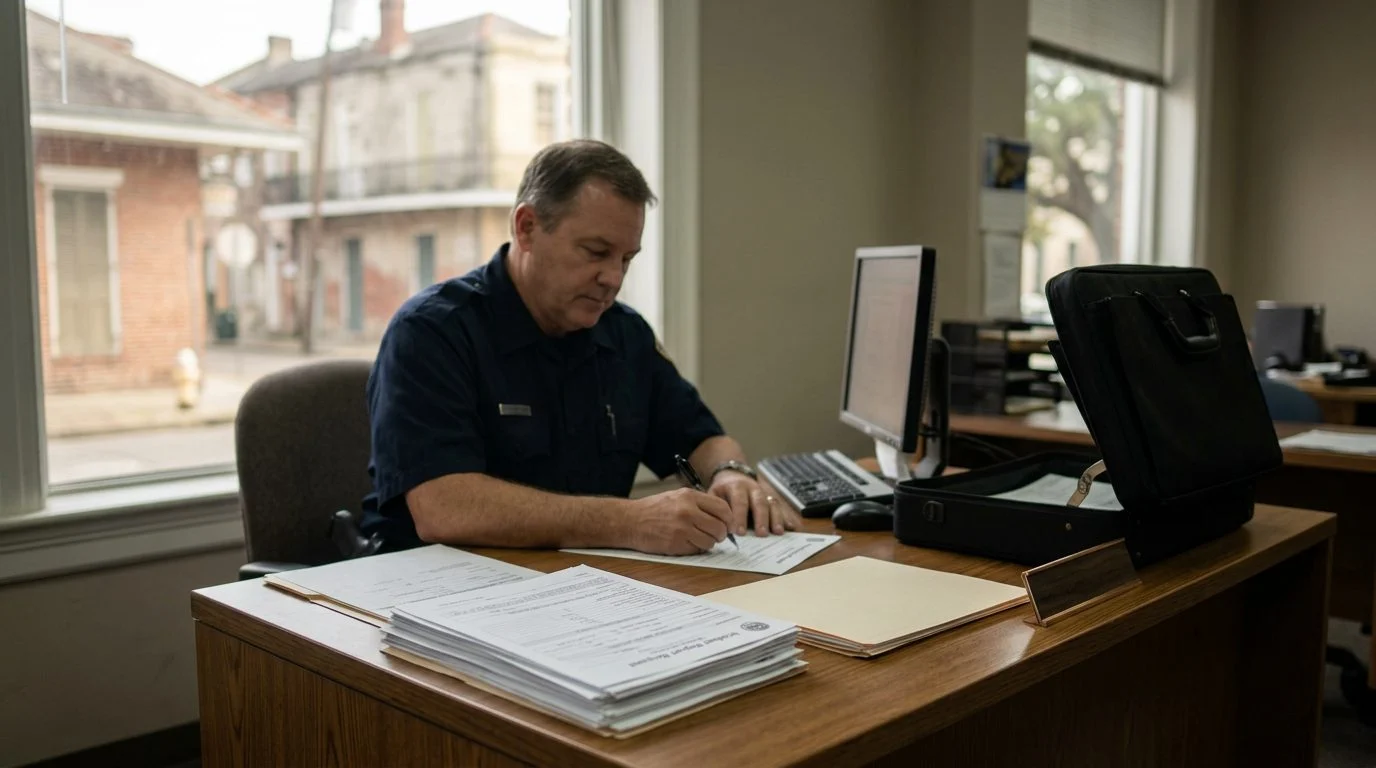
Having the right details ready helps match your request to the correct record. Gather these before you submit:
- The date and time of the crash
- The intersection or street address
- Names of the drivers and a description of each vehicle
- License plate numbers, if you have them
- Any report or incident number, from a ticket, insurance letter, or tow receipt
- For a truck or commercial vehicle, the company name and any USDOT number on the vehicle
Keep photos, medical records, and letters in one folder. Dates and names on every document make the timeline easier to follow.
What to Do If the Report Is Delayed, Incomplete, or Not Yet on File
If the report isn’t ready, keep a written log. Note the date you asked, how you asked, and the name of each person you spoke with. That record helps if questions come up later.
Released reports may leave out some details. Your own notes, photos, and medical records help fill those gaps. Don’t assume the report will arrive on its own. Ask for it in writing.
Timing matters too. Louisiana law generally sets a two-year deadline for delictual (fault-based) actions. It generally runs from the day injury or damage is sustained. See La. Civ. Code art. 3493.1. Exceptions exist, so the facts of your case decide which rule applies. Waiting for a report does not change when that period starts.
For a crash with no report on file, our guide on truck accident claims with no police report covers that situation.
How long does a crash report take?
On request, Louisiana law says crash reports must be made available within seven working days after the investigation is complete.
Does a police report decide who was at fault?
It is a record of the crash, not a final decision on fault.
Not sure what your next step is?
Talk it through with our team — the first consultation is free, confidential, and carries no obligation.
Talk With Our New Orleans Office About Your Crash
If you’re waiting on a report while you recover from injuries or grieve a loved one, you don’t have to sort out the next steps alone. Our New Orleans office is glad to talk through the crash, the report, and your options.
Call 855-LUBECKI (Office in New Orleans) to request a free case evaluation. The first consultation is free, confidential, and without obligation to continue.
Przemek Lubecki is the responsible lawyer for this page. American Trial Lawyer, LLC may associate or refer a case to other law firms.
How We Can Help
Review the Report With You
We can walk you through the details in your crash report and explain what each section means.
Plain-Language Answers
Legal terms and official forms can be confusing. We explain them clearly, without pressure.
Focused on Injured People and Families
We represent people seriously hurt in truck, commercial vehicle and car crashes, and families in wrongful death cases.
A Free, Confidential First Step
The first consultation is free, confidential and without obligation to continue.
Keep in Mind
A police report is a record of what the officer saw and was told at the scene. It is not a final decision on fault. American Trial Lawyer may associate or refer a case to other law firms.
Before You Call
Write Down What You Remember
Note the date, time, location, weather and the names or badge numbers you saw while the details are fresh.
Gather Your Paperwork
Keep medical records, photos, repair estimates and any letters from insurance companies in one place.
Note the Report Number
Having the report or incident number on hand helps us discuss your crash clearly from the start.
Ask Before You Sign
Speak with a lawyer before giving a recorded statement or signing anything from an insurer.