
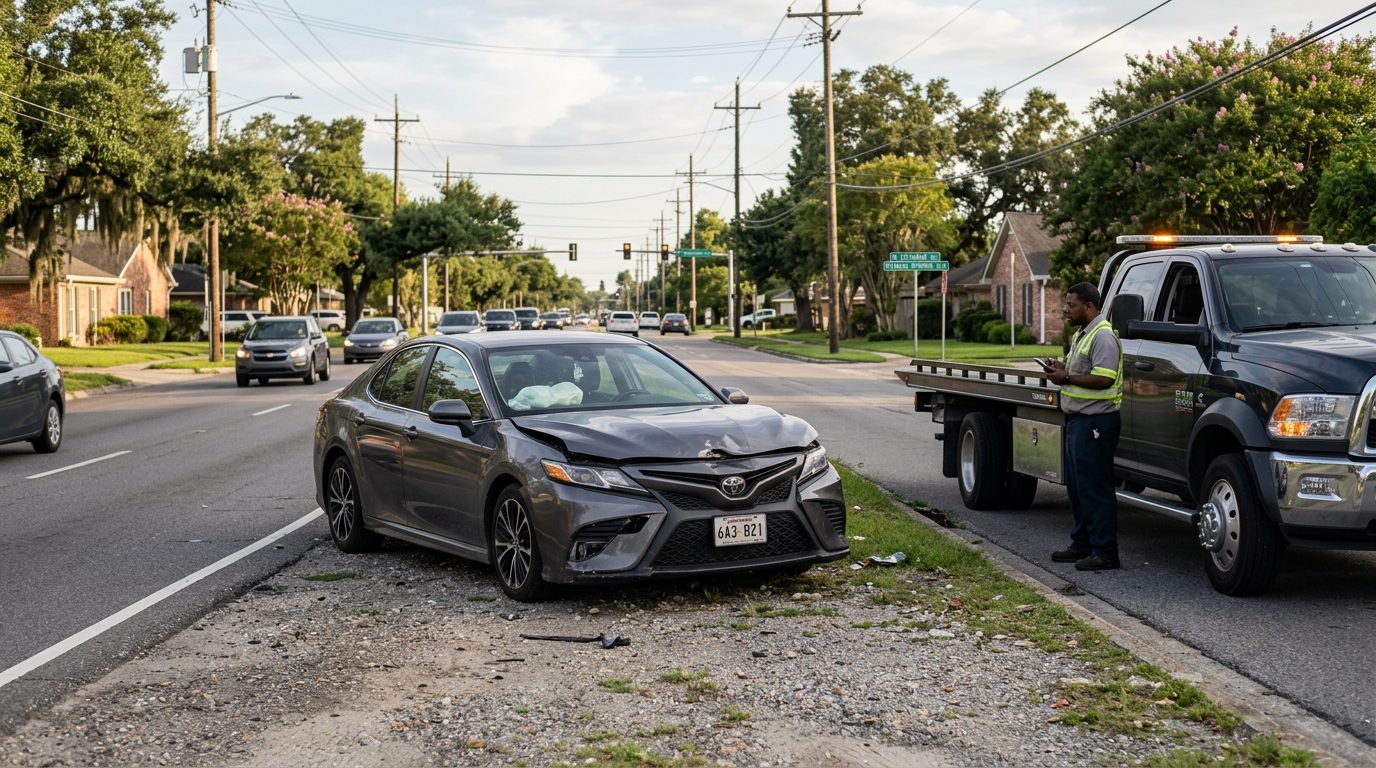
Truck Accidents | New Orleans, Louisiana
Truck Crash With No Police Report in New Orleans? Talk It Through With Przemek Lubecki
A missing report is a common worry after a serious truck collision. Here is a plain-language look at the other evidence that can matter and the steps people often take next.
By Przemek Lubecki · Published November 19, 2026
If you were hurt in a truck crash and no report was made, you may be looking into New Orleans accident reports and wondering what comes next. In many cases, a truck accident claim can still go forward without one.
Short Answer: A Missing Police Report Does Not Automatically End a Claim
A truck accident claim can still be pursued without a police report in many cases, because the claim rests on proving what happened and who was responsible. Whether it works depends on the facts of the crash, your injuries, and the evidence you can gather. This page is general information, not legal advice, and no outcome is promised.
If you are deciding whether to pursue a claim for yourself or for a family member, you do not have to sort out the evidence alone. Talk it through with our team — the first consultation is free, confidential, and carries no obligation.
What a Police Report Does and Does Not Establish
A police report, or New Orleans accident report, records the basics: the date, time, place, vehicles, people involved, and the officer’s first observations. It is one piece of evidence, not a final decision on fault. Its absence does not prove that a crash did not happen. Crash reports can be one useful part of the information relevant to a case. Details about requesting a police report are available from the New Orleans Police Department. The Louisiana State Police also publishes its crash-report access procedures. Under La. R.S. 32:398, crash reports are confidential and are made available only to the parties, their insurers, and their attorneys, among others. A report that is late or incomplete can be challenged, which is why other proof often carries real weight.
Other Evidence That Can Support a Truck Accident Claim
Several kinds of evidence can support a claim when no report exists. Start with what is easiest to lose.
- Witnesses: names, phone numbers, and anything they said at the scene or afterward.
- Photos and video: the scene, vehicle damage, road conditions, traffic signals, and any dashcam or phone footage.
- Medical records: first treatment and how symptoms were described over time.
- Your own account: written while memory is fresh, including the route, the weather, and what the truck was doing before impact.
Trucking company records need early attention. Federal rules require a motor carrier to keep driver duty-status records and supporting documents for at least 6 months from receipt (49 C.F.R. § 395.8). Records may be destroyed after the required retention periods, at the company’s discretion, but this does not excuse compliance with any other governmental body’s longer retention requirements (49 C.F.R. § 379.3). Federal hours-of-service rules limit driving time and require rest breaks for property-carrying drivers. Asking for these records early matters.
Why Timing Matters: Louisiana Filing Deadlines
Louisiana generally allows two years to file most injury claims, counted from the day the injury happens. Under La. Civ. Code art. 3493.1, delictual (tort) actions are subject to a two-year liberative prescription (filing deadline) that starts when the injury or damage is sustained. The article has an exception: prescription does not run against minors or interdicts in actions involving permanent disability and brought under the Louisiana Products Liability Act or state product liability law, so confirm the deadline for your facts early. Missing a deadline can prevent a claim from going forward. A missing police report should not delay that conversation. Under the version of La. Civ. Code art. 2323 effective January 1, 2026, a person who suffers injury partly from their own negligence and partly from another’s fault cannot recover damages if their own negligence is 51 percent or more, unless the other party is an intentional tortfeasor. If a person’s own negligence is less than 51 percent, the damages recoverable are reduced in proportion to that negligence, unless the other party’s fault is that of an intentional tortfeasor, in which case the claim for recovery of damages is not reduced.
Commercial Vehicle and Wrongful Death Situations
Commercial crashes can involve more than one responsible party, such as a driver, a carrier, or an employer. That shapes which records matter. Louisiana law makes a person responsible for damage caused by negligence (La. Civ. Code art. 2316). Under La. Civ. Code art. 2320, employers may be answerable for damage their employees cause in the work they were hired to do, but only when the employer might have prevented the act that caused the damage and did not.
If someone dies, certain family members may sue. Under La. Civ. Code art. 2315.2, the surviving spouse and children come first. If there is no spouse or child, the parents may sue (a parent who abandoned the deceased during his minority is deemed not to have survived him), then siblings, then grandparents, in the order the statute sets. The wrongful death right generally runs one year from the death or two years from the injury, whichever is longer; for medical malpractice actions, it runs one year from the death. Damages may include loss of consortium, service and society (La. Civ. Code art. 2315). La. Civ. Code art. 2315 reads: “Damages do not include costs for future medical treatment, services, surveillance, or procedures of any kind unless such treatment, services, surveillance, or procedures are directly related to a manifest physical or mental injury or disease.” When the injured person cannot speak for themselves, a family member may need to gather records, witness names, and medical details.
Practical Steps to Take Now
Keep every medical record, bill and appointment note, even for care that seems minor. Save photos, messages, and the names of anyone who saw the crash. Write down what you remember while it is fresh.
Avoid giving a recorded statement to an insurance company or a trucking company before getting advice on your own situation. If you do give a statement, Louisiana law requires the person who took it to give you a true and complete copy within twenty days after a written demand (La. R.S. 13:3732).
If a police report exists, bring a copy or its report number to your consultation. That way it can be reviewed with the rest of your evidence.
Not sure what your next step is?
Talk it through with our team — the first consultation is free, confidential, and carries no obligation.
How Przemek Lubecki and the New Orleans Office Can Help
Przemek Lubecki is the responsible lawyer for this page. The firm’s New Orleans office handles truck accidents, commercial vehicle accidents, car accidents, rideshare accidents, motorcycle accidents, wrongful death, brain injury and negligent security cases. The firm may associate or refer a case to other law firms. Any co-counsel is not part of American Trial Lawyer, LLC. The firm does not promise any result, settlement or amount. Our team can review the facts of your crash with you, including whatever evidence exists today.
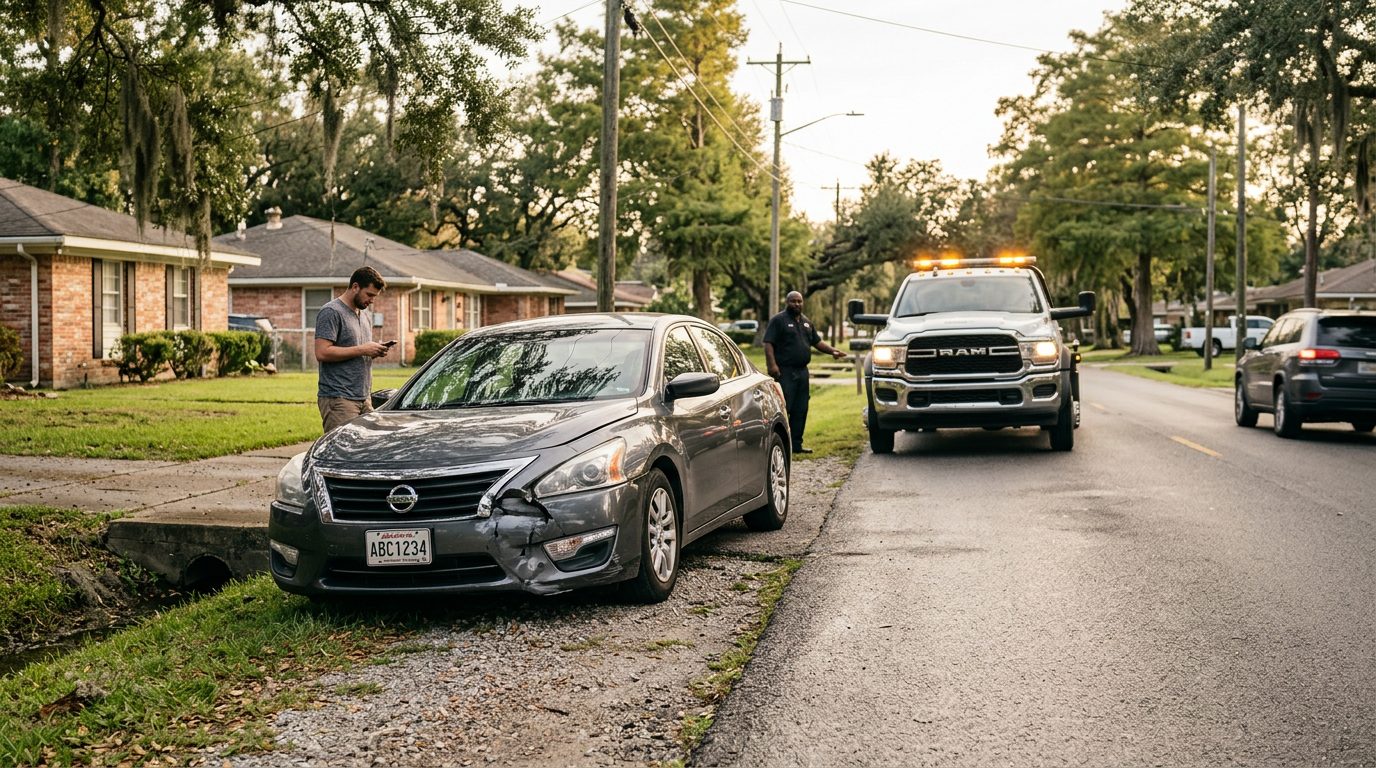
Talk With the New Orleans Office About Your Crash
Being hurt in a crash you did not choose, with no report to point to, can leave you unsure what to do. If you are deciding whether to pursue a claim for yourself or for a family member, you do not have to sort out the evidence alone.
Can a truck accident claim go forward with no police report?
In many cases, yes. Witness accounts, photos, medical records and company records can support a claim.
How long do I have to file?
For most injury claims, Louisiana generally allows two years from the injury (La. Civ. Code art. 3493.1). Wrongful death claims follow their own timing rule.
To talk through your facts, call 855-LUBECKI to reach the New Orleans office, or request a free case evaluation. The first consultation is free, confidential and without obligation to continue.
How We Approach a Truck Claim Without a Police Report
Gathering the Record
We look at photos, medical records, repair and damage records, and other documents that describe what happened.
Identifying Witnesses
Statements from people who saw the crash or its aftermath can help fill in the picture.
Reviewing Company Records
Trucking companies keep logs, maintenance files and driver records that may bear on how a collision occurred.
Keeping Your Health First
Your medical care comes first. We help you organize your records while you focus on recovery.
Before You Speak With an Insurer
A trucking company's insurance adjuster may contact you quickly. Consider speaking with a lawyer before giving a recorded statement or signing any release.
Ways to Start
Request a Free Case Evaluation
Share the basic facts of your crash and we will tell you how we can help.
Call 855-LUBECKI
Speak with our New Orleans office about your situation. The first consultation is free, confidential and without obligation to continue.
Bring What You Have
Photos, medical paperwork, the other driver's information and any letters from insurers are useful, even if you have no police report.
Office in New Orleans: Przemek Lubecki Is Responsible for This Page. The First Consultation Is Free, Confidential and Without Obligation to Continue.
Related practice areas
- New Orleans Bicyclist Hit by Truck: Rights and Next Steps