
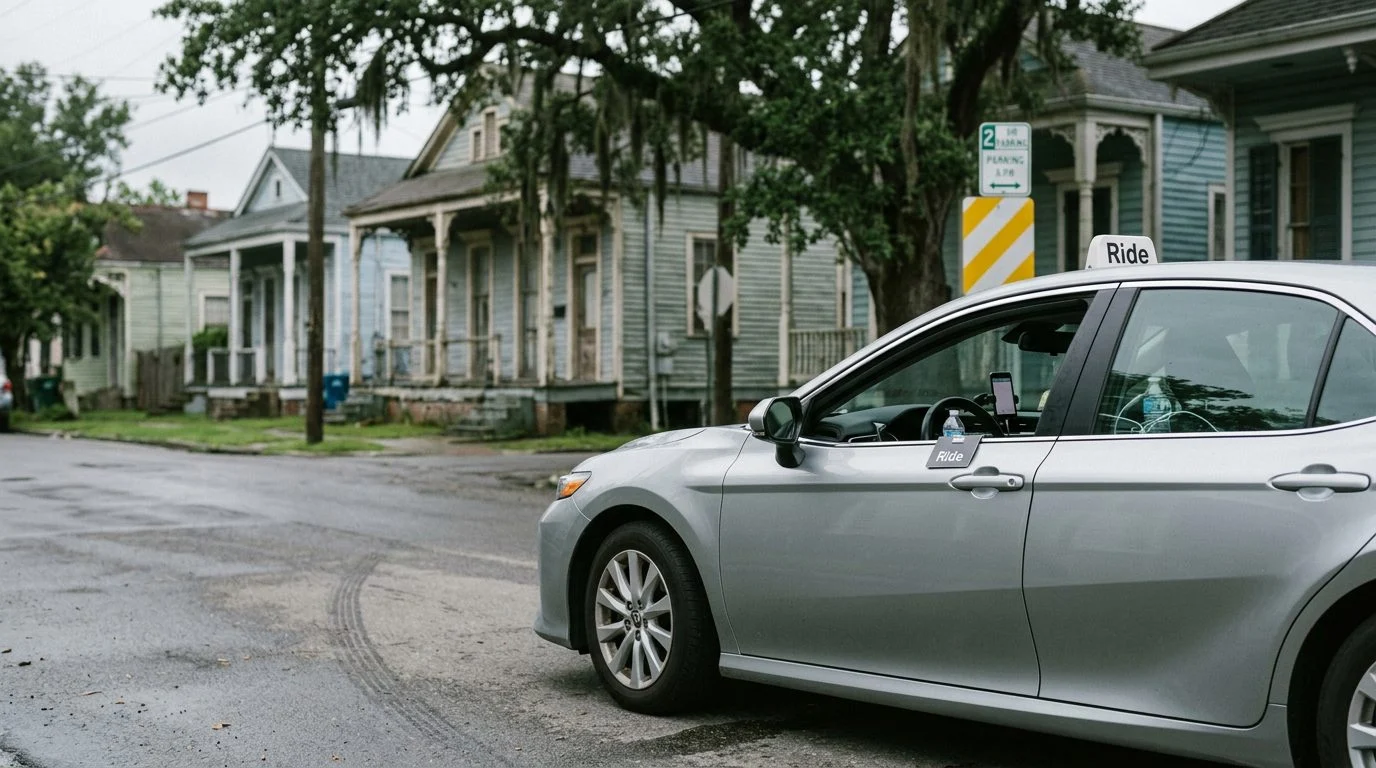
Rideshare Accidents | Wrongful Death | New Orleans, Louisiana
Lost a Loved One in an Uber or Lyft Crash?
Families often have questions about who can act for their loved one and what options may be open to them. Przemek Lubecki and our team can talk those questions through with you.
By Przemek Lubecki · Published November 18, 2026
Losing someone in a crash is hard to absorb. When that person was riding as a passenger in an Uber or Lyft, many families also ask whether they can take legal action at all.
In many cases, yes. Louisiana law lets certain family members bring a wrongful death claim when a death is caused by another person’s fault. Whether a claim exists depends on the facts of the ride and the crash.
Short Answer: Can a Family Bring a Claim?
Often, yes, when another person’s negligence helped cause the death. Louisiana gives families two separate kinds of claims, and they cover different losses.
A wrongful death claim covers the losses the family itself suffered, such as the loss of society and services of the person who died. A survival action covers the injuries and damages the person had before dying. The survival action is governed by La. Civ. Code art. 2315.1, and it follows the same order of family members.
Many online pages blur these two claims together. It helps to know which one applies to your family’s situation. Grief comes first for most people, and it’s normal to need time before you can think about legal steps.
If your family is facing a sudden loss after an Uber or Lyft trip, you don't have to work out the legal questions alone, and our team is ready to talk with you about your situation. Talk it through with our team — the first consultation is free, confidential, and carries no obligation.
Who Can File a Wrongful Death Lawsuit in Louisiana?
The law sets an order of family members who may sue. The order is set out in La. Civ. Code art. 2315.2.
First come the surviving spouse and children. They may sue together, or either one may sue alone. If the person left no spouse or child, the surviving father and mother, or either of them, may sue, except that a father or mother who abandoned the deceased during his minority is deemed not to have survived him.
Brothers and sisters may sue only if the person left no spouse, child, or parent.
Adopted relatives count the same way as relatives by birth under the statute. A parent who abandoned the child during the child’s minority is treated as not having survived. The statute presumes abandonment when a parent has left a child for at least twelve months and failed to provide care and support, without just cause.
Under La. Civ. Code art. 2315.1, when a person injured by an offense or quasi offense dies, the right to recover damages for that injury survives for one year from the death or two years from the day the injury was sustained, whichever is longer, in favor of specified surviving family members. When no class of beneficiary exists, the deceased’s succession representative may pursue the deceased’s own damages, under La. Civ. Code art. 2315.1.
Who May Be Liable After an Uber or Lyft Crash?
Any person whose negligence helped cause the crash may be responsible. Louisiana law says every person is responsible for damage caused by negligence, imprudence, or want of skill. See La. Civ. Code art. 2316.
That can include the driver of the rideshare vehicle, the driver of another vehicle, or another party whose conduct contributed to the crash. The rideshare company may also be a possible party. Whether it is depends on the app status at the time of the crash and the insurance rules that apply, which are covered below.
Louisiana also has rules for how several at-fault parties answer for harm. When two or more people are liable, and liability is not solidary under the rule for those who conspire to commit an intentional or willful act, each is responsible only for his own degree of fault. See La. Civ. Code art. 2324. See La. Civ. Code art. 2324.
That is why identifying every responsible party matters. A family may not know at first who contributed to the crash. Early questions can help clear that up.
How Rideshare Insurance Coverage Works in Louisiana
Louisiana sets minimum insurance amounts that depend on what the driver is doing in the app. The rules are in La. R.S. 45:201.6.
Under La. R.S. 45:201.6, automobile insurance during a prearranged ride shall be in the amount of not less than one million dollars for death, bodily injury, and property damage, and a transportation network company may satisfy this requirement through a driver’s policy only if the company verifies that the policy is maintained by the driver and is specifically written to cover the driver’s use of a vehicle related to a transportation network company’s digital network.
If a driver’s insurance has lapsed or does not provide the required coverage, the rideshare company must provide it. That coverage begins with the first dollar of a claim, and the company has the duty to defend the claim. Coverage under the company’s policy does not depend on a personal insurer first denying the claim.
Personal auto policies can be different. La. R.S. 45:201.7 lets insurers exclude coverage while a driver is logged on to the app or on a prearranged ride. It does not require a personal policy to cover those times.
Keep trip receipts, app screenshots, and any letters from insurers. These records can help show what the driver was doing when the crash happened.
Can I Sue Both Drivers If I Am a Passenger?
A family may be able to pursue more than one party when more than one person’s fault contributed to the crash. Louisiana looks at the fault of everyone involved. This rule is in La. Civ. Code art. 2323.
The fault of each person is determined whether or not that person is a party to the lawsuit. Insolvency, ability to pay, or immunity by statute does not change that determination.
The same article reduces recovery when the injured person’s own negligence contributes to the harm, but his claim is not reduced if the other fault is that of an intentional tortfeasor. Under the current text, which took effect January 1, 2026, a person whose own negligence is 51 percent or more cannot recover damages. Below 51 percent, damages are reduced in proportion to that share.
Each party’s share turns on what happened in the crash. Driver actions, road conditions, and the app’s role may all matter. A careful review of the facts helps show how each share is judged.
What Evidence Is Used to Prove a Wrongful Death Claim?
Proof usually starts with the crash report and the trip records. Medical findings about how the death happened often come next.
Under La. R.S. 32:398(I)(1)(a), the crash reports required by that section, and the information they contain, are confidential and may be made available only to the parties to the crash, parents or guardians of a minor who is a party to the crash, insurers or an insurance support organization under contract to provide claims and underwriting for a party that is the subject of the report, any healthcare provider, or their agent, that rendered healthcare services to a party, the succession representatives of those parties, the attorneys of the parties or succession representatives, and news-gathering organizations that request documents related to a specific crash. Under La. R.S. 32:398, upon request, crash reports must be made available to those persons within seven working days following the completion of the crash investigation.
The Louisiana State Police traffic records unit explains how crash-report access works, including processing delays.
Other useful evidence includes photos and video, vehicle data, witness statements, app trip records, and medical examiner findings. Toxicology and cause-of-death reports can be central. They show how the crash led to the death.
Families should also keep phone records, messages, and app notifications. These can be lost over time, so saving them early matters.
Damages in a wrongful death case can include loss of society, service, and consortium. These are recoverable by the same family members who could bring the claim, under La. Civ. Code art. 2315.
Not sure what your next step is?
Talk it through with our team — the first consultation is free, confidential, and carries no obligation.
Criminal Charges Versus a Family’s Civil Claim
A criminal case is brought by the government. A wrongful death claim is a civil case brought by the family or the estate.
Criminal cases and civil claims answer different questions. A criminal case asks whether someone broke the law. A civil claim asks who must repair the harm. Louisiana law says a person whose act causes damage to another must repair it when the act was by his fault. See La. Civ. Code art. 2315.
The outcome of one case does not automatically decide the other. The two cases can move on different timelines. Families often feel pressure from both at once, which can make it harder to think clearly.
It can help to write down what you know and keep it in one place. That way, each question can be answered in its own time.
Deadlines and Next Steps for Families
Louisiana sets a filing deadline for wrongful death and survival claims. Missing it can end the claim.
Under the current text of La. Civ. Code art. 2315.2, the right of action expires one year from the death or two years from the day the injury was sustained, whichever is longer, except that for medical malpractice actions it expires one year from the death of the deceased. The survival action follows the same periods under La. Civ. Code art. 2315.1, except that the prescriptive period for medical malpractice survival actions is governed by R.S. 9:5628.
Inheriting the right of action does not extend the deadline. Other rules can affect timing in some cases, so families should not assume the dates are the same for every claim.
Some practical early steps can help. Keep the crash report number. Save trip and payment records. Write down the timeline while memory is fresh. Avoid posting about the crash on social media, since posts can be used in later discussions of the facts.
Talk With Przemek Lubecki About Your Family’s Situation
If your family is dealing with a sudden death after a ride, you don’t have to sort out who can sue and who is responsible on your own. Many families reach this point while still grieving, with questions piling up.
You may be asking whether your family has a claim, who might be responsible, and what insurance applies. Those are fair questions, and they deserve clear answers.
Przemek Lubecki is the responsible lawyer for this page. The firm’s office is in New Orleans, Louisiana. The firm represents families in Orleans Parish, the New Orleans metro area, and across Louisiana.
The initial consultation is free, confidential, and without obligation to continue. La consulta inicial es gratuita, confidencial y sin compromiso de continuar.
Your case may be associated with, or referred to, other law firms. Su caso puede ser asociado con otros despachos de abogados o remitido a ellos.
If you want to talk about your family’s situation, contact this firm for a free case evaluation, or dial 855-LUBECKI.

Frequently Asked Questions
Can the family of an Uber passenger who died in a Louisiana crash file a lawsuit?
Yes, in many cases. Louisiana law allows certain family members to bring a wrongful death claim when a person dies because of another party’s negligence, and whether a claim exists depends on the facts of the crash.
Who can bring a wrongful death claim in Louisiana?
Under Louisiana law, a surviving spouse and children are generally among the family members who may bring the claim, and other relatives may have rights depending on who survived. Because the rules depend on each family’s situation, a lawyer can explain who qualifies.
Who could be responsible when an Uber passenger dies in a crash?
Responsibility may rest with the at-fault driver, another driver, a vehicle owner, or another party whose negligence contributed to the crash. Rideshare insurance can depend on whether the app was on and whether a trip was active, so the coverage often needs careful review.
How long does a family have to file a wrongful death lawsuit in Louisiana?
Louisiana has strict filing deadlines, and the time limit often runs from the date of the crash or death, depending on the details of the case. Because deadlines can be short, families should speak with a lawyer promptly rather than waiting.
What to expect when you reach out
A confidential conversation
Call 855-LUBECKI or send a request online to speak with our office in New Orleans about what happened.
A review of the basic facts
We listen to how the crash occurred, who was involved and what records may exist, so you understand the situation before deciding anything.
Clear answers for your family
The initial consultation is free, confidential and without obligation to continue. We explain the process in plain language.
Respect for your family
We know that a loss like this affects everyone differently. We approach each conversation with patience and care.
Related claims we handle
Wrongful death
When a person dies because of another party's negligence, certain family members may have the ability to bring a claim under Louisiana law.
Rideshare accidents
Crashes involving Uber and Lyft vehicles can involve several parties and insurance layers. We review how those pieces may fit together.
Brain injury and serious injury
When a crash causes lasting harm, families may need to understand both the medical picture and the legal options that may be available.
Important: Evidence can change
Trip records, vehicle data, witness memories and medical documentation can become harder to gather over time. Reaching out early helps preserve your options. Our firm may associate or refer a case to other law firms, and we will tell you if that is likely in your matter.