
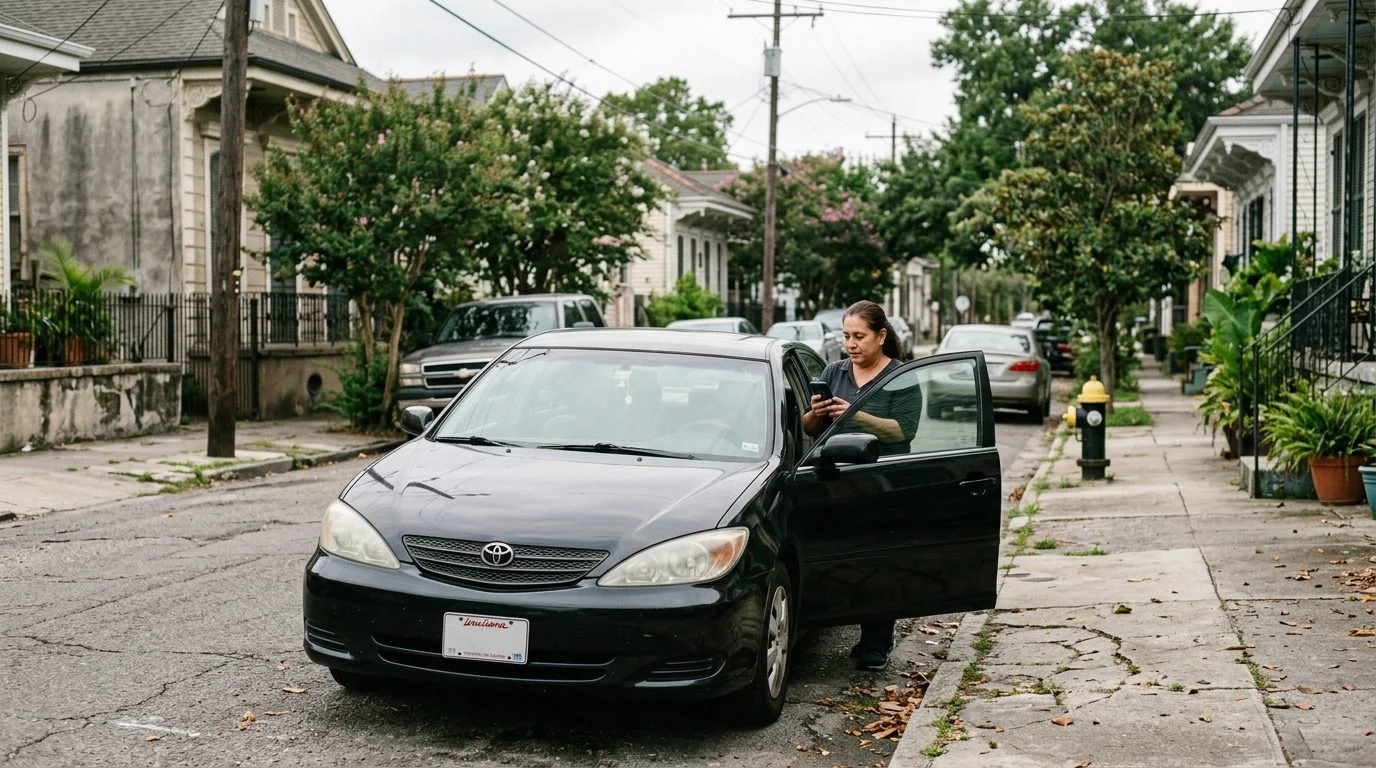
Rideshare Accidents · New Orleans
Hurt in a Rideshare Crash? Start With the App Question
A crash involving an active rideshare trip can bring in more than one insurance policy and more than one set of questions. Knowing what to ask early helps you make sense of it.
By Przemek Lubecki · Published November 19, 2026
If you were hurt in a crash with an Uber or Lyft driver, one of the first questions is whether the driver’s app was on. The app’s status at the moment of the crash is one of the first facts that can help decide which insurance may apply.
Why the Driver’s App Status Can Change Who Pays
The app status at the time of a crash is one of the first facts that can shape which insurance policies may apply to a rideshare accident.
Louisiana starts with general negligence rules. Under the Civil Code, every person is responsible for the damage he occasions by his negligence, his imprudence, or his want of skill. Fault comes first. Insurance is the next question, and that is where the app comes in.
A rideshare driver can be off the app, logged in and waiting, or on an active trip. Each stage can bring different insurance into play. The stage is not a shortcut to an answer. Each crash is reviewed on its own record.
This page was written by Przemek Lubecki, the responsible lawyer for its content. The firm’s office is in New Orleans. The firm serves people in Orleans Parish, the New Orleans metro area, and across Louisiana.
If you're trying to make sense of a crash you did not choose, you do not have to sort out the app records alone. Talk it through with our team — the first consultation is free, confidential, and carries no obligation.

The Three App Stages in Plain Terms
An Uber or Lyft app is usually in one of three general stages: off, on and waiting, or on a trip.
App off. The driver is not logged in to accept rides. The driver’s own personal auto policy is often where an insurance review starts, because the driver was not logged in to the rideshare app.
App on and waiting. The driver is logged in and available but has not accepted a trip yet. This stage is easy to overlook, and it matters just as much as the others.
Trip accepted or passenger aboard. The driver is heading to pick up a rider or is carrying one. This is the stage many people think of first, but it is only one of the three.
Each stage is defined by the company’s app data. Exact timestamps matter. A few minutes can separate one stage from another, so it helps to know when the crash happened, not only that a trip was going on.
What Changes When the App Was On
When the app was on, rideshare company insurance may be part of the picture. The exact stage at impact needs careful review.
Do not assume coverage, or the lack of it, from the stage alone. Two crashes that both start with the app on can have different facts, different parties, and different policies.
The people hurt in a crash also have different connections to the insurance. A passenger, the other driver, and a pedestrian may each stand in a different position. Their claims can point to different policies and different defendants.
Louisiana also has rules about who answers for a driver’s conduct. Under Civil Code article 2320, masters and employers answer for damage caused by their servants in the functions in which they are employed. Responsibility attaches only when the employer might have prevented the act and did not. Whether that rule reaches a particular rideshare driver depends on the facts.
Why Trip Data and Other Evidence Matter
Trip records, phone data, and the crash report are the kinds of evidence that can show what the app was doing.
Trip records held by the rideshare company show the app’s status and timing. A lawyer can request those records as part of a claim, so the timing of that request matters.
Other evidence helps too. Useful items include screenshots of the app on your phone, photos of the vehicles and dashboards, and the police report. Witness names and contact details matter because memories fade. Medical records that tie your injuries to the crash, along with dates of each treatment, support the claim.
Under La. R.S. 32:398, the driver must give his name, address, and vehicle registration number to anyone injured in the crash. On request, the driver must also show his license or permit to drive, if available, to any injured person, to the driver or occupant of or person attending any vehicle or other property damaged in the crash, or to any police officer at the scene of the crash or who is investigating the crash. Under La. R.S. 32:398(I)(1)(a), crash reports and the information in them are confidential and may be released only to the parties to the crash, parents or guardians of a minor party, insurers of a party or an insurance support organization under contract to provide claims and underwriting, any healthcare provider or their agent that rendered services to a party, succession representatives, the attorneys of the parties or succession representatives, and news-gathering organizations requesting documents about a specific crash. Under La. R.S. 32:398(I)(1)(a), when the listed persons request a crash report, it must be provided to them within seven working days following completion of the crash investigation.
Preserve your phone. Do not delete app history, messages, or photos from the day of the crash.
When the At-Fault Driver Has No Insurance
If the at-fault driver has no insurance, your own auto policy may include uninsured motorist coverage that can apply.
Under La. R.S. 22:1295, a choice to reject this coverage, select lower limits, or select economic-only coverage must be made only on a form prescribed by the insurance commissioner and provided by the insurer. The named insured or a legal representative must sign it.
The form matters, so the paperwork behind your policy deserves a close look. A lawyer can review the policy and any selection form with you.
Under La. R.S. 9:5629, actions for damages under the uninsured motorist provisions of a motor vehicle policy are prescribed by two years from the date of the accident.
App status can still matter when insurance is disputed. Whether a rideshare policy applies may turn on the stage, so the trip records and other evidence described above remain important even when the at-fault driver is uninsured.
Is Uber Operating in New Orleans?
Whether a ride service operates in New Orleans is a separate question from who pays for one trip.
A ride service being available in a city and the insurance for a single crash are different things. A reader asking about the city often needs the second answer. For a particular crash, the questions stay the same: what the app showed at impact, who was involved, and what records exist.
Write down the trip details you have. Include the pickup point, the drop-off point, the time, and what the app screen showed when you can recall it. Note the names of anyone who was in the vehicle or nearby. These details help show the stage of the trip.
Do not rely on memory alone. A written record made soon after the crash is easier to match against app data and the crash report later.
Not sure what your next step is?
Talk it through with our team — the first consultation is free, confidential, and carries no obligation.
Why Timing Matters After a Rideshare Crash
Louisiana sets a filing deadline, called prescription, for most injury claims. Early review helps you protect that deadline.
Under La. Civ. Code art. 3493.1, delictual (tort) actions are subject to a two-year prescription. It runs from the day the injury or damage is sustained. The statute has exceptions, so the exact date should be reviewed against your facts.
Tort (delictual) claims have a two-year liberative prescription that runs from the day the injury or damage is sustained, as explained above.
Evidence also changes over time. App data is kept by a company, witnesses move, and memories fade. Write down what you remember while it is fresh. Keep a record of medical visits, bills, and missed work.
Lyft Drivers and the Same Questions
Lyft crashes raise the same app-status questions, and the same stages and evidence matter in general terms.
A Lyft driver may be off the app, logged in and waiting, or on a trip, just as an Uber driver can be. The insurance that applies still depends on the stage, the facts, and the company’s records.
Louisiana uses modified comparative fault for accidents on or after January 1, 2026. Under La. Civ. Code art. 2323, a person whose share of fault is 51% or more recovers no damages. A person below 51% has damages reduced in proportion to their own share of fault. Fault is determined for everyone who contributed to the injury, whether or not they are parties to the case.
If a loved one died in a rideshare crash, the crash report rules described above also apply to succession representatives and their attorneys. The firm also handles wrongful death cases.
Frequently Asked Questions
Here are short answers to common questions about Uber and Lyft app status and insurance.
Does Uber insurance cover accidents?
It depends on the app stage and the facts of the crash. The app’s status at impact is one of the first facts to check.
Can you sue an at-fault driver with no insurance?
You may have a claim against the at-fault driver for negligence. Your own uninsured motorist coverage may also apply, and a lawyer can review the policy with you.
How long do you have to file a claim?
Louisiana generally gives two years from the date of injury for tort claims (La. Civ. Code art. 3493.1). Tort (delictual) claims run two years from the day the injury or damage is sustained.
Talk With Przemek Lubecki About Your Crash
If you’re trying to make sense of a crash you did not choose, you do not have to sort out the app records alone.
You may be reading this for yourself, or for a parent, spouse, or friend who was hurt and does not know what the app showed. Not knowing can make every next step feel uncertain.
Call 855-LUBECKI to reach the New Orleans office, or request a free case evaluation through the contact form. The first consultation is free, confidential, and without obligation to continue.
Przemek Lubecki and the New Orleans office may associate or refer a rideshare case to other law firms when the case warrants it.
Before You Talk to an Insurer
Insurance adjusters for rideshare companies and other drivers may contact you soon after a crash. Consider speaking with a lawyer before you give a statement or sign any paperwork.
Information That Can Help Your Case
Your Trip Details
Note the time, pickup and drop-off points, and whether the app showed a trip in progress. Screenshots taken soon after the crash can be useful.
Photos and Scene Notes
Photograph vehicle damage, the road, traffic signs and any visible injuries. Write down what you remember while it is fresh.
Medical Records
Keep every visit, test result, prescription and bill. Follow the care plan your doctors recommend, even if you feel better at first.
Police and Witnesses
Save the crash report number and the names and contact details of anyone who saw what happened.
How the Firm Works With You
Przemek Lubecki Is Responsible for This Page
Przemek Lubecki, a New Orleans trial lawyer, is the responsible lawyer for the content on this page and leads the firm's work on personal injury cases.
New Orleans Office
The firm's office is in New Orleans, and the firm serves people across Orleans Parish, the New Orleans metro area and Louisiana.
Referrals Are Possible
The firm may associate or refer a case to other law firms. If that happens, we will tell you.
A Free First Conversation
We will listen to what happened, answer your questions about the next steps, and talk through your options.