
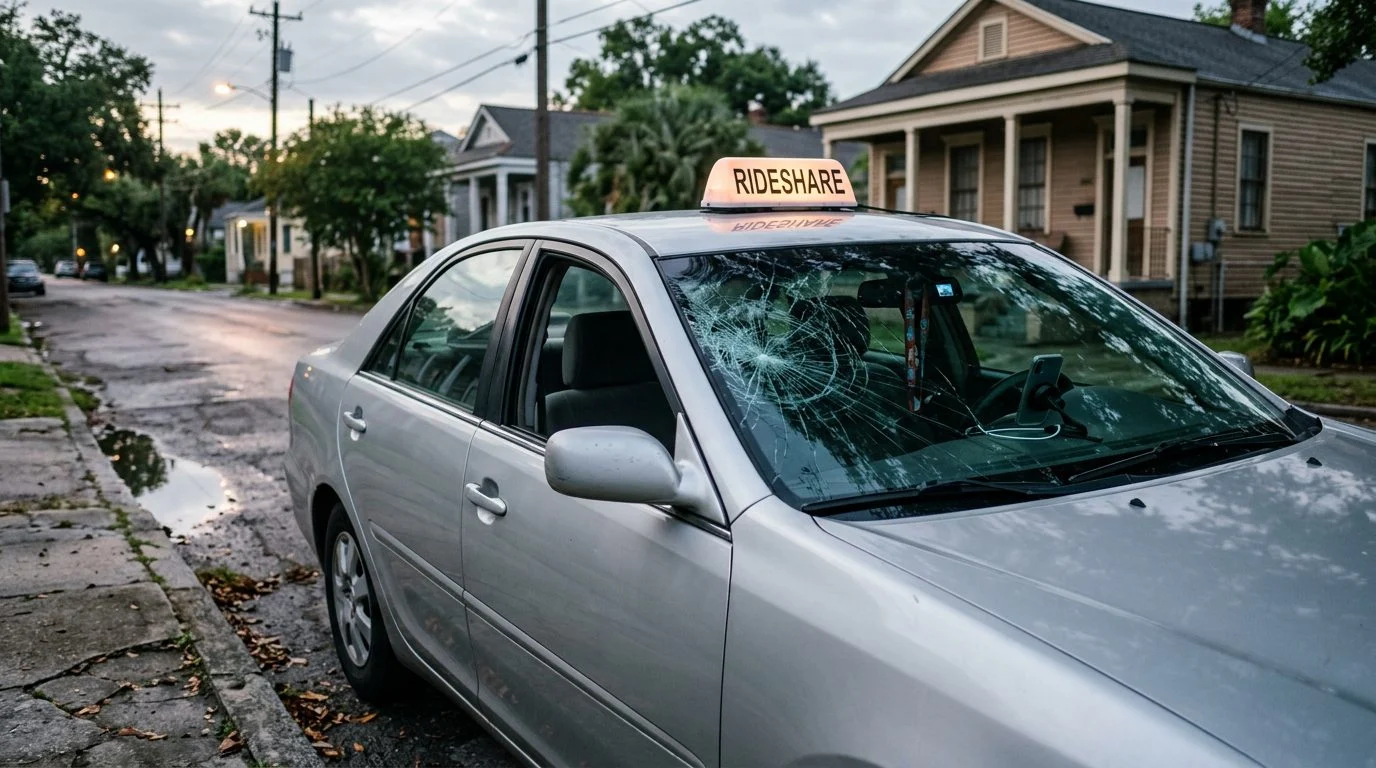
Rideshare Accidents | New Orleans, Louisiana
Hurt in a Lyft or Uber? Know Your Options in Louisiana
Przemek Lubecki and our team at American Trial Lawyer, LLC, based in our New Orleans office, help people injured while driving for or riding with rideshare services understand where they stand.
By Przemek Lubecki · Published November 18, 2026
Being hurt in a crash while you drive for Lyft or Uber can mean pain, missed shifts and insurance questions you never expected. In Louisiana, you may have options against the at-fault driver, and rideshare insurance may also apply, depending on what your app was doing when the crash happened. Here is a plain-language walk through the main points.
If You Were Hurt Driving for Lyft or Uber, Start Here
Your first priorities are your health and the facts from the scene. Those steps protect you and any claim you may bring later.
Przemek Lubecki is the responsible lawyer for this content, which our New Orleans office prepared for people hurt in Orleans Parish, Jefferson Parish and across Louisiana. Crashes during rideshare work raise insurance questions most drivers have never faced. You may be dealing with pain, lost income and bills that keep arriving, while the app still asks if you’re available.
Many people feel they must sort out everything at once. You don’t. The order of the next steps matters more than speed.
If a crash while you were driving for Lyft or Uber left you hurt, you don't have to sort out the insurance alone, and our New Orleans office is glad to talk it through. Talk it through with our team — the first consultation is free, confidential, and carries no obligation.

Protect Your Health and the Facts First
Get a medical evaluation promptly, even when symptoms seem mild, and keep the facts from the scene.
Some crash injuries don’t show up right away. MedlinePlus notes that motor vehicle accidents can cause spinal cord injuries, which need immediate medical attention (car accident injuries). Keep every visit, referral and prescription record. Those records show what care you needed and when.
Louisiana law requires a driver in a crash that causes injury to give his or her name, address and vehicle registration number to anyone injured. The driver must also show a license on request, if one is available (La. R.S. 32:398). A police report is the official record of the crash. Under the same statute, crash reports are confidential and available only to the parties to the crash, parents or guardians of a minor who is a party to the crash, insurers of any party that is the subject of the report, any healthcare provider, or their agent, that rendered healthcare services to a party that is the subject of the report, the succession representatives of those parties or the attorneys of the parties, or a news-gathering organization that requests documents related to a specific crash. Upon request, they are made available within seven working days after the investigation is completed.
When it’s safe, photograph the vehicles, the road and any visible injuries. Write down the time, the route and the names of any witnesses while your memory is fresh. Track your pain, missed shifts and tasks you can’t do.
Why Your App Status at the Time of the Crash Matters
The app status at the moment of the crash often decides which rideshare insurance may apply.
Louisiana’s rideshare insurance law uses timing periods. It refers to the pre-trip acceptance period and to a prearranged ride, and it sets different minimums for each (La. R.S. 45:201.6). Under La. R.S. 45:201.6, automobile insurance during a prearranged ride shall be in the amount of not less than one million dollars for death, bodily injury, and property damage, and a transportation network company may satisfy that obligation through a driver’s policy only if the company verifies that the policy is maintained by the driver and is specifically written to cover the driver’s use of a vehicle related to the company’s digital network. Under La. R.S. 45:201.6, automobile insurance during the pre-trip acceptance period shall be in the amount of not less than fifty thousand dollars for death and bodily injury per person, not less than one hundred thousand dollars for death and bodily injury per incident, and not less than twenty-five thousand dollars for property damage.
Those numbers are the statute’s minimums. They are not a measure of what any claim is worth.
A single shift can move from waiting, to accepting a request, to carrying riders. That makes the timing easy to lose track of. Keep app screenshots, trip receipts and any records that show when you went online, accepted a request or began a ride. Write down the times you remember, then compare them with the time on any police report.
Whether the app status changes which coverage applies depends on the facts of your crash.
How Your Personal Auto Policy May Fit In
Your personal auto policy may exclude coverage while you’re logged on or on a ride, because Louisiana lets insurers write those exclusions.
Under La. R.S. 45:201.7, insurers that write auto insurance in Louisiana may exclude coverage under a personal policy for loss during those periods. The exclusion can reach bodily injury liability, uninsured and underinsured motorist coverage and medical payments coverage. The same statute says nothing in it requires a personal policy to cover a driver who is carrying riders for pay.
Rideshare company insurance works differently. The statute says that coverage does not depend on a personal insurer first denying a claim (La. R.S. 45:201.6). If a driver’s insurance has lapsed or does not provide the required coverage, the company must provide it starting with the first dollar of a claim.
Uninsured and underinsured motorist coverage has its own rules under La. R.S. 22:1295. Medical payments coverage on your own policy can also matter. Gather your policy and any rideshare insurance papers so you have them in hand.
Who Else May Be Responsible for Your Injuries
The other driver is often the first party to consider, but other parties may share responsibility depending on how the crash happened.
Louisiana law determines the fault of everyone who caused or contributed to an injury, whether or not that person is a party to the lawsuit (La. Civ. Code art. 2323). Under the version of that article that took effect January 1, 2026, a person found 51% or more at fault cannot recover damages. A person found less than 51% at fault has damages reduced in proportion to that fault, except when the injury results partly from the fault of an intentional tortfeasor, in which case the claim for recovery of damages is not reduced.
Article 2324 says a joint tortfeasor is not liable for more than his degree of fault. The split of fault in your case can shape who pays what.
Evidence such as the crash report, photos, witness statements and medical records helps show how fault was shared. A rideshare driver who is hurt may have a claim against an at-fault third party, even when rideshare or other coverage is also involved. How those pieces fit together takes careful review.
What Damages Can Cover in a Louisiana Injury Claim
Louisiana law says a person whose fault causes damage must repair it, but no dollar amount can be promised in advance.
Article 2315 says that every act of a person that causes damage to another obliges the person at fault to repair it. Damages can also include loss of consortium, service and society for certain family members. La. Civ. Code art. 2315 reads: “Damages do not include costs for future medical treatment, services, surveillance, or procedures of any kind unless such treatment, services, surveillance, or procedures are directly related to a manifest physical or mental injury or disease.” Medical bills follow separate rules. When a health insurer or Medicare pays a contracted provider, recovery of past medical expenses is limited to the amount actually paid, plus cost sharing, not the amount billed (La. R.S. 9:2800.27).
Medicare adds another layer for some people. CMS explains that when someone entitled to Medicare is in an accident involving liability insurance, that insurance pays first and Medicare pays second (CMS coordination of benefits). A Medicare beneficiary must also notify Medicare when a claim is made, through CMS case reporting.
A lawyer handling these claims typically gathers records, checks coverage periods, identifies parties, deals with insurers and prepares for court if needed. No dollar figure can be promised, because each claim turns on its own medical records, evidence and insurance. This firm may associate or refer a case to other law firms. If a referral is planned, the firm will tell you.
Not sure what your next step is?
Talk it through with our team — the first consultation is free, confidential, and carries no obligation.
Deadlines and Why Timing Matters in Louisiana
Louisiana generally gives two years from the day of injury to file a claim for damages caused by a delictual act, which is a tort (La. Civ. Code art. 3493.1).
La. Civ. Code art. 3493.1 sets this two-year period. It starts to run on the day the injury or damage is sustained. The article also has exceptions, so the exact timing in your case needs a close look.
Acting early helps protect evidence like vehicle data, app records and witness contacts. Insurers may ask for a recorded statement. Ask for a copy, and read anything before you sign it.
Frequently Asked Questions
Does my personal insurance cover me when I’m driving for Lyft or Uber?
It may not. Louisiana lets insurers exclude coverage under a personal policy during the rideshare periods described in La. R.S. 45:201.7.
Can I get a copy of the police crash report in Louisiana?
Yes, if you are a party to the crash. Under La. R.S. 32:398, crash reports are confidential and, upon request, are made available only to the parties to the crash, parents or guardians of a minor who is a party, insurers of any party that is the subject of the report, any healthcare provider, or their agent that rendered healthcare services, the succession representatives of those parties, the attorneys of the parties, and news-gathering organizations requesting documents for a specific crash, within seven working days after the investigation is completed.
How long do I have to file an injury claim in Louisiana?
Louisiana generally allows two years from the day of injury (La. Civ. Code art. 3493.1). Exceptions exist, so check your timing early.

Talk Through Your Situation With Our New Orleans Office
You can talk through your crash and insurance questions with our New Orleans office at whatever pace you choose.
You may be reading this for yourself, or for a spouse, parent or friend who was hurt while driving for Lyft or Uber and is still recovering. Insurance questions can feel tangled, and the deadlines are real. Contact our New Orleans office or call 855-LUBECKI (New Orleans office) to start that conversation.
The initial consultation is free, confidential, and without obligation to continue.
La consulta inicial es gratuita, confidencial y sin compromiso de continuar.
Este despacho puede asociar o referir un caso a otros despachos de abogados. Przemek Lubecki tiene licencia para ejercer la abogacía en Luisiana. Esta página es información general y no constituye asesoría legal.
Przemek Lubecki is licensed to practice law in Louisiana. This page is general information, not legal advice.
How We Can Help
Plain-language answers
We explain the insurance questions, reports and deadlines in terms you can follow, without legal jargon.
Confidential conversations
Your first consultation is private, so you can share what happened and ask questions openly.
Careful review of the facts
We look at the crash, the rideshare app status, the insurance involved and your medical records before recommending a path.
Reach a lawyer directly
Call 855-LUBECKI to speak with our office in New Orleans about your situation.
Do Not Assume Your Insurance Applies
Your personal auto policy may exclude coverage while you are logged into a rideshare app. Ask a lawyer to review your policies before you rely on them. The firm may associate or refer a case to other law firms. The first consultation is free, confidential and without obligation to continue.
Practical Steps After a Rideshare Crash
Get medical care
Seek treatment right away, even if your injuries seem minor. Some injuries, including brain injuries, may show up later.
Document the scene
Take photos of vehicles, injuries, road conditions and the app screen if you can. Write down witness names and contact details.
Keep your records
Save ride receipts, the crash report number, insurance letters, bills and notes about missed work and daily limitations.
Speak with a lawyer
Before giving recorded statements or signing papers from an insurer, talk with Przemek Lubecki and our team about your options.
Talk with Przemek Lubecki About Your Rideshare Crash
Related practice areas
- Rideshare Accidents in Orleans Parish
- Rideshare Accidents in Metairie
- Passenger Injured in a Lyft or Uber Crash in New Orleans