
Rideshare Accidents | New Orleans, Louisiana
Hurt in an Uber Crash? App Status Can Change Who Pays.
Rideshare coverage questions often turn on details most riders never see. Here is what to look at, and how our New Orleans office can help you sort them out.
By Przemek Lubecki · Published November 20, 2026
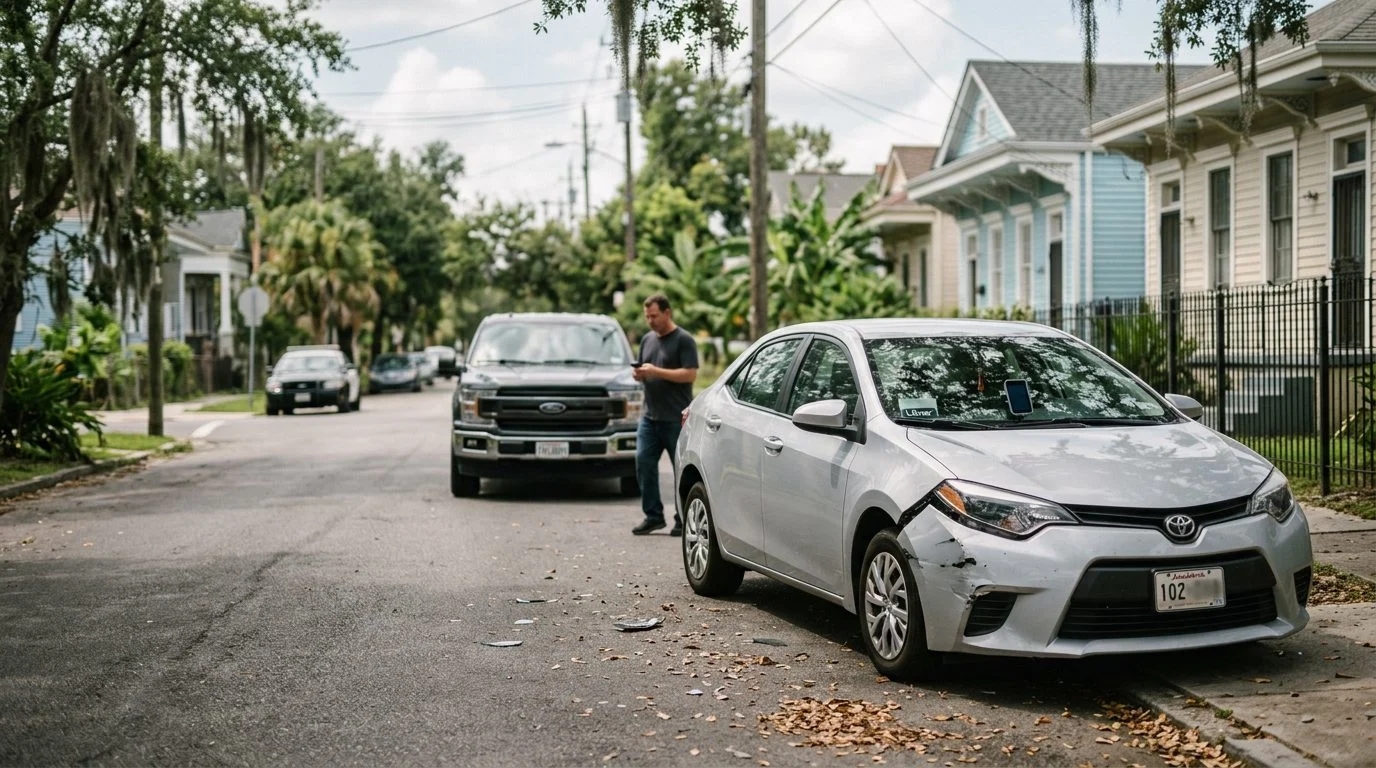
Getting hurt in a crash with an Uber driver is stressful, and the insurance questions can pile up fast. If you were hurt in a rideshare crash and the driver’s app was off at the time, you may be wondering what insurance applies to your situation.
The app status at the moment of the crash matters most, so that is where the review starts.
Short answer: app status is the first question
The first question is whether the driver was logged on to the app when the crash happened. Louisiana’s rideshare insurance law applies to transportation network companies and their participating drivers (La. R.S. 45:201.3). La. R.S. 45:201.3 reads: “Notwithstanding any other provision of this Title to the contrary, this Part shall apply to transportation network companies and their participating drivers as defined in R.S. 45:201.4.”
Many people assume Uber’s coverage always applies once a crash involves an Uber vehicle. The law ties required coverage to specific periods, so that assumption can miss a key point. Insurers and injured people usually look at the same basic facts: whether the app was on, whether a trip had been accepted, and whether a passenger was in the car. Those facts together help show which coverage will be examined first.
Not sure what your next step is?
Talk it through with our team — the first consultation is free, confidential, and carries no obligation.
How Louisiana sets the rideshare coverage periods
Louisiana law sets automobile insurance requirements for transportation network company drivers, with separate requirements for the pre-trip acceptance period and for a prearranged ride (La. R.S. 45:201.6). The first is the pre-trip acceptance period, when a driver is logged on and waiting for a request. During the pre-trip acceptance period, the law requires automobile insurance of not less than fifty thousand dollars for death and bodily injury per person, not less than one hundred thousand dollars for death and bodily injury per incident, and not less than twenty-five thousand dollars for property damage (La. R.S. 45:201.6). A transportation network company may satisfy this requirement through a policy obtained by the driver only if the company verifies that the policy is maintained by the driver and is specifically written to cover the driver’s use of a vehicle related to its digital network.
The second is a prearranged ride. During a prearranged ride, the law requires automobile insurance of not less than one million dollars for death, bodily injury, and property damage (La. R.S. 45:201.6). A transportation network company may meet this requirement through a driver’s policy only if it verifies that the policy is maintained by the driver and is specifically written to cover the driver’s use of a vehicle related to its digital network. Both periods must include uninsured and underinsured motorist coverage to the extent Louisiana law requires (La. R.S. 45:201.6).
The coverage that applies in your case depends on the policies in place and the facts of the crash. Time when the app is off falls outside these two periods, which is why the driver’s own policy often becomes the focus.
Why the app being off can change the picture
When the app is off, the driver’s personal auto policy is often the main policy to review. Personal policies can contain terms that affect rideshare use.
Under Louisiana law, insurers that write auto insurance may exclude coverage under a personal policy while the driver is logged on during the pre-trip period or on a prearranged ride (La. R.S. 45:201.7). An insurer that expressly excludes a claim has no duty to defend or pay that claim under its policy.
Rideshare company coverage does not wait for a personal insurer to deny a claim first (La. R.S. 45:201.6). When insurers disagree about which policy responds, a claim can slow down. That is one reason the crash facts need a close review.
Other coverage that may apply
If the at-fault driver has no insurance or too little, your own uninsured motorist coverage may matter. Louisiana auto liability policies must include uninsured motorist coverage unless the named insured rejects it, selects lower limits, or selects economic-only coverage (La. R.S. 22:1295).
If the other vehicle is never identified, as in a hit-and-run, the claim often turns on uninsured motorist coverage. La. R.S. 22:1295(1)(e) states that uninsured motorist coverage does not extend to bodily injury, sickness, or disease, including the resulting death of an insured, while the insured is occupying a motor vehicle he or she owns if that vehicle is not described in the policy under which the claim is made or is not a newly acquired or replacement vehicle covered under the policy’s terms; the statute also says this provision is inapplicable to uninsured motorist coverage in a policy that does not describe specific motor vehicles. Under Louisiana’s Direct Action Statute, R.S. 22:1269, an injured person generally may not join the at-fault party’s liability insurer as a defendant in a lawsuit, except in limited situations set out in the statute. The listed exceptions include when the insured is deceased (Louisiana direct action law). Insolvency is addressed separately in Subsection A, under which an executory judgment against the insured is prima facie evidence of the insured’s insolvency.
Deadlines matter. Actions under uninsured motorist provisions are prescribed by two years from the date of the accident (La. R.S. 9:5629). Most delictual, or fault-based, injury actions are subject to a two-year period that starts on the day the injury occurs (La. Civ. Code art. 3493.1). The law has exceptions, so the exact date depends on the facts.
Why early calls from insurers need care
An insurance adjuster may call you soon after a crash, sometimes before the coverage question is settled. Be careful about what you say and what you sign.
If you are an injured person and give a written, recorded, or transcribed statement about an accident or an injury to person or property, you can ask for a copy. The person who took it, or anyone who has possession of the statement or a copy of it, must furnish a true and complete copy within twenty days after written demand (La. R.S. 13:3732).
Crash reports are confidential. The parties, their insurers, and their attorneys can obtain them. Upon request, they must be made available within seven working days after the crash investigation is complete (La. R.S. 32:398).
Write down who called, when they called, and what they asked. Keep that record with your crash details and any photos you took.
Talk with Przemek Lubecki about your crash
If the app status is unclear after your crash, Przemek Lubecki can review the facts with you. He is the responsible lawyer for this content, and the New Orleans office handles these matters.
Does Uber’s insurance always apply to a crash?
No. Louisiana’s rideshare rules tie coverage to specific periods, so app status matters.
How long do I have to act?
Many injury claims have a two-year deadline from the date of injury, but exceptions exist (La. Civ. Code art. 3493.1).
The first consultation is free, confidential, and without obligation to continue. The firm may associate or refer a case to other law firms, and it would tell you if that happens. To talk about your crash, call 855-LUBECKI for a free case evaluation.
Why Talk With Us Early
A Trial Lawyer Leads Your Case
Przemek Lubecki is the responsible lawyer for this page and the New Orleans office, with support staff who handle the day-to-day work.
Practical Next Steps
We explain which records, photos and app data matter so you can preserve them while the facts are still fresh.
A Confidential Conversation
The first consultation is free, confidential and without obligation to continue.
Referrals Are Possible
We may associate or refer a case to other law firms. If that is likely in your matter, we will tell you before anything is decided.
Do Not Guess on Your Own
Do not assume that Uber's coverage applies because you were in the car, or that it does not because the app was off. Keep your trip receipts, app screenshots, the police report number and photos of the vehicles if you have them, and talk with us before you give a recorded statement to any insurer.
What We Look at in a Rideshare Crash
App Status at the Time
Whether the driver was logged in, accepting a request, or on a trip changes which insurance layers may be involved.
Who Was Driving, and Why
The driver's purpose, the trip stage and the vehicle's role all shape the questions we ask.
Other Vehicles and Parties
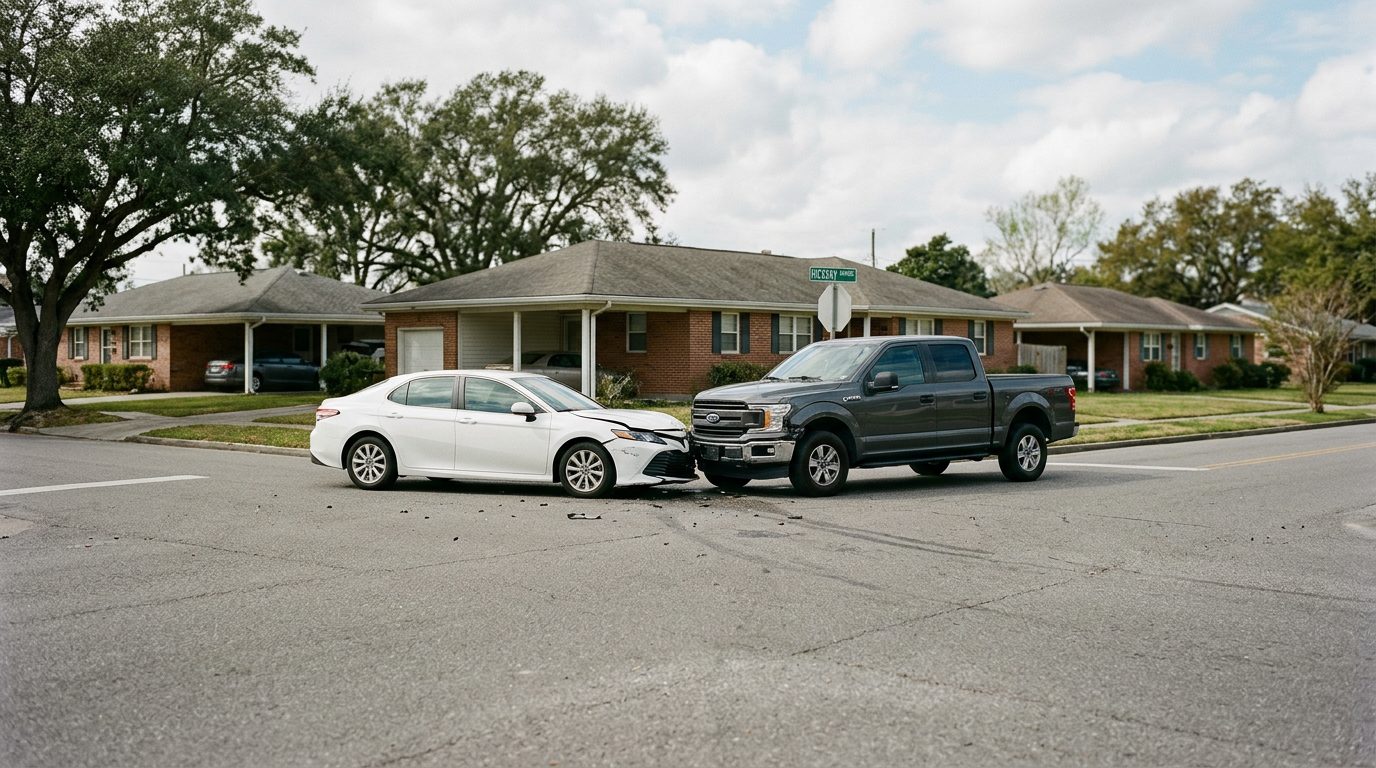
Another driver, a commercial truck or a negligent property owner may also be part of the picture.
Your Injuries and Records
Medical records, bills, lost income and how the injury affects daily life all need careful documentation.