
Wrongful Death | Orleans Parish
After a Fatal Crash, Understanding the Police Report and Coroner Autopsy
Przemek Lubecki and our team at American Trial Lawyer help families in New Orleans make sense of the records that follow a fatal crash, including the police report and the coroner's autopsy.
By Przemek Lubecki · Published October 22, 2026
After a fatal crash in Orleans Parish, three records usually matter most: the police crash report, the coroner’s autopsy file, and the death certificate. This guide explains what each one is, who holds it, and how to ask about it. It is general information, not legal advice about any specific case.
Where you are right now
If you are asking for these papers, you may be doing it for someone you loved, while also making arrangements and grieving. That is a heavy load. You don’t have to understand every form at once.
This page covers the official records that most often come up after a fatal crash. Knowing what each one is can help you read the paperwork in front of you with more confidence.
Start with what you already hold. Look for any letter, card, or form from the police, the coroner, or a hospital. These papers often include a case or reference number you will need when you ask for a copy. Records often arrive at different times from different offices, so it helps to know which office holds what.
Nothing here is a promise about how any case will go.
Not sure what your next step is?
Talk it through with our team — the first consultation is free, confidential, and carries no obligation.
The police crash report: who writes it and how to ask for a copy
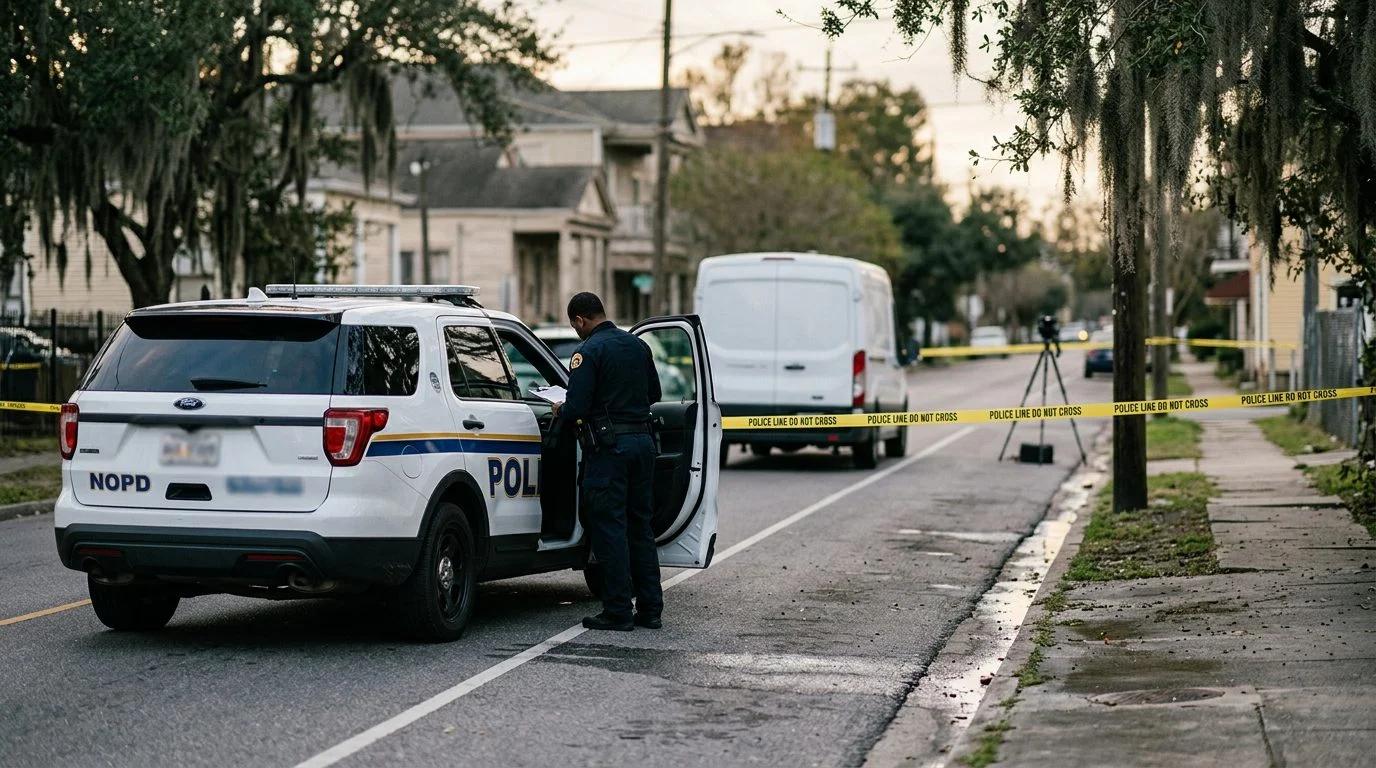
The police crash report is written by the agency that investigated the crash. Under La. R.S. 32:398, if the crash occurred within a city or town’s limits, the investigating agency must send a copy of the crash report to that city’s police department, and a duplicate to the Department of Transportation and Development, within forty-eight hours after completing the investigation. Under La. R.S. 32:398, the city police department investigates crashes inside city limits. In New Orleans, that is the New Orleans Police Department (NOPD). The state police or the sheriff’s office handles crashes outside city limits.
A report typically records the date, time, and place of the crash, the vehicles and people involved, witness details, and the officer’s narrative and diagram. It shows what the officer documented, and it may not capture every detail.
The statute keeps crash reports confidential, but it lets certain people get them: the parties to the crash, parents or guardians of a minor party, the insurers of any party (or an insurance support organization under contract to provide claims and underwriting), healthcare providers (or their agents) who treated a party, the succession representatives of the parties, the attorneys of the parties or succession representatives, and news-gathering organizations asking about a specific crash. Upon request, the report must be made available to those listed people within seven working days after the investigation is complete.
Under La. R.S. 32:398, the agency may charge a reasonable fee for photographs, video, audio and extraordinary-sized documents. When you ask, give the crash date, the location, and the names of those involved.
The coroner’s file: death investigation and autopsy in Orleans Parish
The coroner’s file holds the record of the death investigation, and it includes an autopsy when one is ordered. The Orleans Parish Coroner’s Office investigates deaths in the parish. An autopsy may be ordered when the cause or circumstances of death need a closer look.
A coroner’s file can include investigator notes, the autopsy report, and the cause and manner of death. It may also include toxicology results, which appear only when testing was done.
Two terms cause confusion. Cause of death is the medical reason a person died. Manner of death is the category the coroner assigns to how the death happened. Neither term alone tells the whole story of a crash. Families often read the coroner’s findings alongside the crash report to see how the injuries and the crash line up.
The coroner’s office controls its own investigative and autopsy records. Ask that office directly how it handles requests and what it needs from you to start one.
The death certificate and other records that fill in the picture
The death certificate is a short official summary that families often need for estate and benefit matters. It lists the cause of death, but it is not the full investigation.
Other records families often gather include hospital and emergency medical services (EMS) records, medical records, photographs of the scene and vehicles, insurance claim numbers, and contact information for witnesses. Gather them while details are still fresh.
If your loved one gave a written or recorded statement about the crash after being injured, Louisiana law addresses copies. Under La. R.S. 13:3732, the person who took the statement must give a true and complete copy to the person who made it, or to that person’s personal representative. This applies within twenty days after written demand.
Keep a dated list of who you contacted, when, and what they said. That list makes it easier to track which records are still outstanding.
Why timing matters after a fatal crash
Louisiana’s general rule for these claims is a two-year deadline, called prescription, that starts from the day the injury or damage was sustained (La. Civ. Code art. 3493.1).
For wrongful death, La. Civ. Code art. 2315.2 says the right of action prescribes one year from the death or two years from the day the injury was sustained, whichever is longer. Survival claims for damages the deceased person suffered follow the same whichever-is-longer rule under La. Civ. Code art. 2315.1.
Which date applies to your family depends on the facts, including when the crash and the death happened. A lawyer can review those dates with you.
Evidence changes over time, too. Vehicles can be moved, and records and physical items can be harder to obtain as months pass. Starting early gives you more time to collect what is still available.
Talking with a lawyer about these records
Talking with a lawyer can help you sort out which records matter most while requests are still pending. You don’t need every paper in hand before you call.
Our team at American Trial Lawyer, LLC represents people seriously hurt in truck, car, and commercial vehicle crashes, and families in wrongful death cases. Przemek Lubecki is the responsible lawyer for this page. The firm may associate or refer a case to other law firms.
Call 855-LUBECKI to request a free case evaluation for a free, confidential first consultation, with no obligation to continue. You may be responsible for case costs and expenses in addition to the fee.
Responsible lawyer: Przemek Lubecki Office: New Orleans, Louisiana (the firm also has an office in Park Ridge, Illinois) Licensed in: Louisiana
This page is general information. It does not promise any particular outcome.
Have questions about what happened?
Ask our team directly. The first conversation is free, confidential, and there is no obligation to continue.
Frequently Asked Questions
Who investigates a fatal crash in Orleans Parish, and how do I get the police report?
The investigating agency, such as the New Orleans Police Department, prepares the crash report, and family members can usually request a copy from that agency once the report is available. Timing varies, especially when the investigation is still open, so American Trial Lawyer can help you find out where the report stands.
What is the Orleans Parish Coroner’s role after a fatal crash?
Families often have questions about how the cause and manner of a sudden or unexplained death are determined. Families can ask the coroner’s office about the cause of death and when official findings will be released.
Does an autopsy always happen after a fatal crash?
Families often have questions about whether an autopsy will be performed after a death. Toxicology and other test results can take weeks or longer, so the final cause-of-death report may come later than the police report.
Can a police report or autopsy findings be used in a wrongful death claim?
Yes, these records are often important evidence, but they do not decide fault or the value of a claim on their own. Louisiana has time limits for filing wrongful death claims, so reaching American Trial Lawyer early at 855-LUBECKI gives our team time to go over these records with you during a free, confidential initial consultation that does not commit you to anything further. You may be responsible for case costs and expenses in addition to the fee.
How We Help Families Make Sense of the Records
Clear explanations
We walk you through what the crash report and autopsy say, and what they do not say, in plain language.
Local knowledge
Our office in New Orleans works with Orleans Parish records and the agencies that handle them.
Careful follow-up
We track open investigations and pending records so nothing important is overlooked.
Respect for your family
We understand how painful these requests are, and we move at a pace that works for you.
Records That Often Matter After a Fatal Crash
Police crash report
The investigating agency's report may include the crash scene, the vehicles involved, and the officer's initial findings.
Coroner autopsy
The autopsy report describes the cause and manner of death and may include toxicology results.
Photos and witness information
Scene photos, statements, and vehicle data can help explain how the crash happened.
Medical and EMS records
Emergency response and hospital records document the injuries and the timeline of care.
Keep in Mind
A police report is a starting point, not the final word. Reports can be updated, and investigations may remain open for a time. Please do not rely on a single document to understand what happened.
Talk With Przemek Lubecki About Your Family's Situation
Related practice areas
- How to File a Wrongful Death Lawsuit in Orleans Parish: A Family’s Step-by-Step Guide
- Get Car Back Tow Yard After Fatal Crash New Orleans
- Loss Of Love And Companionship Wrongful Death Louisiana
- 18 Wheeler Crash Injury Representation New Orleans
- Orleans Parish Car Crash Injury Representation