
Fatal Crash Support | New Orleans, Louisiana
Getting a Car Back From the Tow Yard After a Fatal Crash
Losing someone in a crash is hard enough. A tow yard, a police report and paperwork can make it harder. Przemek Lubecki and our team in New Orleans can help you understand the steps in front of you. Your first consultation is free, confidential and without obligation. You may owe case costs and expenses in addition to any fee.
By Przemek Lubecki · Published October 22, 2026
How do you get car back tow yard after fatal crash New Orleans? The investigating agency and the tow yard both have a say, and you’ll need the right paperwork. This guide covers the release steps, the fees you may see, and what to protect before the car leaves the yard.
Families dealing with this are often dealing with a loss first. Take it one step at a time.
Why the Car May Be at a Tow Yard After a Fatal Crash
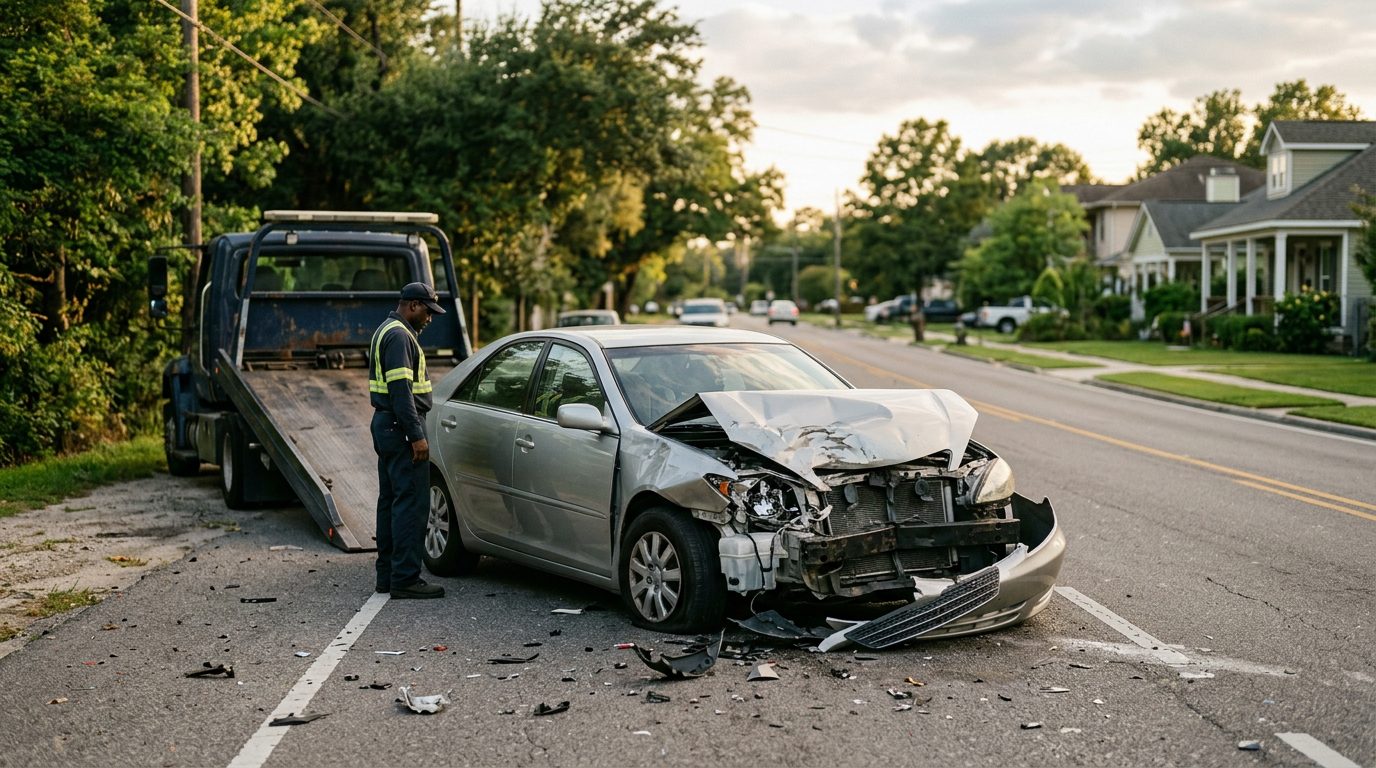
After a fatal crash, the car is often towed from the scene and held while the investigation continues. That hold can last longer than it would after an ordinary wreck, because investigators may need to examine the vehicle first.
Police reports can be one source of information about how a crash happened. The investigation’s status often decides when a car can leave. A yard also usually wants proof that you have the right to take it.
If you are arranging a funeral or telling relatives what happened, these questions can feel like one more demand. That reaction is normal.
Not sure what your next step is?
Talk it through with our team — the first consultation is free, confidential, and carries no obligation.
Steps to Request the Vehicle’s Release
Start by calling the investigating agency. Ask whether the car is still on hold and what it needs from you. Then call the yard. Requirements can differ by yard and by case, so ask for the list in writing.
Ask the yard which of these it requires:
- Identification for the person picking up the car
- Proof of ownership or registration
- Insurance information
- Written authorization from the registered owner
If the registered owner is not the one picking up the car, bring written consent and that person’s ID. Keep copies of every form. Write down the name of the person who approved the release and the date.
Ask for the crash report too. Under La. R.S. 32:398, crash reports are confidential. They are available only to listed people, including the parties to the crash, their insurers, and the succession representatives or attorneys of those parties. Upon request, they must be made available within seven working days after the investigation is completed.
Police and sheriff’s agencies may charge up to $5 for a report of two pages or less. For longer reports, the cap is $20, inclusive of all service fees and other charges (La. R.S. 32:398). Photos and video may carry a reasonable fee.
Storage Charges, Fees and Timing Questions
Storage charges can grow while a car sits in a yard. Ask for an itemized statement in writing. It should show what has built up, the rate used, and when the charges started.
Next, ask who is responsible for the charges: the owner, the insurer, or someone else. Get that answer in writing before you pay. Also ask which payment methods the yard accepts, and whether a partial payment or payment plan is possible.
If a charge looks wrong, ask the yard to explain it line by line. Keep every receipt. These records can matter later if there is a dispute over who paid what.
Don’t plan around a specific release date. The investigation’s timing controls how long a hold lasts. The yard can tell you what it knows, and you can ask again if your plans change.
What to Protect Before the Car Leaves the Yard
Before the car is moved, document it and ask that it stay intact. Take dated photos of the damage, the interior, and where the car sits in the yard. Note any personal items still inside.
Don’t repair, salvage, or sell the car until you have talked with someone about preserving it. The vehicle itself can be important evidence. Some vehicles record data about speed and braking before a crash, so ask that the vehicle and its data be preserved.
If a commercial truck is involved, the carrier’s records matter too. Federal rules require motor carriers to keep electronic logging device duty-status records and supporting documents for six months, plus a separate backup (FMCSA record retention rules). Because that period is short, ask early for preservation.
Many families also send a written preservation request to the insurers and other parties involved. Our team can talk through when and how to make that request.
How the Vehicle Connects to a Wrongful Death Claim
The car, its data, and the crash records can all matter if a family considers a wrongful death claim. Louisiana law lists who may sue. In order, the right to sue goes to the surviving spouse and children; the surviving father and mother may sue only if he left no spouse or child surviving, and a father or mother who has abandoned the deceased during his minority is deemed not to have survived him; brothers and sisters only if he left no spouse, child, or parent surviving; and grandparents only if he left no spouse, child, parent, or sibling surviving (Louisiana Civil Code art. 2315.2).
The time limit to file is one year from the death or two years from the day the injury was sustained, whichever is longer (Louisiana Civil Code art. 2315.2). Some claims, such as medical malpractice cases, follow different rules. That is one more reason not to wait.
Insurers may ask a surviving driver for a recorded statement. If you are an injured person who gave a written or recorded statement, you or your personal representative can ask for a true and complete copy, and it must be provided within twenty days after a written demand (La. R.S. 13:3732). Insurers may also reach out to family early, so take time before answering detailed questions about the crash.
Talk With American Trial Lawyer About Your Situation
A short conversation can help you put the release steps and the claim questions in the right order. American Trial Lawyer, LLC is led by trial lawyer Przemek Lubecki, the responsible lawyer for this page. Our New Orleans office handles these matters.
Our first consultation is free, confidential, and comes with no obligation to continue. You may be responsible for case costs and expenses in addition to the fee. The firm may associate or refer a case to other law firms. No outcome can be promised.
Quick Answers
Who decides when the car is released?
The investigating agency and the tow yard both usually have a say, and the yard may ask for proof of your right to take the car.
How much does a crash report cost in Louisiana?
Police and sheriff’s agencies may charge up to $5 for a report of two pages or less, and up to $20 for longer reports, inclusive of all service fees and other charges.
Who can file a wrongful death claim in Louisiana?
Certain surviving family members can, in a set order that starts with a spouse and children.
If you are still working through the car, the paperwork, and questions about a claim, call 855-LUBECKI to reach our New Orleans office. You can also contact our team by calling 855-LUBECKI to ask about a case evaluation.
Have questions about what happened?
Ask our team directly. The first conversation is free, confidential, and there is no obligation to continue.
How our New Orleans office can help
Tow yard and storage questions
We can review the paperwork the tow yard has asked you to sign and explain what each document means before you decide anything.
Crash report and records
We can help you understand what records exist for the crash and where questions about them can be raised.
Protecting vehicle evidence
We can discuss how to keep track of your loved one's vehicle, its condition and any items left inside, so important details are not lost.
Support for your family
We listen first. Our team focuses on clear, calm answers so your family knows what to expect at each step.
Before you sign anything
Tow yards and storage businesses may ask you to sign forms or pay fees to release a vehicle. Read every document carefully and ask questions before you sign or pay. If you are unsure, call us first. Office in New Orleans.
Questions families often bring to us
Where is the car now?
After a crash, vehicles are often moved to a tow yard or impound lot. We can help you find out where it is held and what is needed to reach it.
What paperwork is needed?
Tow yards may ask for identification, proof of ownership or a letter of authority. We can explain what is being requested and why.
What about the police report?
A crash report can contain important details about the event. We can talk through how to obtain it and what it does and does not show.
Who should I talk to first?
You do not have to sort this out alone.