
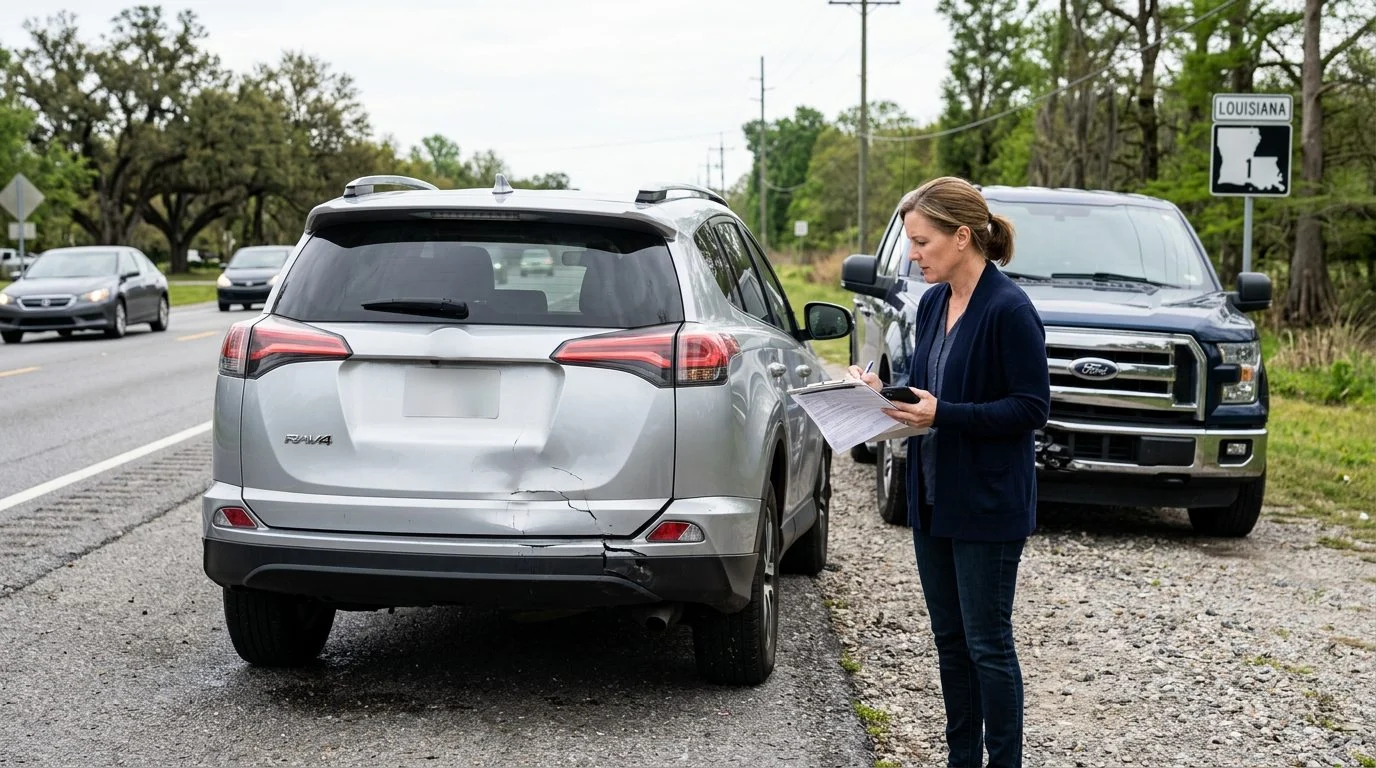
Car Accidents | New Orleans, Louisiana
When the Other Driver Has No Insurance, Know What Your Coverage Can Do
Uninsured motorist coverage can matter after a crash. Learn what it may cover in Louisiana, and what to gather before you talk with an insurer. Przemek Lubecki leads the New Orleans office.
By Przemek Lubecki · Published November 8, 2026
If you’re asking what does an uninsured motorist cover in Louisiana, the short answer is this: it can pay for your injuries and, under some policies, damage to your car, when the at-fault driver has no insurance or not enough. The details depend on your policy, its limits, and the facts of the crash.
This page is general information about Louisiana law. It is not advice about any one claim. Use it to understand your policy before you decide what to do next.
What uninsured motorist coverage is
Uninsured motorist (UM) coverage is part of your own auto insurance policy. It helps when the at-fault driver has no liability insurance, or too little to cover your losses. The coverage sits on your policy, so a UM claim usually goes through your own insurer.
Louisiana law describes this coverage for people who are “legally entitled to recover nonpunitive damages” from an owner or operator of an uninsured or underinsured vehicle. The injury must cause bodily injury, sickness, disease, or death. La. R.S. 22:1295 In plain terms, the coverage matters when you could recover damages from the at-fault driver.
Some policies also respond when the other driver cannot be identified, as in a hit-and-run. Whether your policy does depends on its wording.
If a driver without enough insurance hurt you or someone you love, you don't have to work out your policy alone. Our team offers a free, confidential first consultation. Talk it through with our team — the first consultation is free, confidential, and carries no obligation.
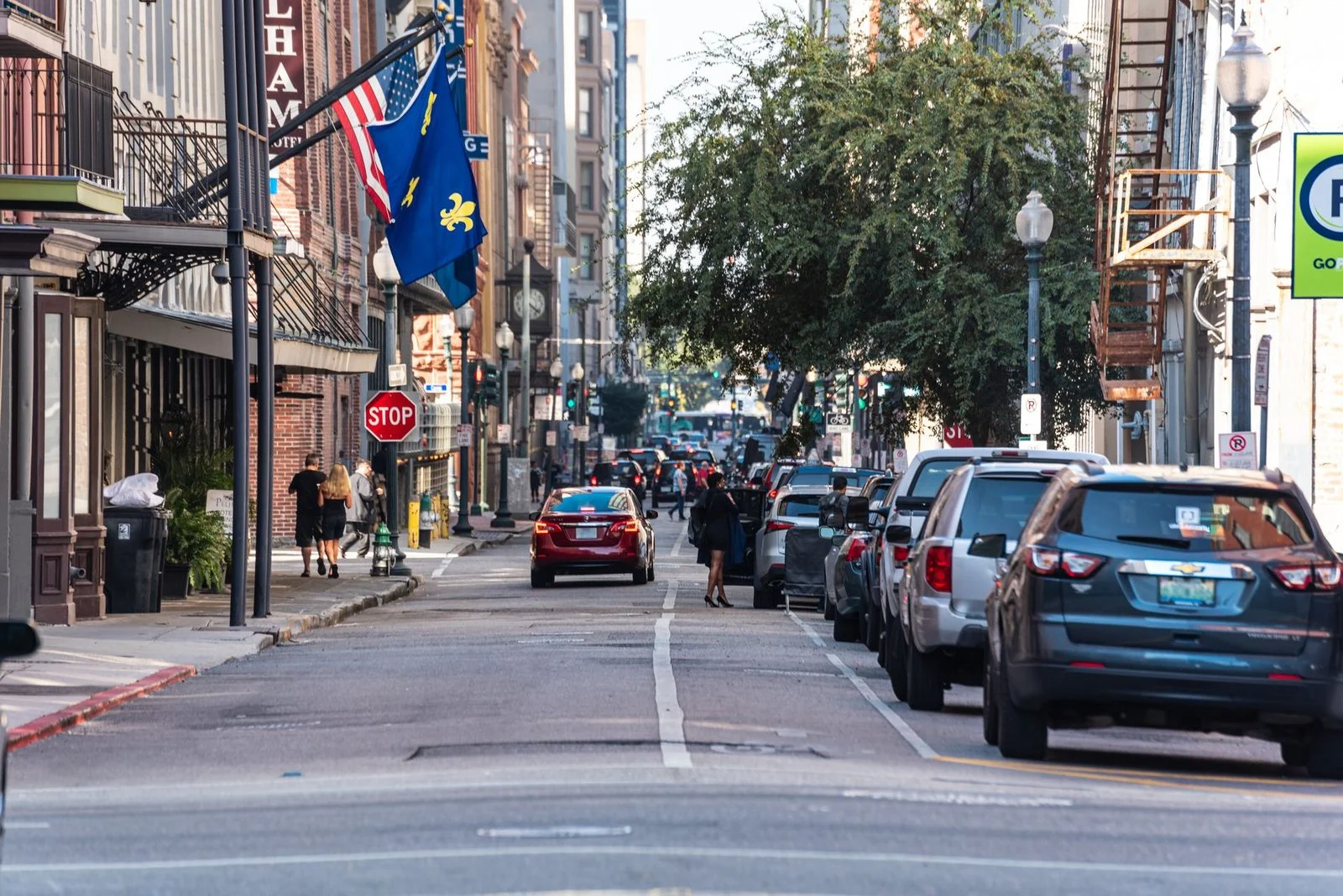
Is uninsured motorist coverage required in Louisiana?
Louisiana law says no auto liability policy may be issued without UM coverage for a motor vehicle designed for use on public highways and required to be registered in Louisiana. The exceptions include when the named insured rejects it, selects lower limits, or selects economic-only coverage, and when a renewal, reinstatement, or substitute policy follows a rejection or lower-limits selection on a policy previously issued by the same insurer or its affiliates. La. R.S. 22:1295
Louisiana also requires registered vehicles to carry liability security. La. R.S. 32:861 The minimum liability limits are set in La. R.S. 32:900. La. R.S. 32:861 requires that every self-propelled motor vehicle registered in this state, subject to the statute’s exceptions, be covered by an automobile liability policy with the liability limits defined in R.S. 32:900(B)(2) or 900(M), or a binder for one, or a motor vehicle liability bond, or a deposit of cash or securities with the state treasurer, or a certificate of self-insurance under R.S. 32:1042.
Your choices show up on your declarations page, the summary page of your policy. Look there for which coverages are listed and at what amounts.
What the bodily injury part covers
Bodily injury UM pays for injuries to people covered by your policy, up to the policy limit. It applies when they are legally entitled to recover nonpunitive damages from an uninsured or underinsured driver. Those damages can include economic losses and, unless you chose economic-only coverage, noneconomic losses.
Economic losses include medical bills and lost wages. Noneconomic loss is any loss other than economic loss. The statute gives examples such as pain, suffering, inconvenience, and mental anguish. La. R.S. 22:1295 The LSBA consumer brochure on auto insurance says uninsured or underinsured coverage may pay medical bills and lost wages.
If you were a passenger in the insured vehicle, the UM coverage on that vehicle is primary. La. R.S. 22:1295 Who else counts as an insured person is set by the policy’s terms.
Property damage and UM property damage
UM property damage (UMPD) can pay for damage to your own vehicle when an uninsured driver causes the crash. It is not the same as collision coverage. Louisiana law limits UMPD to the vehicle’s actual cash value or the minimum property damage liability amount, whichever is less. La. R.S. 22:1295
Under La. R.S. 22:1295, when the policy does not afford collision coverage for a vehicle, property damage coverage for that vehicle, if the named insured has not rejected uninsured motorist coverage and requested it in writing, is subject to a deductible of two hundred fifty dollars for any one accident. Under La. R.S. 22:1295, unless the named insured has rejected uninsured motorist coverage, an insurer issuing an automobile liability policy that does not afford collision coverage for a vehicle insured under it must, on a named insured’s written request, provide property damage coverage for persons insured under the policy who are legally entitled to recover damages from an uninsured motor vehicle’s owner or operator, in an amount equal to the actual cash value of the described vehicle or the minimum property damage liability amount under R.S. 32:851 et seq., whichever is less. It also does not protect against damages paid or payable under other property insurance. La. R.S. 22:1295
Collision coverage is a separate part of many policies. It pays for your car after a crash, subject to its own deductible and terms.
Understanding policy limits like 100/300/100
Policy limits are the most the policy will pay. A label like 100/300/100 shows three separate caps. The first number is the per-person bodily injury limit. The second is the per-accident bodily injury limit, which covers two or more people hurt in the same crash, subject to the per-person limit. The third is the property damage limit.
Here’s how that works. Say two people in your car are hurt. Each person’s claim is capped by the per-person number. All of their claims together are capped by the per-accident number. A limit does not say what anyone is owed. It only caps what the policy pays.
Louisiana law also ties UM bodily injury coverage to your policy’s liability limits. It must be in not less than the bodily injury liability limits the policy provides, unless an insured named in the policy rejects coverage, selects lower limits, or selects economic-only coverage. La. R.S. 22:1295
Underinsured motorist coverage and the no-pay, no-play rule
Underinsured motorist (UIM) coverage applies when the at-fault driver has insurance, but the limits are too low for your losses. The statute covers both “uninsured or underinsured” vehicles. La. R.S. 22:1295
Louisiana also has a “no-pay, no-play” rule. Under La. R.S. 32:866, there is no recovery for the first one hundred thousand dollars of bodily injury or the first one hundred thousand dollars of property damage occasioned by an owner or operator of a motor vehicle involved in the accident who did not own or maintain the compulsory motor vehicle liability security required by law, subject to the exceptions in the statute. Those exceptions include the rule that the limit does not apply where the other vehicle is not being operated and is not in violation of Chapter 1 of this Title, and the rule that nothing in the statute precludes a passenger from asserting a claim for injury or loss caused in whole or in part by another person’s negligence, unless the passenger owns the uninsured vehicle. A liable person may raise this limit as an affirmative defense. How it applies depends on the facts of each crash.
Fault also matters. Under La. Civ. Code art. 2323, if the degree or percentage of negligence attributable to the person suffering injury, death, or loss is equal to or greater than fifty-one percent, that person is barred from recovering damages, except as Paragraph C of the article provides for claims involving an intentional tortfeasor. Under La. Civ. Code art. 2323, if the degree or percentage of negligence attributable to the person suffering injury, death, or loss is less than fifty-one percent, the amount of damages recoverable is reduced in proportion to that degree or percentage, except as Paragraph C of the article provides for claims involving an intentional tortfeasor. La. Civ. Code art. 2323
Not sure what your next step is?
Talk it through with our team — the first consultation is free, confidential, and carries no obligation.
Common steps in an uninsured motorist claim
Start at the scene. Under La. R.S. 32:398, the driver of a vehicle involved in a crash resulting in injury to or death of any person or property damage in excess of five hundred dollars shall give his name, address, and the registration number of the vehicle he was driving. La. R.S. 32:398 provides that when the law enforcement officer investigating a crash involving injury, death, or property damage over five hundred dollars has reason to believe a medical condition exists that is cause for license revocation or suspension under R.S. 32:414(E), the officer must notify the medical/conviction unit of the office of motor vehicles, “provided that the law enforcement officer first consults with his superior officer as to his specific observations and his superior officer concurs with the issuing officer’s belief.”
Louisiana law keeps crash reports confidential, with exceptions: under La. R.S. 32:398(I)(1)(a), they shall be made available to the parties, their attorneys, insurers, healthcare providers and others. La. R.S. 32:398
Next, report the crash to your own insurer promptly. Keep copies of the police report, medical records, bills, and wage records as they come in. Insurers may dispute fault, damages, or the policy’s terms, so keep your records in one place.
Mind the deadline. Under La. R.S. 9:5629, actions for damages from motor vehicle accidents brought under UM provisions prescribe two years from the accident date. La. R.S. 9:5629
Talking with a New Orleans trial lawyer about your coverage
If someone you love was hurt, or your own injuries have made work and daily life hard, you may feel stretched thin. Sorting out what your policy pays, and what to do next, can feel like too much at once.
Przemek Lubecki is the responsible lawyer for this page. The office is in New Orleans, Louisiana. You can call 855-LUBECKI (Office in New Orleans). People in Orleans Parish, Metairie, Jefferson Parish, Kenner, St. Bernard Parish, Slidell, and across Louisiana can reach that office.
The firm may associate or refer a case to other law firms. If that happens, we would tell you.
Our team offers a free first consultation. It is confidential and comes with no obligation to continue. You can also request a free case evaluation or call 855-LUBECKI.
Frequently asked questions
How long do I have to file a UM claim in Louisiana?
Under La. R.S. 9:5629, these claims prescribe two years from the accident date. La. R.S. 9:5629
Does uninsured motorist coverage pay lost wages?
The LSBA consumer brochure says uninsured or underinsured coverage may pay medical bills and lost wages. LSBA consumer brochure
How does UM property damage coverage apply to my car?
Under La. R.S. 22:1295, if your auto policy does not include collision coverage and you have not rejected uninsured motorist coverage, you can ask your insurer in writing for uninsured motorist coverage for damage to your vehicle. That coverage is the vehicle’s actual cash value or the minimum property damage liability insurance required by Louisiana law, whichever is less, and it is subject to a per-accident deductible set by the statute. La. R.S. 22:1295 reads: “Unless the named insured has rejected uninsured motorist coverage, the insurer issuing an automobile liability policy that does not afford collision coverage for a vehicle insured thereunder shall, at the written request of a named insured, provide coverage in the amount of the actual cash value of such motor vehicle described in the policy or the minimum amount of property damage liability insurance required by the Motor Vehicle Safety Responsibility Law, R.S. 32:851 et seq., whichever is less, for the protection of persons insured thereunder who are legally entitled to recover damages from the owner or operator of an uninsured motor vehicle because of property damage to the motor vehicle d.” La. R.S. 22:1295
Why Coverage Questions Come Up After a Crash
Your policy language matters
The wording of your own policy, including its declarations page and endorsements, shapes what it says about uninsured motorist claims.
Insurers may ask for records
Medical bills, repair estimates, and details about time away from work are often part of the conversation with an insurer.
Several people may be involved
Passengers, family members, and other drivers can each raise separate questions about coverage after a crash.
Tough questions deserve clear answers
Our team works to explain your options in plain language so you can make informed decisions about your claim.
Bring Your Policy Paperwork to Your Consultation
Your insurance policy controls what your coverage includes. Keep your declarations page and any letters from your insurer. The firm may associate or refer a case to other law firms when that is in the client's interest.
Steps to Take After a Crash With an Uninsured Driver
Get medical care
See a doctor promptly, even if your injuries seem minor at first. Keep every visit summary and bill.
Document the scene
Write down the date, time, location, and what happened. Photograph vehicles, road conditions, and any visible damage.
Keep your records
Save letters from insurers, repair estimates, and receipts. Note any time you missed from work and why.
Talk with a lawyer
Share your policy and crash details with our team for a free, confidential, no-obligation consultation.