
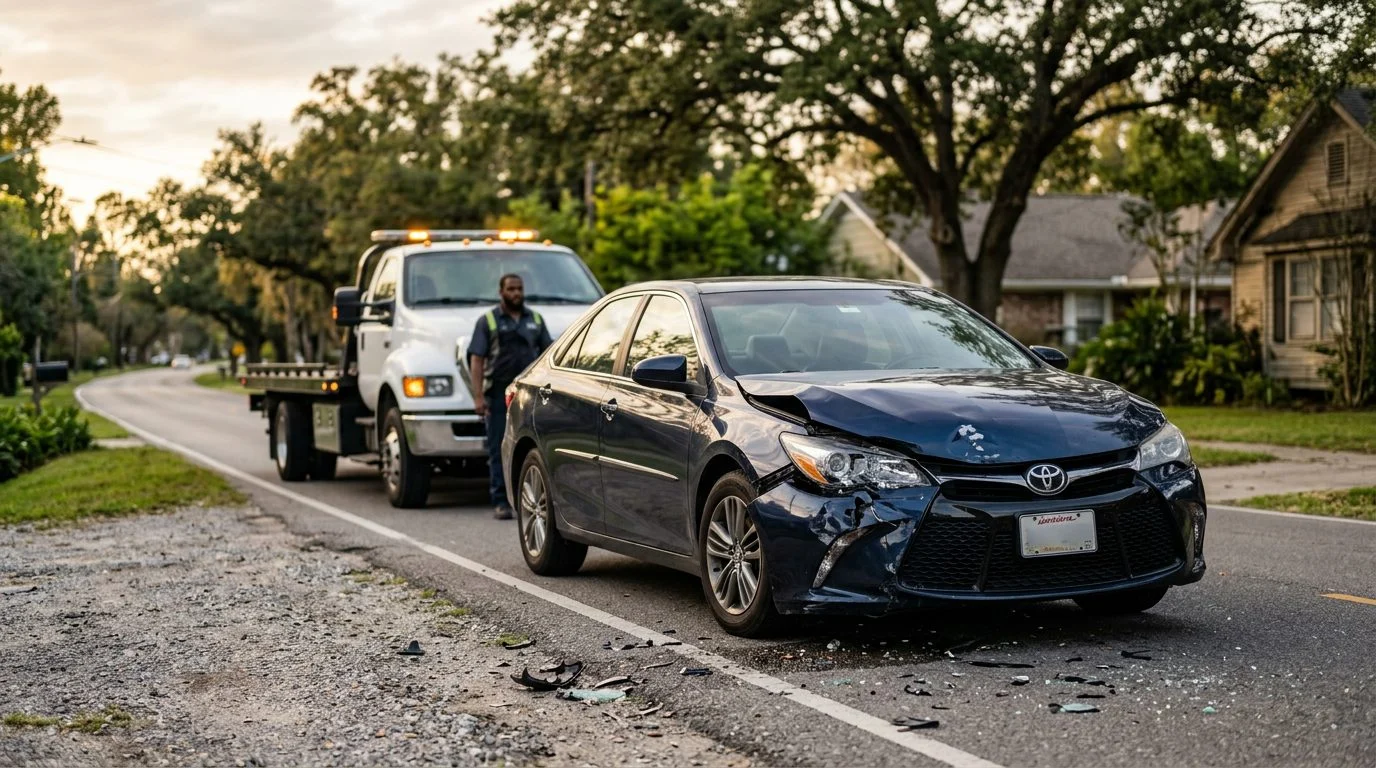
Car Accidents | New Orleans, Louisiana
Understanding Damages After a Car Accident in Louisiana
A plain-language guide from American Trial Lawyer in New Orleans to the kinds of losses people often raise after a crash, and how to think about them while you recover.
By Przemek Lubecki · Published November 7, 2026
Louisiana law lets a person hurt in a car accident seek money for losses that another person’s fault caused. These losses fall into two main groups: economic damages, which have a bill or paycheck attached, and non-economic damages, such as pain and suffering. This page explains each group in plain terms. It also explains how Louisiana’s fault rules and filing deadlines can change what can be recovered. American Trial Lawyer is based in New Orleans, and Przemek Lubecki is the responsible lawyer for this page.
What Does “Damages” Mean in a Louisiana Car Accident Claim?
Damages are the money a person may ask for to repair harm that another person’s fault caused. Louisiana’s main rule is simple. Under La. Civ. Code art. 2315, every act that causes damage to another obliges the person whose fault caused it to repair that damage.
Louisiana law also says a person is responsible for harm caused by negligence, not only by a deliberate act. See La. Civ. Code art. 2316. A driver who looks away from the road, or drives too fast for conditions, can be negligent.
The categories on this page are the ones commonly raised in Louisiana car accident claims. Your claim is your own. The crash, the injuries, the records, and the other driver’s conduct all shape what applies to you.
Not sure what your next step is?
Talk it through with our team — the first consultation is free, confidential, and carries no obligation.

Economic Damages: Medical Expenses Past and Future
Medical expenses are the bills tied to treating injuries from the crash. Past medical costs can include emergency care, hospital stays, surgery, imaging, medicines, and physical therapy. Future medical care can also be part of a claim, but only in limited cases. Under La. Civ. Code art. 2315, future treatment costs are not recoverable unless they are directly related to a manifest physical or mental injury or disease.
The amount billed is not always the amount that counts. Under La. R.S. 9:2800.27, when a health insurer or Medicare pays a contracted provider, recovery is limited to the amount actually paid, plus cost-sharing amounts such as copays and deductibles. In a trial to recover past medical expenses provided by Subsection B of this Section, the trier of fact must be informed of the amounts billed and the amounts actually paid.
This is why records matter. Keep every itemized bill, provider record, and treatment note. Save receipts for prescriptions, medical devices, and trips to appointments. Clear records make it easier to show what care was needed and why.
Lost Wages and Loss of Earning Capacity
Lost wages cover pay you missed because of your injuries. Loss of earning capacity covers a longer-term drop in your ability to earn, such as being unable to do your old job at the same level.
Pay stubs, timecards, work schedules, and employer letters help document lost wages. Hourly workers often have the clearest records. Self-employed people may need tax records, invoices, booking calendars, or client records instead.
Doctors’ notes matter here too. Missed work that a treating provider documented is easier to explain than missed work described only from memory. Tell your provider about your job duties and any work restrictions. Ask that those limits appear in the chart.
Property Damage and Other Out-of-Pocket Expenses
Property damage covers the vehicle and personal items the crash damaged. Repair or replacement of the vehicle is a common claim. Louisiana law also includes sales taxes the owner paid on the repair or replacement of damaged property. See La. Civ. Code art. 2315.
Other out-of-pocket costs can also be part of a claim. These may include rental car or transportation costs while your vehicle is unavailable. Phones, car seats, and work equipment damaged in the crash can count too. Keep receipts, repair estimates, and photos of damaged items.
Smaller costs add up. Copays, coinsurance, and mileage to medical visits are often overlooked. Write them down as they happen. Note any help you needed at home, such as someone cooking, cleaning, or driving your children.
Non-Economic Damages: Pain, Suffering, and Loss of Enjoyment
Non-economic damages cover the personal side of an injury. These include physical pain, fear, anxiety, and emotional distress. They also include loss of enjoyment of life, such as no longer being able to exercise, travel, or care for children or relatives.
Disfigurement and physical impairment can also be part of this category. A scar or limited movement affects daily life in ways a bill does not show. In cases of offenses, quasi offenses, and quasi contracts, Louisiana law leaves much of the assessment of damages to the judge or jury. See La. Civ. Code art. 2324.1.
Non-economic damages are not measured by bills or wages. That makes them more dependent on the particular facts. Serious injuries can change a person’s life in ways that take time to understand. MedlinePlus notes that motor vehicle accidents can cause spinal cord injuries and that immediate medical attention is needed after such a crash.
How Records of Missed Work and Daily Limits Help Show Your Losses
Dated, consistent records are one of the most practical ways to show how an injury changes daily life. Start a simple journal. Note pain levels, sleep problems, and tasks you can no longer do on your own. Write one short entry a day.
Keep employer communications, leave requests, and attendance records. Keep every follow-up appointment and follow the treatment plan. Gaps in treatment can give others a reason to question how serious the injury was.
Photos of your injuries, your vehicle, and the scene help too. Take them soon after the crash, and keep the originals with the date.
Statements matter as well. If you gave a written, recorded, or transcribed statement as an injured person about an accident or injury, La. R.S. 13:3732 requires the person who took it to give you a true and complete copy. The copy must be provided within twenty days after written demand.
Crash reports are also useful. Under La. R.S. 32:398, crash reports are confidential. They are made available only to the parties to the crash, parents or guardians of a minor who is a party, their insurers or insurance support organizations under contract to provide claims and underwriting, any healthcare provider (or its agent) that treated a party, the parties’ succession representatives, the attorneys of the parties or succession representatives, and news-gathering organizations that request documents related to a specific crash. Upon request, they are made available within seven working days after the investigation is completed.
Not sure what your next step is?
Talk it through with our team — the first consultation is free, confidential, and carries no obligation.
How Louisiana Fault Rules and Deadlines Affect Your Damages
Louisiana reduces damages by a claimant’s share of fault. Under La. Civ. Code art. 2323, if the degree or percentage of negligence attributable to the person suffering injury, death, or loss is equal to or greater than fifty-one percent, that person shall not be entitled to recover damages, but a claim is not reduced when the other person’s fault was intentional. Under La. Civ. Code art. 2323, if the degree or percentage of negligence attributable to the person suffering injury, death, or loss is less than fifty-one percent, the amount of damages recoverable shall be reduced in proportion to that degree or percentage, unless the other person’s fault was intentional, in which case the claim is not reduced. See La. Civ. Code art. 2323.
See La. Civ. Code art. 2317.1. A roadway condition or a vehicle defect may matter in some crashes.
Deadlines matter just as much. Delictual actions in Louisiana carry a two-year liberative prescription, set out in La. Civ. Code art. 3493.1, that begins to run from the day the injury or damage is sustained, but it does not run against minors or interdicts in actions involving permanent disability brought under the Louisiana Products Liability Act or state law governing product liability actions in effect at the time of the injury or damage. That period runs from the day the injury or damage is sustained.
Common Questions
Does Louisiana use comparative fault?
Yes. Under La. Civ. Code art. 2323, when a person is hurt partly through his own negligence and partly through someone else’s fault, he is not entitled to recover damages if his share of negligence is fifty-one percent or more, and otherwise his damages are reduced by his share, unless the other person’s fault was intentional, in which case his claim is not reduced.
Can I get a copy of my recorded statement?
Yes.

Talk With Przemek Lubecki About Your Own Losses
After a car crash, the open questions are often which losses to document now, who was at fault, and how much time remains to act. Those answers depend on the details of your crash, your injuries, and your records.
Przemek Lubecki is the responsible lawyer for this page. American Trial Lawyer’s office is in New Orleans, Louisiana. Your first consultation is free, confidential, and comes with no obligation to continue. You can call 855-LUBECKI or request a free case evaluation.
American Trial Lawyer may associate with or refer a case to other law firms when appropriate.
How We Can Help
Responsible Lawyer
Przemek Lubecki, a trial lawyer, is the responsible lawyer for this page and for the car accident matters the firm handles.
New Orleans Office
Our office is in New Orleans, and we serve people injured across Orleans Parish, the New Orleans metro, and Louisiana.
Plain-Language Answers
We explain your options clearly so you can make informed decisions about your claim at your own pace.
Confidential Conversations
Your first consultation is free, confidential, and comes with no obligation to continue.
Categories of Damages Often Discussed After a Crash
Medical Expenses
Emergency care, hospital stays, surgery, medication, therapy, and future treatment related to the crash.
Lost Income
Wages missed during recovery and, where injuries affect the ability to work, lost future earning capacity.
Pain and Suffering
Physical pain, emotional distress, and the change a serious injury can bring to daily life and relationships.
Property and Other Losses
Vehicle repair or replacement, rental costs, and out-of-pocket expenses tied to the accident and your recovery.
Keep Track of Your Losses
Save medical records, bills, pay stubs, photos, and notes about how the injury affects your daily life. American Trial Lawyer may associate or refer a case to other law firms when that serves the client. Your free consultation is confidential and comes with no obligation to continue.