
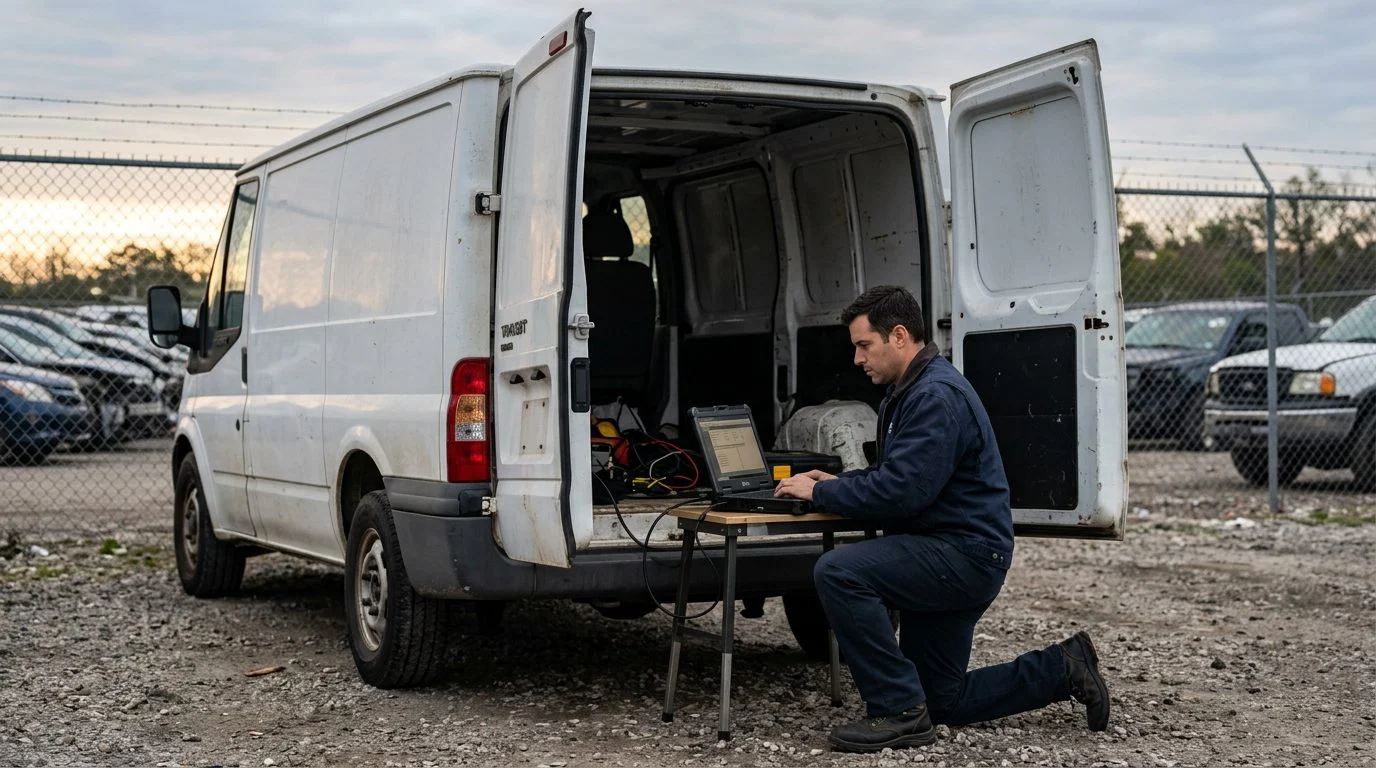
Commercial Vehicle Accidents | New Orleans, Louisiana
Hurt in a Taxi or Shuttle Van Crash? Talk With a New Orleans Trial Lawyer
Przemek Lubecki and the team at American Trial Lawyer represent people injured in taxi and shuttle van accidents across Orleans Parish, the New Orleans metro and Louisiana. Your first consultation is free, confidential and without obligation.
By Przemek Lubecki · Published October 28, 2026
Thinking about a taxi or shuttle van accident claim in New Orleans? A claim may involve more than one party, including the driver and the company that operates the vehicle. Louisiana law also sets fault rules and time limits that can change the outcome. This guide explains the basics in plain language. American Trial Lawyer’s New Orleans office handles these matters under the direction of trial lawyer Przemek Lubecki.
What a Taxi, Shuttle Van or Commercial Vehicle Crash Claim Covers
A taxi or shuttle van accident claim seeks money to address the harm a crash caused. It can help an injured passenger, a driver hurt on the job, or a family after a fatal crash.
These crashes often cause serious injuries. Examples include broken bones, spinal injuries, traumatic brain injuries and internal injuries from high-impact collisions.
A claim may address:
- Medical bills from the crash
- Future medical care, but only when it is directly related to a manifest physical or mental injury or disease (La. Civ. Code art. 2315)
- Lost wages and lost earning capacity
- Pain and suffering
In a wrongful death case, certain family members may recover losses from the loss of their loved one. Louisiana law allows recovery of loss of consortium, service and society by the same people who could bring a wrongful death claim (La. Civ. Code art. 2315).
The firm also handles car, truck, commercial vehicle, rideshare, motorcycle, wrongful death, brain injury and negligent security matters.
If a taxi or shuttle van crash left you or someone you love hurt, you don't have to work out who may be responsible alone. Talk it through with our team — the first consultation is free, confidential, and carries no obligation.
Who May Be Responsible After a Taxi, Shuttle or Van Crash
More than one party may be responsible, usually the driver and the company that puts the driver on the road.
The driver. A driver who is distracted, tired, speeding or impaired may be at fault.
The operating company. Employers answer for damage their workers cause while doing the work they were hired to do (La. Civ. Code art. 2320). The article adds a condition: responsibility attaches when the employer might have prevented the act and did not. That’s why hiring, training, supervision and dispatch records matter.
Other parties. Vehicle owners, maintenance providers and manufacturers can also be involved. When liability is not solidary pursuant to Paragraph A of this article, a joint tortfeasor shall not be liable for more than his degree of fault (La. Civ. Code art. 2324).
Your own share of fault. Under La. Civ. Code art. 2323, if the degree or percentage of negligence attributable to the person suffering injury, death, or loss is equal to or greater than fifty-one percent, that person shall not be entitled to recover damages, unless the injury resulted partly from the fault of an intentional tortfeasor, in which case his claim for recovery of damages shall not be reduced. If the degree or percentage of negligence attributable to the person suffering injury, death, or loss is less than fifty-one percent, the amount of damages recoverable shall be reduced in proportion to that degree or percentage (La. Civ. Code art. 2323).
Federal law can also matter.
How the Operator’s Insurance and Vehicle Records Can Change the Claim
The insurance in force on the crash date and the vehicle’s ownership records help show who may pay.
- The policy date matters. The policy active when the crash happened is the one to identify, even if the company has since changed insurers.
- Registration appears on the report. A driver involved in a crash resulting in injury to or death of any person, or property damage in excess of five hundred dollars, must give any person injured in the crash the driver’s name, address and the registration number of the vehicle he was driving (La. R.S. 32:398). Under La. R.S. 32:398(J), when an officer investigating a crash that resulted in injury, death, or property damage over five hundred dollars has reason to believe a driver has a medical condition that is cause for license revocation or suspension under R.S. 32:414(E), the officer is to report it to the office of motor vehicles’ medical/conviction unit within the Department of Public Safety and Corrections, but only after first consulting a superior officer about the specific observations and only if that superior officer agrees with the officer’s belief.
- Owner and operator can differ. The company that runs the vehicle may not be the one that owns it, so both should be checked.
- Property payments are not admissions. Under La. R.S. 22:1290, a settlement under a vehicle policy for damage to another person’s property is not an admission of liability on other claims from the same accident.
Company Records and Evidence to Preserve Early
The records a taxi or shuttle company keeps about a trip and its driver are often the most time-sensitive evidence in a claim.
- Crash reports. Louisiana crash reports are confidential. They are available on request only to the parties to the crash, parents or guardians of a minor who is a party to the crash, their attorneys, insurers or an insurance support organization under contract to provide claims and underwriting of any party which is the subject of the report, healthcare providers who treated a party, succession representatives, and news-gathering organizations requesting documents for a specific crash, within seven working days after the investigation is complete (La. R.S. 32:398).
- Driver hours. Under 49 C.F.R. § 395.1, the rules in this part apply to all motor carriers and drivers, except as provided in paragraphs (b) through (x) of that section. 49 C.F.R. § 395.5 provides: “Subject to the exceptions and exemptions in § 395.1: (a) No motor carrier shall permit or require any driver used by it to drive a passenger-carrying commercial motor vehicle, nor shall any such driver drive a passenger-carrying commercial motor vehicle: (1) More than 10 hours following 8 consecutive hours off duty; or (2) For any period after having been on duty 15 hours following 8 consecutive hours off duty. Under 49 C.F.R. § 395.5(b), a motor carrier may not permit, and a driver may not drive, a passenger-carrying commercial motor vehicle, whether or not the driver works for more than one carrier, after being on duty 60 hours in any 7 consecutive days if the employing carrier does not operate every day of the week, or after being on duty 70 hours in any period of 8 consecutive days if the employing carrier operates every day of the week. Hours-of-service logs show whether those limits were met.
- Retention periods. Companies subject to this part shall retain records for the minimum retention periods provided in appendix A to this part (49 C.F.R. § 379.3). After the required retention periods, the records may be destroyed at the discretion of each company’s management. It shall be the obligation of the subject company to maintain records that adequately support financial and operational data required by the Secretary. The company may request a ruling from the Secretary on the retention of any record. The provisions of this part shall not be construed as excusing compliance with the lawful requirements of any other governmental body prescribing longer retention periods for any category of records. After those periods, records may be destroyed at the company’s discretion, but this does not excuse compliance with the lawful requirements of any other governmental body prescribing longer retention periods (49 C.F.R. § 379.3). That’s why early written preservation requests matter.
- Other evidence. Dispatch logs, GPS and app data, driver qualification and training files, maintenance and inspection records, dashcam and nearby surveillance video, photos, and names of passengers and witnesses all can matter.
How the Process Works, Step by Step
Most claims begin with a free consultation and move through records, medical documentation and negotiation. Each stage’s timing depends on the facts.
- Consultation. You describe the crash, your injuries and any insurance details you have. The consultation is free, confidential and without obligation.
- Case review. The firm reviews the crash facts, injuries, insurance information and available records, then explains your options in plain terms.
- Preservation. Written requests go to the operator, its insurer and other parties to keep relevant records.
- Medical and damages review. Medical records are gathered and losses are documented, including future care directly tied to the injury.
- Demand and negotiation. The firm presents a demand to insurers. You make the key decisions.
- Suit if needed. If a fair resolution isn’t reached, the firm may file suit.
Deadlines matter. Louisiana generally gives two years to file a delictual (tort) action, counted from the day injury or damage is sustained (La. Civ. Code art. 3493.1). A wrongful death right of action prescribes one year from the death or two years from the injury, whichever is longer, except for medical malpractice actions, which prescribe one year from the death (La. Civ. Code art. 2315.2). Talking with the firm early leaves more time to act.
Why Work With American Trial Lawyer on These Cases
American Trial Lawyer is led by trial lawyer Przemek Lubecki, who is the responsible lawyer for this page. The firm’s office is in New Orleans.
- The New Orleans office serves people in Orleans Parish, the New Orleans metro, Metairie, Jefferson Parish, Kenner, St. Bernard Parish, Slidell and across Louisiana.
- Przemek Lubecki represents people seriously hurt in truck, commercial vehicle and car crashes, and families in wrongful death cases.
- The firm approaches each case with trial in mind, which means building the evidence early.
- Our team includes assistants and office staff who help keep records and schedules organized.
- The firm may associate or refer a case to other law firms.
- No one can promise an outcome. Each claim turns on its own facts, evidence and law.
Not sure what your next step is?
Talk it through with our team — the first consultation is free, confidential, and carries no obligation.
Frequently Asked Questions
Can I bring a claim if I was only a passenger?
A passenger who did not cause the crash may have a claim against the parties at fault. The firm can review the facts in a free consultation.
Can I sue the company as well as the driver?
Louisiana law can make an employer answerable for work-related negligence by its workers. Each at-fault party is liable only for its own share of fault.
What if the insurer calls me first?
Insurers often reach out early. A property-damage settlement under a vehicle policy is not an admission of liability on other claims from the same accident.
Does it matter if the van ran airport or hotel routes?
Routes and schedules can point to the operator and the records it should have kept. The firm can review those details with you.
How do I start a wrongful death claim?
Start with a consultation. Louisiana lists who may sue in order: the surviving spouse and children first; then the surviving parents, only if the deceased left no spouse or child surviving; then siblings and grandparents, each only if none of the higher-ranked relatives survive; and a father or mother who has abandoned the deceased during his minority is deemed not to have survived him (La. Civ. Code art. 2315.2).
What should I do in the first days after a crash?
Keep medical records, bills, photos and witness names. Write down what you remember while it’s fresh.
If a taxi or shuttle van accident claim in New Orleans is on your mind, you don’t have to sort out fault and deadlines alone. Request a free case evaluation or call 855-LUBECKI for a free, confidential consultation.
How We Can Help
Every Side of the Crash
Taxi and shuttle van crashes can involve more than one party, including the driver, the company that operates the vehicle, or another driver. We look at all of them.
Focused on Injured People
Our work centers on people seriously hurt in commercial vehicle crashes and on families facing a wrongful death. We take the time to understand your injuries and your life.
Based in New Orleans
Our office is in New Orleans, and we serve Orleans Parish, Jefferson Parish, St. Bernard Parish, the New Orleans metro and Louisiana.
Plain Answers
We explain your options in clear language, so you can decide what makes sense for you and your family.
Good to Know
The firm may associate or refer a case to other law firms. If your case is handled with another firm, you will be told before any such arrangement is made. Call us to discuss your situation.
Steps That Can Help Protect Your Health and Your Claim
Get Medical Care
Even if you feel you have only minor injuries, see a doctor promptly. Some injuries, including head and brain injuries, may not show symptoms right away.
Document the Scene
If you are able, note the date, time and location, and take photos of the vehicles, the scene and your injuries. Keep the names and contact details of anyone who saw the crash.
Keep Your Records
Save medical bills, pay stubs, receipts for expenses and any letters you receive about the crash. Organized records make a claim easier to review.
Speak With Us Early
Before you give a recorded statement or sign anything, talk with Przemek Lubecki. Your first consultation is free, confidential and without obligation.
Talk With Przemek Lubecki About Your Taxi or Shuttle Van Crash
Related practice areas
- Car Accident Claims in Orleans Parish: What Injured Drivers and Passengers Need to Know
- New Orleans Car Accident Claim With a Prior Back Injury