
Louisiana Car Accidents | New Orleans
Vehicle Damage After a Crash: Who Pays, and How to Protect Your Claim
Repairs, rental cars and total losses can each involve different insurers. Here is how the process typically works and what to bring to the conversation.
By Przemek Lubecki · Published November 12, 2026
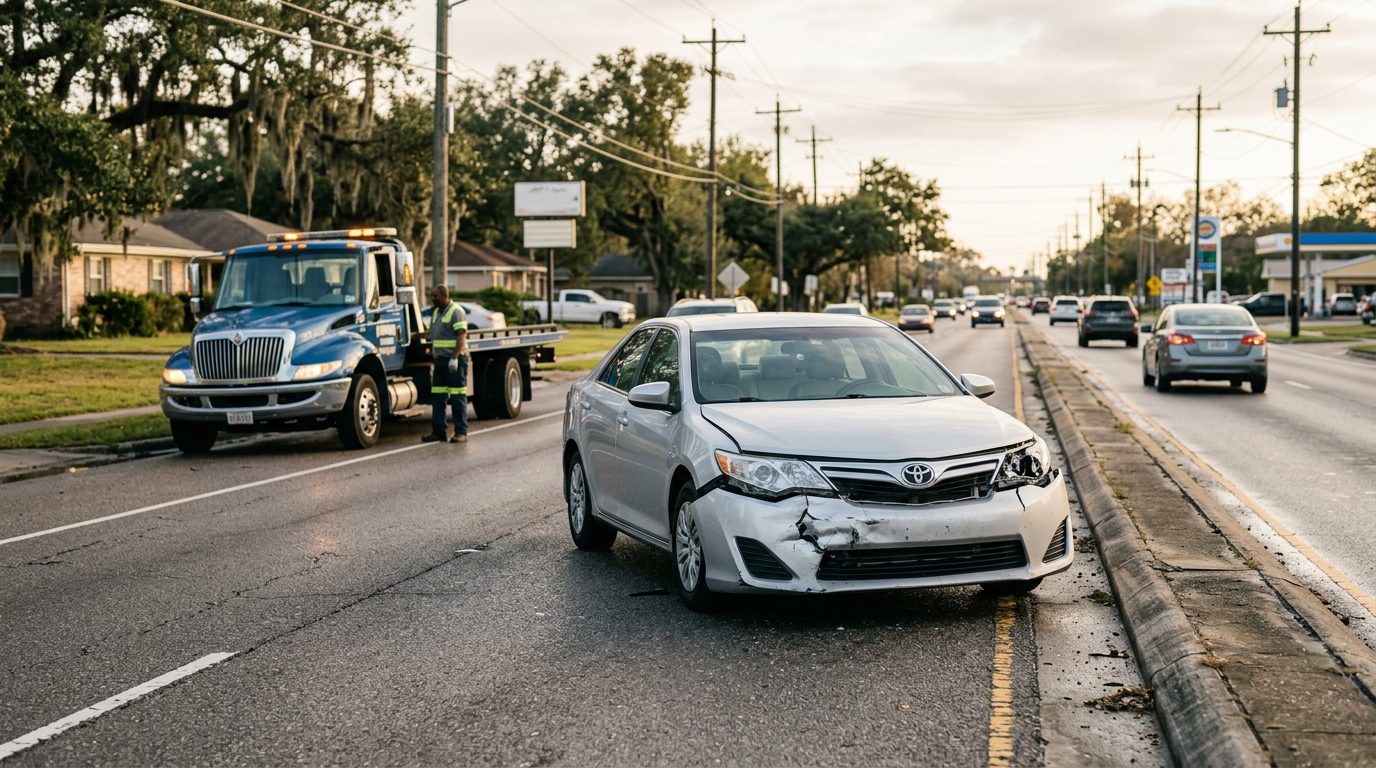
After a crash, one of the first questions is who pays to fix or replace your car. In Louisiana, vehicle damage is usually paid by the at-fault driver’s liability insurance or your own collision coverage.
Which path fits depends on who caused the crash, what coverage you carry, and whether the other driver was insured. Here is how each path works and the time limits that apply.
Who Pays for Vehicle Damage After a Car Accident in Louisiana?
When another driver caused the crash, that driver or the driver’s insurer normally pays to repair the damage. Louisiana law places this duty on the person at fault. Under La. Civ. Code art. 2315, a person whose act causes damage to another must repair it when the damage happened through that person’s fault.
La. Civ. Code art. 2316 makes a person responsible for damage caused by negligence, imprudence, or want of skill.
Louisiana also requires liability insurance. La. R.S. 32:900 requires a motor vehicle liability policy to cover damage to other people’s property, with a limit of twenty-five thousand dollars for any one accident.
That gives you three main routes. You can file a property damage claim with the at-fault driver’s insurer. You can use your own collision coverage. Or, if the other driver is uninsured, you may use uninsured motorist property damage coverage. The sections below explain each one.
If an unpaid repair or a disputed fault question has left your car stuck after a crash, you don't have to sort out the insurance steps alone. Reach out for a free, confidential consultation with Przemek Lubecki. Talk it through with our team — the first consultation is free, confidential, and carries no obligation.
Filing a Property Damage Claim With the At-Fault Driver’s Insurer
You can ask the at-fault driver’s liability insurer to pay for repair or replacement of your vehicle. A claim may include the repair cost or total loss value, towing and storage fees, and loss of use, such as a rental while your car is out of service.
Start by gathering records. Save photos, repair estimates, towing and rental receipts, and every letter or email from the insurer. Keep your claim number handy when you call.
Get the crash report too. Under La. R.S. 32:398, the investigating officer must tell each driver to report the following to all parties harmed in the crash: the name and address of the owner and the driver of the vehicle, the license number of the vehicle, and the name of the liability carrier and the name, address, and telephone number of the insurance agent who procured the liability policy. On request, crash reports must be made available to the parties to the crash, their insurers and attorneys, and the other persons the law lists, within seven working days after the investigation is complete.
An adjuster may ask for a recorded statement. You can ask questions before you answer. If you give a written or recorded statement, the person who took it must give you a true and complete copy. La. R.S. 13:3732 requires that copy within twenty days after your written demand.
Using Your Own Collision Coverage
If you carry collision coverage, your own insurer can pay to repair your vehicle, subject to your policy’s deductible. A higher deductible means more comes out of your pocket before the insurer pays.
You might use this route when the other driver can’t be identified, when fault is disputed, or when you want repairs to start sooner. Check your declarations page for your collision deductible, rental reimbursement, and other limits. Your policy terms control what your insurer pays.
If your declarations page shows no collision coverage, this route isn’t available. In that case, the uninsured motorist section below may matter more. Keep copies of everything you send to either insurer, with dates, so you can show what was reported and when.
When the Other Driver Is Uninsured or Leaves the Scene
Under La. R.S. 22:1295, uninsured motorist coverage for bodily injury does not apply when any insured named in the policy rejects coverage, selects lower limits, or selects economic-only coverage in the manner provided in Item (ii) of this Subparagraph. For how Louisiana courts have treated uninsured motorist coverage, see the Louisiana Supreme Court opinion.
Two details matter.
Hit-and-run crashes raise several coverage questions. Which coverage applies turns on the policy language and the facts. A prompt police report helps document the crash, so report it right away and ask for a copy of the crash report when it is ready.
Deadlines matter here too. Under La. R.S. 9:5629, actions for damage in motor vehicle accidents brought under uninsured motorist provisions have a two-year time limit that runs from the date of the accident. Check your policy now, not later.
Rental Cars, Towing and Loss of Use
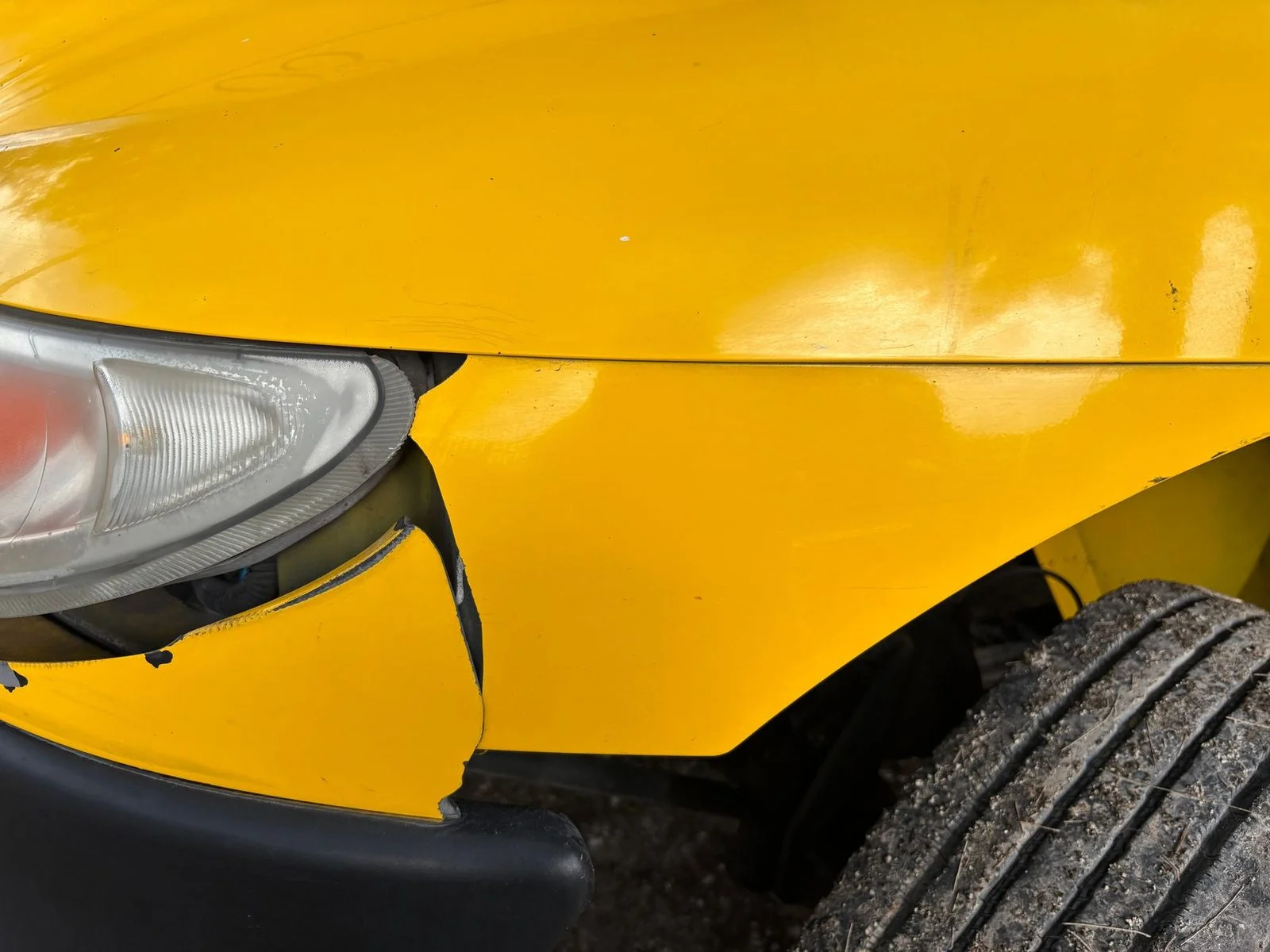
Rental costs, towing, storage, and loss of use can all be part of a vehicle damage claim. Loss of use means the transportation you need while your car is unavailable.
Your own policy may help too. Under La. R.S. 22:1296, an insurer that writes automobile liability, physical damage, or collision insurance must extend the coverage in your original policy to rental and temporary substitute vehicles. Rental reimbursement is a separate coverage, so check your declarations page to see whether you have it.
Keep a simple record while you wait. Save rental receipts, the date the shop said your car was ready, and the date the insurer declared a total loss. If you used other transportation, note the dates and costs too. These records show how long you needed a substitute.
Total Loss, Repair Estimates and Diminished Value
The starting point is repair. La. Civ. Code art. 2315 obliges the person at fault to repair the damage. Art. 2315 obliges the person by whose fault the damage happened to repair it; it does not say when an insurer may treat a vehicle as a total loss.
Ask how the insurer valued your car. Compare its number with your own records, such as receipts for past work, photos, options or upgrades, and listings for similar vehicles. Ask for the valuation in writing.
Diminished value is the drop in a vehicle’s market value that can remain after a proper repair. It is separate from the repair bill. Whether a claim for it applies turns on the vehicle’s history and how it was damaged, so raise the question early.
Not sure what your next step is?
Talk it through with our team — the first consultation is free, confidential, and carries no obligation.
Fault, Comparative Negligence and Time Limits
Your share of fault can reduce what you recover. For accidents and injuries on or after January 1, 2026, La. Civ. Code art. 2323 bars recovery when the degree or percentage of negligence attributable to the person suffering the injury, death, or loss is fifty-one percent or more. Below that line, damages are reduced in proportion to the person’s share of fault.
Parking lot crashes show how fault works. Fault turns on who failed to use reasonable care, such as while backing up, driving too fast, or yielding. Insurers may argue shared fault to lower what they pay, so clear photos, the crash report, and witness names matter.
Time matters too. For damage arising after July 1, 2024, La. Civ. Code art. 3493.1 provides that delictual (tort) actions are subject to a liberative prescription of two years, which commences to run from the day that injury or damage is sustained. It does not run against minors or interdicts in actions involving permanent disability brought under the Louisiana Products Liability Act or state law governing product liability actions in effect at the time of the injury or damage. Video footage and witness memories can fade, so waiting can make evidence harder to gather.
Common Questions
Who pays for a rental car after a crash in Louisiana?
Your own policy may extend coverage to a rental. In a property damage claim, the at-fault driver’s insurer may be asked to cover reasonable rental costs.
Can I file with the other driver’s insurer and my own insurer?
You may pursue either path or both, and the right mix depends on the facts.
Can I still recover if I’m partly at fault?
For accidents on or after January 1, 2026, you can if your share of fault is less than fifty-one percent. Your damages are reduced by that share.
Talk With Przemek Lubecki About Your Vehicle Claim
You can talk with Przemek Lubecki about your vehicle claim in a free, confidential initial consultation, with no obligation to continue. Mr. Lubecki is the lawyer responsible for this page, and our office is in New Orleans.
Our firm represents people in car, truck, and commercial vehicle crashes. Our firm may associate or refer a case to other law firms. If a case is likely to be referred, we will say so.
Bring the repair estimate, the insurer’s letters, the crash report number, and your policy declarations page. These help us review where your claim stands.
If an unpaid repair, a disputed fault question, or a hit-and-run has left your car stuck, you don’t have to work through the insurance steps alone. Call 855-LUBECKI or request a free case evaluation.
Questions to Settle Early in Your Vehicle Claim
Gather your records
Photos of the vehicles, the police report, repair estimates and any towing or storage receipts help show what was damaged and what it cost.
Know which policy applies
Your own collision or comprehensive coverage, and the other driver's liability coverage, may each play a role. Each path has its own steps.
Watch the paperwork
Insurers often send releases, appraisals and total-loss offers quickly. Read them carefully before you sign or accept a figure.
Plan for a rental
Ask early how a rental vehicle will be handled while your car is being repaired or evaluated, so you are not left without transportation.
Before You Sign Anything
Do not sign a repair release, a total-loss settlement or a medical authorization without reading it first. Once a document is signed, it can be difficult to reopen the issue.
A Simple Path Through the Vehicle Claim
1. Document the damage
Take clear photos from several angles, keep every receipt and write down what happened while it is still fresh.
2. Identify the insurers
Note each insurance company involved, the claim numbers and the adjuster's contact details, then keep a running log of calls.
3. Review the offers
Compare any repair estimate or total-loss valuation against your records. Ask questions about anything you do not understand.
4. Get a second look
Speaking with a Louisiana trial lawyer about the facts of your crash can clarify your options before you accept a final number.