
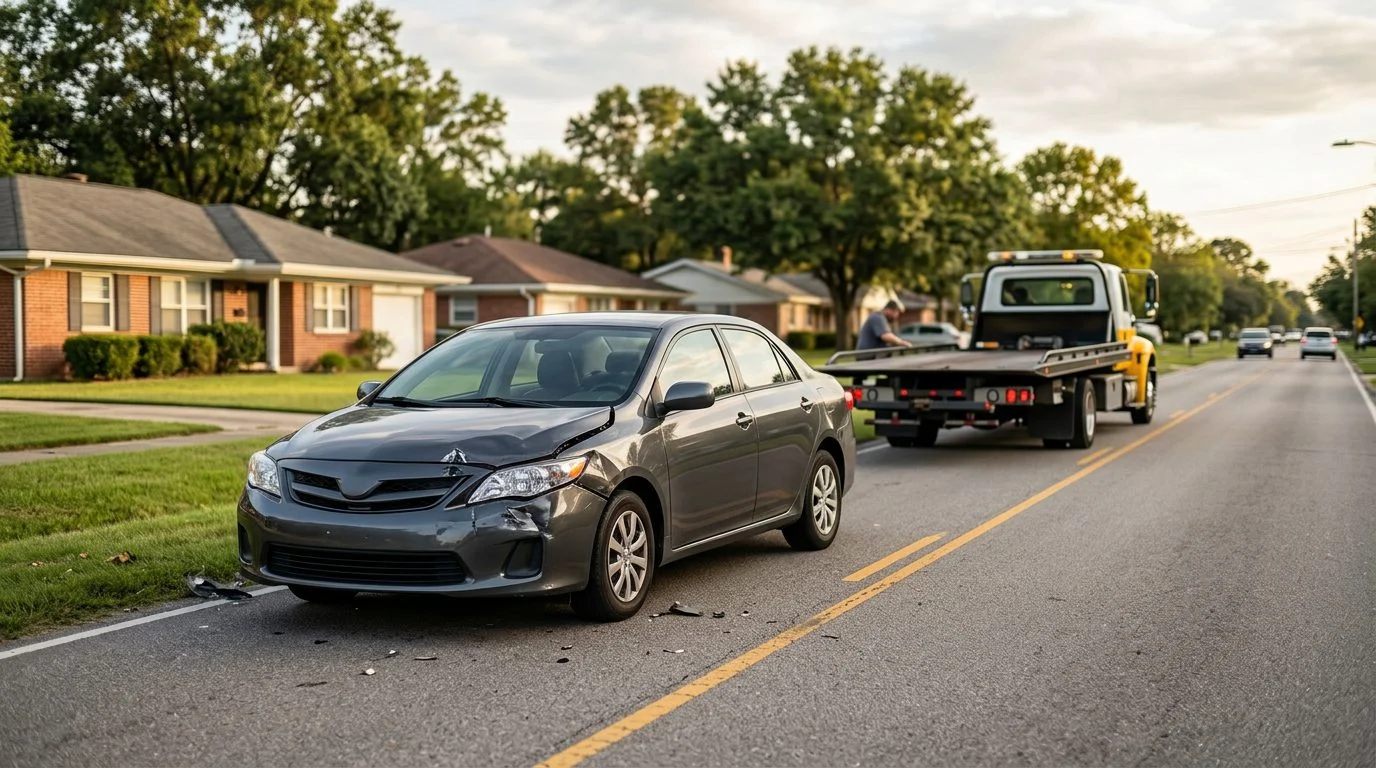
New Orleans | Car Accidents
Your Car Accident Report: What Is Public and What Is Not
Przemek Lubecki, a trial lawyer with the firm's New Orleans office, explains how crash reports are kept and how to approach one after a collision.
By Przemek Lubecki · Published November 19, 2026
If you were hurt in a crash, or you are helping someone who was, you may wonder whether the police report is open to anyone. Under La. R.S. 32:398, police agencies provide copies of crash reports for a fee. This page explains what a report contains and how to ask for one. For the bigger picture, see our car accident claim guide.
Is an accident report public record in Louisiana?
Under La. R.S. 32:398(D)(1), agencies shall provide copies of crash reports and may charge a fee of no more than five dollars for a report of up to two pages, or no more than twenty dollars, including all service fees and other charges, for a report longer than two pages. Louisiana law governs how crash reports are handled under La. R.S. 32:398. Under La. R.S. 32:398, the state police, a local police department, or a sheriff’s office provides copies of crash reports, and it may charge a fee for them.
“Public record” and “who may obtain a copy” are two different questions. The first asks whether the file is open to everyone. The second asks which people the law allows to get it. The answer to the second is covered below.
Some websites describe crash reports as public. Those descriptions often blur these two questions. Every case depends on its own facts, and the details of a particular matter can affect how it is handled.
If you are sorting through a crash report while you recover, or you are gathering records for a family member after a crash, you do not have to do it alone. Talk it through with our team — the first consultation is free, confidential, and carries no obligation.
What is a crash report?
A crash report is the written record a police agency prepares after a motor vehicle crash. It documents what the agency found at the scene. Under state law, the report is designed to disclose the cause of the crash, the conditions then existing, and the persons and vehicles involved. (La. R.S. 32:398)
The Department of Public Safety and Corrections sets the electronic form and format for these reports. The agency that creates a report owns it. (La. R.S. 32:398)
A crash report is a record of the crash. It is not a lawsuit, and it does not decide a claim. Whether a claim is won or lost turns on the facts, the evidence and the law, not on the report alone.
Do crash reports go on your record?
A crash report and a traffic ticket are different documents. The report describes the crash. A citation or criminal charge is a separate matter that may or may not follow from what happened at the scene.
Whether any citation or charge exists depends on the facts of the crash and what the agency did. Keep the two questions apart when you request records. Ask for the crash report, and ask separately about any citation.
If you want to know how fault is discussed in a claim, see what vehicular negligence means.
How long after an accident must it be reported in Louisiana?
Louisiana requires the driver of a vehicle in a crash that causes injury or death, or property damage over five hundred dollars, to immediately notify the local police department if the crash happens in a city or town, or the nearest sheriff’s office or state police station if it happens outside one. The driver also has other duties under the same statute, including giving his name, address, and the registration number of the vehicle he was driving to any person injured in the crash or to the driver or occupant of or person attending any vehicle or other property damaged in the crash. (La. R.S. 32:398)
A separate statute lets an operator report a crash in writing to the commissioner. That report must declare the vehicle’s insurance or security information. (La. R.S. 32:871)
Prompt reporting helps create an accurate record while the details are fresh. An injured person should also get medical care without waiting on paperwork.
Who can request a New Orleans or Louisiana accident report, and what do you need?
A police report of two pages or fewer may cost up to five dollars. A longer report may cost up to twenty dollars in total. (La. R.S. 32:398)
Having the date, the time, the location, and the drivers’ names helps locate a report. If the other driver has no insurance, see whether it is worth suing someone with no insurance.
Why the accident report matters after a New Orleans crash
The crash report is one record a claim may draw on. Others include medical records, photographs, insurance information, and witness statements.
Crash photographs, video and audio recordings are handled differently. The state police, local police and sheriff’s offices must provide copies of these to an interested person on request. They may charge a reasonable fee. (La. R.S. 32:398)
Traffic-camera or surveillance footage is a separate kind of record. It is not part of the crash report.
Insurance information is also separate. Under La. R.S. 32:871, the Department of Public Safety and Corrections keeps a record of the insurance or security information declared under subsection A, and upon written request and payment of a fifteen dollar fee by any interested person, it forwards that information. (La. R.S. 32:871)
Timing of any insurance payment depends on the facts of each claim. For that topic, see how long a car insurance payout takes.
Not sure what your next step is?
Talk it through with our team — the first consultation is free, confidential, and carries no obligation.
Talk with a New Orleans trial lawyer about your crash
If you are sorting through a crash report while you recover, or you are gathering records for a family member after a crash, you do not have to do it alone. Przemek Lubecki is the responsible lawyer for this page. The New Orleans office handles these matters.
Call 855-LUBECKI or request a free case evaluation. The first consultation is free, confidential, and carries no obligation to continue.
American Trial Lawyer, LLC may associate or refer a case to other law firms.
Frequently Asked Questions
Is an accident report public record in Louisiana?
Not in the way most public records are. Under La. R.S. 32:398, agencies shall provide copies of crash reports.
Who can get a copy of a Louisiana crash report?
Rules and fees can change, so the agency’s current requirements apply.
Which agency keeps the accident report?
The agency that investigated the crash, such as the Louisiana State Police or a local police department, usually keeps the report. Ask that agency which office handles crash report requests and what information it needs from you.
Can an attorney help me get an accident report?
Yes. American Trial Lawyer can help clients request and review a crash report as part of their case. Contact our New Orleans office for a free, confidential consultation with no obligation to continue.
How We Work With Families After a Crash
Review the report with you
We go through the crash report line by line and explain what it contains and what it leaves out.
Plain-language answers
Crash paperwork can be confusing. We explain each step in terms you can follow without legal training.
Based in New Orleans
Our office is in New Orleans, and we serve people across Orleans Parish, the New Orleans metro area and Louisiana.
Referrals when needed
The firm may associate or refer a case to other law firms. If that is likely, we will tell you before you decide anything.
Important: Report Rules Can Change
Requirements for requesting a copy, and any fees, can change over time. Do not rely on an older rule or a secondhand summary. Bring your questions to us and we will review your situation with you.
Common Questions About Crash Reports
Which agency keeps the report?
The agency that investigated the crash usually holds the official report. Knowing which agency responded to your collision helps you track down the right record.
Who can request a copy?
We can explain how those rules affect your family.
Why the report matters
A crash report records the scene, the parties and the officer's observations. It is one of many sources we review when we look into a collision.
What to do next
Keep photos, medical records and any insurance letters. Share them with us so we can look at the full picture from the start.