
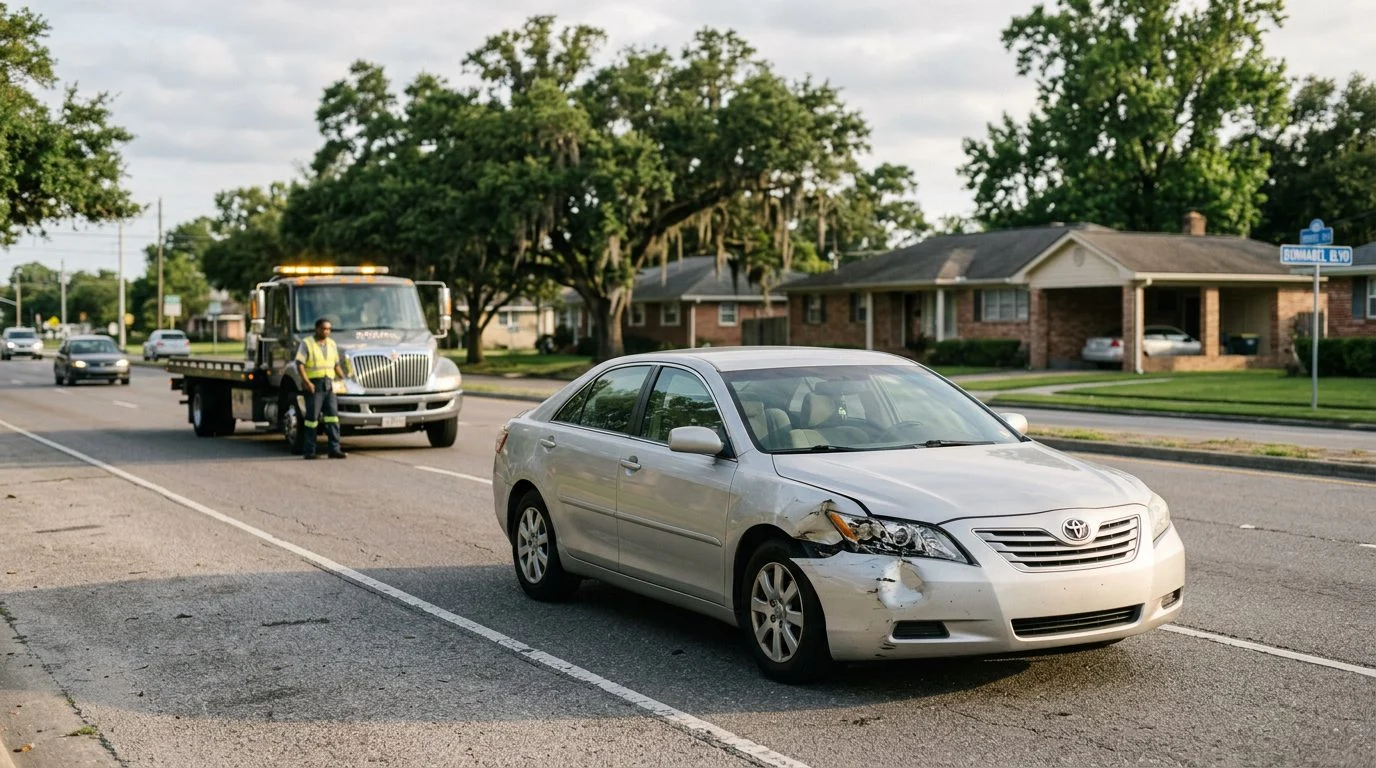
Car Accidents | New Orleans, Louisiana
Waiting on a Car Insurance Payout? Here's What Shapes the Wait
After a crash, the calendar can feel like it is working against you. Learn where delays usually start and how you can keep your claim moving.
By Przemek Lubecki · Published November 11, 2026
Waiting on an insurance payment after a crash is stressful. It’s harder still if you’re sore, without a car, or helping a family member through the same wait. There’s no fixed number of days for a car insurance payout in Louisiana. The time depends on who was at fault, how serious the injuries are, how the vehicle damage is handled, and how the insurer processes the file.
This page explains the usual steps and what slows them down. It is general information about Louisiana claims, not advice about your specific claim.
The short answer: why car insurance payouts take different amounts of time
A car insurance payout can take a few weeks or several months. Simple claims with clear fault and minor vehicle damage tend to close faster. Claims with disputed fault, ongoing medical treatment, or several coverages usually take longer. No single timeline fits every claim, and no one can give you a set date.
Four things drive most of the timing. They are who caused the crash, how the vehicle and any injuries are documented, how many coverages are involved, and how quickly each side responds. The insurer’s internal workload also plays a role, and you can’t control that part. The sections below cover each factor in plain terms.
If you're still waiting on an insurer after a crash in Orleans Parish, you don't have to sort out the next steps alone; our team is glad to talk through your situation. Talk it through with our team — the first consultation is free, confidential, and carries no obligation.

The typical stages of an auto insurance claim
Most claims move through the same basic stages, though not always in a straight line. The first step is reporting the accident and opening a claim with your insurer. Share the basic facts, your policy details, and the other driver’s information.
Next, the vehicle is assessed. An estimate or inspection shows whether the car can be repaired or is a total loss. If you claim injuries, the parties review medical records and bills. Injury claims often wait until treatment is far enough along to judge.
Then comes the liability investigation. The insurer reviews the crash report, statements, photos, and other evidence to decide who was at fault. This stage often takes the most time, especially when the facts are disputed.
After that, the insurer makes a settlement offer, and the sides negotiate. The final stage is payment and closing. Closing can slow down when liens or reimbursement claims, such as those from a health plan, must be sorted out before the money is final.
What affects how long an insurance claim takes
Fault is the biggest factor. Clear fault usually means a quicker offer. Disputed fault means more investigation. Louisiana uses a modified comparative fault rule for accidents on or after January 1, 2026. Under Louisiana Civil Code article 2323, if a person suffers injury partly as the result of their own negligence and partly as a result of the fault of another person or persons, and their share of negligence is 51% or more, they recover no damages. Louisiana Civil Code article 2323 provides that if the degree or percentage of negligence attributable to the person suffering injury, death, or loss is equal to or greater than fifty-one percent, that person shall not be entitled to recover damages. If it is less than fifty-one percent, the amount of damages recoverable shall be reduced in proportion to the degree or percentage of negligence attributable to that person. If the injury, death, or loss results partly from the person’s own negligence and partly from the fault of an intentional tortfeasor, the claim for recovery of damages shall not be reduced.
Injury treatment is the second factor. A claim is usually not valued until the injured person’s condition and treatment are documented. An injury that is still healing may not be ready for a fair evaluation.
Third, several coverages or vehicles add steps. A claim may involve liability coverage, collision coverage, medical payments coverage, and uninsured motorist coverage, each with its own paperwork.
Fourth, missing documents stall claims. Crash reports, repair estimates, and medical bills all need to arrive. Each missing piece can add weeks.
If the crash involved a rideshare app, the rules are more specific. Under La. R.S. 45:201.8, a transportation network company and its insurers must cooperate within ten business days of a request for information in a claims coverage investigation.
Property damage claims versus injury claims
Vehicle-only claims for repairs or a total loss often move faster than claims with bodily injury. A repair estimate can be made early. A total loss needs a vehicle valuation and title paperwork, which adds steps but tends to be more predictable.
Injury claims follow a different path. They often wait until treatment is finished or the medical picture is clear. Medical bills also matter. Under La. R.S. 9:2800.27, when a health insurer or Medicare paid a contracted provider, recovery of those medical expenses is limited to the amount actually paid, plus cost-sharing amounts, not the amount billed. That rule can change how final payment is calculated.
For a Medicare secondary payer beneficiary, the order of payment is also a factor.
Rental coverage is a related point. Under La. R.S. 22:1296, an approved insurer writing auto liability, physical damage, or collision coverage must extend that coverage to rental and temporary substitute vehicles. That insurance is primary, unless other automobile insurance coverage or financial responsibility protection is purchased by the insured for the rental vehicle, in which case that coverage becomes primary.
One accident can produce both tracks. The vehicle claim may close while the injury claim stays open.
When a delayed claim may raise a legal question
A delay is not automatically a legal violation. Whether a slow payment raises a legal question depends on the facts, the type of coverage, and the reasons the insurer gives. Louisiana has rules about how insurers handle claims, and those questions turn on the details of your file.
Records matter when a delay is questioned. Keep the dates you sent proof of loss and documents. Save every written communication. Note any reason the insurer gave for holding the claim. Clear records make the timeline easier to review.
Be aware that a direct suit against the other driver’s insurer is limited. Louisiana’s Direct Action Statute, La. R.S. 22:1269, generally does not allow an injured person to bring a direct action against the at-fault party’s liability insurer, and it permits one only in the situations listed in the statute. Limited situations allow it, such as when the insured is insolvent or bankrupt.
Common questions about insurance payouts
How long does a car accident settlement take?
No fixed schedule applies. A settlement comes after fault, injuries, and documentation are clear enough for both sides to agree.
Does my insurance go up after a claim that is not my fault?
It depends on your policy and your insurer. Ask your insurer how a not-at-fault claim is treated under your own policy.
What is subrogation in car insurance?
In general terms, after an insurer pays its own policyholder, it may seek repayment from the other party’s insurer. That step can add time before the file closes.
The first offer may also come before all injuries and bills are known. An early offer does not always reflect the full picture still being evaluated.
Not sure what your next step is?
Talk it through with our team — the first consultation is free, confidential, and carries no obligation.
Steps that can help keep a claim moving
Keep copies of the crash report, repair estimates, medical bills, and every written message with the insurer. Under La. R.S. 32:398, crash reports and the information in them are confidential and may be obtained only by listed persons, such as the parties to the crash, their insurers and their attorneys. Upon request, those persons receive crash reports within seven working days of the investigation’s completion.
If you gave a recorded or written statement, you have a right to a copy.
Track the dates of every contact and every request for information. Follow medical advice and keep records of treatment and missed work. Before you sign a release, understand that it may end the claim.
Talk with a New Orleans trial lawyer about your claim
If you’re still waiting on an insurer after a crash in Orleans Parish, you may be dealing with pain, bills, and questions you didn’t expect. You might be helping a relative who is waiting on a payment. You don’t have to sort this out alone. Our team can answer your questions in a free, confidential consultation, with no obligation to continue. Call 855-LUBECKI or request a free case evaluation.
Przemek Lubecki is the responsible lawyer for this page. The office is in New Orleans, Louisiana. Przemek Lubecki is licensed to practice law in Louisiana. The firm may associate or refer a case to other law firms where it handles the case type.
What Often Slows a Car Insurance Claim
Incomplete records
Missing police reports, photos, or repair estimates can leave an adjuster without what they need to evaluate the claim.
Disputed fault
When each driver tells a different story, the insurer may investigate further before responding.
Ongoing treatment
Injuries that are still being evaluated or treated can make it hard to know the full scope of a claim yet.
Several insurers
Crashes involving more than one vehicle often mean more than one insurance company is reviewing the file.
Keep Your Records Organized
Save your police report number, photos, repair estimates, medical bills, and every letter or call record from an insurer. Notes about who said what and when can make a difference. Our firm may associate or refer a case to other law firms.
Common Stages of a Car Insurance Claim
Reporting the crash
The claim usually begins when the crash is reported to the insurer and the other driver's insurer is notified.
Investigation
The insurer reviews the police report, vehicle damage, and statements to understand how the crash happened.
Medical documentation
Records of treatment, diagnoses, and bills help show the physical and financial impact of the crash.
Settlement discussions
Once the facts and injuries are clearer, both sides may negotiate. Each step depends on the details of your case.
Talk with Przemek Lubecki About Your Car Accident Claim. Our New Orleans office is ready to listen. The first consultation is free, confidential, and without obligation.
Related practice areas
- Car Accident Claims in Orleans Parish
- Car Accident Claim on Earhart Boulevard, New Orleans
- Concussion After a Car Accident in New Orleans