
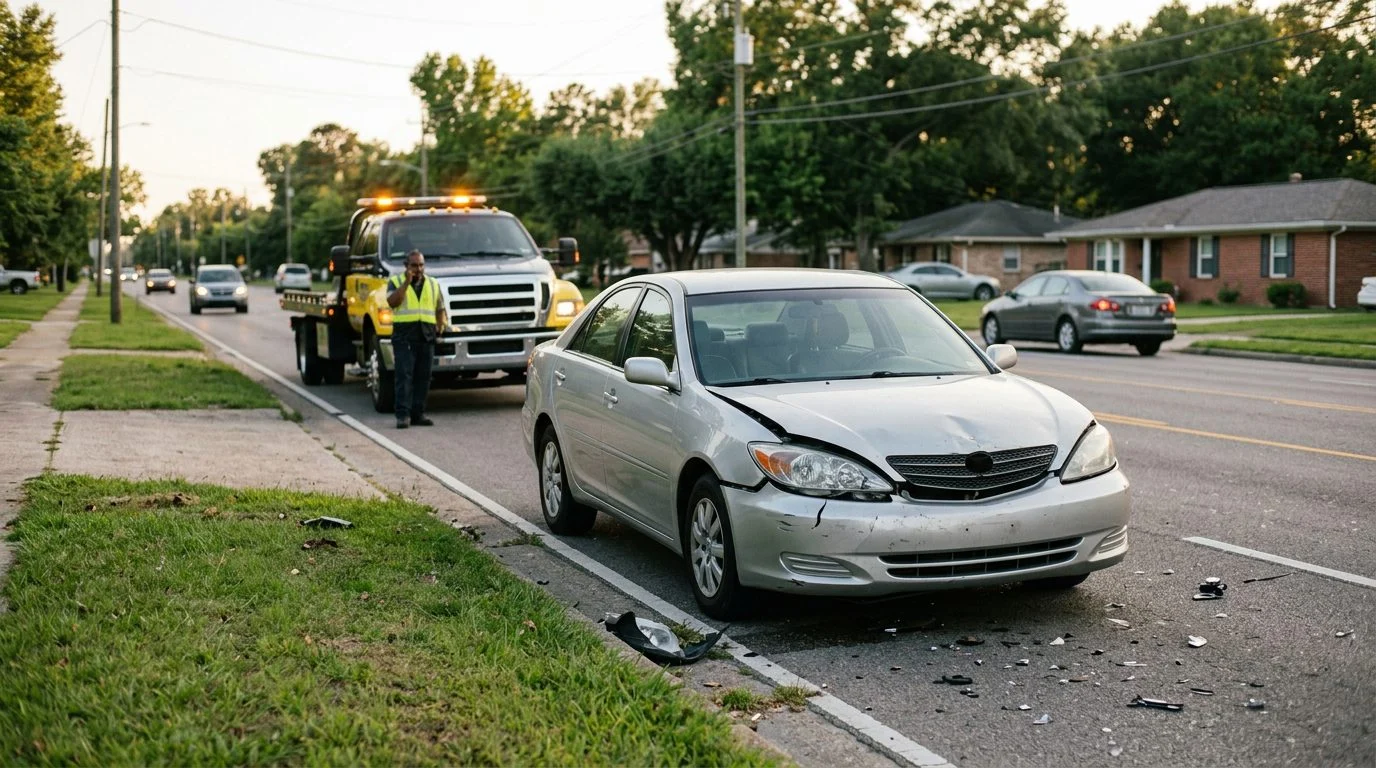
Car Accidents | New Orleans, Louisiana
Is Louisiana a No-Fault State for Car Accidents?
Understanding how fault works after a crash can help you make sense of what comes next. Przemek Lubecki and our team are here to talk through your situation.
By Przemek Lubecki · Published October 25, 2026
Is Louisiana a no-fault state for car accidents? No. Louisiana is an at-fault state, so the driver whose negligence caused the crash is generally responsible for the damage they cause. This matters because it affects whose insurance may pay and how your claim works. If you were hurt and you’re trying to sort it out, this page explains the basics in plain language.
Short Answer: Louisiana Is a Fault State, Not a No-Fault State
Louisiana is a fault state. In a no-fault system, each driver’s own insurance pays their own injury benefits, no matter who caused the crash. Louisiana’s basic rule works differently. Under La. Civ. Code art. 2315, every act of a person that causes damage to another obliges the person whose fault caused it to repair that damage.
For an injured person, this means a claim is built around the at-fault driver. The claim can cover losses such as medical bills, but damages do not include costs for future medical treatment unless directly related to a manifest physical or mental injury or disease, and the claim is directed at the driver whose fault caused the crash. Two crashes can fall under the same rule and still end differently, because the facts differ. How fault is assigned matters most, and the next section explains that.
If you were hurt in a crash and aren't sure how fault works here, our team can talk it through with you at no cost and with no obligation. Talk it through with our team — the first consultation is free, confidential, and carries no obligation.
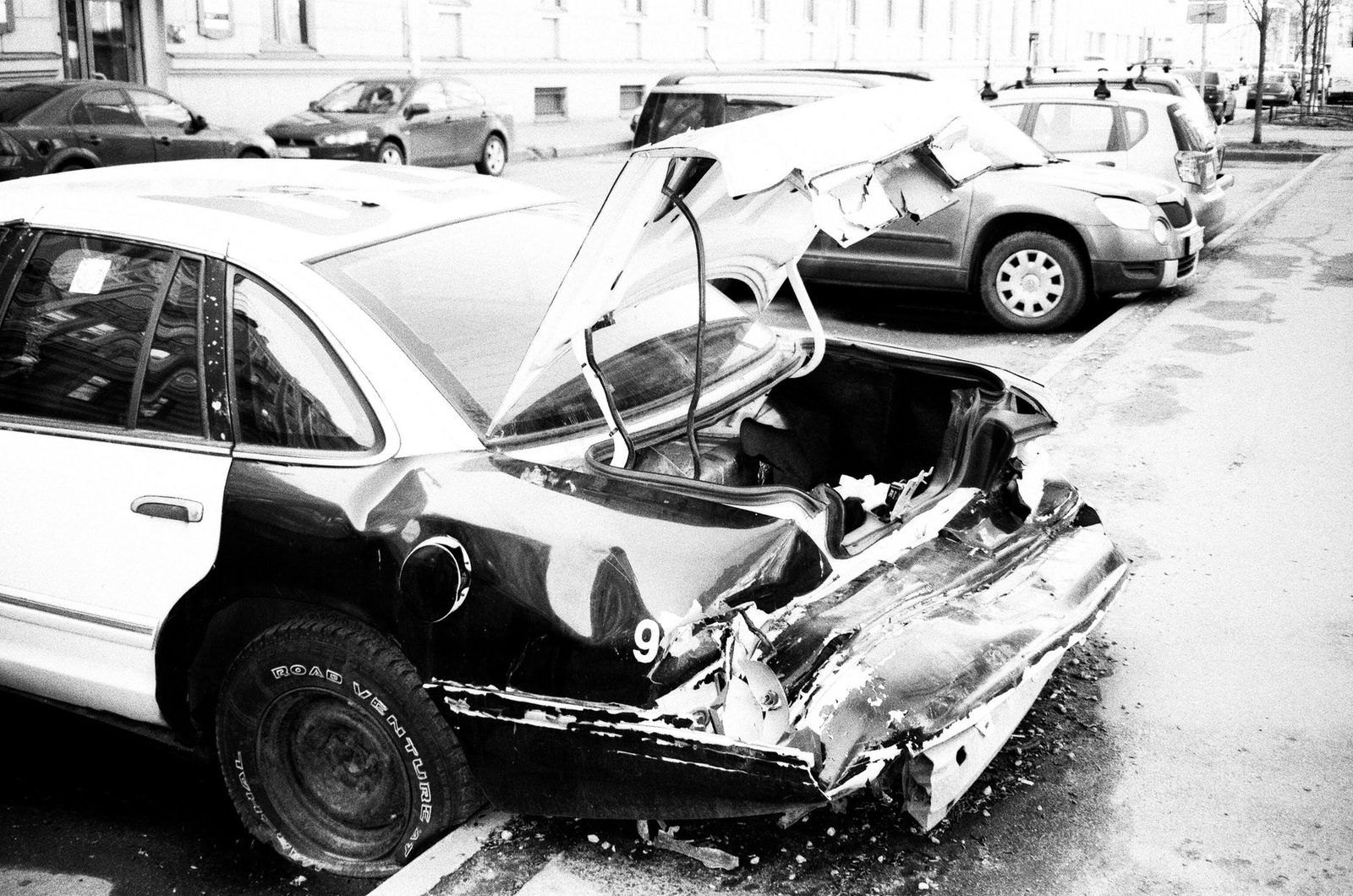
How Fault Is Decided Under Louisiana Law
Fault comes down to negligence. La. Civ. Code art. 2316 says a person is responsible for damage caused not only by an act but also by negligence, imprudence, or want of skill.
Many crashes involve more than one driver at fault. Louisiana uses comparative fault, which means shared fault is measured by percentage. Under La. Civ. Code art. 2323, if the degree or percentage of negligence attributable to the person suffering injury, death, or loss is equal to or greater than fifty-one percent, that person shall not be entitled to recover damages. Under La. Civ. Code art. 2323, if the degree or percentage of negligence attributable to the person suffering injury, death, or loss is less than fifty-one percent, the amount of damages recoverable is reduced in proportion to that person’s degree or percentage of negligence.
The same article counts the fault of everyone who contributed to the harm, even someone who is not part of the lawsuit. Drivers and insurers often dispute these percentages. Each crash turns on its own evidence about what each driver did.
Required Insurance and What Your Own Policy Can Do
Louisiana requires registered self-propelled motor vehicles to carry automobile liability coverage, or another form of security the law lists, except certain vehicles such as agricultural or forest vehicles during off-highway seasons, exhibit or parade vehicles, and lease-bound mobile rig haulers (La. R.S. 32:861). Under La. R.S. 32:861, every self-propelled motor vehicle registered in this state, except the exemptions listed in that section, must be covered by an automobile liability policy with liability limits as defined by R.S. 32:900(B)(2) or 900(M), or by a binder for that policy, a motor vehicle liability bond, a certificate of the state treasurer for a cash or securities deposit, or a certificate of self-insurance under R.S. 32:1042. Certain agricultural or forest vehicles used off the highway, vehicles used primarily for exhibits, parades or shows, and lease-bound mobile rig haulers are excepted.
Your own policy can add protection. Under La. R.S. 22:1295, insurers issuing automobile liability policies generally are required to offer uninsured and underinsured motorist coverage, subject to exceptions, such as when the named insured rejects coverage, selects lower limits, or selects economic-only coverage. Separately, La. R.S. 22:1295(1)(d) addresses property damage rather than bodily injury: where a policy does not provide collision coverage for a listed vehicle and the named insured has not rejected uninsured motorist coverage, the insurer must, on written request, provide coverage up to the lesser of the vehicle’s actual cash value or the minimum property damage liability amount required by law. Under the bodily injury provisions of La. R.S. 22:1295(1)(a)(i), the named insured can reject the coverage, select lower limits, or choose economic-only coverage. Under La. R.S. 22:1295(1)(a)(i), this coverage applies when you are legally entitled to recover nonpunitive damages from owners or operators of uninsured or underinsured motor vehicles because of bodily injury, sickness, or disease, including death resulting therefrom.
Economic-only coverage costs less, but it excludes noneconomic loss, such as pain, suffering, and mental anguish. Check your policy’s declarations page to see which coverages you carry.
When the Other Driver Has No Insurance
If the at-fault driver has no insurance, your own uninsured motorist coverage may be an important source of recovery. Louisiana’s “No Pay, No Play” rule also affects that driver. Under La. R.S. 32:866, there shall be no recovery for the first one hundred thousand dollars of bodily injury and no recovery for the first one hundred thousand dollars of property damage based on any cause or right of action arising out of a motor vehicle accident, for such injury or damages occasioned by an owner or operator of a motor vehicle involved in the accident who fails to own or maintain compulsory motor vehicle liability security, but the statute sets out further exceptions, including where the other driver is in furtherance of a felony offense at the time of the accident, where the other driver is cited under La. R.S. 14:98 and convicted or pleads nolo contendere, where the other driver intentionally causes the accident, or where the other driver flees the scene.
If the other driver is found liable and the other vehicle was not covered by compulsory motor vehicle liability security, that driver can raise this limit as a defense. The rule has an important exception for passengers. Under the same statute, a passenger can still claim for injury caused by another driver’s negligence. The exception does not apply if the passenger is also the owner of the uninsured vehicle.
Sudden Braking and Who Is at Fault in a Rear-End Crash
Rear-end crashes are a fact question. Louisiana law says a driver shall not follow another vehicle more closely than is reasonable and prudent, given speed, traffic, and road conditions (La. R.S. 32:81). Under La. R.S. 32:81, the driver of a motor truck traveling upon a highway outside a business or residential area shall not follow another motor truck within four hundred feet, though this does not prevent one motor truck from overtaking and passing another.
A sudden stop can be one factor in how fault is shared. It also does not automatically clear the lead driver. Those reviewing the crash look at speed, following distance, road and weather conditions, and whether the lead driver had a reason to stop.
Evidence That Helps Establish Fault
Evidence from the scene and early records helps show how a crash happened. Useful items include photos of the vehicles and scene, names and phone numbers of witnesses, dashcam or nearby video, and medical records. Records of prompt treatment and follow-up care document the injuries.
Crash reports are confidential and available only to the parties, parents or guardians of a minor party, their attorneys, their succession representatives, insurers (or insurance support organizations under contract), healthcare providers who treated a party, and news-gathering organizations requesting documents related to a specific crash (La. R.S. 32:398). Upon request, they are made available within seven working days after the investigation is complete.
If you give a recorded statement after an injury, you can ask for a copy. Under La. R.S. 13:3732, the person who took the statement must provide a true and complete copy within twenty days after written demand.
Not sure what your next step is?
Talk it through with our team — the first consultation is free, confidential, and carries no obligation.
Deadlines to Keep in Mind
In Louisiana, claims for injuries caused by fault generally have a two-year prescriptive period under La. Civ. Code art. 3493.1, and that article contains exceptions, including for minors and interdicts in certain actions involving permanent disability under the product liability provisions. La. Civ. Code art. 3493.1 sets a two-year liberative prescription, or time limit, for delictual actions. That period starts on the day the injury is sustained.
Claims under uninsured motorist coverage have their own two-year period, which runs from the date of the accident under La. R.S. 9:5629. Families pursuing a wrongful death claim should ask about their time limits early. Evidence can fade, and witness memories can change, so waiting can make the record harder to build.
Common Questions
Is Louisiana a no-fault state for car accidents?
No. Louisiana is an at-fault state, so the driver who caused the crash is generally responsible.
What if the other driver was at fault but had no insurance?
Your own uninsured motorist coverage may apply. The No Pay, No Play rule can also limit what the uninsured driver may recover.
Does a passenger have a claim?
Under La. R.S. 22:1295, uninsured motorist coverage does not apply to bodily injury, sickness, or disease, including resulting death, of an insured while occupying a motor vehicle owned by the insured if the motor vehicle is not described in the policy under which a claim is made and is not a newly acquired or replacement motor vehicle covered under the terms of the policy. This provision does not apply to uninsured motorist coverage provided in a policy that does not describe specific motor vehicles.
Talk With Przemek Lubecki About Your Crash
Being hurt, dealing with a damaged car, and answering calls from an insurance adjuster is a lot at once. Many people reading this are trying to understand whether Louisiana’s fault rules help them, or whether a family member’s crash raises these questions. You don’t have to work through it alone.
If you’d like to talk through how these rules apply to your crash, call 855-LUBECKI or request a free case evaluation. Our New Orleans office, led by Przemek Lubecki of American Trial Lawyer, LLC, offers a first consultation that is free, confidential, and without obligation. The firm may associate or refer a case to other law firms.
Be careful with recorded statements
An insurance adjuster may ask you for a recorded statement soon after a crash. Before you give one, consider speaking with a lawyer about what to say and what to leave out.
Practical steps after a car accident
Get medical care
Even if you feel fine, see a doctor. Some injuries, including brain injuries, may not show symptoms right away.
Document the scene
Photos of vehicles, roadway conditions, and any visible injuries can be useful later. Write down names, insurance details, and witness contact information.
Keep your records
Save repair estimates, medical bills, prescriptions, and notes about missed work in one place.
Talk with a lawyer
A conversation with a trial lawyer can help you understand your options before you speak with an insurer.
Why people bring their crash questions to American Trial Lawyer
Trial lawyer leadership
Przemek Lubecki leads our practice and is responsible for the content of this page.
Office in New Orleans
Our office is in New Orleans, and we serve people across Orleans Parish, the New Orleans metro, and Louisiana.
Free, confidential first consultation
Your first consultation is free, confidential, and comes with no obligation to continue.
Referrals when needed
The firm may associate or refer a case to other law firms. We will tell you if that happens.