
Car Accidents | New Orleans
A Small Dent Can Hide a Big Problem. Know What to Do Next.
Even a low-speed crash can leave hidden damage, a stack of paperwork and an insurance adjuster on the phone. Here is how to approach the claim with a clear head.
By Przemek Lubecki · Published November 11, 2026
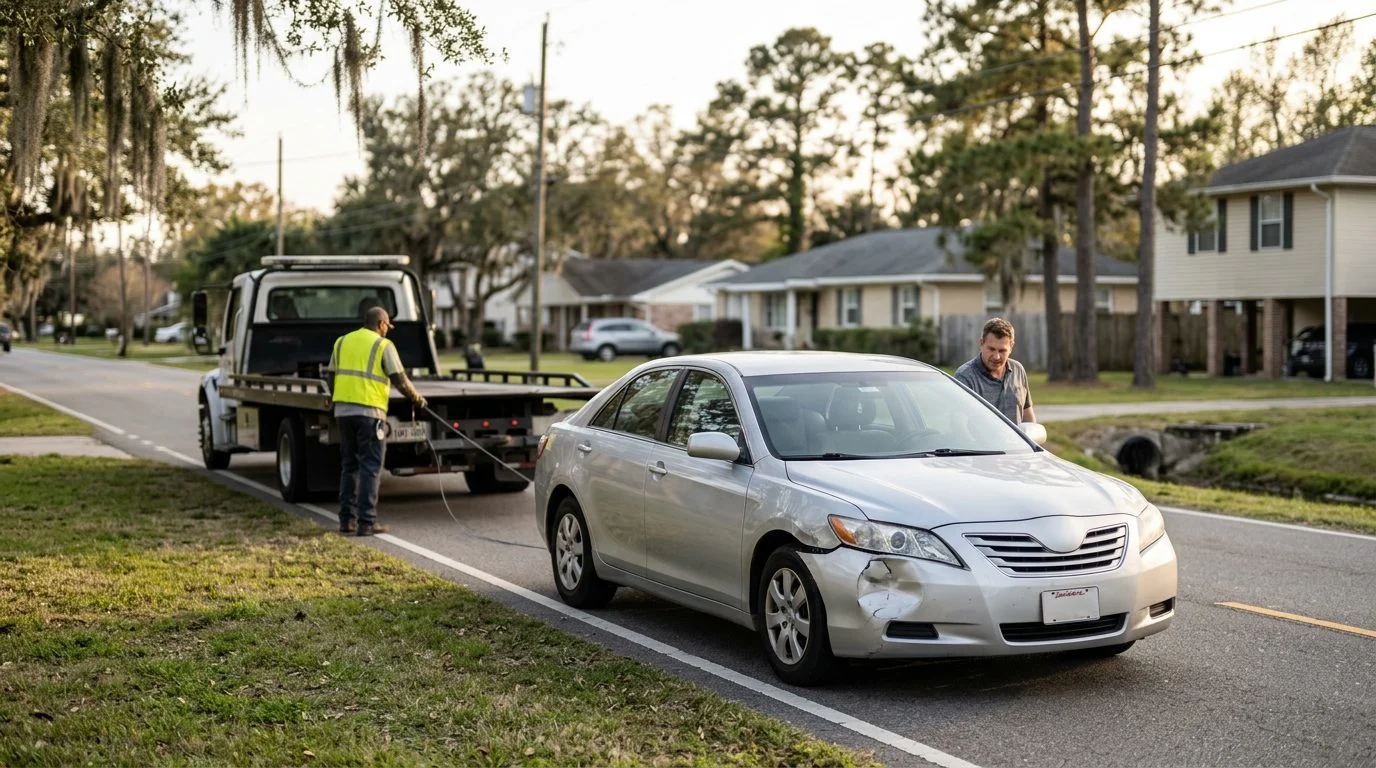
A fender bender leaves a small dent, and the other driver says it’s no big deal. Now you’re asking whether it’s worth making an insurance claim for minor damage. Small visible damage alone doesn’t settle that. Repair costs, rental needs, injuries and legal deadlines can all change the answer.
Small damage alone doesn’t decide whether a claim is worth it
Whether a claim is worth filing depends on the facts of your crash, and the size of the dent is only one fact. A low repair estimate can rise once a shop removes the bumper and finds a cracked bracket. You may also need a rental car while the vehicle is repaired. Injuries can appear after the adrenaline fades. Each of these changes what the crash actually cost you.
Louisiana law starts from a simple idea. Under La. Civ. Code art. 2315, every act that causes damage to another obliges the person at fault to repair it. Under La. Civ. Code art. 2316, a person is responsible for damage caused by negligence, imprudence, or want of skill, not only by a deliberate act.
So the real question is not only how the car looks. It is who was at fault, what harm the crash caused, and what you need now to get back on your feet.
Not sure what your next step is?
Talk it through with our team — the first consultation is free, confidential, and carries no obligation.
What counts as a minor car accident?
A minor car accident is usually a low-speed crash with limited visible damage and no obvious injuries. Other signs include no airbag deployment and drivers who could move their vehicles out of the traffic lane. The word “minor” describes the vehicle damage. It does not describe the injury, the medical bills, or the full cost of the crash.
Bigger vehicles change the picture. A truck, commercial vehicle, rideshare vehicle, or motorcycle crash can involve different rules, records, and parties. Commercial motor vehicles may fall under federal General Regulations (FMCSR Part 390), so a claim may involve more paperwork than a standard car claim.
Ask yourself a few plain questions. Did anyone feel pain? Did the airbags deploy? Does the other driver’s account differ from yours? Those answers shape what comes next.
What should you do at the scene?
Check for injuries first, then move to a safe spot if the vehicles can be moved, and record the facts before anyone leaves.
- Move to a safe location if the vehicles can be moved safely. Call 911 if anyone is hurt.
- Exchange the names and addresses of the owner and the driver, the vehicle’s license number, and the name of the liability carrier and the insurance agent, with the agent’s address and telephone number.
- Photograph both vehicles from several angles, plus the scene, traffic signs, and any skid marks. Note the date, time, and location.
- Write down witness names and contact details.
Photos taken at the scene show the damage before any repairs. Louisiana law also has a reporting duty. Under La. R.S. 32:398, the driver of a vehicle involved in a crash resulting in injury to or death of any person, or property damage in excess of five hundred dollars, must give his name, address, and the registration number of the vehicle he was driving and, upon request and if available, exhibit his license or permit to drive to any person injured in the crash or to the driver or occupant of, or person attending, any vehicle or other property damaged in the crash.
Do police care about minor accidents?
Who investigates a minor crash depends on where it happened. Under La. R.S. 32:398, state police or the sheriff’s office investigate all crashes required to be reported outside city or town limits. A city or town police department investigates all crashes required to be reported by the statute when they occur within the city or town’s corporate limits.
A crash report is an official record. It describes the cause, the conditions at the time, and the people and vehicles involved. That record can matter later, even when the damage looked small.
The same statute keeps crash reports confidential. They are shared only with listed people, including the parties, parents or guardians of a minor party, their insurers, healthcare providers who treated them, succession representatives of the parties, their attorneys, and a news-gathering organization that requests documents related to a specific crash. Upon request, they are available within seven working days after the investigation is complete. If an officer writes a report, keep the report number with your photos and notes.
Should you tell your insurance company about a minor accident?
Telling your own insurer about a crash is a common first step, even when the damage looks small. Reporting a crash and asking for a payment are different steps. Many policies set their own notice terms, so acting promptly helps.
Louisiana law also lets a driver report a claim in writing to the state commissioner. Under La. R.S. 32:871, that report must declare in writing that the vehicle is covered by security, including the insurer’s name and policy number.
Expect an adjuster to ask for basic facts, photos, the other driver’s details, and repair estimates. If an adjuster asks to record your statement, ask for a copy. Under La. R.S. 13:3732, if you were injured, the person who takes your statement must give you a true copy within twenty days after you ask in writing. If that person refuses your request, the statement may not be admissible in a civil case.
Stick to facts you know. Don’t guess about fault, injuries, or damage, and say so when you don’t know.
What are the biggest mistakes people make?
The costliest mistake is often accepting a quick payment before anyone knows the full cost of the crash.
- Taking a quick payment too early. Under La. R.S. 22:1290, a settlement under a vehicle liability policy for damage to or destruction of property owned by another person is not an admission of liability on other claims from the same accident.
- Skipping a medical check. Headaches, neck pain, and stiffness are not always felt right away. A medical visit records what the car damage does not show.
- Missing deadlines. Louisiana law generally gives two years to file a delictual (tort) action, a deadline called prescription. It starts on the day the injury or damage happens. La. Civ. Code art. 3493.1 sets this period, and exceptions exist. Policy notice terms are separate from this deadline.
- Repairing the car before documenting it. Save photos and estimates before repairs begin.
Not sure what your next step is?
Talk it through with our team — the first consultation is free, confidential, and carries no obligation.
Can small damage hide a bigger claim?
Yes, a small repair bill can sit next to medical costs, lost work time, and injuries that appear later. Medical bills matter too. In some cases, Louisiana law limits recovery of medical expenses paid by health insurance or Medicare to a contracted medical provider to the amount actually paid, plus any applicable cost sharing amounts paid or owed by the claimant, and not the amount billed. See La. R.S. 9:2800.27. See La. R.S. 9:2800.27.
For more on how general damages are handled, read pain and suffering in Louisiana.
The firm handles car, truck, commercial vehicle, rideshare, and motorcycle accident claims. It may associate or refer a case to other law firms when that is appropriate. For the wider picture, see Orleans Parish car accident claims.
Talk through your situation with Przemek Lubecki
A short, confidential conversation can help you sort out whether a claim fits your facts. You may be dealing with a car still in the shop, a sore neck you didn’t expect, and a decision about reporting while you’re still unsure what the crash means. You don’t have to sort that out alone.
Przemek Lubecki is the responsible lawyer for this page. Our office is in New Orleans, Louisiana, and our team there can go over the facts with you. The first consultation is free, confidential, and without obligation to continue. Call 855-LUBECKI to set up your free consultation.
Frequently Asked Questions
Is it worth filing an insurance claim for minor car damage?
It can be, but it depends on the repair estimate, your deductible, and who was at fault. Get a written repair estimate before deciding, because a small dent can hide damage that costs more to fix.
Will filing a claim raise my insurance rates?
It might, depending on your insurer, your policy, and who caused the crash. Ask your insurer how a claim would be treated before you file.
What if I feel sore after a minor crash, even though the car looks fine?
Some injuries, such as neck or back strain, can take hours or days to appear. See a medical provider and keep records of your visits before you decide whether to file a claim.
Should I talk to a lawyer before accepting a settlement offer for minor damage?
Consider it if the other driver disputes fault, you develop injuries, or the offer seems low. Przemek Lubecki offers a free, confidential first consultation with no obligation to continue. Call 855-LUBECKI.
Why Talk With American Trial Lawyer
Free First Consultation
Your initial consultation is free, confidential and without obligation to continue.
Przemek Lubecki Is Responsible for This Page
Przemek Lubecki, a trial lawyer, leads the firm's work for people hurt in car, truck and commercial vehicle crashes.
Office in New Orleans
Our office is in New Orleans, and we serve people across Orleans Parish, the New Orleans metro and Louisiana.
Clear Answers, No Pressure
We explain your options in plain language so you can decide what fits your situation.
Before You Accept an Offer
Do not sign a release or accept a settlement offer until you understand the full repair cost and whether you have any injuries. Our firm may associate or refer a case to other law firms.
Four Steps to Protect Your Claim
Document the Scene
Photograph vehicle damage from several angles, note the location and weather, and gather the other driver's information and any witness names.
Get a Written Repair Estimate
A written estimate from a repair shop shows the true cost. Hidden frame or sensor damage often appears only after a closer inspection.
Report the Crash to Your Insurer
Share the facts you know without guessing about fault or injuries. Keep copies of everything you send and receive.
Ask Before You Decide
If the damage, your medical condition or the other driver's coverage is unclear, talk with a lawyer before you agree to a final payment.