
New Orleans | Commercial truck crashes
Scene Guide: Steps to Take After a Commercial Truck Crash in New Orleans
A calm, practical checklist for the minutes and hours after a crash with a big rig, box truck or other commercial vehicle, from Przemek Lubecki and our team.
By Przemek Lubecki · Published November 9, 2026
Hurt in a truck crash in New Orleans, or still shaken by what just happened? You may be wondering whether to call NOPD and what to say. For most crashes with injuries, a blocked lane, a commercial vehicle, or disputed facts, calling 911 so the police can document the scene is the sensible first step.
The short answer: when to call 911 and NOPD after a truck crash
Call 911 when anyone is hurt, when a vehicle blocks traffic, or when the drivers disagree about what happened. A truck or other commercial vehicle makes an official record even more important.
Louisiana law requires a driver in a crash with injury, death, or property damage over five hundred dollars to give their name, address, and vehicle registration number. The driver must also show a driver’s license or permit to drive on request, if one is available, to any person injured in the crash or to the driver or occupant of or person attending any vehicle or other property damaged in the crash. La. R.S. 32:398 sets out these duties.
The agency that responds depends on where the crash happens. Inside city limits, the local police department investigates. In New Orleans, that is NOPD. Outside city limits, the Louisiana State Police or the sheriff’s office investigates.
If you're holding a report number, a hospital bill, or an insurer's call after a truck crash in New Orleans, our team is glad to talk through your next steps with you. Talk it through with our team — the first consultation is free, confidential, and carries no obligation.
Why an official police report matters after a truck crash
An official report gives you a dated, neutral record of the crash. It notes the time, the place, the vehicles, and the people involved. It may also list witnesses and visible damage. Those details matter later, when memories fade and insurers start asking questions.
A report is a record, not the final word on fault. Insurers and courts weigh it alongside photos, statements, and other evidence. Ask the officer for the report number before you leave.
Getting a copy takes some patience. Under La. R.S. 32:398, crash reports are confidential. Crash reports are confidential and are made available only, upon request, to the parties, parents or guardians of a minor who is a party, insurers of a party who is the subject of the report (or an insurance support organization under contract to provide claims and underwriting), healthcare providers or their agents who rendered services to a party, succession representatives, attorneys of the parties or succession representatives, and news-gathering organizations requesting documents related to a specific crash, within seven working days following the completion of the crash investigation.
Write down the report number, the investigating agency, and the officer’s name and badge number. Those details make the request faster.
What to say and what to avoid saying at the scene
Stick to facts you know, and say so when you don’t know something. Tell the officer where you were, what you saw, and where you feel hurt. Mention symptoms even if they seem minor. Pain that shows up later is harder to tie back to the crash.
Avoid guessing about speed, distance, or what the other driver meant to do. Don’t agree that the crash was your fault. Don’t sign anything beyond what the officer or medical staff require.
Louisiana’s comparative fault rule makes this matter. For crashes on or after January 1, 2026, La. Civ. Code art. 2323 bars recovery if the degree or percentage of negligence attributable to the person suffering injury, death, or loss is equal to or greater than fifty-one percent. A smaller share reduces the amount recoverable in proportion to the injured person’s own negligence, except that a claim is not reduced if the injury, death, or loss results partly from the person’s own negligence and partly from the fault of an intentional tortfeasor.
If you give a written or recorded statement about your injuries, you can ask for a copy. La. R.S. 13:3732 requires the person holding it to give you a true and complete copy within twenty days after written demand.
Commercial trucks can bring additional records into the picture
A truck crash often creates records that a car crash does not. These are questions to raise early. They are not claims about any particular company.
Federal rules require motor carriers and intermodal equipment providers to make all records and information pertaining to an accident available to authorized representatives within such time as the request or investigation may specify. They must also keep an accident register for three years after each accident (49 CFR 390.15). Records of duty status and supporting documents must be kept for at least six months from the date of receipt (49 CFR 395.8).
Hours-of-service limits and required rest breaks apply to property-carrying truck drivers. Records about them can matter in a claim (FMCSA hours-of-service rules). Post-accident drug and alcohol testing may also be required (FMCSA drug and alcohol testing).
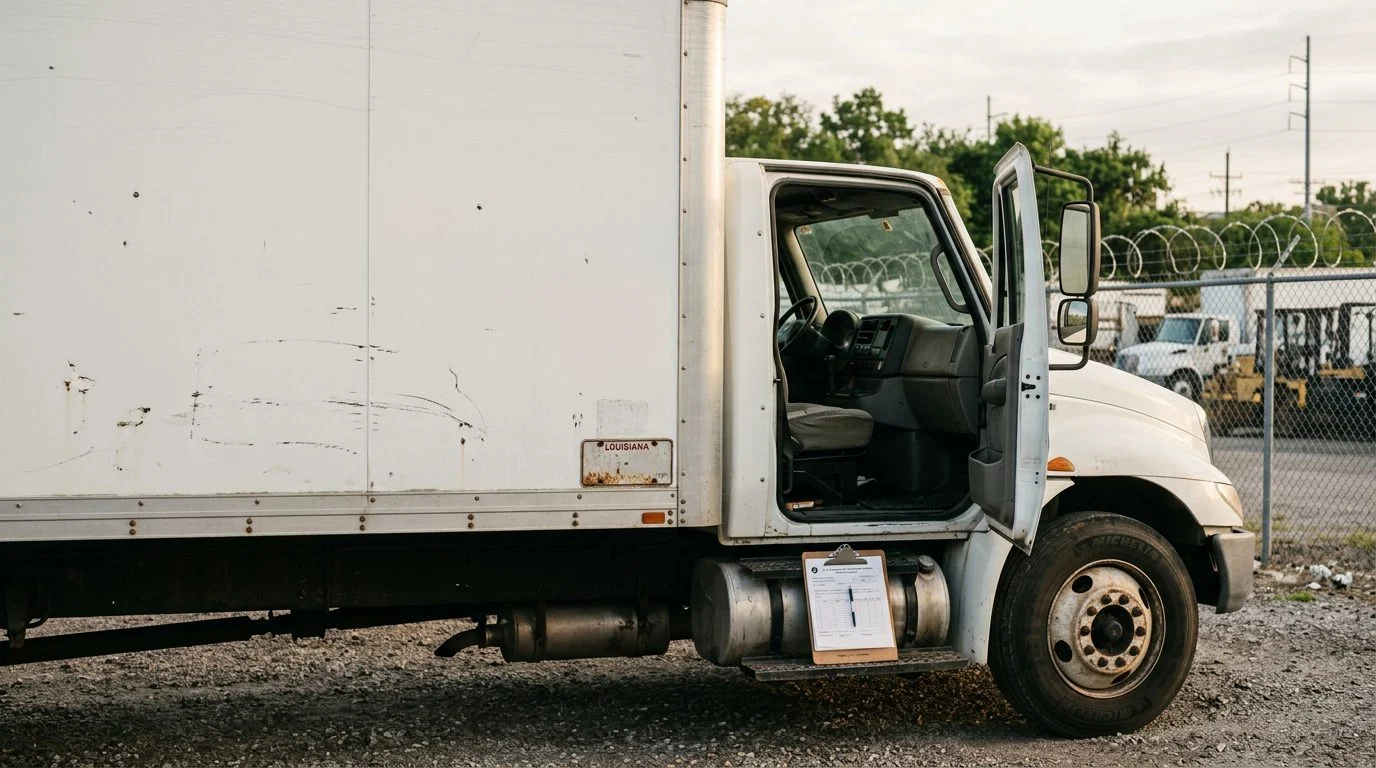
Some retention periods are short, so early requests matter. When it is safe, photograph the truck’s company name, any DOT number, and the trailer number.
Steps to take after the scene
Get a medical evaluation soon, even if you feel fine. Keep every visit, prescription, and bill. Write down any new symptoms and the date you first noticed them.
Record the report number, the officer’s name, the truck company’s name, and the other driver’s insurance details. Photograph your vehicle, your injuries, and the roadway. Note witnesses and how to reach them.
Be careful with insurance calls. You can politely say you’re still getting care and aren’t ready to give a statement. For a broader look at how harms like pain and suffering are considered, read pain and suffering in Louisiana truck cases.

Talk with a New Orleans truck accident lawyer about your crash
If you’re holding a report number, a hospital bill, or a call from an insurer, a conversation can help you sort out what comes next. Przemek Lubecki is the responsible lawyer for this page, and our office is in New Orleans.
The first consultation is free, confidential, and without obligation to continue. Call 855-LUBECKI or request a free case evaluation.
The firm may associate or refer a case to other law firms, including truck cases. Read the overview of truck accident claims in Orleans Parish for more background.
Should I call 911 after a truck accident in New Orleans?
Yes, when anyone is hurt, a lane is blocked, or the drivers disagree. A commercial truck makes the official record even more important.
Who investigates a truck crash in New Orleans?
NOPD investigates crashes inside city limits. Outside city limits, the Louisiana State Police or the sheriff’s office investigates.
Can a New Orleans truck accident lawyer help after a crash?
A lawyer can review your report, your records, and your options. The first consultation is free, confidential, and without obligation to continue.
Does Louisiana still use comparative fault?
Yes. For crashes on or after January 1, 2026, a degree or percentage of negligence attributable to the person suffering injury, death, or loss of 51% or more bars recovery under La. Civ. Code art. 2323.
Your scene checklist
Get medical care
Check yourself and others for injuries. Some injuries, including head and brain injuries, may not show symptoms right away, so get evaluated even if you feel fine.
Document the scene
If it is safe, photograph vehicle positions, damage, road conditions, skid marks and any visible signs of the truck's cargo or trailer.
Record the details
Write down the truck company name, driver's name, license plate, DOT number if visible, and the insurance information you are able to safely collect.
Identify witnesses
Names and phone numbers of people who saw the crash can be valuable. Note where they were standing and what they described.
A key caution
Insurance adjusters and representatives for the trucking company may contact you quickly. Think carefully before giving a recorded or written statement, and consider speaking with a lawyer first.
How we approach your case
Plain-language answers
We explain each step of the process in everyday terms so you can make informed decisions.
Focused on your protection
We work to protect your rights while you focus on recovering and caring for your family.
Support for families
When a crash causes a death, we work with surviving family members with patience and care.
Serious injuries, handled with care
Our practice focuses on people seriously hurt in truck, commercial vehicle and car crashes, along with wrongful death and brain injury matters.
Referrals when they fit
A case may be associated with or referred to other law firms when that is the best fit for the client. Any such arrangement is disclosed to you.
Free, confidential first conversation
The first consultation is free, confidential and without obligation to continue.