
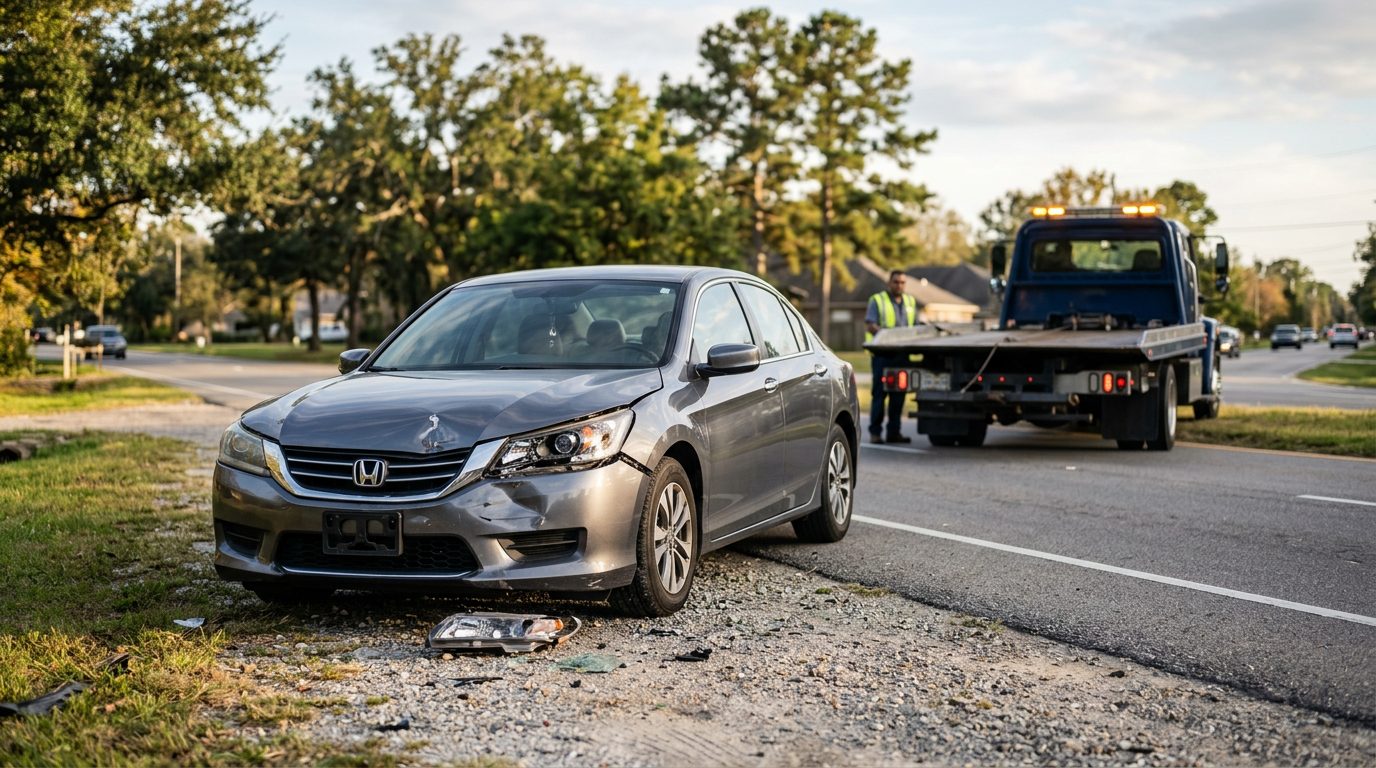
Truck Accidents · New Orleans, Louisiana
Getting the Crash Report After a Truck Accident in New Orleans
A truck crash report can shape how your case is understood. Przemek Lubecki and our team explain what the report contains, how to request it, and what to do if it has errors. Office in New Orleans.
By Przemek Lubecki · Published October 28, 2026
Why the Crash Report Matters After a Truck Accident in New Orleans
A crash report is the official record an investigating agency creates after a crash. After a serious truck accident, it is often one of the first documents people ask for.
The report puts basic facts in one place. These include the date, time, and location, the vehicles and drivers, any passengers and witnesses, and the officer’s narrative and diagram. When memories are fresh, the report helps you and your family line up what happened.
The report is a starting point, though. It does not show the full picture of a commercial truck crash. Many of the records that matter most sit with the trucking company, not on a police form. Some electronic data can be overwritten, so early steps matter.
This guide is for anyone deciding whether to speak with a truck crash attorney New Orleans residents can reach. It explains who wrote the report, how to request it, how to read it, what it leaves out, and which mistakes to avoid. For background on truck accident claims, see our New Orleans truck accident claims guide.
If you're still waiting on the crash report and worry the truck's logs or camera footage could disappear, you don't have to sort this out alone; call 855-LUBECKI or request a free case evaluation. Talk it through with our team — the first consultation is free, confidential, and carries no obligation.
Which Agency Wrote the Report
The agency that responded to the crash wrote the report, and that agency keeps it. Under La. R.S. 32:398, each law enforcement agency owns the reports it creates.
In New Orleans, the New Orleans Police Department often responds to crashes inside the city. The Louisiana State Police may respond to certain highway crashes. A sheriff’s office or another local police agency may respond in other parishes.
The metro area adds more variety. A crash in Jefferson Parish, Kenner, Metairie, or St. Bernard Parish may involve a different agency than one in Orleans Parish. Don’t guess. Confirm the agency before you make any request.
To find out, check the paperwork the officer gave you. Look for a citation, a tow slip, or a card with a report number. Write down the officer’s name, badge number, and agency name. Our New Orleans office serves people across Orleans Parish and the surrounding metro area, including the parishes named above.
Step-by-Step: How to Request the Crash Report
Send your request to the records unit of the agency that responded, with the crash details ready. Having the details on hand speeds up the search.
- Gather the basics. Write down the crash date and time, the exact location or nearest intersection, the drivers’ names, and any report number.
- Add the officer’s details. Include the officer’s name or badge number if you have it.
- Choose a method the agency accepts. Agencies may use an online form, mail, or an in-person visit. Ask which method works and what ID or signed request it needs.
- Pay the copy fee. Under La. R.S. 32:398, a report of two pages or less may cost no more than $5. A longer report may cost no more than $20, including all service fees and other charges.
- Keep proof. Save the confirmation and write down the date you submitted the request.
La. R.S. 32:398 provides that agencies shall provide copies of crash reports. Who may bring a claim after a crash can depend on the facts of each case, and a free consultation with this firm is a way to talk through your situation. If you lost a loved one, a succession representative can request the report.
Serious crashes can take longer to investigate, and a supplemental report can follow. Photos and video can also be requested, and an agency may charge a reasonable fee for copies under the same statute.
How to Read a Truck Crash Report
Start with the facts that don’t depend on opinion: the time, the place, where each vehicle ended up, and the damage each one took.
Read the main sections in order. Vehicle and driver information shows who was behind the wheel. Ownership and insurance fields show who owned each vehicle and who insured it. The collision diagram shows positions and direction of travel. The narrative gives the officer’s account. Contributing factors and citations show what the officer marked.
Commercial vehicles have extra fields. Look for the carrier’s name, a USDOT number, and sometimes a trailer or cargo identifier. These fields help identify the company that operated the truck, which may differ from the driver’s employer.
Keep one difference in mind. Times and damage measurements come from direct observation. The narrative and fault boxes often rest on what drivers and witnesses said at the scene. A citation is not the final word on fault in a civil claim.
Check every name, plate number, address, and vehicle description. If something is wrong, tell the responding agency. Ask whether a supplemental report or correction is possible.
What a Crash Report Does Not Capture in a Truck Crash
A standard crash report usually does not include the trucking company’s internal records. Those records can matter as much as the scene facts.
Driver qualification files. Federal rules require a motor carrier to keep a driver qualification file for each driver.
Hours-of-service logs. A driver’s record of duty status must show the city, town, or village, with the state abbreviation, for each change of duty status, under 49 CFR 395.8. If a change of duty status occurs at a location other than a city, town, or village, show one of the following: the highway number and nearest milepost, the highway number and the name of the service plaza, or the highway numbers of the nearest two intersecting roadways, followed by the name of the nearest city, town, or village and State abbreviation. Electronic logging devices hold this data. Carriers must not alter or erase the original information, under 49 CFR 395.30.
Electronic and camera data. Some commercial trucks record engine data or carry dash or onboard cameras. This data can be overwritten or lost if no one asks for it in time.
Witnesses and nearby cameras. Witness names on a report may need follow-up. Independent witnesses and nearby business cameras may also hold useful information.
Physical evidence. Inspections, repairs, and moving the truck from the scene can change what evidence remains.
This is why early action matters. For how lost income is documented after a truck crash, read our guide to lost wages after a truck accident.
Common Mistakes to Avoid When Getting the Report
Two common mistakes are waiting too long and relying on the first paper from the scene. Start the request early. Don’t assume the report will arrive on its own.
- Relying on the scene copy. The paper handed out at the scene may be preliminary. The full report can differ.
- Overlooking supplemental reports. Corrections can change details such as lane position, citations, or contributing factors.
- Posting on social media. Detailed accident descriptions or fault opinions online can be used later. Talk with a lawyer before posting.
- Giving recorded statements too fast. Insurance adjusters may ask for a recorded statement. Know what is being asked and how the answers may be used.
If you gave a written or recorded statement after an injury, Louisiana law gives you a right to a copy. Under La. R.S. 13:3732, the person who took the statement must furnish a true and complete copy within twenty days after written demand.
Not sure what your next step is?
Talk it through with our team — the first consultation is free, confidential, and carries no obligation.
Frequently Asked Questions About Crash Reports After Truck Accidents
Can I get the crash report if I wasn’t at fault?
Yes.
How long does it take to get a truck crash report in New Orleans?
Serious truck crashes can take longer, so ask the records unit about current timing.
What if the report has an error?
Raise the error with the agency that wrote the report. Ask whether a supplemental report or correction is possible.
Does the crash report decide who is legally responsible?
No. The report is one piece of evidence. Fault is decided under Louisiana’s rules, including La. Civ. Code art. 2323, through the claim process and, if needed, the courts.
Can a lawyer request the report for me?
Yes. A lawyer representing a party may be able to obtain a copy of the crash report, which can be an early step in a truck case.
How a Truck Crash Attorney in New Orleans Can Help
Those records can include logs, maintenance files, and electronic data.
An attorney can review the report and other evidence with you. This can help you understand the facts and the claim process. No particular outcome can be promised in advance.
Some time limits apply to injury claims. Louisiana generally gives two years from the day injury or damage is sustained, under La. Civ. Code art. 3493.1; prescription does not run against minors or interdicts in actions involving permanent disability brought under the Louisiana Products Liability Act or state product liability law. Wrongful death claims have their own timing rules, so don’t wait to ask questions.
The first consultation is free, confidential, and without obligation. The firm may associate or refer a case to other law firms.
Przemek Lubecki is the responsible lawyer for this page. The firm’s office is in New Orleans, and the New Orleans office handles these matters. For local context, see our New Orleans truck accident page and our Orleans Parish truck accident page.

Get in Touch About Your Truck Crash Report
If you are still waiting on the report, or you are worried about the truck’s logs and camera footage, you can reach out now. Przemek Lubecki and our New Orleans office can talk through your next steps.
Call 855-LUBECKI or request a free case evaluation. Your first consultation is free, confidential, and without obligation.
Why the crash report matters
It records the official account
The investigating agency's report often lists the parties, vehicles, weather, road conditions and the officer's notes from the scene.
It can be checked against the facts
Witness names, photographs, driver logs and inspection records can be compared with what the report says.
It guides the next steps
Knowing what the report includes helps identify what other evidence may still need to be preserved.
Do not rely on the report alone
A crash report is one piece of the evidence. Reports can contain mistakes or omit details, and the trucking company's own records may be needed to understand what happened. Keep your own notes, photos and medical records, and speak with a lawyer before giving a recorded statement to an insurance company.
How to request the report
1. Gather your information
Have the date, time and location of the crash, the names of those involved, and any report or case number you received at the scene.
2. Contact the investigating agency
Ask the records unit of the police department or state agency that responded. Ask about the current process, any fees, and how long it may take for a serious crash.
3. Review it carefully
Check names, vehicle details, diagram, statements and the officer's narrative. Write down anything that looks incorrect.
4. Bring it to a lawyer
Share the report with Przemek Lubecki and our team so we can review it alongside the other evidence from your crash.
If the report contains an error
Note the specific mistake
Identify the section, the incorrect detail and what the correct information should be.
Ask the agency to correct it
Raise the error with the agency that wrote the report and ask how corrections are submitted.
Gather supporting proof
Photographs, witness statements and other records can help show what the correct information is.