
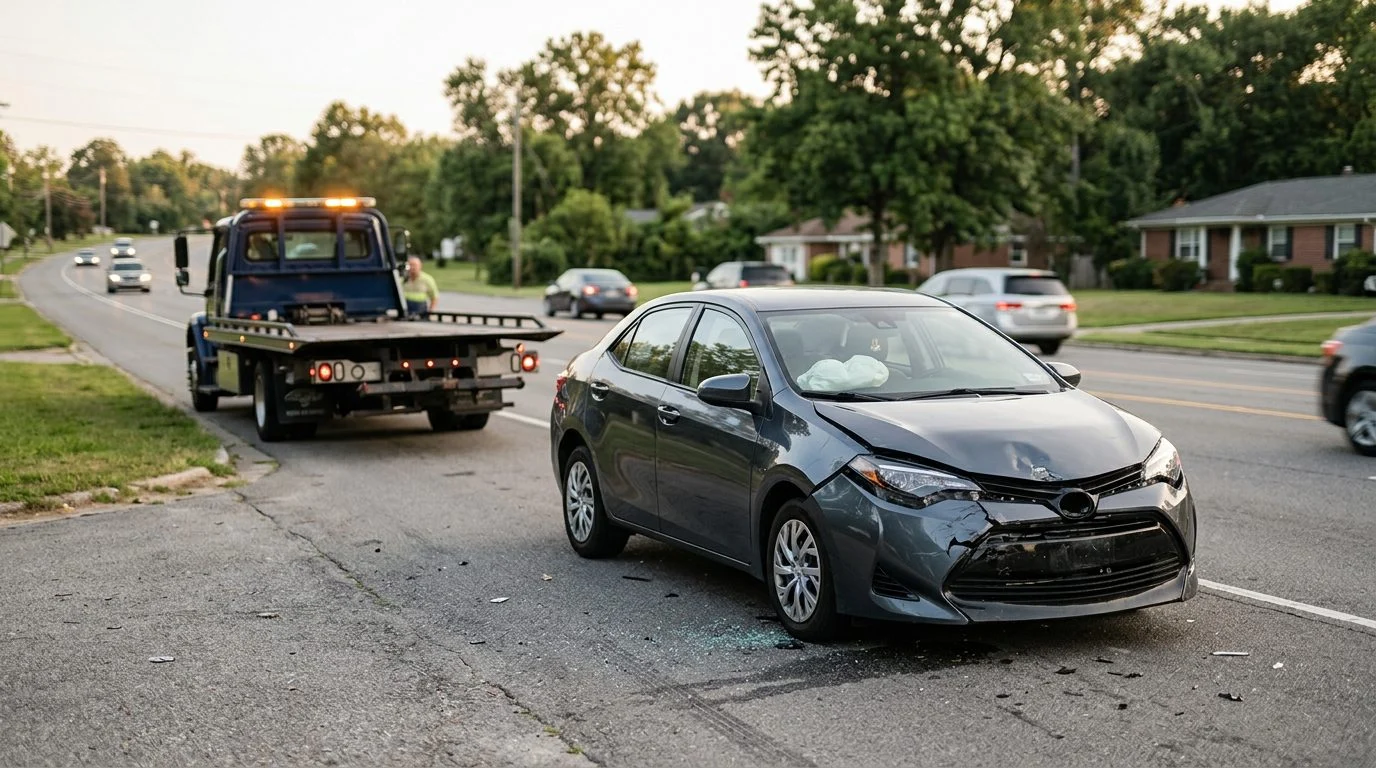
Truck Accident Guide Orleans Parish: Fault and Deadlines
By Przemek Lubecki · Published October 17, 2026
Truck Accidents in Orleans Parish: The Short Answer
Fault, insurance, and deadlines decide most truck accident claims in Orleans Parish. This truck accident guide explains those basics in plain language. A crash with a commercial truck can involve the driver, the trucking company, and other businesses, and Louisiana law sets how responsibility is shared.
Przemek Lubecki is the responsible lawyer for this page. The firm’s office is in New Orleans, Louisiana. The firm may associate or refer a case to other law firms when that helps the client.
No guide can say what a specific claim is worth or how it will end. What this page can do is show the questions that shape most truck claims. That way you know what to gather and what to ask.

Not sure what your next step is?
Talk it through with our team — the first consultation is free, confidential, and carries no obligation.
How a Truck Crash Differs from a Car Crash
A truck crash usually causes more harm than a car crash because of size and weight. A loaded tractor-trailer needs much more distance to stop, and its driver has large blind spots around the cab and trailer. When a car and a truck collide, the people in the car usually face the greater risk of serious injury.
Federal rules add another layer. Except for a private motor carrier of passengers (nonbusiness), § 395.8 provides that a motor carrier subject to the requirements of this part must require each driver used by the motor carrier to record the driver’s duty status for each 24-hour period. No driver or carrier may make a false report about it or tamper with an electronic logging device. Those records can show how long a driver was working before a crash. They only help if they’re kept.
Truck crashes also involve more parties. One crash can involve the driver, the company that employs or leases the driver, the company that owns the truck, a repair shop, or a cargo loader. Each may hold records or insurance that matters.
Electronic data can be lost. Logs, dashcam footage, and engine data sit on systems that can be overwritten. That’s why early steps matter. For more, see truck accident claims in Louisiana and truck accident evidence.
Who Can Be Liable in a Truck Crash
Several people or companies can be liable in one truck crash, depending on the facts. Louisiana’s general rule is that the person whose fault causes damage must repair it. That rule comes from La. Civ. Code art. 2315.
The driver is the starting point. Speeding, distraction, or fatigue can make a driver liable for the harm that follows.
The employer may also answer for the driver’s work. Under La. Civ. Code art. 2320, employers answer for damage caused by employees in the functions they were hired to perform. Responsibility attaches only when the employer might have prevented the act and did not.
Owners or custodians of defective equipment may also be liable. Under La. Civ. Code art. 2317.1, the owner must have known, or should have known with reasonable care, of the defect. The damage must also have been preventable. A brake problem noted in a maintenance file can matter, but only if the facts show it.
Whether a broker or shipper can be liable depends on what it knew and did. Each case turns on what the broker knew and did.
Liability depends on evidence. No one can predict the result from a short description of a crash. For the driver’s side of a claim, see truck driver at-fault claims.
Who Pays: Insurance Layers in a Louisiana Truck Claim
Several insurance policies can apply after a truck crash, and the order of payment depends on which ones are involved. The at-fault carrier’s commercial liability policy is one source. The minimum levels of financial responsibility referred to in § 387.7 are prescribed in § 387.9. Those minimums are a floor. They don’t set what a claim is worth.
Your own auto policy may help too. Under La. R.S. 22:1295, uninsured motorist coverage on a vehicle you occupy but don’t own is primary. Other coverage applies only if that primary coverage runs out. This matters when the at-fault driver is uninsured or underinsured. Medical payments coverage may also apply, depending on your policy.
Health insurance, Medicare, or Medicaid may pay early bills. Those payers can later seek repayment from a recovery. That repayment claim is called a lien. Liens must be identified and resolved before money is divided. Don’t assume the at-fault insurer will pay your medical bills first. For more, see who pays truck accident medical bills and who gets paid first after a crash.
Louisiana Comparative Fault: What Partial Blame Means
La. Civ. Code art. 2323 provides that the amount of damages recoverable is reduced in proportion to the degree or percentage of negligence attributable to the person suffering injury, death, or loss. The amended version, which can bar recovery where that negligence is fifty-one percent or greater, applies only to causes of action arising on or after January 1, 2026. La. Civ. Code art. 2323 provides that a person suffering injury, death, or loss is not entitled to recover damages where the degree or percentage of negligence attributable to that person is equal to or greater than fifty-one percent. La. Civ. Code art. 2323 provides that, where the degree or percentage of negligence attributable to the person suffering injury, death, or loss is less than fifty-one percent, the amount of damages recoverable is reduced in proportion to that degree or percentage.
For example, if you were found 20 percent at fault, the amount you could recover would be reduced by 20 percent. That’s how the rule works. It’s not a prediction about any claim.
The law also looks at everyone who contributed to a crash. Under the same article, fault is determined for people who aren’t parties to the case. It applies regardless of whether they can pay. A trucking company, its driver, and a maintenance vendor can each receive a share.
Insurers often push for a higher share against the injured person. That’s why what you say at the scene matters. Stick to facts you saw and felt. Don’t guess at speeds or admit fault you’re unsure of. For more, see partly at-fault car accidents and Louisiana comparative fault (La. Civ. Code art. 2323).
Evidence That Shows Fault
The main evidence in a truck crash includes the police crash report, vehicle data, and the trucking company’s own records. Each one can answer a different question about what happened.
Under La. R.S. 32:398, crash reports are confidential. Parties, their attorneys, and their insurers can get them. Upon request, they’re available within seven working days after the crash investigation is completed. Agencies may charge up to five dollars for a report of two pages or fewer, and up to twenty dollars for longer reports.
Other evidence matters too. Photos, dashcam and vehicle data, electronic logging device records, and witness names all help. Trucking files can help as well. § 391.51 provides that each motor carrier shall maintain a driver qualification file for each driver it employs. It must keep that file while the driver is employed and for three years after. These files can show hiring, road test, and driving-record checks.
Time matters. Some records get overwritten, discarded, or lost on routine schedules. Asking early helps make sure they still exist.
Your own statements matter too. Under La. R.S. 13:3732, if you give a written or recorded statement, the person who took it must give you a true copy. That copy is due within twenty days after written demand. Medical records that link your injuries to the crash matter as well. See evidence that proves fault and adjuster communication after a crash.
Have questions about what happened?
Ask our team directly. The first conversation is free, confidential, and there is no obligation to continue.
What a Truck Injury Claim Can Include
A truck injury claim can seek money for losses you actually suffered. Common categories include past and future medical care, lost wages, and lost ability to earn in the future. Vehicle damage can be part of a claim too. Non-economic harm, such as pain, suffering, and loss of enjoyment of life, is also part of many claims.
How these losses are judged depends on proof. Adjusters and lawyers look at medical records, treatment history, and the effect on work and daily life. They also look at whether the records fit the crash. No dollar figure can be set from a short description, and no page can predict what a claim will settle for.
Brain injuries and spinal injuries are different. Their full effects can take time to show. Treatment and testing may continue long after the crash. A claim often can’t be fully evaluated until the medical picture is clearer. Keep appointments and records, and keep a daily journal of symptoms and missed work. For severe head injuries, see brain injury claims. You can also read truck accident claim value.
Wrongful Death Claims After a Truck Crash
When a truck crash causes a death, certain family members can bring a claim. Under La. Civ. Code art. 2315.2, a surviving spouse and children come first. If none survive, parents can sue. Then come siblings, and then grandparents. Adoptive relationships count under the same article.
Deadlines are the most urgent part. Louisiana law sets a time limit for filing a wrongful death claim under art. 2315.2. Wrongful death prescription runs from the date of death and depends on when the claim arose, so families should check their dates early. Because dates depend on the facts, families should check timing early.
Families should keep useful records. These include the crash report, funeral and medical bills, and records of the person’s income. Notes about the role the person played in the household help too. These records show the family’s losses in plain terms. For more, see wrongful death truck crash and wrongful death deadline Louisiana.
What to Do in the First Days After a Truck Crash
The first days matter most for your health and your records. Get medical care, even if you feel okay, because some injuries show up later. Follow the treatment plan you’re given. Gaps in care can complicate a claim.
Under La. R.S. 32:398, a driver in a crash with injury must share certain information. That includes the names and addresses of the vehicle’s owner and driver. Collect names, phone numbers, insurance details, and witness contacts.
Write notes while your memory is fresh. Record the time, weather, lanes, traffic, and what people said. Photograph the scene, the vehicles, and your injuries when it’s safe to do so.
Be careful with recorded statements. You’re entitled to a copy of any statement you give. Don’t sign releases or accept a quick offer before you know the extent of your injuries. Keep receipts and records of missed work. For more, see what to do after a car accident and what not to say after a crash.
Orleans Parish, the New Orleans Metro, and Louisiana
This truck accident guide for Orleans Parish also applies to crashes across the New Orleans metro. Interstate I-10 runs through the area and carries commercial traffic. The fault, insurance, and deadline rules in this guide apply statewide.
The firm’s office is in New Orleans, Louisiana. Pages for Metairie, Jefferson Parish, Kenner, St. Bernard Parish, Slidell, and other parts of Louisiana serve people who live or were hurt in those places. They don’t mean an office exists there. Przemek Lubecki is licensed to practice law in Louisiana.
Local detail matters. Parish roads, crash locations, and the agency that wrote the report can all affect the records you need. For local pages, see Orleans Parish truck accidents, Jefferson Parish truck accidents, and St. Bernard Parish truck accidents. For statewide matters, see Louisiana truck accident attorney.
How a Truck Accident Claim Usually Moves Forward
A truck accident claim usually moves through intake, investigation, negotiation, and, if needed, a lawsuit. Each stage builds on records gathered earlier, so early steps matter.
Intake means the firm reviews the facts, the injuries, and the paperwork. Investigation means requesting reports, records, and vehicle data, and asking the other side to preserve evidence. Negotiation means talking with insurers about fault and losses. If those talks don’t resolve the claim, a lawsuit may be filed. Many claims resolve without trial, and some go to trial. No one can promise which path a case will take.
The firm may associate or refer a case to other law firms. Fee arrangements are discussed directly with you. You may be responsible for case costs and expenses in addition to any fee. For more on suit timing, see lawsuit timeline for Louisiana truck crash cases and trial representation.
Want to know where you stand?
Tell us what happened and our team will walk you through the options available to you, at no cost.
Talk With Przemek Lubecki About Your Truck Crash
Przemek Lubecki leads the firm’s New Orleans office, which handles truck, commercial vehicle, and wrongful death matters in Louisiana.
Does this truck accident guide replace advice about my case?
No. It explains general Louisiana rules, but it can’t review your facts or predict an outcome.
How long do I have to file a truck accident claim?
Time limits depend on the type of claim and its dates. Under La. Civ. Code art. 3493.1, delictual (fault-based) actions arising on or after July 1, 2024 have a two-year limit, while earlier injuries remain subject to the one-year period of La. Civ. Code art. 3492, so check your dates early.
What if I was partly at fault?
La. Civ. Code art. 2323 states that an injured person whose own negligence is equal to or greater than fifty-one percent shall not be entitled to recover damages. A smaller share reduces the damages instead.
If a truck crash left you hurt, or left your family grieving a loss, you don’t have to sort out fault, insurance, and deadlines alone. Request a free case evaluation, or call 855-LUBECKI for a free consultation. You may be responsible for case costs and expenses in addition to any fee.
Ready to take the next step?
Related practice areas
- Big Rig Crash Claims in Orleans Parish: How They Work
- Car Crash Injury Claim Jefferson Parish: Key Facts
- Louisiana Truck Accident Injury Claims: Rights & Next Steps