
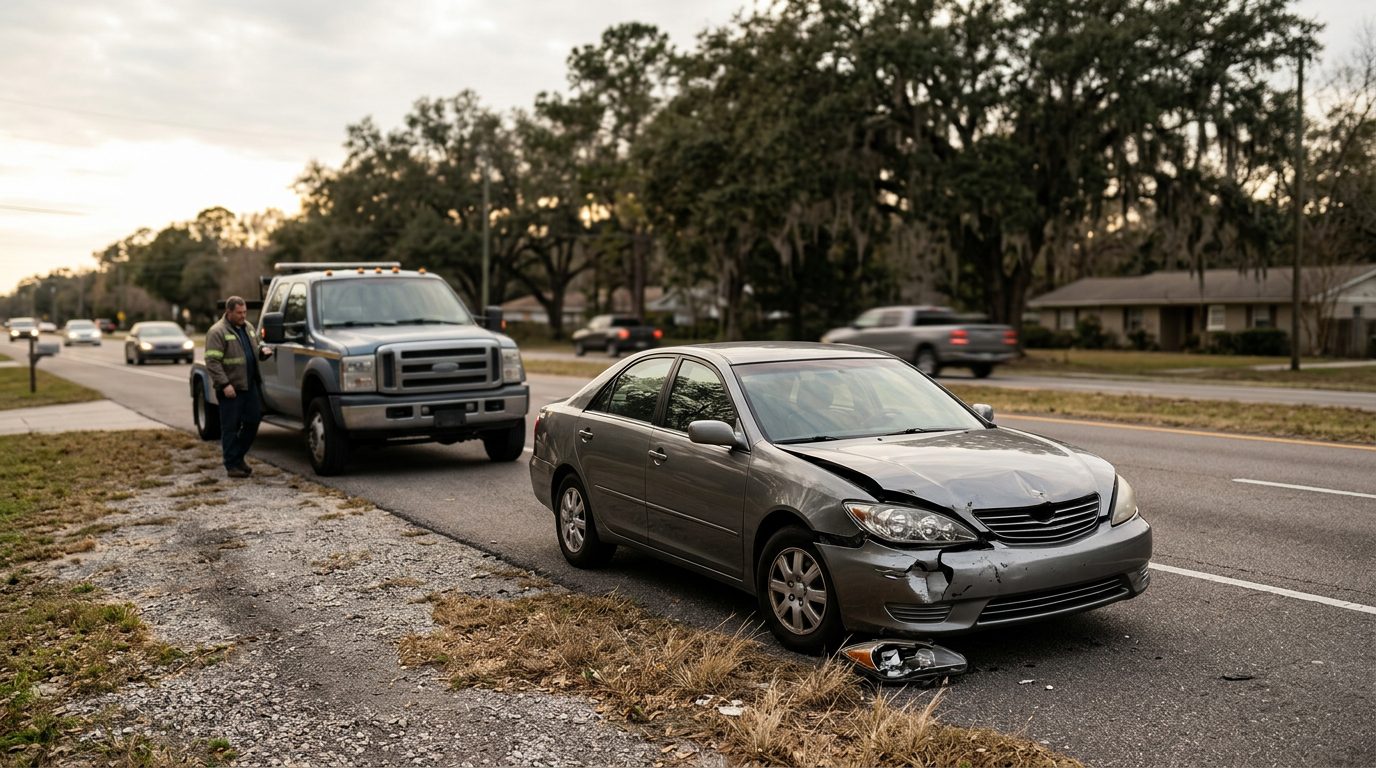
Truck Accidents | New Orleans, Louisiana
Hurt in a Louisiana Truck Crash? Find Out Where You Stand, Even If You Share Some Blame
Many people wonder whether being partly at fault limits what they can pursue. Przemek Lubecki and the team at American Trial Lawyer, LLC, in New Orleans, can review the facts of your crash with you.
By Przemek Lubecki · Published November 6, 2026
The short answer: can you still pursue a claim if you were partly at fault?
Yes, you may still have a claim even if you share some of the blame. Under Louisiana Civil Code article 2323, your recovery is reduced by your percentage of fault. As amended effective January 1, 2026, La. Civ. Code art. 2323 provides that a person suffering injury, death, or loss is not entitled to recover damages where the degree or percentage of negligence attributable to that person is equal to or greater than fifty-one percent.
So the question is mostly about percentages. Where the degree or percentage of negligence attributable to the injured person is less than fifty-one percent, La. Civ. Code art. 2323 reduces the amount of damages recoverable in proportion to that degree or percentage. The statute bars recovery entirely when the injured person’s own negligence is equal to or greater than fifty-one percent of the fault (La. Civ. Code art. 2323).
How fault is split depends on the evidence from each crash. General information can’t predict that split, and no one can promise how it will turn out.
If you were hurt in a truck crash and worry that part of the blame may fall on you, you don't have to sort it out alone, and our team offers a free, confidential consultation with no obligation to continue. Talk it through with our team — the first consultation is free, confidential, and carries no obligation.
How comparative fault reduces a truck crash claim
Comparative fault works by subtracting your share from the total (La. Civ. Code art. 2323). Think of the full harm from the crash as 100 percent. If you were 20 percent at fault, your recovery is reduced by 20 points, leaving 80 percent of the total.
The statute says the fault of every person who caused or contributed to the harm is counted. That includes people who are not parties to the lawsuit, and it includes people whose identity is not known.
Fault percentages are usually settled in one of two ways. Insurers often negotiate them with the injured person or a lawyer. A person can’t set their own percentage. Both sides argue about it, and the evidence decides it.
Why truck crashes often involve more than one party at fault
A truck crash often involves more than one party. The driver, the motor carrier that employs the driver, the vehicle owner, a maintenance contractor, or a company that loaded the cargo may each share fault. Which of them matters depends on the facts.
Louisiana law makes employers answerable for damage caused by employees while they do their jobs, but responsibility attaches only when the employer might have prevented the act which caused the damage and did not do so, as described in Louisiana Civil Code article 2320. Where liability is not solidary under article 2324, a joint tortfeasor (a person who shares fault for the same harm) is not liable for more than its own degree of fault. That means each party’s share is tracked separately.
Federal trucking rules can help show how a crash happened. Under 49 C.F.R. § 395.3, a driver of a property-carrying commercial motor vehicle generally may not drive without first taking 10 consecutive hours off duty, subject to exceptions in § 395.1. A driver also may not drive after 14 consecutive hours following that break, and may drive 11 hours in that period. Federal rules on driver qualification files require each motor carrier to keep one for every driver it employs. Louisiana crash reports are made available to the parties and their attorneys within seven working days after the investigation is complete.
Insurance claim versus lawsuit: how they differ
An insurance claim is a request for payment made to an insurer, usually handled by an adjuster. A lawsuit is a case filed in a Louisiana court. Some claims settle through negotiation, and others move forward into court. The path depends on the facts and the parties involved.
An adjuster may point to your share of fault to lower an offer. That is a negotiating position, not a final decision about the case. You can ask questions, take time to review the numbers, and get the facts straight before you respond.
Talking with an insurer does not replace the court deadlines covered in the next section. Don’t assume a negotiation will pause those dates.
Filing deadlines: why timing matters in Louisiana
For most injury claims, the general rule is two years from the day the injury or damage happened, under Louisiana Civil Code article 3493.1.
Wrongful death claims have a different clock. Under article 2315.2, the right to sue for wrongful death prescribes one year from the death or two years from the day the injury was sustained, whichever is longer. A survival claim, covered by article 2315.1, follows the same one-year or two-year rule.
Timing matters for practical reasons too. Records fade, witnesses move, and vehicle data can be overwritten. Write down the date and location of the crash now, and keep it with your other papers.
What to be careful about when speaking with insurers
Be careful what you say before the facts are clear. Avoid admitting fault in a written or recorded statement, and stick to what you saw and what happened to you. It’s fine to say you need time to review things.
Think carefully before you sign a release or accept an early payment. A signed release can limit what you can pursue later, so read it closely and understand what it covers before you agree.
At the scene, Louisiana law requires a driver involved in a crash with injury, death, or property damage in excess of five hundred dollars to give their name, address, and the registration number of the vehicle they were driving. Upon request, the driver must also show a license to anyone injured in the crash, if one is available, under La. R.S. 32:398.
Keep copies of medical records, repair estimates, photos, and every letter or email from an insurer in one place. Organized paperwork makes it easier to review the claim later.
Not sure what your next step is?
Talk it through with our team — the first consultation is free, confidential, and carries no obligation.
Passengers, families, and wrongful death claims
A passenger’s recovery is reduced only by the passenger’s own share of fault. The fault of the driver and others is still counted under article 2323, so a passenger’s claim can depend on how the whole crash is divided. Each crash turns on its own facts.
In a wrongful death case, article 2315.2 lists who may sue. The list starts with the surviving spouse and children. It moves to parents, then siblings, then grandparents, but each later group may sue only if the deceased left no spouse, child, or closer relatives surviving. The deceased person’s own share of fault can also reduce recovery.
A survival action, under article 2315.1, covers the damages the injured person could have recovered before death. Its rules differ from a wrongful death claim, so it helps to review both with a lawyer.
Crashes in New Orleans and Orleans Parish
Crashes in Orleans Parish and across the New Orleans metro area are governed by the same Louisiana rules described above.
Our office is in New Orleans, and we represent people in Orleans Parish, the New Orleans metro area, and across Louisiana. Our team handles truck, commercial vehicle, car, rideshare, motorcycle, wrongful death, brain injury, and negligent security matters. You can read more about truck accident claims in New Orleans.
The firm may associate or refer a case to other law firms when that is appropriate. Any referral would be disclosed before a case moves forward.
Talk through your own crash with Przemek Lubecki
If you were hurt in a truck crash, you may also be dealing with pain, a damaged vehicle, and an insurer waiting for an answer. Partial fault can make all of that feel more uncertain. You don’t need to have every answer before you ask a question.
Quick answers
Can I still recover if I was partly at fault?
Under La. Civ. Code art. 2323, the answer depends on the degree or percentage of negligence attributable to the injured person: where it is less than fifty-one percent, the amount recoverable is reduced in proportion to that percentage. Where your share of fault is less than fifty-one percent, your recovery is reduced by your percentage; if it is equal to or greater than fifty-one percent, you shall not be entitled to recover damages.
What share of fault stops recovery?
Under the current text of La. Civ. Code art. 2323, a degree or percentage of negligence equal to or greater than fifty-one percent means the injured person shall not be entitled to recover damages.
How long do I have to file?
For most injury claims, the general rule is two years from the injury, with some exceptions (La. Civ. Code art. 3493.1).
Przemek Lubecki is the responsible lawyer for this page. To talk through your crash, call 855-LUBECKI, or request a free case evaluation. Our Office in New Orleans can review the facts with you. The first consultation is free, confidential, and without obligation to continue.
How We Can Help You Take the Next Step
A Responsible Lawyer You Can Reach
Przemek Lubecki is the responsible lawyer for this page and for matters handled through our New Orleans office. He will explain your situation in plain language.
Office in New Orleans
Our office is in New Orleans, and we serve people across Orleans Parish, the New Orleans metro, and Louisiana, including Jefferson Parish, Metairie, Kenner, St. Bernard Parish and Slidell.
Free, Confidential Consultation
Your first consultation is free, confidential and without obligation to continue.
Organized Case Review
Our staff helps gather crash reports, medical records and other documents so the facts are clear before any decisions are made.
Good to Know Before You Call
Depending on the facts of your case, American Trial Lawyer, LLC may associate with or refer your case to other law firms. Please ask us about this at your consultation.
Questions People Often Ask About Shared Fault
What does partial fault mean?
It means more than one person may have contributed to a crash. Fault can be shared among drivers, companies and others, and each situation is different.
What evidence can matter?
Photos, dash camera footage, witness statements, crash reports and driver logs can all help show how the crash happened.
Why act early?
Preserving evidence and gathering records soon after a crash can make the facts easier to review.
What should I bring to a consultation?
Bring any crash report, medical paperwork, insurance letters and photos you have. If you are unsure what to bring, call us and we will tell you what helps.