
Truck Accidents | New Orleans, Louisiana
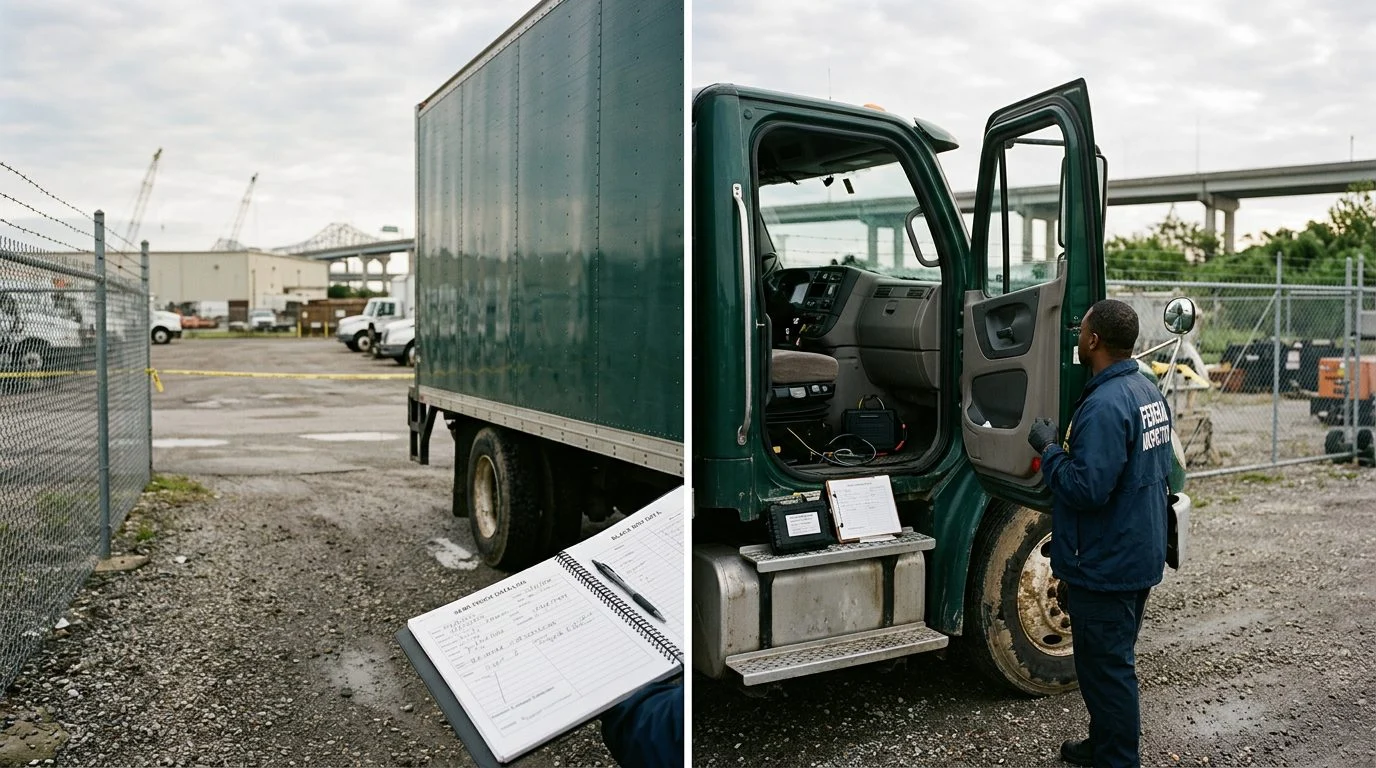
Semi Truck Crash Evidence in New Orleans: Why Logs and Black Box Data Matter
After a serious semi truck crash, the trucking company's driver logs and the truck's event data can be the most important proof of what happened. Przemek Lubecki and the team at American Trial Lawyer, LLC explain what to look for and why acting early matters.
By Przemek Lubecki · Published November 4, 2026
Evidence after a semi truck crash usually includes the driver’s logs, electronic data from the truck, and any camera video. Federal rules require trucking companies to keep some of these records, but only for set periods. Acting early helps make sure key records are requested before they are discarded.
If you were hurt in a crash with a big rig, you may have many questions. What does the truck record? Who keeps those records? How long must they be kept? This page answers those questions in plain words.
On This Page
- Why evidence can disappear quickly
- What black box data can show
- Driver logs and hours-of-service records
- Dashcam video and other camera footage
- Key evidence that often goes with the data
- Common proof gaps in truck crash claims
- How a careful investigation fills the gaps
- Questions to bring to a free case evaluation
Why Evidence Can Disappear Quickly
Some crash records must be kept for a set time, and then they may be discarded. Under 49 C.F.R. § 395.8, a motor carrier must keep each driver’s records of duty status and supporting documents for at least 6 months from the date of receipt. The FMCSA guidance on ELD records describes the same six-month period for electronic logs.
Other records follow different periods. 49 C.F.R. § 379.3 states: Companies subject to this part shall retain records for the minimum retention periods provided in appendix A to this part. After the required retention periods, the records may be destroyed at the discretion of each company’s management. It shall be the obligation of the subject company to maintain records that adequately support financial and operational data required by the Secretary. The company may request a ruling from the Secretary on the retention of any record. The provisions of this part shall not be construed as excusing compliance with the lawful requirements of any other governmental body prescribing longer retention periods for any category of records. These periods are minimums. A request sent early is safer than one sent after the period has run.
For the bigger picture on these claims, read our guide to semi truck accident claims in New Orleans.
If a semi truck's records may still be in the carrier's hands, our team can explain what to request and how soon, so call 855-LUBECKI. Talk it through with our team — the first consultation is free, confidential, and carries no obligation.

What Black Box Data Can Show
Black box data is the information a truck’s onboard computers record about how the vehicle was running. People often use the term for the event data recorder and the engine control module. Together, these systems can store details such as speed, braking, throttle position and brake use around a crash. Which items are stored depends on the vehicle and its equipment.
Black box data shows what the truck did. It does not show what the driver was thinking or whether the driver was distracted. It also does not show what happened outside the truck unless other evidence supports it. That limit matters. A data file answers some questions and leaves others open.
The data also fits into a larger file. It can show how the truck was moving in the seconds before a crash. That information is then compared with the driver logs, the police report and the scene evidence. No single file settles fault by itself.
Driver Logs and Hours-of-Service Records
Driver logs show when a driver was driving, on duty, resting or off duty.
An ELD records date, time, location, engine hours, vehicle miles and driver identification on its own. Under 49 C.F.R. § 395.26, if nothing else is recorded, the device makes an entry about once an hour while the truck is moving. Under 49 C.F.R. § 395.30, a motor carrier must not alter or erase the original hours-of-service information.
Supporting documents back up the logs. Comparing these papers with the log can show gaps or mismatches. A carrier need not keep more than eight supporting documents per driver per day, but it must keep the earliest and latest ones.
Logs matter for questions about fatigue, because they show how long a driver had been working. Logs alone do not establish what caused a crash. They are one piece of the file.
Dashcam Video and Other Camera Footage
Some trucks have forward-facing or driver-facing cameras, and others have none. Confirming which kind of camera a truck had is one of the first facts to check.
When a camera is present, its footage sits on a device with its own storage settings. Carriers set retention through their equipment and policies, so how long footage is kept can vary. Footage that is not saved can be written over.
Nearby traffic, business or public cameras may also have recorded the area. Those recordings can be overwritten within a short time, so asking early matters. Video shows only what the camera could see, which limits what it proves.
Key Evidence That Often Goes With the Data
Maintenance records, inspection reports and the driver’s qualification file often sit alongside the black box and log files. Under 49 C.F.R. § 396.11, carriers keep the driver vehicle inspection report for three months from the date it was prepared, except private motor carriers of passengers (nonbusiness), driveaway-towaway operations, and carriers operating only one commercial motor vehicle. Under 49 C.F.R. § 382.401, records of the alcohol and drug collection process (except calibration of evidential breath testing devices) are kept for at least 2 years.
Louisiana crash reports matter too. Under La. R.S. 32:398, crash reports are confidential. They are available to the parties, their attorneys, insurers and others the statute lists. Upon request, they must be made available within seven working days after the investigation is completed. Under Subsection E of La. R.S. 32:398, the state police, any local police department, or any sheriff’s office must provide copies of photographs of crashes, video recordings, and audio recordings to any interested person upon request, and may charge a reasonable fee for those copies.
Other proof includes witness information, medical records, photographs and the truck itself. A vehicle may be repaired, sold or salvaged, which is why early preservation matters. These sources work together. Each one is checked against the others.
Common Proof Gaps in Truck Crash Claims
Some gaps make truck crash claims harder to document. Records may be discarded after their retention period ends. A truck may be repaired or returned to service before anyone inspects it. Nobody may have sent a written request to keep records. Data may be pulled from a device without a written process.
Chain of custody means being able to show who collected a record, when, and how it was stored. Without that, a record can be questioned. Under 49 C.F.R. § 395.30, a motor carrier must not alter or erase, or permit or require alteration or erasure of, original hours-of-service information, which is one reason original records matter.
A gap does not automatically end a claim. Its impact depends on the facts of the crash and on what other evidence remains.
Not sure what your next step is?
Talk it through with our team — the first consultation is free, confidential, and carries no obligation.
How a Careful Investigation Fills the Gaps
A careful early investigation focuses on getting records before they are lost. Common first steps include written preservation requests to the carrier, requests for the records listed above, documentation of the scene, and collection of witness and police information. Technical reviewers may be used to read black box and engine control data and explain what it does and does not show.
American Trial Lawyer may associate or refer a case to other law firms. If a case is associated or referred, this page will say so and identify the lawyers responsible for that work.
Przemek Lubecki is the responsible lawyer for this page’s content. The firm’s New Orleans office is where its work is based. The firm also has an office in Park Ridge, Illinois. People in Orleans Parish, Jefferson Parish and the wider New Orleans metro can reach the New Orleans office.

Questions to Bring to a Free Case Evaluation
Writing down a few questions before you call can help. Which records has the carrier been asked to keep? Has the truck been inspected or repaired since the crash? Was any camera footage saved? What does the police report show? If you still have symptoms, read about delayed symptoms after a truck crash. If an insurer has contacted you, see talking with a trucking company’s insurance adjuster. For local details, see our New Orleans office page.
How long do I have to file an injury claim in Louisiana?
Louisiana generally sets a two-year deadline for injury claims, counted from the day the injury happened. Some exceptions apply, so check the timing early. La. Civ. Code art. 3493.1
How long must a trucking company keep driver logs?
Under federal rules, a motor carrier must keep records of duty status and supporting documents for at least 6 months from the date of receipt. Other records have different periods.
Can driver logs prove what caused a crash?
Logs show driving and on-duty time, but they do not establish cause by themselves. They are one part of the evidence.
If your crash involved a big rig, the truck and its records may still be in the carrier’s hands, and some records may be discarded on a set schedule. If that describes your situation, request a free case evaluation through our contact form or call 855-LUBECKI. The first consultation is free, confidential and without obligation.
How American Trial Lawyer, LLC approaches truck crash evidence
Reviewing the records
We look at driver logs, dispatch notes, maintenance files and vehicle data to build a clear picture of the crash.
Acting early
Electronic records can be overwritten or lost over time, so early requests help protect important evidence.
Protecting your rights
We work to preserve evidence on your behalf while you focus on your recovery and your family.
Plain-language updates
Przemek Lubecki explains the evidence, the process and your options in terms you can follow.
Important: evidence can disappear
Driver logs, electronic control module data and GPS records are not always kept indefinitely. If you or a family member was hurt in a semi truck crash, contact us as soon as you can. Our firm may associate or refer a case to other law firms when that serves the client.
Key evidence in a semi truck crash
Driver logs and hours of service
Records showing when the driver was on duty, driving and resting, which can matter in reconstructing the crash timeline.
Black box and event data
Data from the truck's electronic systems, such as speed, braking and throttle information recorded before and during the crash.
Dispatch and GPS records
Communications and location data that can show the route, schedule pressures and the driver's whereabouts.
Maintenance and inspection files
Repair, inspection and maintenance history for the tractor and trailer, including any known problems before the crash.