
Truck Accidents · New Orleans
Evidence After a Truck Crash in New Orleans: A Checklist
A serious truck crash leaves a lot to sort out at once. This checklist covers the evidence worth preserving, so you have clear information when you decide your next steps. Przemek Lubecki, responsible lawyer, New Orleans office.
By Przemek Lubecki · Published November 4, 2026
Evidence after a truck crash in New Orleans can disappear faster than most people expect. The most time-sensitive items are the truck’s electronic data, the carrier’s logs, the scene, and the names of people who saw the crash. Save what you can now, and ask for the rest in writing early.
If you’re reading this, you may be dealing with an injury, a hospital stay, or a loss. You may also be gathering information for a spouse, parent, or friend who can’t do it alone right now. You don’t need every answer today.
This page explains the main categories of evidence and why each one matters. It does not predict how any claim will turn out.
Why evidence after a truck crash can disappear quickly
A commercial truck is often towed to a storage yard, repaired, or put back on the road. Each step can change the truck’s condition or its data. Records also sit with the trucking company, its software, and outside vendors.
Federal rules set minimum times for keeping many trucking records. Under 49 C.F.R. § 395.8, a motor carrier must keep driver records of duty status and supporting documents for not less than 6 months from the date of receipt. Other files last longer. Under 49 C.F.R. § 391.51, a driver qualification file is kept while the driver works for the carrier and for three years after.
Minimum times are not the same as a promise to keep. Under 49 C.F.R. § 379.3, companies subject to this part must keep records for at least the minimum periods set out in appendix A; after those periods, management may decide whether to destroy the records, and the part is not to be read as excusing compliance with other governmental rules that set longer retention periods for any category of records. That is why early, written requests matter.
If you're gathering records for someone you love after a truck crash, we can talk through what to keep and what to request. Our first consultation is free, confidential, and carries no obligation to continue. Talk it through with our team — the first consultation is free, confidential, and carries no obligation.
Police and crash reports
A crash report is the record the investigating police or sheriff’s office prepares. It usually lists the parties, vehicles, witnesses, a diagram, and the officer’s notes. Under La. R.S. 32:398, the report is confidential. It is available only to certain people, including the parties, insurers of a party, and the attorneys of the parties or succession representatives. Upon request, it must be made available within seven working days after the investigation is completed.
Check the report against what you saw. Compare names, plate numbers, and the carrier’s name and identifying numbers. Mistakes happen, and officer conclusions can be incomplete.
The agency may charge a fee for copies of no more than five dollars for a report of two pages or less, and no more than twenty dollars, including all service fees, for a longer report. A driver involved in a crash resulting in injury to or death of any person, or property damage in excess of five hundred dollars, must also give his or her name, address, and vehicle registration number to any person injured in the crash or to the driver or occupant of, or person attending, any vehicle or other property damaged in the crash. On request and if available, the driver must show a license or permit to drive to a person injured in the crash.
If you’re helping a family member, check the list above before you ask for the report. The report is one record among many, not the whole story.
Photos, video, and the scene
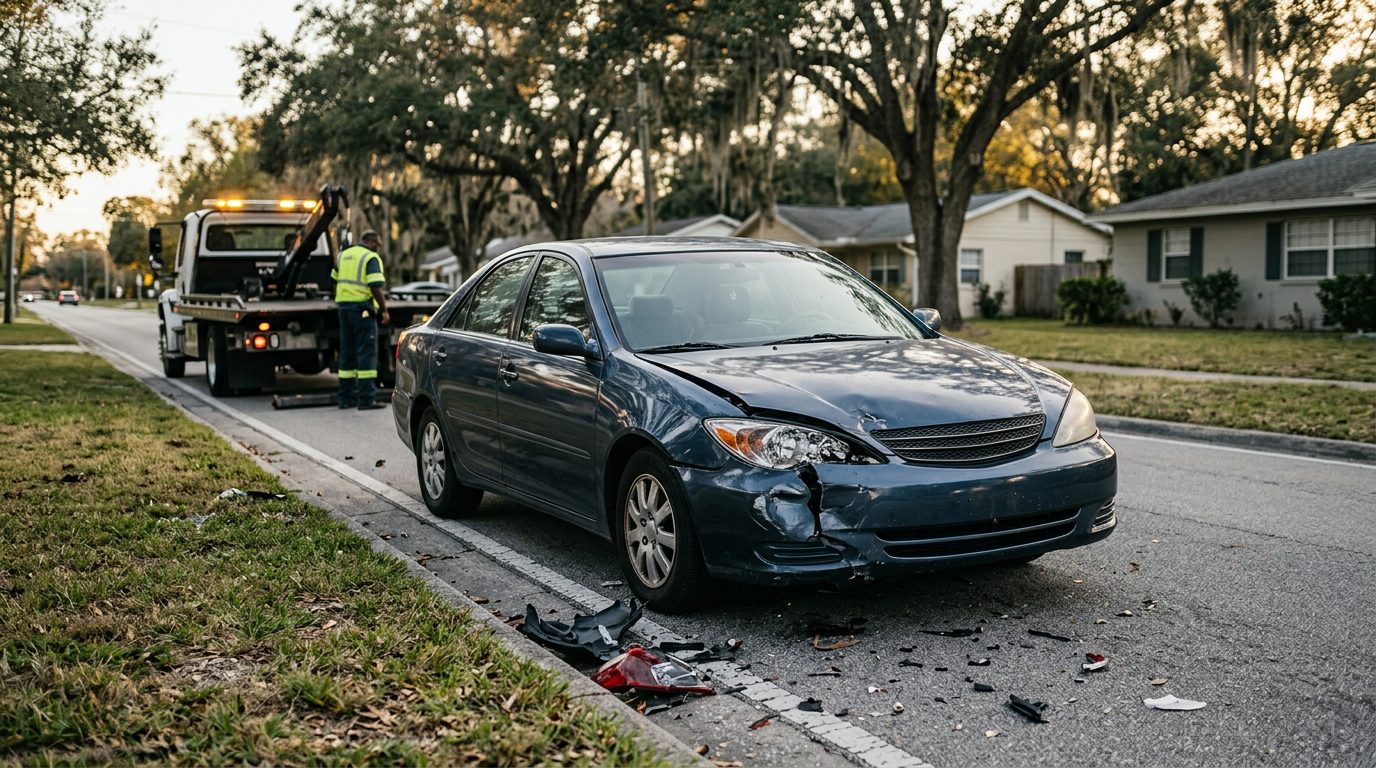
Scene photos show where vehicles stopped, what the road looked like, and what was damaged. Take them only when it’s safe to do so.
Useful photos include the truck’s company name and USDOT number, damage to both vehicles, skid marks, road conditions, traffic signals, lighting, and where each vehicle came to rest. A USDOT number is the federal number carriers use to identify themselves, so a clear photo of it helps.
Save the original files with their date information. Don’t edit the originals. Make a backup copy in a second place. Dashcam footage from your own vehicle or a nearby business may be recorded over if no one saves it, so ask for it right away.
If an image is an illustration, a reenactment, or AI-generated, label it clearly as such. Only actual photos and video should be presented as the scene.
Witness information and statements
Write down each witness’s name and phone number while memories are fresh. Note what each person says they saw, in their own words. Don’t guess or fill in gaps.
Never pressure anyone to change their account. An honest, consistent account is worth more than a polished one.
If you or your loved one gave a written or recorded statement, ask for a copy in writing. Under La. R.S. 13:3732, the person who took an injured person’s statement must, at the request of the person who made the statement or his personal representative, provide that person a true and complete copy within twenty days after written demand. A written, recorded, or transcribed statement by an injured person is not admissible in evidence or otherwise used in any civil action relating to its subject matter if the person holding it refused, on request of the person who made it or his personal representative, to furnish a true and complete copy.
Truck and trucking company records
The carrier’s records often matter most. Categories include driver logs and electronic logging device (ELD) data, maintenance and inspection records, driver qualification files, bills of lading, dispatch messages, and drug and alcohol testing records.
An ELD records the date, time, location, engine hours, vehicle miles, and driver, vehicle, and carrier identification. Under 49 C.F.R. § 395.26, it records these automatically.
Testing rules also apply after some crashes. Under 49 C.F.R. § 382.303, an employer must test surviving drivers for alcohol and drugs as soon as practicable after certain crashes. Timing rules apply to each test, so the records should show when testing happened.
A written preservation request asks the carrier, in writing, to keep these records. It also shows what you asked for and when. You don’t need to know which records exist to ask. A lawyer can help identify what to request.
Medical records and the cost of care
Medical records show what happened to your body and what care followed. Keep discharge summaries, imaging reports, prescription lists, therapy notes, and every bill.
Keep a simple journal of symptoms, missed work, and daily limits. Write each entry close to the day it happens. Notes made at the time are easier to explain later than memories pieced together months afterward.
Some brain-related symptoms, such as headaches, memory trouble, or mood changes, can be easy to miss early on. Write them down as they happen. Our page on brain injury after a truck crash covers what to watch for.
Not sure what your next step is?
Talk it through with our team — the first consultation is free, confidential, and carries no obligation.
Your own records and what to avoid
Keep your own records close. Save photos from the day, phone logs, receipts for out-of-pocket costs, pay stubs, and every letter from an insurer.
Be careful about posting details of the crash on social media. Posts can be read out of context. Also think before giving a recorded statement to an insurance company. Get advice on your situation first.
Insurance information can also be requested. Under La. R.S. 32:871, an interested person may ask the Department of Public Safety and Corrections for insurance coverage information. The request must be in writing and include a fifteen dollar fee.
Keep copies of everything you sign or receive. Date each copy, and store originals in a safe place.

Next steps and how Przemek Lubecki can help
Start with a written list of what you have and where it is. Keep originals safe. Then talk with a lawyer about what else to request and how quickly.
Przemek Lubecki is the responsible lawyer for this page. The firm’s office is in New Orleans, and it serves people in Orleans Parish, the New Orleans metro, and across Louisiana. The firm may associate or refer a truck crash case to other law firms. This page is general information, not advice on your specific situation, and the right steps depend on the facts.
For a related overview, read our guide to truck accident claims in New Orleans.
Frequently asked questions
How long do trucking companies keep driver logs?
Federal rules require at least 6 months from the date of receipt for driver records of duty status. Other files, such as driver qualification files, have longer periods.
Can I get a copy of the police report?
Louisiana limits who may receive crash reports. Parties and their attorneys are among those who may request one.
Should I save dashcam footage?
Yes. Footage can be recorded over, so save the original file as soon as you can.
If you’re gathering records for someone you love after a truck crash, contact us for a free, confidential consultation or call 855-LUBECKI. There is no obligation to continue.
The Evidence Checklist
Scene and vehicle photos
Photos and video of the crash scene, vehicle damage, skid marks, road conditions, and any visible signs from the truck, taken as soon as it is safe to do so.
Driver and carrier details
The truck driver's name and contact information, the trucking company, the vehicle and trailer identification numbers, and the insurance information the driver provides.
Witness information
Names and contact details of anyone who saw the crash or what happened just before it. Memories fade, so write down what each person described while it is fresh.
Medical records and treatment notes
Records of every visit, test, diagnosis, and recommended treatment, along with bills and a simple daily log of symptoms, limitations, and missed work.
Why Careful Documentation Matters
Details fade quickly
Road conditions, positions of vehicles, and what people said can change or be forgotten within days. Early notes help preserve an accurate account.
Records can be lost
Some trucking records, such as driver logs and maintenance files, are kept for limited periods. Requests for them should be considered early.
Injuries can develop over time
Some injuries, including brain injuries, may not show their full effects right away. Keeping consistent medical records helps document the full picture.
Be Careful With Early Statements
Insurance adjusters may ask for a recorded statement or a signed release soon after a crash. Before you agree to either, consider speaking with a lawyer about what you are being asked to give up.