
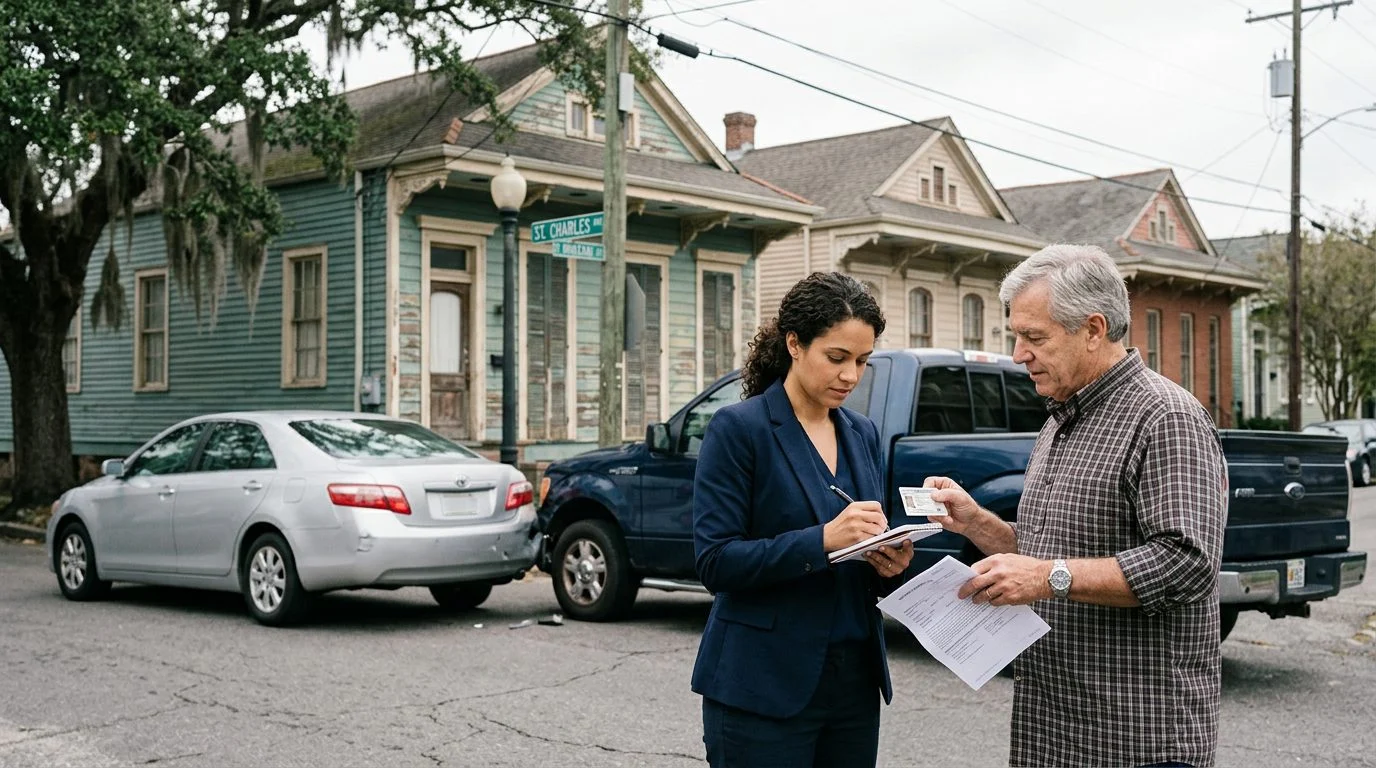
New Orleans · Louisiana Accident Law
Louisiana Is an At-Fault State: What That Means After a Crash
Louisiana is not a no-fault state. Here is how Louisiana's at-fault approach works, and why it matters after a crash in New Orleans, Metairie, Kenner, Slidell or elsewhere in Louisiana. Przemek Lubecki leads the New Orleans office.
By Przemek Lubecki · Published November 4, 2026
Short answer: Louisiana is an at-fault state, not a no-fault state
Is Louisiana a no-fault state for accidents? No. Louisiana is an at-fault state, so the person whose fault caused a crash is generally responsible for the harm. Louisiana Civil Code article 2315 says that a person whose fault causes damage to another must repair it.
In a no-fault state, an injured driver usually turns to their own insurer first, no matter who caused the crash. Louisiana’s basic approach is different. That difference decides whose insurance is asked to respond, and where you should start.
If you were hurt in a crash, or you're worried about someone who was, you don't have to sort out the insurance questions alone. Our team is glad to talk. Talk it through with our team — the first consultation is free, confidential, and carries no obligation.

What “at-fault” means after a Louisiana crash
Liability coverage pays for harm the insured driver causes to others. It does not work like a plan that pays your own bills no matter who caused the crash.
That is why fault has to be shown. Police reports, photos of the scene and vehicles, and names of witnesses often help show what happened. Keep your medical records and bills in one place, too. The outcome of any claim depends on the facts of that crash.
Damages can include more than medical bills. Under article 2315, damages may include loss of consortium, service, and society. La. Civ. Code art. 2315 reads: “Damages do not include costs for future medical treatment, services, surveillance, or procedures of any kind unless such treatment, services, surveillance, or procedures are directly related to a manifest physical or mental injury or disease.” La. Civ. Code art. 2315(B) provides that damages may include loss of consortium, service, and society, and that these may be recovered by the same respective categories of persons who would have had a cause of action for wrongful death of an injured person. La. Civ. Code art. 2315 reads: “Damages do not include costs for future medical treatment, services, surveillance, or procedures of any kind unless such treatment, services, surveillance, or procedures are directly related to a manifest physical or mental injury or disease.”
How your own insurance may still help
Your own policy can still matter, even when another driver caused the crash. Under La. R.S. 22:1295, auto liability policies must include uninsured motorist coverage. The named insured can reject it, pick lower limits, or choose economic-only coverage.
This coverage applies when the at-fault driver is uninsured or underinsured. La. R.S. 22:1295 reads: “(f) Uninsured motorist coverage shall include coverage for bodily injury arising out of a motor vehicle accident caused by an automobile which has no physical contact with the injured party or with a vehicle which the injured party is occupying at the time of the accident, provided that the injured party bears the burden of proving, by an independent and disinterested witness, that the injury was the result of the actions of the driver of another vehicle whose identity is unknown or who is uninsured or underinsured.” Some policies also include medical payments coverage, which can help with bills after a crash. Check your policy’s declarations page to see which coverages you carry.
Timing matters too. La. R.S. 9:5629 says actions under uninsured motorist provisions are prescribed two years from the date of the accident. Keep copies of your insurer’s letters and your coverage records, so you can act in time.
Comparative fault: how shared blame affects recovery
If you share some of the blame, your recovery can shrink. Louisiana uses comparative fault, which means shared fault. Louisiana Civil Code article 2323 sets the rule. Under La. Civ. Code art. 2323, if the degree or percentage of negligence attributable to the person suffering injury, death, or loss is equal to or greater than fifty-one percent, that person shall not be entitled to recover damages, unless the injury also resulted partly from the fault of an intentional tortfeasor, in which case the claim shall not be reduced (La. Civ. Code art. 2323).
If the degree or percentage of negligence attributable to the person suffering injury, death, or loss is less than fifty-one percent, then the amount of damages recoverable shall be reduced in proportion to that degree or percentage, unless the injury also resulted partly from the fault of an intentional tortfeasor, in which case the claim shall not be reduced (La. Civ. Code art. 2323). The current text took effect January 1, 2026. Suppose you are found partly at fault. Your recovery goes down by your share, and a high enough share can take away recovery entirely.
The same comparison applies to claims under any legal theory. Shared fault can come up early in a claim, so write down what you remember while it’s fresh.
Uninsured drivers and the “no pay, no play” question
Louisiana requires registered self-propelled vehicles to carry liability security, with some exceptions. La. R.S. 32:861 lists the forms that security can take.
The “no pay, no play” idea comes from La. R.S. 32:866. Under La. R.S. 32:866, there shall be no recovery for the first one hundred thousand dollars of bodily injury, or for the first one hundred thousand dollars of property damage, arising out of a motor vehicle accident, when the injury or damage is occasioned by an owner or operator of a motor vehicle involved in the accident who fails to own or maintain compulsory motor vehicle liability security, subject to the exceptions set out in the statute (La. R.S. 32:866). A driver found liable can raise this limit as a defense.
If another vehicle never touched yours, uninsured motorist coverage may still apply. You must prove, through an independent and disinterested witness, that the other driver’s actions caused the injury. See La. R.S. 22:1295.
Reporting duties after a crash in Louisiana
La. R.S. 32:398 sets duties for the driver of a vehicle involved in a crash resulting in injury to or death of any person, or property damage in excess of five hundred dollars (La. R.S. 32:398). Under La. R.S. 32:398(J), when the officer investigating such a crash has reason to believe a medical condition exists that is cause for revoking or suspending a license under R.S. 32:414(E), the officer must notify the medical/conviction unit of the office of motor vehicles, provided that the officer first consults with his superior officer as to his specific observations and his superior officer concurs with the issuing officer’s belief. La. R.S. 32:398 covers those duties. State police or sheriff’s offices investigate crashes outside city limits. City police investigate crashes inside them.
Crash reports are confidential. Under the same section, reports are made available only to the parties, their insurers, their healthcare providers, and their attorneys, and also to parents or guardians of a minor party, succession representatives, an insurance support organization under contract to provide claims and underwriting, and news-gathering organizations requesting documents about a specific crash. Upon request, reports must be made available to the parties and others listed in the statute within seven working days after the investigation is completed.
An operator may also file a written report with the commissioner. Under La. R.S. 32:871, that report declares the vehicle’s insurance. Keep copies of anything you file, and write down the date, time, and place of the crash.
Not sure what your next step is?
Talk it through with our team — the first consultation is free, confidential, and carries no obligation.
Why truck and commercial vehicle crashes can involve more parties
Truck and commercial vehicle crashes can involve more than one at-fault party and more than one insurer. The driver, the vehicle’s owner, or another company tied to the trip may each have some share of responsibility. Which parties were involved, and what each one did, is part of the investigation.
Louisiana Civil Code article 2324 addresses multiple parties. When liability is not solidary, a joint tortfeasor is not liable for more than their degree of fault. In plain terms, each party answers for its own share of fault.
Don’t assume the first insurer who calls you is the only one. More than one policy may apply. Trip logs, maintenance records, and inspection reports can matter in these claims.
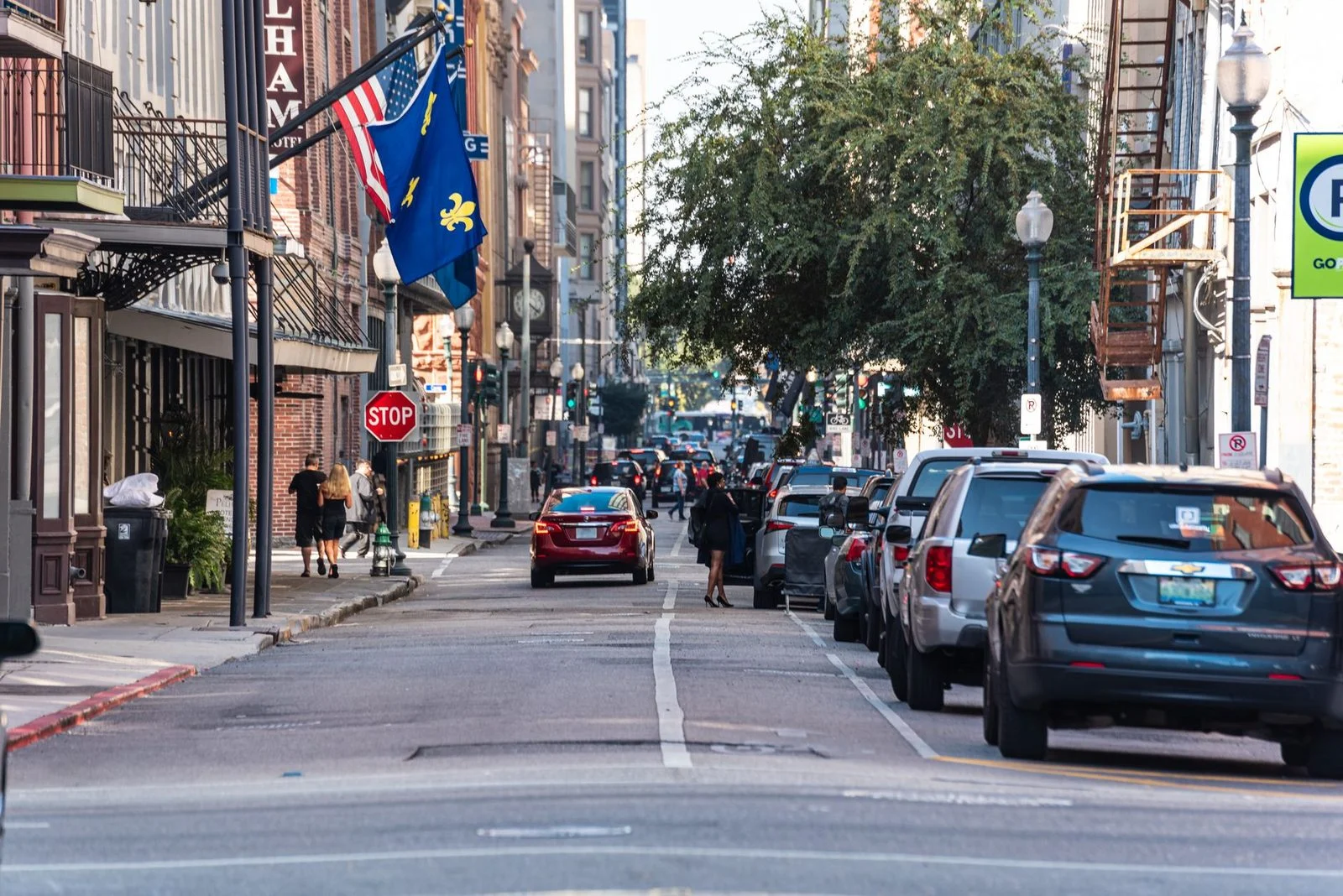
Talking with a Louisiana injury attorney about your situation
You may be reading this while you’re hurt, handling bills, or getting calls from insurance adjusters. You may also be trying to help a family member who was injured or lost someone in a crash. Those are heavy decisions to make at the same time.
The decisions in front of you often include whether to speak with insurers, how to pursue a claim against the at-fault driver, and how to protect your own coverage. American Trial Lawyer handles car, truck, commercial vehicle, rideshare, and motorcycle crash claims, and wrongful death cases. Przemek Lubecki is the responsible lawyer for this page, and the office is in New Orleans, Louisiana. American Trial Lawyer may associate or refer a case to other law firms.
Do I have to report a crash to police in Louisiana? La. R.S. 32:398 requires the driver of a vehicle involved in a crash resulting in injury to or death of any person, or property damage in excess of five hundred dollars, to give such information and, upon request, to exhibit such license or permit to any police officer at the scene of the crash or investigating it (La. R.S. 32:398). Under La. R.S. 32:398(J), when the officer investigating such a crash has reason to believe a medical condition exists that is cause for revoking or suspending a license under R.S. 32:414(E), the officer must notify the medical/conviction unit of the office of motor vehicles, provided that the officer first consults with his superior officer as to his specific observations and his superior officer concurs with the issuing officer’s belief. Under La. R.S. 32:398(A), the driver of a vehicle involved in a crash resulting in injury to or death of any person, or property damage in excess of five hundred dollars, has specific duties under that section.
Only the parties to the crash, their attorneys, and certain others, such as insurers and healthcare providers, can request it, and a copy fee may apply.
If you were hurt, or you’re worried about someone who was, you don’t have to sort out the insurance questions alone. Call 855-LUBECKI or request a free case evaluation. The first consultation is free, confidential, and carries no obligation to continue.
Questions to think through after a crash
Who caused the crash?
In an at-fault state, the question of fault is central. Gathering the police report, photos and witness details early can help clarify what happened.
What injuries are you dealing with?
Some injuries, including brain injuries, may not show their full effects for days or weeks. Keep records of medical visits, treatment and time missed from work.
Was anyone else involved?
Crashes with commercial trucks, rideshare vehicles or multiple drivers can involve more than one insurer and more than one potentially responsible party.
Who is handling the claim?
Be cautious about giving recorded statements or signing documents from an insurance company before you understand your situation.
A common misunderstanding
Many people assume that their own insurer will handle everything, as it might in a no-fault state. In Louisiana, the at-fault driver's responsibility is the starting point, so it is worth getting informed before accepting an insurer's first offer. The firm may associate or refer a case to other law firms. Your first consultation with American Trial Lawyer is free, confidential and without obligation.
How our New Orleans office can help
Free, confidential consultation
Talk with the firm about your crash, your injuries and your questions. The first consultation is free and comes with no obligation to continue.
Focus on serious injuries
The firm focuses on people seriously hurt in truck, commercial vehicle and car crashes, as well as families in wrongful death cases.
Clear, plain-language answers
We explain how Louisiana law may apply to your situation in terms you can follow, so you can make informed decisions.
Serving Louisiana from New Orleans
Our New Orleans office serves Orleans Parish, the New Orleans metro area and communities across Louisiana.