
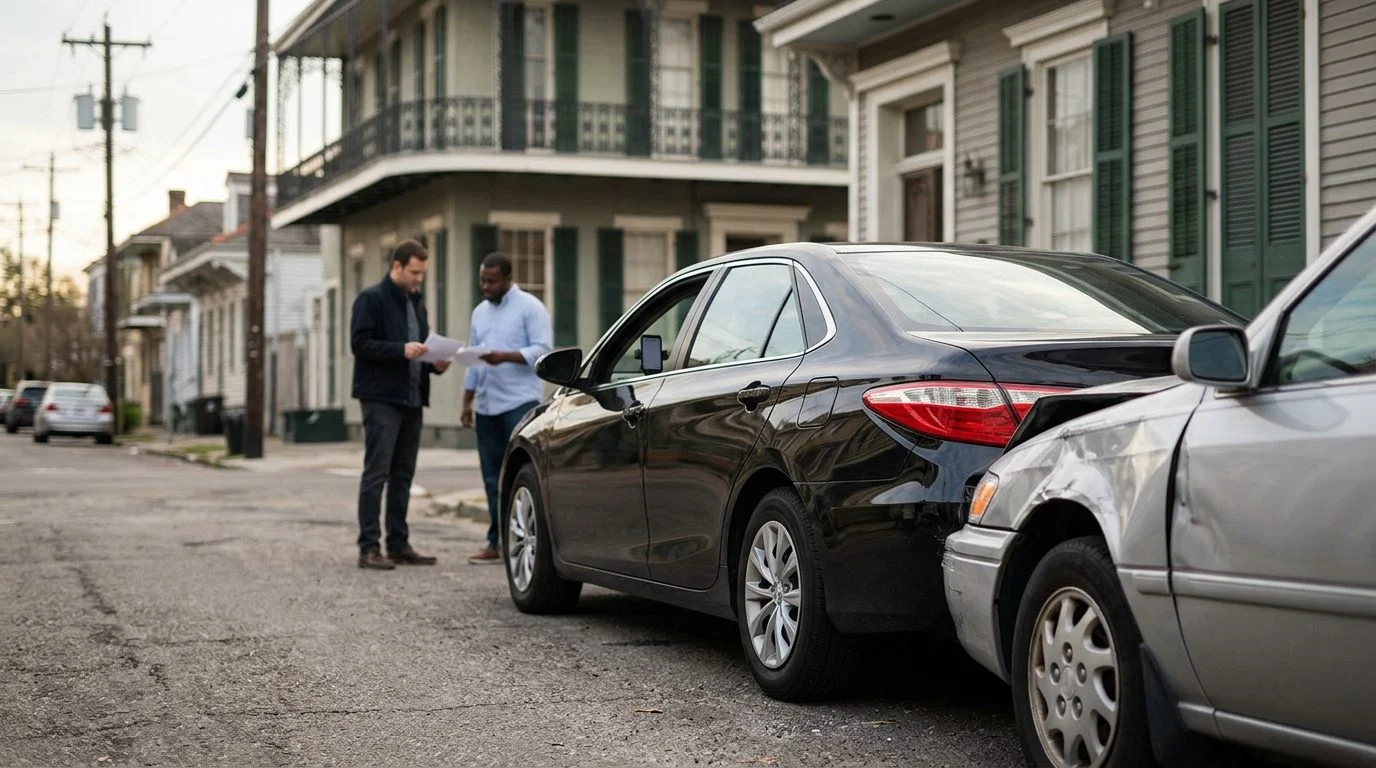
Rideshare Accidents · New Orleans, Louisiana
Hurt in an Uber Crash in New Orleans? Here's What Comes Next
A rideshare crash can raise questions about insurance, who is responsible and where to turn first. Przemek Lubecki and our team focus on helping injured people work through each step.
By Przemek Lubecki · Published November 9, 2026
If you rode in an Uber, drove one, or were hit by one, you’re probably shaken and unsure what comes next. Here is what happens if an Uber gets in a crash, in the order you’re likely to face it. Safety and medical care come first. Then insurance depends on the app status, Louisiana fault rules decide responsibility, and time limits apply to any claim.
What to do first after an Uber crash
Safety and medical care come first. Call 911 when anyone needs medical help or when police are needed. Then get checked, even if the pain seems minor. Some injuries take days to show, and every medical visit creates a record you can point to later.
If it’s safe, take photos of the vehicles, where they came to rest, road conditions, and any visible injuries. Capture the Uber app screen showing the trip status, too. Get names, phone numbers, insurance details, and the crash report number from everyone involved.
Police reports follow their own rules. Under Louisiana’s crash report law, crash reports are confidential but available to the parties to the crash and their attorneys. Upon request, they are made available within seven working days after the investigation is complete. Keep your app receipt and any messages you sent through the app.
If you're still sorting out an Uber crash that hurt you or someone you love, you don't have to work out the next step alone. Przemek Lubecki can talk through your situation in a free, confidential first consultation with no obligation to continue. Talk it through with our team — the first consultation is free, confidential, and carries no obligation.

Who can be involved when an Uber is in a crash
Several people can be affected. That includes the driver, the rider or passengers, the other driver, and any pedestrian or cyclist nearby. Other vehicles can include delivery vans, commercial trucks, or cars driven by people with their own auto policies.
Each person may have a different claim and a different insurance source. A passenger hurt in an Uber is in a different position from the driver or from someone in another car. One person’s situation does not automatically decide another’s. Each person should keep their own records.
If an Uber hit your own car, the rideshare driver’s coverage and your own policy may both come into the picture. Keep every insurance card, claim number, and letter in one place so nothing gets lost. A rider who was hurt should also keep the trip receipt, since it shows the timing of the ride.
How the Uber app status can affect which insurance applies
The app status matters because Louisiana sets different insurance minimums for different parts of a ride. Louisiana law under La. R.S. 45:201.6 sets the automobile insurance for a transportation network company driver logged on during the pre-trip acceptance period at not less than fifty thousand dollars for death and bodily injury per person, not less than one hundred thousand dollars for death and bodily injury per incident, and not less than twenty-five thousand dollars for property damage.
For a prearranged ride, the same section sets the automobile insurance amount at not less than one million dollars for death, bodily injury, and property damage. Both phases also include uninsured and underinsured motorist coverage to the extent the law requires.
Personal auto insurers may exclude coverage for losses during these periods, under La. R.S. 45:201.7. That is one reason the question gets complicated.
Each phase can lead to a different answer. For more, read our rideshare accident guide for New Orleans and our page on Uber’s $1 million insurance policy.
How fault is decided under Louisiana law
Louisiana uses comparative fault, which means responsibility can be divided among everyone whose negligence contributed to a crash. Under La. Civ. Code art. 2323, a person whose own negligence is fifty-one percent or greater is not entitled to recover damages, while a person whose negligence is less than fifty-one percent may recover damages, decreased in proportion to their percentage of fault.
Fault is looked at through the evidence, such as photos, statements, crash records, and vehicle or phone data where it exists. Investigators and insurers look at what each driver did before the crash, and those answers come from evidence. Common car accident causes gives background on why driver behavior matters.
When more than one party contributed to a crash, La. Civ. Code art. 2324 provides that, where liability is not solidary, a joint tortfeasor (a person whose fault adds to the harm) is not liable for more than his own degree of fault.
Early statements matter. If you gave a recorded statement, you can ask for a copy. Under La. R.S. 13:3732, the person who took it must give a true and complete copy within twenty days after written demand.
Injuries that appear days or weeks later
Some crash injuries don’t show up until hours, days, or weeks later. Neck and back strain, headaches, and stiffness are common examples. Body aches after a car accident explains why symptoms can be delayed.
Following medical advice and keeping follow-up visits helps create a clear record. That record shows what was treated, when, and why. Tell every provider about the crash, even if the pain seems unrelated.
Louisiana also limits how medical bills count. Where a health insurer or Medicare paid a contracted provider, recovery is limited to the amount actually paid plus cost sharing, not the amount billed, under La. R.S. 9:2800.27.
Head impacts deserve special attention. A brain injury may not look serious at the scene. Ongoing changes in memory, mood, sleep, or concentration need medical attention. Read more on our brain injury page.
What the claim process generally involves and when to pay attention to deadlines
A typical claim moves through several stages. These include notice to insurers, reporting injuries, gathering medical and wage records, reviewing the harm, and negotiation. If claims are not resolved, a lawsuit may follow. Early records help each stage move forward, so keep copies of every bill, pay stub, and letter from an insurer.
Deadlines matter, so don’t wait to ask questions. Under La. Civ. Code art. 3493.1, delictual (tort) actions have a two-year time limit that starts on the day the injury or damage is sustained. Exceptions exist, so the exact deadline depends on the facts.
When someone dies because of another’s fault, La. Civ. Code art. 2315.2 lists who may sue, starting with a surviving spouse and children. The time limit is one year from the death or two years from the injury, whichever is longer, but for medical malpractice actions it is one year from the death. See our wrongful death page.
American Trial Lawyer may associate or refer a case to other law firms when that makes sense. The first consultation is free, confidential, and without obligation.
Quick answers
Does the app status change which insurance applies?
Yes. Louisiana sets different minimum coverage for logged-on time and for prearranged rides.
How long do I have to file?
Louisiana generally allows two years from the injury for most injury claims, but exceptions exist (La. Civ. Code art. 3493.1).
Not sure what your next step is?
Talk it through with our team — the first consultation is free, confidential, and carries no obligation.

Talking through your Uber crash with Przemek Lubecki
You may be reading this while still sore, buried in paperwork, or worried about a family member who was in an Uber. You don’t need to have decided anything to ask a question. Przemek Lubecki, the trial lawyer responsible for this page, works from the New Orleans office and serves people across Orleans Parish, the New Orleans metro, and Louisiana. Call 855-LUBECKI or request a free case evaluation to talk through your situation in a confidential first consultation, with no obligation to continue.
How we approach your rideshare case
Protecting your position
We focus on protecting injured people's rights while the facts of the crash are gathered and reviewed.
Plain-language answers
We explain insurance questions and legal steps in terms you can understand, so you can make informed decisions.
A free, confidential first call
Your initial consultation is free, confidential and comes with no obligation to continue.
Based in New Orleans
Our office is in New Orleans. We represent people across Orleans Parish, the New Orleans metro and Louisiana.
Keep a record of what happened
Write down what you remember while it is fresh, and keep photos, receipts, app screenshots and medical paperwork. Speak with a lawyer before giving a recorded statement to any insurance company.
Common questions after a rideshare crash
Does the app status matter?
Whether the driver was logged on, waiting for a ride or on a trip can change which insurance coverage applies. We look at these details early.
Why medical care comes first
Seeing a doctor creates a record of your injuries. Keep every appointment, bill and prescription.
Who else may be involved?
A rideshare crash can involve the driver, the platform, another motorist or a commercial vehicle. The firm may associate or refer a case to other law firms where that serves the client.
Serious injury or loss of life
Brain injuries and wrongful death claims raise their own questions. Przemek Lubecki focuses on these cases and will explain your options in a free, confidential consultation.