
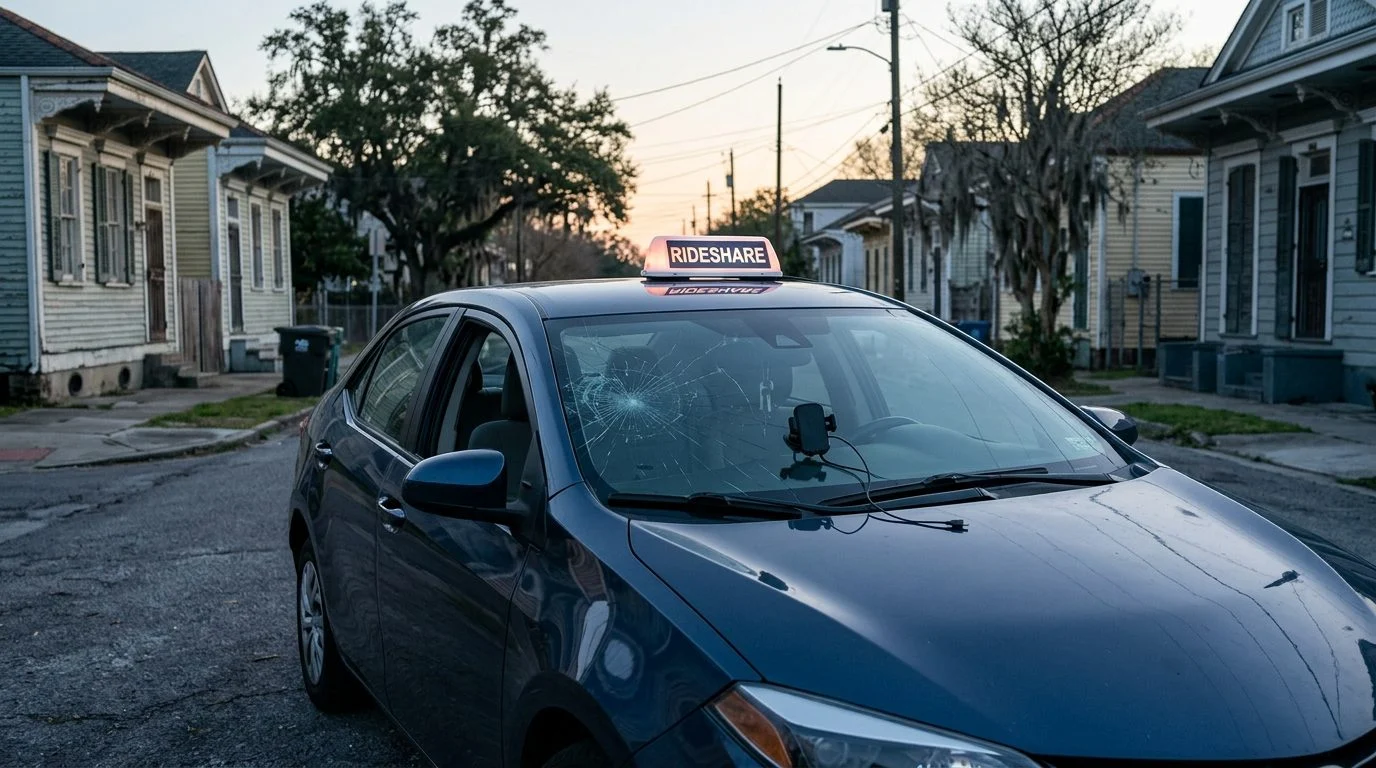
Rideshare Accidents | New Orleans, Louisiana
Your Auto Insurer Denied Your Rideshare Crash Claim. You Still Have Options.
Przemek Lubecki and the team at American Trial Lawyer in New Orleans help injured people read a denial letter, understand the reasons given, and decide on a next step.
By Przemek Lubecki · Published November 18, 2026
You were logged on to Uber or Lyft when a crash happened, and now your own auto insurer has denied the claim. That’s a hard thing to face. A denial letter is the insurer’s position, not always the final word. Whether a personal policy pays for a rideshare crash depends on the policy wording and what your app was doing at the moment of impact.
A Denied Claim Is Not Always the Final Answer
For a rideshare driver, a personal auto insurance denial is a position you can question. Start by understanding each reason in the letter. Then gather the records needed to test it.
Louisiana sets its own insurance rules for rideshare drivers and companies, under La. R.S. 45:201.6. That section says coverage under a policy the rideshare company maintains does not depend on your personal insurer first denying a claim. So more than one policy may be in play. Your app status at the exact moment of the crash often matters as much as the denial reasons.
If your own insurer denied your claim after a crash that happened while you were logged on to Uber or Lyft, we can talk through the denial with you. Talk it through with our team — the first consultation is free, confidential, and carries no obligation.
Why Personal Auto Policies Often Deny Rideshare Crash Claims
Personal auto insurers often deny these claims because Louisiana law lets them exclude coverage during rideshare app periods. Under La. R.S. 45:201.7, an insurer may exclude coverage for a loss that occurs while a driver is logged on during the pre-trip acceptance period. The same goes for a prearranged ride.
The excluded coverage can include bodily injury liability, medical payments, and uninsured and underinsured motorist coverage. It can also include collision coverage. The statute also says nothing requires a personal policy to cover those periods.
Denials can rest on a specific exclusion or endorsement. They can also turn on a dispute over which app phase applied, or on how the car was being used. A common mistake is assuming the personal policy covers every minute of a shift. The policy’s own terms decide that. Each reason traces back to particular policy language, so read that wording closely.
Request a Complete Copy of Your Personal Auto Policy
Ask your insurer in writing for a complete copy of the policy that was in force on the crash date. Ask for the declarations page, every endorsement, and any rideshare or livery rider. The declarations page lists covered vehicles, drivers, coverage limits, and the vehicle’s listed use.
Keep a dated copy of your request and every reply. Save each renewal notice and policy version you received. The terms in force on the crash date are the ones that matter.
If your policy includes uninsured motorist coverage, pull the selection form you signed. Under La. R.S. 22:1295, the uninsured motorist coverage requirement does not apply when any insured named in the policy rejects coverage, selects lower limits, or selects economic-only coverage, in the manner the statute provides.
Get the Denial in Writing and Read the Cited Provisions
Ask for the denial in writing. Ask the insurer to name each policy provision it relies on. A denial given only by phone is hard to review later.
Match each stated reason to a specific section of your policy. Note any reason that is vague or not tied to a provision.
Write down the questions the letter raises. Which app status did the insurer assume? What evidence did it cite? Which vehicle use does it say fell outside the policy?
Keep the letter beside the policy so you can compare them side by side. Any gap between the two is worth a closer look.
Gather App Status, Trip Records, and Crash Evidence
The most useful records are your app status, your trip times, and the Louisiana crash report. Start with the trip data. Under La. R.S. 45:201.8, the rideshare company and any insurer that may cover the crash must cooperate. They must exchange relevant information with directly involved parties within ten business days of a request.
That information can include the exact times the driver logged on and off in the twelve hours before and after the accident. Ask the company for your own trip receipts, app screenshots, and messages about the trip, too.
Crash reports are confidential. The parties and their attorneys can still request them under La. R.S. 32:398. Upon request, the report must be made available within seven working days after the crash investigation is complete.
Preserve dashcam footage, phone records, and witness contact details while they are still available. Keep medical records, bills, and a log of missed work.
If you gave a recorded or written statement to an insurer, ask for a copy.
Deadlines, Next Steps, and Talking With Przemek Lubecki
Louisiana generally gives two years to file an injury claim. The period is counted from the day the injury happened. Under La. Civ. Code art. 3493.1, delictual actions are subject to a two-year liberative prescription that starts when injury or damage is sustained. A claim under uninsured motorist provisions has its own two-year period, counted from the accident date, under La. R.S. 9:5629.
Louisiana law also limits when an injured person may sue an insurer directly, under La. R.S. 22:1269.
Przemek Lubecki is the responsible lawyer for this page. The firm’s office is in New Orleans. The firm serves people in Orleans Parish, Metairie, Jefferson Parish, Kenner, St. Bernard Parish, Slidell, and across Louisiana.
This firm may associate or refer a case to other law firms. Every denial turns on its own facts, and no outcome is promised.
Can my personal auto insurance deny a rideshare crash claim in Louisiana?
Yes, Louisiana law lets an insurer exclude coverage for losses during certain rideshare app periods. The rule is in La. R.S. 45:201.7.
How long do I have to file?
Louisiana generally gives two years from the injury date for injury claims. See La. Civ. Code art. 3493.1.
Can I get a copy of my crash report?
Yes. Crash reports are confidential, and under La. R.S. 32:398, upon request they must be made available only to listed persons, including the parties to the crash and their attorneys, within seven working days after the investigation ends.
If your own insurer denied your claim after a crash that happened while you were logged on to Uber or Lyft, you don’t have to sort out the policy alone. Request a free case evaluation or call 855-LUBECKI for a free consultation. The initial consultation is free, confidential, and without any obligation to continue.
How we approach a denied claim
We review the denial letter
We read the insurer's stated reasons line by line and identify which policy language it relies on.
We look at the app status
We help gather the details that show what the driver was doing on the rideshare app at the time of the crash.
We explain your options
We walk you through what a denial can mean for your injury claim and what steps may be available to you.
We focus on you
We understand that a crash and a denial can happen at the same time, and we aim to keep the process clear and manageable.
Important: Your next steps
A denial letter is not always the final word. Please keep the letter, your police report, medical records, and any messages with the insurer. American Trial Lawyer may associate or refer a case to other law firms when appropriate.
What you can bring to your free consultation
The denial letter
Bring every letter, email, and claim number you have received from the insurer.
Crash and police reports
Accident reports, photos, and witness information help us understand what happened.
Medical records
Records and bills show the injuries you have treated and the care you still need.
Rideshare app details
Screenshots, trip information, and driver status details can be important to the review.