
Rideshare Accidents | New Orleans, Louisiana
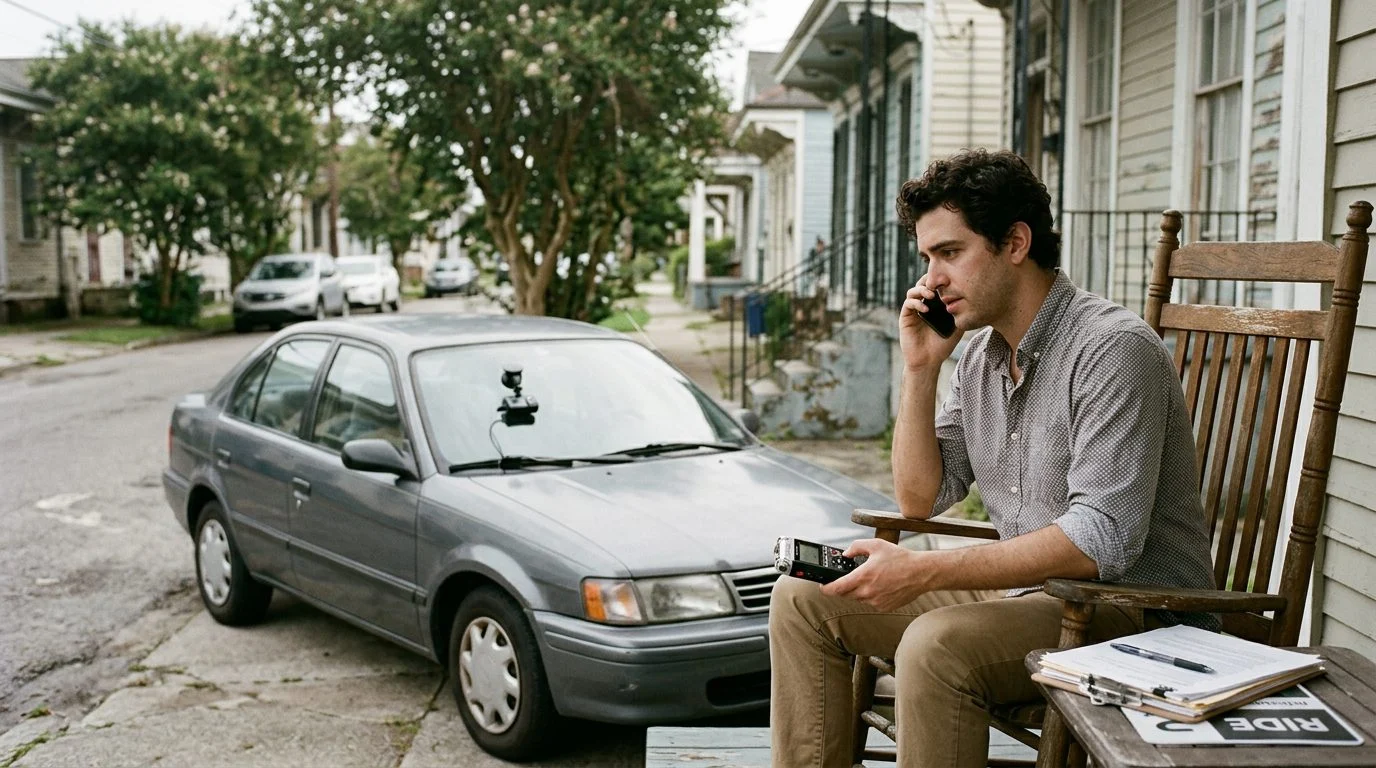
Should You Give Uber or Lyft's Insurer a Recorded Statement?
An insurance adjuster may call soon after a crash and ask to record your answers. Here is how to think it through, and when to speak with a lawyer first.
By Przemek Lubecki · Published November 18, 2026
A call from an Uber insurance adjuster, or from Lyft’s insurer, can arrive soon after a crash. You may be sore, shaken, and unsure of the facts when it happens.
The short answer is that you don’t have to decide on that first call.
Short Answer: You Can Ask for Time Before a Recorded Statement
You can ask the adjuster for time before you give a recorded statement. Before you answer recorded questions, you may want to speak with a lawyer, such as the team at our firm.
This page is written for people in the New Orleans area who were hurt in an Uber or Lyft crash. It is also for drivers, passengers, and family members who have received a call about one. It gives general information, not advice on a specific claim, because every crash turns on its own facts.
If an adjuster has asked you for a recorded statement about a New Orleans rideshare crash, you don't have to answer alone. Call our New Orleans office to talk it through. Talk it through with our team — the first consultation is free, confidential, and carries no obligation.
Who the Adjuster Works For
The adjuster who calls you usually works for the insurance company, not for you. Asking which company they represent is a fair first question.
A rideshare crash can involve more than one insurer. You might deal with your own personal auto policy, a policy the rideshare company carries, and the other driver’s insurer. Each one may assign its own adjuster and open its own file.
An adjuster’s job includes gathering facts the insurer uses to judge its own exposure. That is the purpose of the call, even when the tone is friendly. Calls can come quickly, sometimes before you know how badly you are hurt.
It’s reasonable to ask what the call is for and what the company plans to do next.
Why an Early Recorded Statement Can Affect Your Claim
An early recorded statement becomes part of the claim file. It can be used when the insurer weighs fault and damages.
Early answers are often incomplete. You may not yet know the timing, the speeds, or the full list of injuries. Questions about how you felt right after the crash, or about your health before it, are hard to answer precisely while you’re in pain or on medication. A recorded answer can be hard to correct later, even when a later version is honest.
Louisiana applies comparative fault. Louisiana’s comparative fault law, La. Civ. Code art. 2323, governs how fault is divided among everyone who contributed to an injury, and how a person’s own share of fault can affect the damages that person may recover. How fault is described can matter.
Under La. R.S. 13:3732, the person who takes your recorded statement must give you a true and complete copy. That copy is due within twenty days after written demand.
What Coverage Questions May Affect the Call
Whether a rideshare insurer covers a crash can depend on the driver’s app status at the time. The pre-trip acceptance period is the time after a driver logs on, before a ride is accepted. A dispute over which period applies can slow a claim down.
Louisiana’s rideshare insurance requirements in La. R.S. 45:201.6 vary by the stage of the trip, and the coverage that applies during a prearranged ride is higher than the coverage that applies while a driver is waiting for a ride request. La. R.S. 45:201.6 provides that automobile insurance during the pre-trip acceptance period shall be in the amount of not less than fifty thousand dollars for death and bodily injury per person, not less than one hundred thousand dollars for death and bodily injury per incident, and not less than twenty-five thousand dollars for property damage, and that a transportation network company may satisfy its obligations through a policy obtained by a participating driver only if the company verifies that the policy is maintained by the driver and is specifically written to cover the driver’s use of a vehicle related to a transportation network company’s digital network. A transportation network company can rely on a policy obtained by the driver to meet this requirement only when the company confirms that the driver keeps that policy in place and that it is written specifically to cover the driver’s use of a vehicle in connection with the company’s digital network.
Depends on the facts. Which coverage applies turns on app status, the policy wording, and the timing of the crash. Ask the adjuster to explain each policy in writing, and note which company handles each question.

What You Can Do During the Call
You can stay in control of the call by taking notes and asking for details in writing. Start by writing down the adjuster’s name, company, direct phone number, and claim number.
Tell the adjuster you want time to review the facts before a recorded statement, and ask when you can call back. Avoid guessing about speed, distance, or what you saw. It’s fine to say you don’t have the full information yet.
Don’t sign medical authorizations, releases, or settlement papers until you understand what they cover. Keep notes of every call, including the date, the time, and what was said. Keep copies of everything you send, too.
Under La. R.S. 45:201.8, in a claims coverage investigation, a transportation network company and any insurer potentially providing rideshare coverage under La. R.S. 45:201.6 must cooperate, within ten business days of a request for information, to exchange relevant information with directly involved parties and the driver’s insurer, if applicable. That includes exchanging the precise log-on and log-off times from the twelve hours before and after the crash.
Evidence and Records to Keep Before You Talk
Gather your own records before you answer detailed questions. Keep your medical records, bills, and a simple log of symptoms and treatment visits.
Save screenshots of the trip, the app, the receipt, and any messages with the driver or the company. Note the pickup and drop-off addresses, the time of the trip, and the weather and lighting.
Write down what you remember while it is fresh. Label it as your own recollection, not a final account. Take photos of the vehicles, the scene, and any road signs you can safely capture.
Crash reports also matter. Under La. R.S. 32:398, crash reports and their information are confidential. They are made available only to parties, their insurers, and their attorneys, among others. Upon request, they are provided within seven working days after the crash investigation is complete. Under La. R.S. 32:398(E), state police, local police departments and sheriff’s offices must provide copies of photographs, video recordings and audio recordings to any interested person upon request, and they may charge a reasonable fee for such copies.
Not sure what your next step is?
Talk it through with our team — the first consultation is free, confidential, and carries no obligation.
How the Firm Can Help Right Now
If an adjuster has asked for a recorded statement about your New Orleans rideshare crash, you can call American Trial Lawyer, LLC to talk through the decision before you answer. A consultation can be a chance to go over your facts and your questions. Bring the claim number, the adjuster’s contact details, your notes, and any medical records you have.
This page is the responsibility of Przemek Lubecki, a trial lawyer, and the firm’s office is in New Orleans, Louisiana. The first consultation is free, confidential, and without obligation to continue.
American Trial Lawyer, LLC may associate or refer a case to other law firms. Request a free case evaluation or call 855-LUBECKI to reach our Office in New Orleans.
Frequently Asked Questions
Do I have to give a recorded statement to Uber’s insurance adjuster?
You can ask for time before you answer recorded questions.
Does Louisiana use comparative fault?
Yes. Under La. Civ. Code art. 2323, a person whose own negligence is 51% or more cannot recover damages, but a claim is not reduced where the injury results partly from the fault of an intentional tortfeasor. The amendment took effect January 1, 2026.
How long do I have to file a claim?
Under La. Civ. Code art. 3493.1, a delictual (injury) action in Louisiana is generally subject to a two-year prescriptive period that begins to run on the day the injury or damage is sustained.
Before you speak with an adjuster
Take your time
An adjuster may ask for a call quickly. You can ask for time to rest, gather your thoughts and collect records before answering recorded questions.
Keep your records
Write down what you remember while it is fresh. Save medical notes, photos, bills and any app receipts or trip details.
Stick to what you know
Describe what you saw and felt. Avoid guessing about speed, fault or injuries you have not yet been evaluated for.
Get advice first
A lawyer can explain the questions, look at the timing and help you decide how to respond.
A key warning
Insurance adjusters work for the insurance company, not for you. What you say on a recorded line becomes part of the claim file and can be used later. If you have been hurt, talk with a lawyer before you give a statement.
Common questions
What is a recorded statement?
It is a recorded conversation with an insurance representative, often by phone. The answers are saved and placed in the claim file.
Why timing matters
Early statements are often made before injuries and symptoms are fully known. Details given too soon can be hard to clarify later.
Who can help
Przemek Lubecki, the responsible lawyer for this page, and our team at the New Orleans office can review your questions and explain your options.
How we work
The firm may associate or refer a case to other law firms. We will tell you if that happens with your matter.