
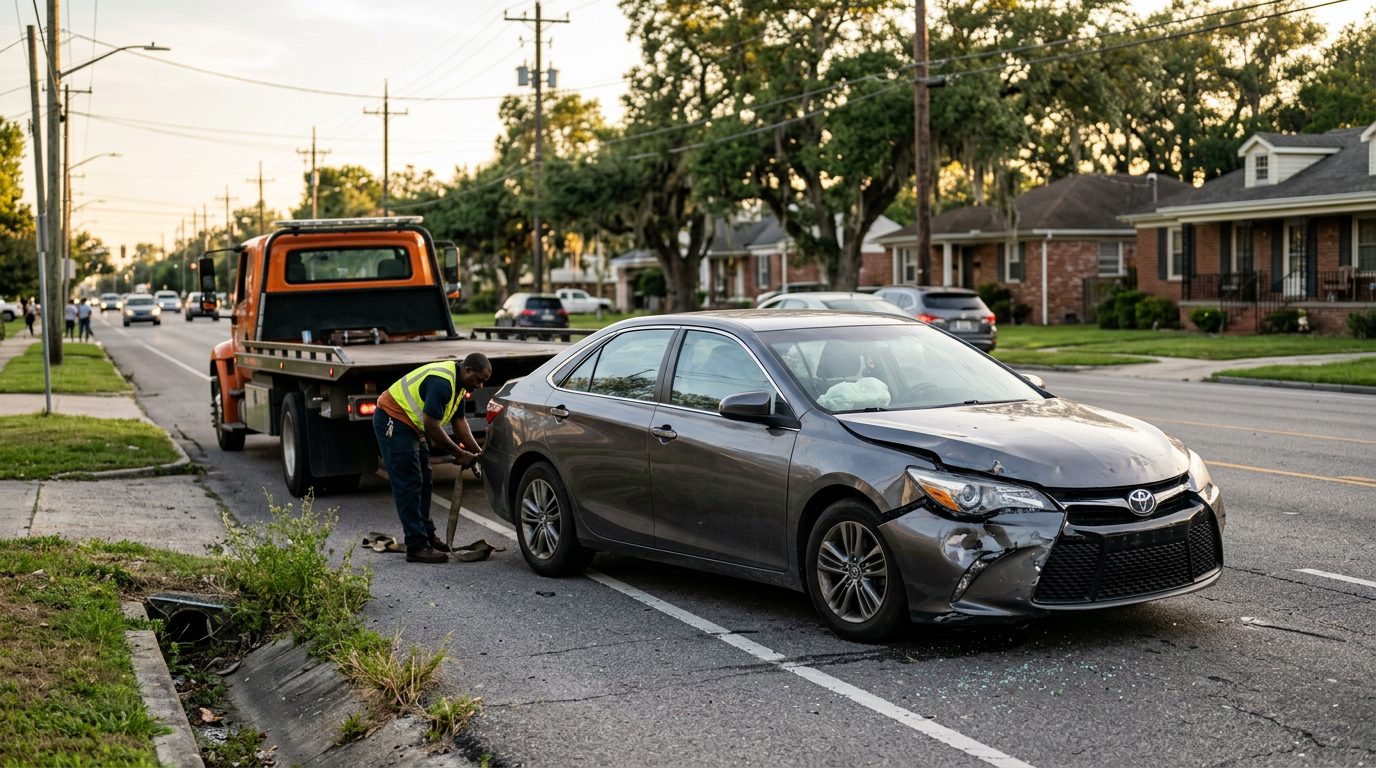
Car Accidents | New Orleans, Louisiana
Shared Blame After a Car Crash? Talk With a New Orleans Trial Lawyer
Przemek Lubecki and our team help you sort out how the crash happened, what your injuries mean for daily life, and what to think through before you speak with an insurance company.
By Przemek Lubecki · Published November 16, 2026
Can you sue if you were at fault in a car accident? In Louisiana, you may still have a claim even if you were partly to blame. This guide explains in plain terms how fault can affect a claim, what to do now, and how to protect yourself while you decide what comes next.
The short answer: Louisiana’s comparative fault rule
Being partly at fault does not automatically end an injury claim in Louisiana. La. Civ. Code art. 2323 sets out this rule.
For accidents on or after January 1, 2026, Louisiana uses modified comparative fault (La. Civ. Code art. 2323). If you were 51% or more at fault, you cannot recover damages. If you were less than 51% at fault, your damages are reduced by your percentage of fault.
Here is the math, with no dollar figures. If a fact-finder assigned you 20% of the fault, your recovery would be reduced by 20%. Each percentage matters, so it helps to understand the rule early.
Other facts can change the picture. The other driver may have been fully responsible, or several people may have contributed to the crash.
If you were partly at fault and are unsure of your options, our team can talk through the facts with you in a free, confidential consultation. Talk it through with our team — the first consultation is free, confidential, and carries no obligation.
How fault is decided after a crash
Fault is decided by weighing the evidence about how the crash happened. No single item settles it.
Insurers and courts often look at the police report, photos of the vehicles and scene, witness statements, and any video. They also weigh each driver’s account. Traffic rules often shape the argument. For example, Louisiana law says a driver shall not follow another vehicle more closely than is reasonable and prudent, given speed, traffic, and road conditions (La. R.S. 32:81).
Fault is not limited to two drivers. Under La. Civ. Code art. 2323, the degree of fault of all persons who caused or contributed to an injury is determined. That is true even when a person is not a party to the lawsuit.
A first view of fault is not always the final one. Insurers and courts can read the same facts in different ways. Write down what you remember while it is fresh.
For a broader look at how these cases move forward in New Orleans, read how car accident injury cases work in New Orleans.
Dealing with your insurance company after an at-fault crash
Talk with your insurer about the facts you know, and avoid guessing. Accurate, careful answers matter.
Common mistakes include:
- Guessing about speed, distance, or timing.
- Admitting fault in writing or on a recorded call.
- Signing a statement you have not read.
- Sharing your full medical history before you know your injuries.
If you gave a written or recorded statement after a crash in which you were hurt, Louisiana law lets you ask for a true and complete copy. The person who took the statement, or anyone who has possession of it or a copy, must furnish a true and complete copy within twenty days after written demand (La. R.S. 13:3732). If they refuse, the statement cannot be admitted in evidence or otherwise used in any civil action relating to its subject matter.
Your own policy may include medical payments or uninsured or underinsured motorist coverage. Whether it applies turns on the policy’s wording and the facts of the crash. Whether you can make a claim against your own insurer is a separate question. It turns on your policy’s terms and the facts.
If someone else sues you, or a passenger is hurt
If someone sues you after a crash, do not ignore the papers. Read them, note any response deadline, and contact your liability insurer right away.
Louisiana law says a person whose fault caused damage must repair it (La. Civ. Code art. 2315). Negligence counts as well. A person is responsible for damage caused by negligence, imprudence, or want of skill (La. Civ. Code art. 2316). That is why an injured driver, passenger, or property owner may bring a claim against the driver who caused the crash.
When more than one person contributed, the rules limit each person’s share. A joint tortfeasor is not liable for more than their own degree of fault. Generally, they are not solidarily liable for another person’s fault, but a person who conspires with another to commit an intentional or willful act is answerable in solido with that person for the damage caused by that act (La. Civ. Code art. 2324).
Keep every document you receive. Louisiana sets filing deadlines for injury claims, so timing matters early.
Passengers hurt in a crash often have questions about whom they may be able to bring a claim against, and the answer depends on the facts of each case.
Protecting your health and your records now
Get a medical evaluation after any crash, even when you feel fine. Some injuries, such as concussion or neck and back strain, can cause symptoms days later.
A doctor can record your symptoms when they start. That record helps show what you experienced. Keep a simple log of symptoms, appointments, missed work, and expenses. Save receipts and photos.
Preserve the evidence too. Keep your vehicle as it is for now if you can, save phone photos, and keep any dashcam footage. Avoid posting about the crash on social media, because posts can be read out of context.
Causing a crash that hurt someone else can bring guilt, fear, and stress. Talking with people you trust, and with your doctor, is a reasonable step.
Talk with our team about your situation
You may be reading this because you were part of a crash, or because a family member is facing one. You may still be deciding what to do next, and that is a normal place to be.
Przemek Lubecki is the responsible lawyer for this page. Our office is in New Orleans, Louisiana. The firm may associate or refer a case to other law firms.
If you’d like to talk through the facts, you can request a free case evaluation or call 855-LUBECKI for a free, confidential consultation with no obligation to continue.
Can you sue if you were at fault in a car accident in Louisiana?
You may still have a claim if your share of fault is under 51% for a crash on or after January 1, 2026. A share of 51% or more bars recovery for those crashes.
How long do I have to file?
Louisiana sets filing deadlines for injury claims, so it helps to learn the timing early.
Can someone sue me after a crash I caused?
Yes. Under La. Civ. Code art. 2315, a person whose fault caused damage must repair it.
What to Bring to Your Free Consultation
Crash report and records
Any police or crash report, insurance letters, and medical records you already have.
Photos and witness details
Pictures of the vehicles, the scene, and your injuries, along with names and phone numbers of anyone who saw the crash.
A timeline of events
Notes on when you first felt pain, when you saw a doctor, and how the injury has changed your work or home life.
Your questions
Write down what worries you most, including questions about fault, insurance, and what happens next.
Be Careful With Recorded Statements
An insurance adjuster may ask you for a recorded statement or a quick signature soon after a crash. It can help to speak with a lawyer about your options before you give either one.
How We Approach Your Case
Listening first
We take time to understand the crash, your injuries, and the choices you are facing, in plain language.
Clear next steps
We explain what information we need, what to expect, and how we would work on your claim together.
Confidential and no obligation
The first consultation is free, confidential and without obligation to continue.
Working with other firms
We may associate or refer a case to other law firms. We will tell you if that happens with your matter.