

Commercial vehicle crashes | New Orleans, Louisiana
Medical Liens After a Commercial Vehicle Crash: Ask First
Before you sign a form or answer a collection notice, find out who may have a claim on your recovery and what it covers.
By Przemek Lubecki · Published November 17, 2026
Got a stack of medical bills and a letter about a lien after a truck or commercial vehicle crash? You’re not alone in asking what it means. A medical lien is a claim against part of a future injury recovery for unpaid treatment or reimbursement. Before you pay, sign, or accept any settlement terms, find out who holds a claim, how much it is, and what it’s based on.
What a Medical Lien Is and Who Can Hold One
A medical lien is tied to your injury claim, not to an ordinary bill. It can let a provider or payer seek payment from money recovered for the crash. That difference matters when a settlement comes up.
Several kinds of parties may hold a claim. A hospital, a doctor’s office, or an ambulance service may have a lien or a signed agreement. A health plan may seek reimbursement. Medicare or Medicaid may have repayment rights. Some providers hold only an open balance.
Whether any of these apply to you depends on the facts and the paperwork you signed. Many people sign intake forms at a clinic or hospital without a close read. Those forms can include assignment or lien language, so finding them is a real first step.
Keep copies of every form and notice. Note who sent each one and when. Those details help when you compare what is claimed with what was actually paid.
If lien notices or reimbursement letters arrived after your truck or commercial vehicle crash, we can help you sort them out; call 855-LUBECKI for a free consultation. Talk it through with our team — the first consultation is free, confidential, and carries no obligation.
Sorting Out the Bills Before Anything Else
Sort each bill into one of four groups before you talk about money: paid by health insurance, partly paid with a balance left, unpaid, or billed to an auto or commercial policy. Each group raises different questions.
A bill paid by a health plan may lead to a reimbursement claim. An unpaid bill may still be owed, or it may be a provider’s claim against a recovery. Keep the groups separate on paper.
A bill can show one number as the billed amount and a much smaller number as the paid amount. Louisiana law limits what can be recovered for medical bills. When a health insurer or Medicare paid a contracted provider, recovery is limited to the amount actually paid, plus any cost sharing you paid or owe, not the amount billed (La. R.S. 9:2800.27). In a trial on those expenses, the trier of fact must be told both the billed and the paid amounts.
Medicare follows federal rules. When someone entitled to Medicare is in an accident involving liability insurance, that insurance pays first, and Medicare pays second (CMS secondary payer overview). If the insurer does not pay promptly, usually within 120 days, a provider may bill Medicare (Medicare.gov coordination guidance).
A conditional payment must be repaid when a settlement or other payment is made (CMS secondary payer overview). The conditional payment letter is not a final amount. A formal demand letter comes only after a settlement, judgment, award, or other payment (CMS attorney services). Those are different documents at different stages, so read each one closely.
Medicaid has its own rules. Under federal law, a state Medicaid program must require recipients who have the legal capacity to execute an assignment for themselves, as a condition of eligibility, to cooperate in identifying third parties who may be liable for care, unless the recipient has good cause for refusing to cooperate as determined by the state agency (42 U.S.C. § 1396k).
Questions to Ask First
Start with a written list of questions, and record each answer with its date and dollar amount.
- Which providers have filed a lien, or may file one, and for what amount?
- Did you sign anything at intake, such as an assignment, lien acknowledgment, or release?
- Which health plan paid, and has it asked to be reimbursed?
- Has Medicare or Medicaid paid any bill, and what notices have arrived?
- Which bills are still open, and which are paid in full?
- Is each claimed amount itemized, with billed and paid figures shown?
- Which records are already in hand, and which are missing?
Ask for written answers whenever you can. A phone call helps, but only a written answer gives you a record to compare. Write down the name of each person you talk with, too. If an answer is unclear, write the question down again and ask it at the next call.
Why Commercial Vehicle Crashes Add Layers
A truck or commercial vehicle crash can involve more parties, insurers, and bills than a typical car crash. That can mean more lien and reimbursement questions.
The driver, the company that operates the vehicle, and their insurers may all be part of the claim. Each may pay different bills and raise different questions. Track which insurer handled which bill.
Fault matters too. Under Louisiana’s comparative fault rule, as amended effective January 1, 2026, a person found 51% or more at fault cannot recover damages. Under the version of La. Civ. Code art. 2323 in effect since January 1, 2026, a share of fault below 51% reduces the damages that can be recovered in proportion to that share.
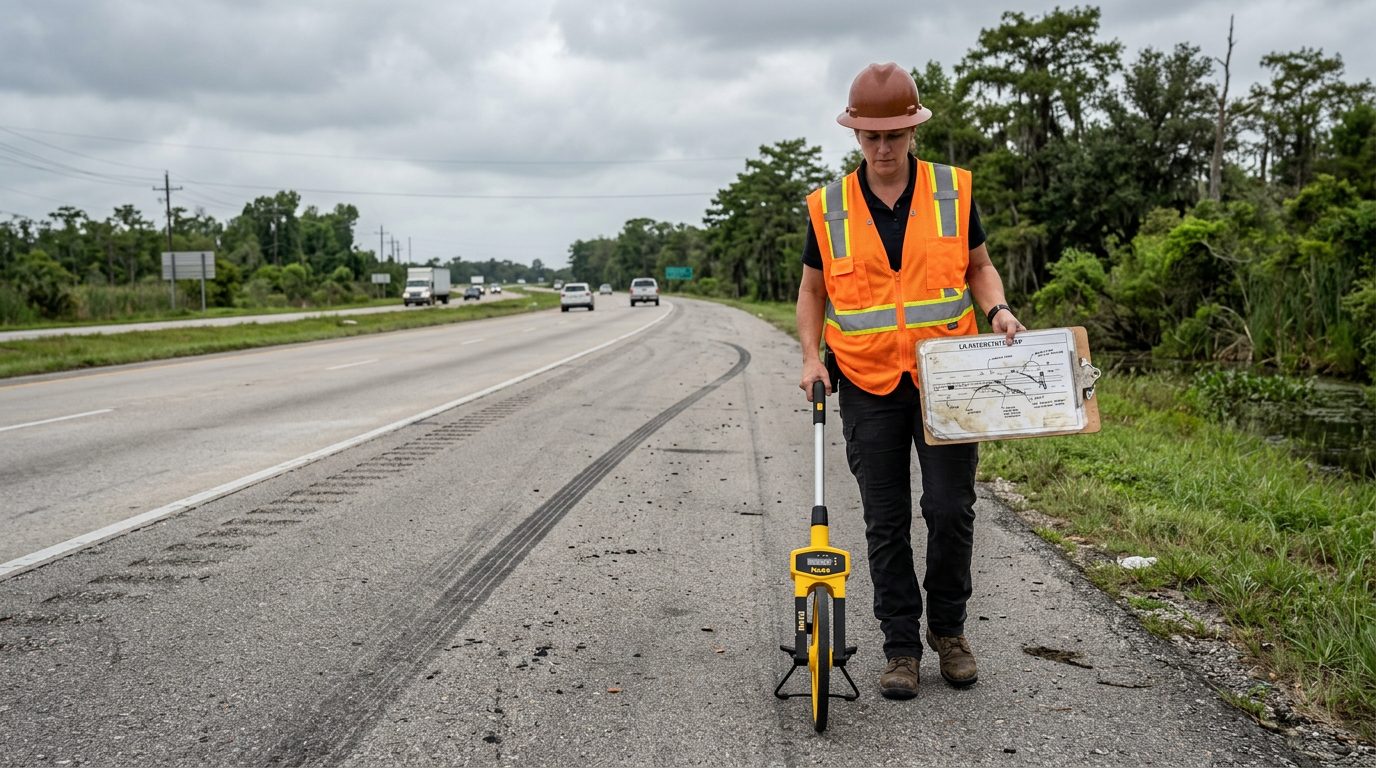
Crash reports are a key record.
Deadlines and Documents to Keep
Other deadlines may apply to some claims, so raise timing questions early.
Keep these records in one folder:
- Itemized bills and payment statements
- Lien, reimbursement, and demand letters
- The crash report, plus the name of the investigating agency
- Photos from the scene and your vehicle
- A simple log of medical visits, with dates
Don’t sign a release or lien acknowledgment until you understand what it says. A signed release can end a claim, and a lien form can affect what is paid from a recovery.
How Przemek Lubecki and the New Orleans Office Can Help
Przemek Lubecki is the responsible lawyer for this page, and the office is in New Orleans, Louisiana.
If you need a Louisiana commercial vehicle accident law firm, American Trial Lawyer, LLC is a personal injury trial firm based in New Orleans. It represents people hurt in truck, commercial vehicle, car, and related crashes. It serves Orleans Parish, the New Orleans metro, Metairie, Jefferson Parish, Kenner, St. Bernard Parish, Slidell, and Louisiana as a whole.
The firm may associate or refer a case to other law firms. If a case is referred or associated with another firm, the firm will tell you as the matter moves forward.
The first consultation is free, confidential, and carries no obligation to continue. You can bring your bills, lien notices, and crash report, and ask the questions in this guide.
Not sure what your next step is?
Talk it through with our team — the first consultation is free, confidential, and carries no obligation.
Talk Through Your Bills and Liens With Us
If lien notices or reimbursement letters arrived after your crash, the choices about paying and signing may need to happen soon.
Can a hospital place a lien on a car accident settlement in Louisiana?
A hospital or other provider may hold a lien or signed agreement that affects a recovery. Ask for any lien in writing, with itemized amounts, before you respond.
Do I have to pay back Medicare after a settlement?
According to CMS, Medicare conditional payments must be repaid when a settlement, judgment, award, or other payment is made.
What is the difference between billed and paid medical bills?
Billed is the amount a provider charges. Louisiana limits recovery to the paid amount, plus cost sharing, when a health insurer or Medicare paid a contracted provider (La. R.S. 9:2800.27).
If bills and lien letters are piling up after a truck or commercial vehicle crash, you don’t have to sort through them alone. Request a free case evaluation or call 855-LUBECKI to talk with the New Orleans office about your next steps.
Four questions to ask before you respond
Ask for the lien in writing
Request a written copy of any lien, assignment or reimbursement agreement before you agree to anything.
Ask for itemized amounts
Get a line-by-line breakdown of charges so you can see what is being claimed and why.
Read every signed form
Documents signed at intake or during treatment can affect a later recovery. Keep a copy of everything you sign.
Talk with a lawyer first
A lawyer can review the paperwork and explain the questions to raise before you respond to a provider or insurer.
Do not sign or agree to a lien without review
Some providers ask patients to sign documents that promise repayment from a future settlement or judgment. Read them carefully and ask questions before you sign. The firm may associate or refer a case to other law firms.
How we can help
Review your paperwork
We look at the bills, liens and agreements you have received so the issues are clear.
Organize the records
We help you gather medical bills, crash reports and correspondence in one place.
Communicate with providers
Where appropriate, we can contact providers and insurers on your behalf so you are not handling every call alone.
Explain your options
We explain the questions to answer and the steps to consider, in plain language, before you make decisions.