
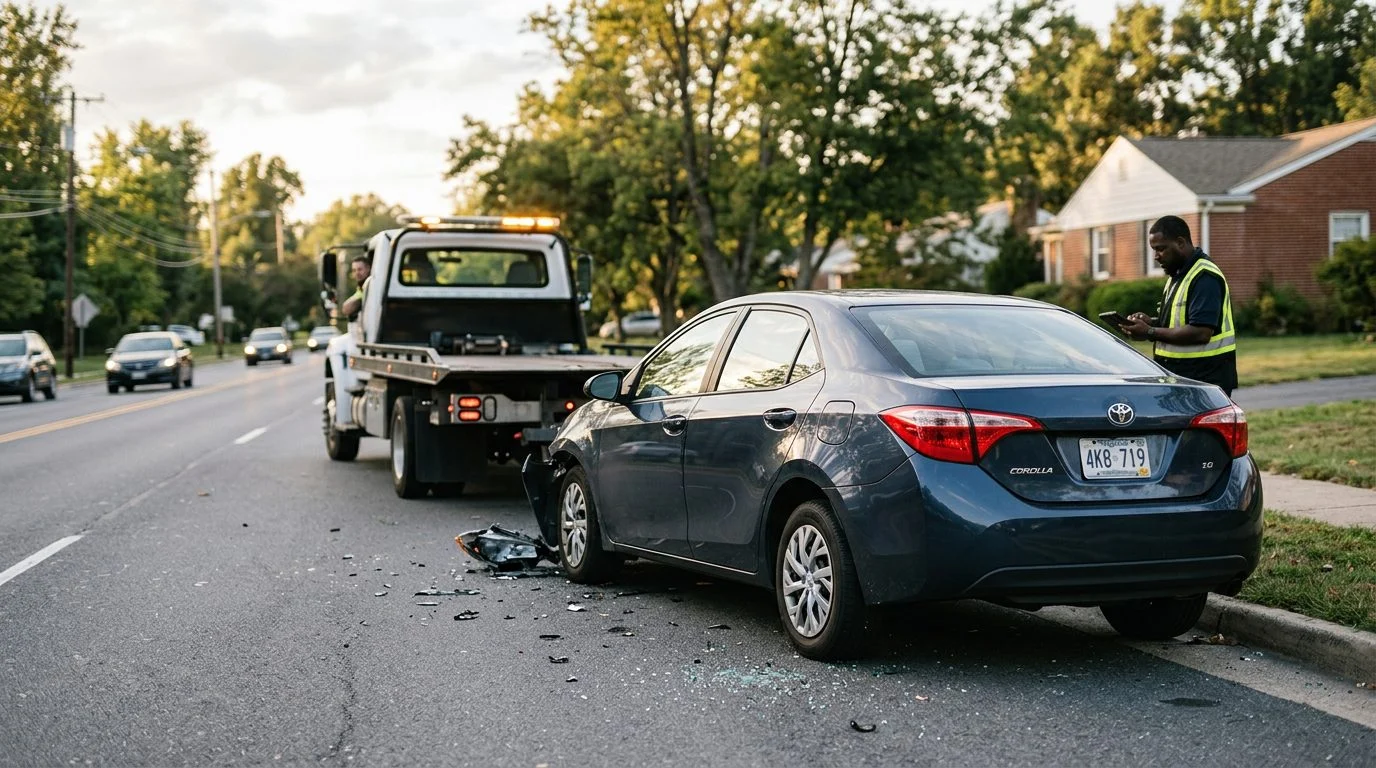
Truck accidents | New Orleans, Louisiana
When a Driver Pushes Past the Hours Limits, Everyone on the Road Pays
Commercial drivers are limited in how long they can stay on duty and behind the wheel. Here is how a breach of those limits can surface after a crash, and what the records may show.
By Przemek Lubecki · Published November 10, 2026
If a truck crash hurt you or took someone you love, you may be asking whether the driver was over the hours limit. A truck driver’s hours-of-service violation can be strong evidence, but it does not prove fault by itself. Fault turns on how that violation connects to what happened on the road.
This page explains the federal hours rules, how a violation shows up in records, and why it is one piece of a Louisiana claim.
A violation matters, but it does not decide fault alone
A proven hours-of-service violation is important evidence. It is a fact to investigate, not a final answer on who caused the crash.
Two questions matter most. Did the driver break a rule? And did that break play a part in how the crash happened? A yes to the first question does not answer the second.
Investigators and courts look at how the violation connects to the collision. They look at the driver’s alertness, the timing of the crash, and the rest of the file.
If you were hurt, you may be facing medical bills, time away from work, and a damaged vehicle. If you lost a family member, the questions are harder still. Clear, early facts help you understand what happened.
If you were hurt in a truck crash or lost someone in one, and you wonder whether the driver was over the hours limit, we can talk it through with you at no cost. Talk it through with our team — the first consultation is free, confidential, and carries no obligation.
What federal hours-of-service rules limit
Federal rules limit how long a commercial truck driver may drive and work before resting. The main limits for property-carrying trucks are these:
- A driver may not drive until taking 10 consecutive hours off duty. 49 C.F.R. § 395.3
- A driver may not drive after 14 consecutive hours that begin when the driver comes on duty after 10 hours off.
- Driving is not permitted after more than 8 hours of driving time without a consecutive 30-minute break from driving. Some short-haul exceptions apply.
- Weekly caps are 60 hours on duty in 7 days, or 70 hours in 8 days, depending on whether the carrier runs every day. A 34-hour off-duty period can end those periods.
Which rules fit a given trip turns on the facts of that trip. The point for a crash claim is simple. A driver past these limits may be too tired to drive safely.
How a violation can show up in the evidence
Hours of service are tracked in records that can be checked against each other.
49 C.F.R. § 395.8 requires each driver to record the driver’s duty status for each 24-hour period using the method prescribed, and 49 C.F.R. § 395.26 provides that an ELD automatically records items such as date, time, location, engine hours, and vehicle miles. 49 C.F.R. § 395.26
It also requires the ELD to automatically record the listed data elements, such as date, time, and location.
Supporting documents can fill in the picture. These include bills of lading, dispatch and trip records, and receipts for on-duty time that isn’t driving. Under 49 C.F.R. § 395.11, a motor carrier need not retain more than eight supporting documents for an individual driver’s 24-hour period under paragraph (c), subject to paragraphs (d)(3) and (4); where a motor carrier has more than eight, it must retain the supporting documents that contain the earliest and the latest time indications within the eight it retains. A carrier that requires a driver to complete a paper record of duty status must also keep toll receipts for any period when the driver kept paper records, regardless of that limit. That means the set of records that remains may be limited.
Roadside inspections can also examine these records. The Commercial Vehicle Safety Alliance notes that inspections may review drivers’ records of duty status and hours of service. CVSA inspection levels
Why a violation alone does not settle a claim
A broken hours rule shows a problem. A claim also needs proof that the problem helped cause the crash.
Causation asks what the driver was doing before the collision. It asks how the crash unfolded, and whether weather, another driver, or the vehicle played a role.
The federal rules also cover fatigue directly. A driver may not operate a commercial vehicle, and a motor carrier may not require or permit a driver to do so, when the driver’s ability or alertness is so impaired, or so likely to become impaired, through fatigue, illness, or any other cause, as to make it unsafe. The rule has a limited exception for a grave emergency where compliance would increase the hazard, in which case the driver may continue to the nearest place where that hazard is removed. 49 C.F.R. § 392.3 That rule is about the driver’s condition, not only the paperwork.
Defendants may dispute the logs or argue the violation did not cause the crash. That is why a claim is usually built on several kinds of proof.
Louisiana also uses comparative fault, which weighs each person’s share of fault. For crashes on or after January 1, 2026, an injured person whose share is 51 percent or more cannot recover damages. A smaller share reduces the recovery in proportion. La. Civ. Code art. 2323
Other parties and claims that can be part of the picture
In some cases a claim can involve more than the driver.
Under Louisiana law, an employer can be answerable for damage its workers cause while doing the job they were hired to do. That responsibility attaches only when the employer might have prevented the act and did not. La. Civ. Code art. 2320
Louisiana law also makes a person responsible for damage caused by negligence, imprudence, or want of skill. La. Civ. Code art. 2316 makes every person responsible for the damage he occasions not merely by his act, but by his negligence, imprudence, or want of skill.
Other parties, such as vehicle owners or shippers, may also be involved. The firm may associate or refer a case to other law firms when that is appropriate.
Steps that help preserve the evidence
Records can be lost or overwritten, so ask for them to be kept as early as you can.
Ask the trucking company and its insurer, in writing, to keep logs, ELD data, dispatch messages, bills of lading, receipts, and maintenance records. Federal rules require carriers to keep duty status records for at least six months from receipt. That is a minimum, not a promise that records stay longer. 49 C.F.R. § 395.8
Waiting is the easiest mistake to make. Each week that passes gives routine record schedules more time to run.
Keep your own records too. Save the crash report, photos, medical notes, and the names of witnesses.
Louisiana generally gives two years from the day of injury to file a delictual (tort) claim. Some exceptions apply, so the timing for your facts needs a closer look. La. Civ. Code art. 3493.1
Not sure what your next step is?
Talk it through with our team — the first consultation is free, confidential, and carries no obligation.
Talk with Przemek Lubecki about your crash
If you think a truck driver’s hours may have played a part in your crash, our team can help you sort out what the records show.
Does an hours-of-service violation prove the driver was at fault?
It is strong evidence to examine.
Can a trucking company be responsible for a driver who broke the hours rules?
In some cases, yes. Louisiana law can make an employer answerable for damage its workers cause in the course of their work.
Does fatigue alone break a federal rule?
Not automatically. Under 49 C.F.R. § 392.3, the rule applies when fatigue or other impairment makes operation unsafe, and the regulation includes a grave-emergency exception.
Przemek Lubecki is the responsible lawyer for this page, and our office is in New Orleans. If you were hurt in a truck crash or lost someone in one, and you wonder whether the driver was over the hours limit, call 855-LUBECKI or request a free case evaluation. The first consultation is free, confidential, and without obligation.
Records that can show hours-of-service problems
Electronic logs and trip records
Logging data can show when a driver started, stopped, and was on duty, which helps reveal whether the schedule matched the rules.
Dispatch and delivery communications
Messages about pickup times, delivery windows and route changes can show pressure to keep moving when the driver needed rest.
Fuel, toll and payment receipts
Receipts often place a driver at specific locations and times, which can be compared with what the logs say.
Driver qualification and training files
Files on training, prior violations and safety practices can show how the company supervised hours and fatigue management.
How our firm approaches a truck crash case
Early preservation of evidence
Trucking companies keep logs, dispatch records and vehicle data, and some of it can be overwritten.
Families and injured people at the center
We explain each step in plain language so you can make informed decisions about your case.
Trial-focused representation
Przemek Lubecki is a trial lawyer, and our team prepares every case as if it may need to be tried before a jury.
Act early, while the records still exist
Trucking companies and their insurers often control the logs, dispatch messages and vehicle data after a crash. Speaking with a lawyer early can help ensure that important evidence is requested and preserved.