
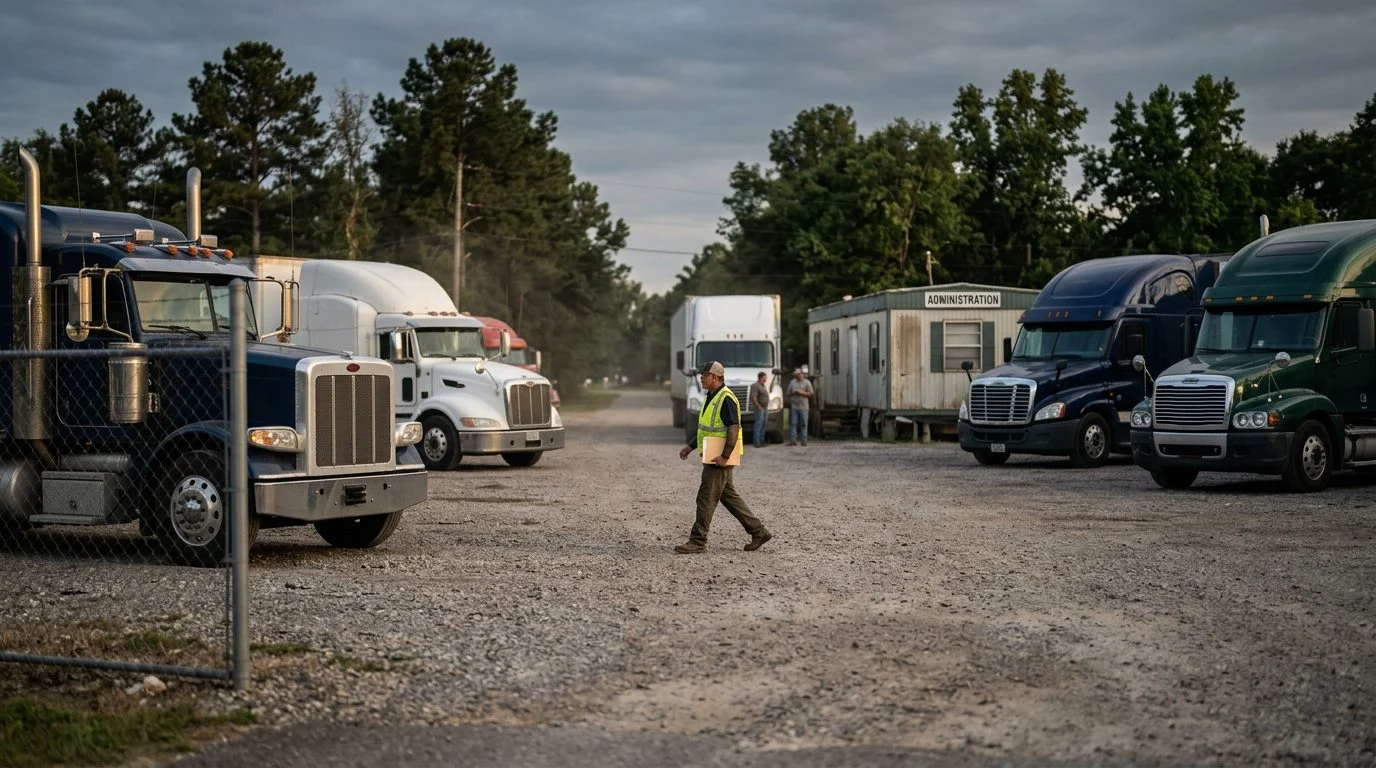
Truck Accidents | New Orleans, Louisiana
Holding Trucking Companies Accountable for the Drivers They Put on the Road
When a crash involves a commercial truck, the questions often reach past the driver to the company that hired and supervised him. Przemek Lubecki and our team in New Orleans look at those questions carefully.
By Przemek Lubecki · Published November 10, 2026
If a commercial truck crash hurt you or someone in your family, you may ask whether the trucking company can be held responsible, not only the driver. In some cases it can, based on how the company hired, trained, supervised or kept that driver.
What Is the Short Answer?
A trucking company can, in some cases, face its own negligence claim in addition to claims against the driver. Louisiana’s general rule is that a person whose fault causes damage must repair it. La. Civ. Code art. 2315 says every act of man that causes damage to another obliges the person by whose fault it happened to repair it.
Whether a claim against the company is available depends on the facts of the crash and on the company’s own records.
This page is general information about Louisiana civil claims. It is not legal advice about any particular crash.
If a truck driver with a past violation or incident was behind the wheel in your crash, you may have a claim worth reviewing, and we can talk it through with you. Talk it through with our team — the first consultation is free, confidential, and carries no obligation.
Negligent Hiring, Training, Supervision and Retention in Plain Terms
Each one looks at what the company did, not only what the driver did.
Under La. Civ. Code art. 2320, an employer answers for damage caused by employees in the work they perform, but only when the employer might have prevented the act and did not.
Why a Driver’s History Matters to the Claim
A driver’s history can matter because it may show what the company knew or could have learned. Past violations, at-fault accidents, license suspensions and drug or alcohol problems are the kinds of records people ask about.
The central question is usually whether the problem was foreseeable. Put simply, would a reasonable motor carrier have acted on that information before the crash? Federal rules tell carriers to give great weight to violations such as speeding, reckless driving and operating under the influence that indicate the driver has exhibited a disregard for the safety of the public. 49 C.F.R. § 391.25 requires a carrier to review each driver’s record, including accident history, at least once every 12 months.
Prior conduct is one piece of evidence. The link between that history and the crash that happened matters just as much. An old minor violation and a recent serious one can carry very different weight.
What Records a Claim May Look At
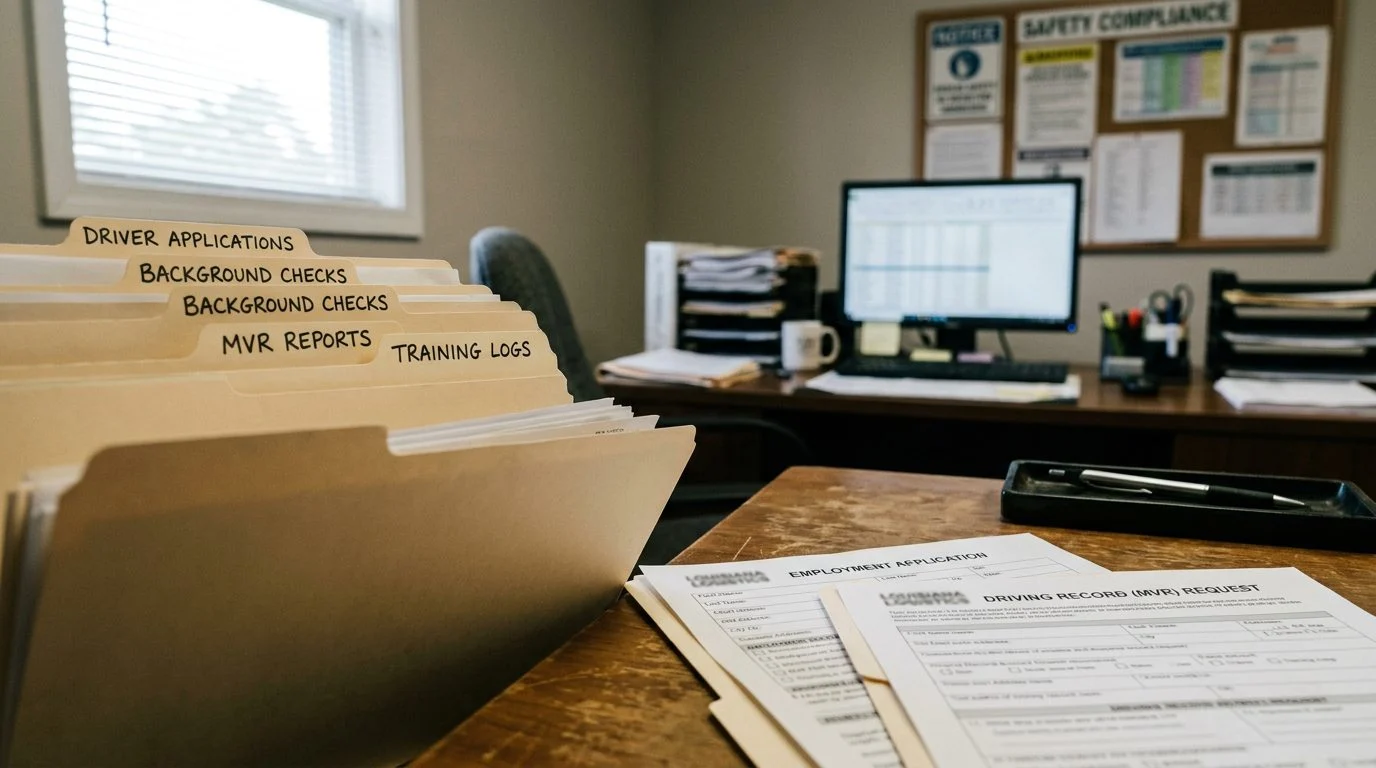
A claim may look at the driver qualification file a carrier must keep. Federal rules require a motor carrier to investigate each driver it employs, other than a person who has been a regularly employed driver of the motor carrier for a continuous period which began before January 1, 1971, including an investigation of the driver’s safety performance history with Department of Transportation regulated employers during the preceding three years. 49 C.F.R. § 391.23 allows those inquiries by interview, letter or any other method the carrier deems appropriate. It also requires a written record of each previous employer contacted.
Under 49 C.F.R. § 391.51, the file must include, among other records, the driver’s employment application, a motor vehicle record from each licensing authority, a road test certificate or its equivalent, the motor vehicle record from each annual driver record inquiry, a note on the annual review of the driving record, and a medical examiner’s certificate or a legible copy. For CDL holders whose CDLIS motor vehicle record contains medical certification status information, the carrier must meet the medical certificate requirement by getting that CDLIS record from the current licensing State and placing it in the file.
Drug and alcohol testing also matters. Under 49 C.F.R. § 382.301, before a driver first performs safety-sensitive work for an employer, the employer generally must have a verified negative controlled substances test result for that driver, unless a limited exception for recent participation in a testing program applies.
Other records can matter too, such as hours-of-service logs, maintenance and inspection reports, prior complaints and written safety policies. Vehicle event data recorders can also hold technical crash information. The National Highway Traffic Safety Administration states that these recorders can preserve data that may help investigate how a collision occurred. Missing or incomplete documents can become part of how a claim is evaluated.
How This Fits Within Louisiana Civil Claims
A negligent hiring claim sits alongside claims about the driver’s own conduct. It does not replace them.
Fault can be divided among several people. Under La. Civ. Code art. 2323, as amended effective January 1, 2026, a person injured in part through his own negligence, where that negligence is equal to or greater than 51 percent, recovers no damages. A person whose fault is less than 51 percent has damages reduced in proportion to that fault.
Also, La. Civ. Code art. 2324 provides that where liability is not solidary, a joint tortfeasor is not liable for more than his degree of fault. That is why each defendant’s share can matter. One crash may involve the driver, the trucking company and sometimes a vehicle owner or another contractor.
Next Steps If You Were Hurt or Lost a Family Member
Start by keeping what you already have: the crash report number, photos, medical records, and any letters or calls from the trucking company or its insurer.
Be careful with recorded statements. Under La. R.S. 13:3732, anyone who takes a written or recorded statement from an injured person must give that person a true and complete copy, within twenty days after written demand. Do not sign a release until you understand what it covers.
Time limits matter. Under La. Civ. Code art. 3493.1, delictual actions (fault-based claims) are subject to a two-year liberative prescription. The period starts on the day the injury or damage is sustained. The article also provides that prescription does not run against minors or interdicts in actions involving permanent disability and brought under the Louisiana Products Liability Act or state law governing product liability actions in effect at the time of the injury or damage, so timing depends on the facts. Families in a fatal crash should raise timing questions early.
Not sure what your next step is?
Talk it through with our team — the first consultation is free, confidential, and carries no obligation.

Talk With Przemek Lubecki About Your Crash
If a truck driver with a past violation, accident or license problem was behind the wheel when you were hurt, or your family lost someone in a crash like that, you may want to know what the company knew. Przemek Lubecki is the responsible lawyer for this page. American Trial Lawyer, LLC has its office in New Orleans, Louisiana.
Frequently Asked Questions
Every case is different, and the facts of each crash are reviewed individually.
How long do I have to file a claim?
Louisiana sets a two-year period for delictual actions, which starts from the day of the injury, with exceptions.
Does a driver’s drug test history matter?
Federal rules bar an employer from letting a driver do safety-sensitive work without a verified negative test result.
The first consultation is free, confidential and without obligation. You can request a free case evaluation or call 855-LUBECKI. A case may be associated with or referred to other law firms.
What a negligent hiring review may examine
Driver qualification files
Records of the driver's background, licensing and prior employment can show what the company knew, or should have known, before it assigned him a truck.
Drug and alcohol testing
Testing history and compliance records can reveal whether safety rules were followed when the driver was hired and while he was working.
Driving history and prior incidents
Past violations, accidents and complaints may show warning signs that were available to the carrier at the time.
Training and supervision
How the company trained, monitored and corrected its drivers can matter as much as who it hired in the first place.
Act early
Trucking companies and their insurers often move quickly after a serious crash, and some records are kept for limited periods. If you or a family member has been hurt, tell us about your situation as soon as you can so the important evidence can be looked at while it is still available.
How we approach these claims
Listening first
We start with your account of the crash, your injuries and what you have been told so far. Our first consultation is free, confidential and without obligation.
Reviewing the paperwork
We look at the crash report, the driver's file and the company's hiring and safety practices to understand what happened and who was responsible.
Explaining your options
We will walk you through what we see in your case in plain language, so you can decide what comes next with clear information.
Working with other firms
Depending on the facts, we may associate or refer a case to other law firms. We will tell you clearly if that happens.