
Car Accidents | New Orleans
Hurt in a Pothole Crash? Learn Who May Be Responsible
Przemek Lubecki and the team at American Trial Lawyer, LLC, with our office in New Orleans, help people seriously injured in car accidents understand the parties who may be involved in a claim.
By Przemek Lubecki · Published November 5, 2026
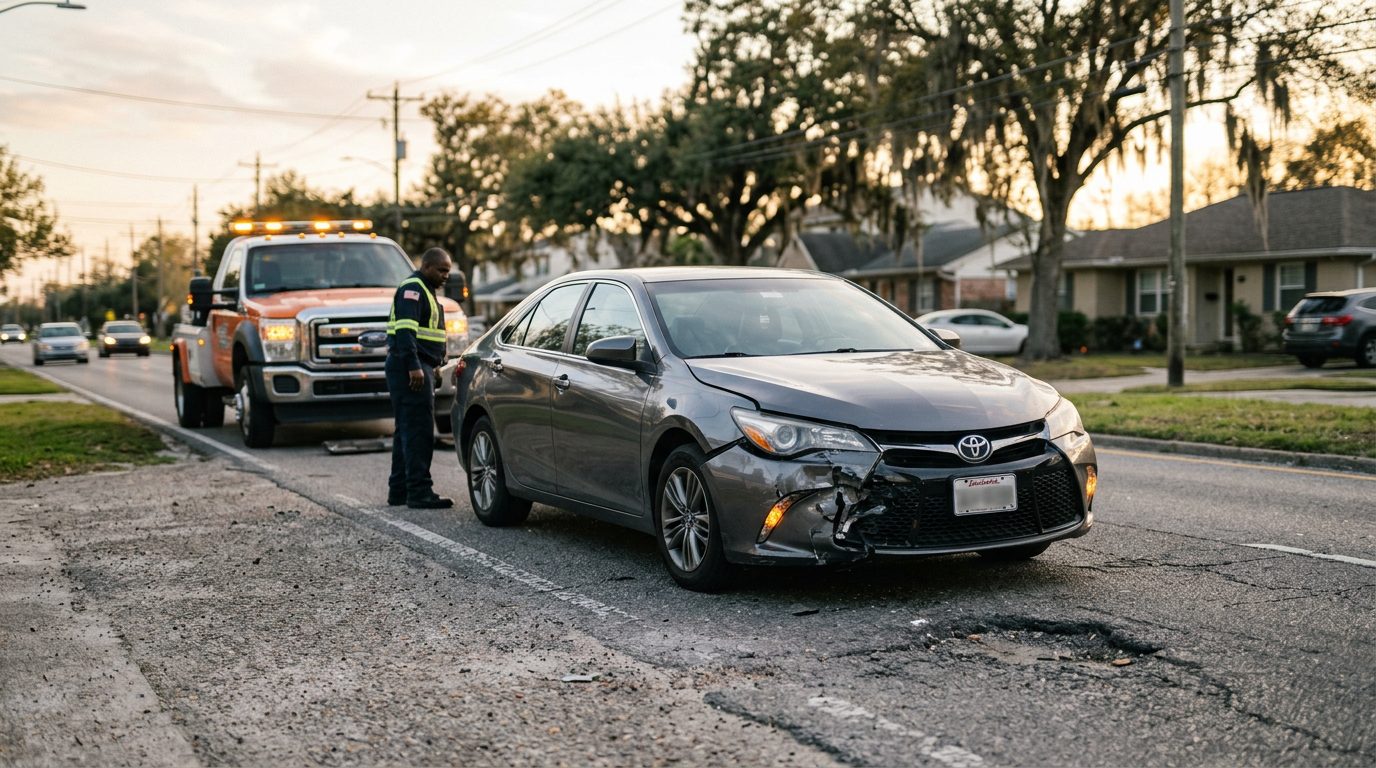
If a pothole, a broken traffic signal or a city vehicle played a part in your car accident in New Orleans, you may wonder who to sue. The short answer is that more than one party can be responsible, and Louisiana adds extra tests when a public body is involved. Timing matters too, because claims against public bodies can follow different rules than other car accident claims. This page explains these rules in plain language. It is general information, not legal advice about your case.
Who Can Be Responsible When a Crash Involves a Road Defect or City Vehicle
A crash can involve several responsible parties, and the road is only one of them.
The first question is usually the other driver. Louisiana makes a person answerable for damage caused by negligence, imprudence or want of skill (La. Civ. Code art. 2316). A driver who swerved, sped or ignored a dark signal may fall into that group, depending on the facts.
The second question is who owned or controlled the vehicle.
The third question is who controlled the road or signal. A pothole on a city street, a signal that failed, or a city truck in the crash can bring a public body into the picture. When a city or other public vehicle is involved, the claim rules can differ from those for a private car. A lawyer reviews each of these questions on the facts.
If a pothole, a dark traffic signal or a city vehicle was part of your crash, our team can review the timing with you in a free, confidential consultation. Talk it through with our team — the first consultation is free, confidential, and carries no obligation.
Louisiana’s Extra Rules for Claims Against a Public Body
Louisiana adds extra tests when the defendant is a public body, such as a city. A suit against a political subdivision must be filed in a Louisiana state court. La. R.S. 13:5106 says no such suit may be instituted in any court other than a Louisiana state court.
The bigger test sits in La. R.S. 9:2800. Except as provided for in Subsections A and B, for a claim based only on the condition of a thing in a public body’s care, the body must have had actual or constructive notice of the particular defect before the crash (La. R.S. 9:2800). It must also have had a reasonable opportunity to fix the defect and failed to do so.
The statute defines constructive notice as the existence of facts which infer actual knowledge. Whether the facts in your crash meet that test depends on what the public body knew and when. A lawyer reviews those facts case by case.
Under La. Civ. Code art. 2317.1, the owner or custodian must have known or should have known of the defect, the damage could have been prevented by the exercise of reasonable care, and the owner or custodian failed to exercise that care.
Why the Clock Matters Even When You Are Still Recovering
The general deadline for many Louisiana car accident claims is two years from the day of injury (La. Civ. Code art. 3493.1). Claims against public bodies may follow different timing, so don’t assume the general rule fits your case.
La. Civ. Code art. 3493.1 provides that delictual actions, which are claims for damage from wrongful acts, are subject to a liberative prescription of two years, and it sets out exceptions, including that it does not run against minors or interdicts in certain actions involving permanent disability brought under the Louisiana Products Liability Act or state law governing product liability. The period starts to run from the day injury or damage is sustained.
Pain, medical visits and time off work can push paperwork aside. That’s why the date matters. Right after a crash, write down the date, the exact location, the defect or signal involved, and the names of anyone who saw it. These notes are easier to write while details are fresh, and they help a lawyer review the facts later.
Steps to Take at the Scene and Afterward
Get medical attention, report the crash, and document the road or signal as soon as you safely can. Symptoms can take time to appear. The Brain Injury Association of America notes that brain injury symptoms may be masked or delayed after a car accident. New or lasting symptoms should be reported to health care professionals promptly. Feeling fine at the scene doesn’t settle the question.
Under La. R.S. 32:398, a driver in a crash causing injury or property damage over five hundred dollars must report it. La. R.S. 32:398(J) provides that when the officer investigating a crash has reason to believe a driver has a medical condition that is cause for license revocation or suspension under R.S. 32:414(E), the officer notifies the Department of Public Safety and Corrections, office of motor vehicles, “provided that the law enforcement officer first consults with his superior officer as to his specific observations and his superior officer concurs with the issuing officer’s belief.” La. R.S. 32:398(B) provides that every law enforcement officer who investigates a crash shall instruct the driver of each vehicle involved to report certain information to all parties suffering injury or property damage as an apparent result of the crash. Inside city limits, the city police department investigates. Crash reports are confidential, but upon request they are made available to the parties to the crash, their insurers, attorneys and certain others within seven working days after the investigation is complete.
For a fuller checklist, see our scene documentation checklist. Insurers may ask for a recorded statement, so review our recorded statement guidance first. You can also read our insurer reporting deadline guide. If the other driver fled or can’t be identified, the coverage questions change, so raise that early.
Can You Sue the City for a Pothole Car Accident in New Orleans?
A claim against the city may be possible in some pothole crashes, but it depends on the facts and on Louisiana’s notice rules. The key question is whether the city had actual or constructive notice of that particular pothole before the crash. A bad road alone does not answer that question.
For a city or other employer, the court’s analysis can go further. Under La. Civ. Code art. 2320, an employer may be answerable for damage its employees cause in the exercise of the functions in which they are employed, and the article states that this responsibility attaches only when the employer might have prevented the act that caused the damage and did not.
La. Civ. Code art. 2320 does not address reducing recovery when the injured person shares fault; it makes employers answerable for damage caused by their employees in the exercise of the functions in which they are employed, but only when the employer might have prevented the act that caused the damage and did not. No one can predict the outcome of a claim from general information.
Frequently Asked Questions
Can you sue the city for a pothole car accident?
Possibly, but only if Louisiana’s notice rules are met on the facts of your crash.
How long do I have to file?
Filing deadlines depend on the facts of each case, so it is worth discussing timing with a lawyer early.
Does Louisiana use comparative fault?
Yes.
What Happens When You Contact American Trial Lawyer
The first step is a free, confidential consultation with no obligation to continue. In that conversation, the firm reviews the crash facts, who controlled the road or vehicle, and the timing for each possible claim. The firm confirms the current deadline for the specific entity and crash, because timing depends on those facts.
Przemek Lubecki is the responsible lawyer for this page. The firm’s office is in New Orleans.
American Trial Lawyer may associate or refer a case to other law firms. Any such association or referral would be disclosed to you.
Not sure what your next step is?
Talk it through with our team — the first consultation is free, confidential, and carries no obligation.
Talk With Przemek Lubecki About Your Crash
If a pothole, a dark signal or a city vehicle was part of your crash, the timing on your claim may already be running. You may be dealing with pain, paperwork and calls from insurers all at once. You don’t have to sort out the timing alone. Call 855-LUBECKI or request a free case evaluation to have the timing reviewed with Przemek Lubecki at the New Orleans office.
What Helps Us Look at Your Crash
Photos and Records
Pictures of the road, the pothole, your vehicle and the scene can help show what was there when the crash happened.
Police and Crash Reports
Any official report, citation or incident record can add important details about the location and what occurred.
Road Ownership and Maintenance
Knowing who maintains the road can shape which parties are considered, so it is worth raising early.
Medical Treatment Notes
Keeping records of your injuries and treatment helps document the impact of the crash on your daily life.
Parties Sometimes Considered After a Pothole Crash
A Government Entity
Cities, parishes or state agencies that oversee a road may be part of a claim, depending on the facts of the crash.
A Contractor
If recent road work or repair left a hazard, the company doing that work may be a party to consider.
Other Drivers
Another driver who swerved, sped or was distracted may share responsibility for the crash.
A Property Owner
In some situations, a private owner of a parking lot, lot or access road may have responsibility for a dangerous surface.
Claims Against Government Bodies Can Work Differently
Claims involving a city, parish or state agency can follow procedures that differ from other injury claims. Contact our office in New Orleans early so the facts can be reviewed. American Trial Lawyer, LLC may associate or refer a case to other law firms when that is appropriate.