
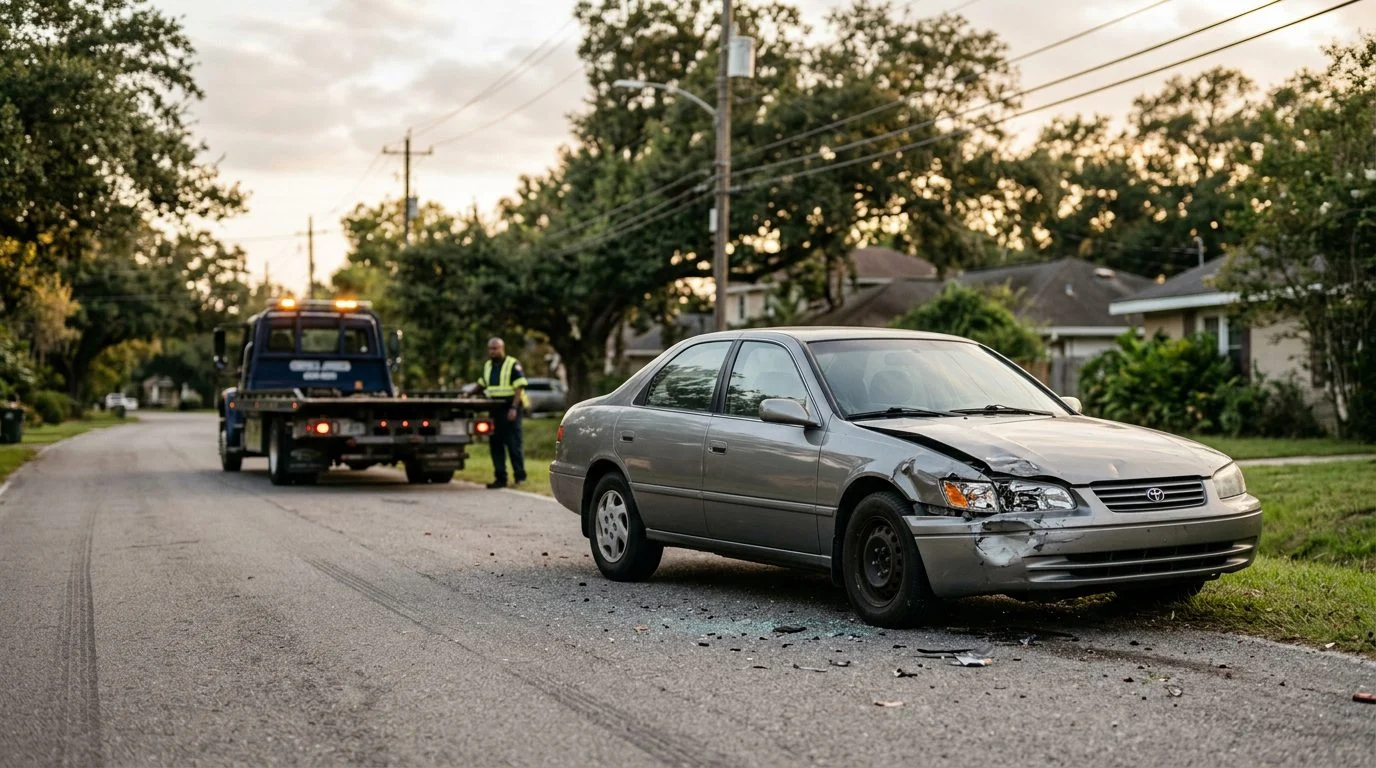
Car Accidents | New Orleans, Louisiana
Hurt as a Passenger in a Car Accident? Talk With a New Orleans Trial Lawyer
Przemek Lubecki represents passengers injured in car, truck and commercial vehicle crashes, and families in wrongful death cases, from our New Orleans office.
By Przemek Lubecki · Published October 19, 2026
If you were hurt as a passenger in a car, truck or rideshare crash in New Orleans, you may be able to bring a claim. This is true even when a friend or relative was driving. Whether a claim works turns on who caused the crash, how you were hurt, and which insurance applies. This guide explains the basics under Louisiana law and what happens after you reach out. Przemek Lubecki is the responsible lawyer for this page, and the office is in New Orleans.
Who this page is for
This page is for people who rode in a vehicle during a crash and want to know whether they can seek money for their injuries.
- Adults hurt while riding in a car, truck, commercial vehicle or rideshare vehicle.
- Family members who were riding with a spouse, parent, adult child or friend behind the wheel.
- Parents and guardians of a child hurt as a passenger, who need to decide what comes next.
- Rideshare passengers who are not sure which insurance applies.
A passenger is a different claimant from the driver. The rules and facts can differ for each person in the vehicle. The firm helps people in Orleans Parish, the New Orleans metro, Metairie, Jefferson Parish, Kenner, St. Bernard Parish, Slidell and across Louisiana.
If you were hurt as a passenger in a car, truck or rideshare crash in New Orleans, you may be able to bring a claim. Talk it through with our team — the first consultation is free, confidential, and carries no obligation.
What a passenger injury claim can cover
A passenger injury claim can seek money for the losses the injury caused. These often include medical costs, lost income and pain and suffering.
- Emergency care, ambulance rides, hospital stays, surgery, imaging, therapy and prescriptions.
- Future medical care, when a doctor ties it to the crash.
- Lost wages and lost ability to earn, when injuries keep you from work.
- Pain, suffering, emotional distress and loss of enjoyment of life.
- Long-term injuries, such as traumatic brain injury, which can need ongoing care and evaluation.
- Wrongful death, when a passenger dies. Louisiana law sets out who may sue, starting with the surviving spouse and children, under Civil Code wrongful death article.
Medical bills need a closer look. When a health insurer or Medicare paid a contracted provider, Louisiana medical expense statute limits recovery to the amount actually paid, plus cost-sharing amounts. It does not reach the full amount billed.
No one can say in advance what a claim is worth. The value turns on your injuries, your medical records and the facts of the crash.
Passengers are often not the at-fault party
Passengers usually did not control the vehicle, so the driver’s choices are often the central question. Louisiana law makes a person responsible for harm caused by negligence, imprudence or want of skill. That means speed, attention, impairment and other driving choices matter most.
Many passengers are hurt while a relative or friend drives. The question is what happened on the road, not who was behind the wheel.
Do you get money for being a passenger? A passenger may be able to seek money from the people or insurers responsible for the crash. Whether that works turns on the facts and the coverage available. Passenger status alone does not decide the claim. Fault, injuries and insurance do.
Who may be responsible
Responsibility can fall on the at-fault driver, the driver’s employer, or an insurer, depending on what happened.
- The at-fault driver and that driver’s auto liability insurance.
- The insurer for the vehicle you rode in, where coverage applies.
- An employer, when the driver was working. Louisiana law makes employers answerable for damage caused by workers “in the exercise of the functions in which they are employed.” This can include trucking and delivery companies. Commercial truck claims often involve more than one party.
- Rideshare companies and their insurers. These claims can involve more than one insurer. The facts about the app and the trip matter.
- Government entities, when a road defect or government vehicle is involved. These claims can follow different timing rules. Under Louisiana state liability statute, total liability of the state and political subdivisions for one person’s personal injury is capped at five hundred thousand dollars. Certain categories, such as property damage and medical care, are excluded from that cap.
Louisiana rules that shape passenger claims
- Under La. Civ. Code art. 2323, if a person suffers injury, death, or loss partly as the result of his own negligence and the degree or percentage of negligence attributable to that person is equal to or greater than fifty-one percent, then that person shall not be entitled to recover damages. Under La. Civ. Code art. 2323, if a person suffers injury, death, or loss partly as the result of his own negligence and the degree or percentage of negligence attributable to that person is less than fifty-one percent, then the amount of damages recoverable shall be reduced in proportion to that degree or percentage. See Civil Code comparative fault article.
- See the same Civil Code comparative fault article.
- Delictual (injury) claims generally have a two-year deadline, called prescription. The clock starts the day the injury happened. See Civil Code prescription article.
- See the Civil Code wrongful death article.
Waiting is a mistake that can cost a claim. Deadlines run whether or not you are ready to talk about the case.
Crash reports are confidential. Parties, their attorneys and their insurers can get them. Upon request, reports are made available within seven working days after the crash investigation is complete, under Louisiana crash report statute.
What to expect: steps and timeline
The process starts with a consultation. It then moves to the facts, the insurance, and either negotiation or a lawsuit.
- Start with a consultation. The first consultation is free, confidential, and carries no obligation to continue. You may owe case costs and expenses in addition to any fee.
- Gather the facts. Collect the crash report, photos, witness names, medical records, bills and the names of every insurer involved.
- Review who may be responsible. Look at who was driving, whether the driver was working, which policies may apply, and whether a rideshare company or government entity is involved.
- Handle insurance contact. Insurers may contact passengers directly. Be careful about giving recorded statements before you speak with a lawyer. Once the firm is retained, it can handle communications with insurers.
- Document the damages. Gather medical opinions, wage records and proof of ongoing care.
- Negotiate or file. Many claims resolve without trial. Trial preparation is still part of the work, and the timeline turns on the facts.
Not sure what your next step is?
Talk it through with our team — the first consultation is free, confidential, and carries no obligation.
Why American Trial Lawyer
American Trial Lawyer is a New Orleans personal injury firm led by trial lawyer Przemek Lubecki.
- Przemek Lubecki is the responsible lawyer for this page. He represents people seriously hurt in truck, commercial vehicle and car crashes, and families in wrongful death cases.
- The office is in New Orleans. The firm also has an office in Park Ridge, Illinois.
- Our team includes support staff who help with intake, records and scheduling.
- The firm may associate or refer a case to other law firms.
Questions passengers ask
Can I sue the driver who was my friend or family member?
A passenger may have a claim against an at-fault driver. That driver’s insurance is often the source of payment.
Can someone sue me for a crash that happened months ago?
Louisiana’s two-year deadline generally applies to injury claims (La. Civ. Code art. 3493.1). It runs from the day the injury happened, so timing should be reviewed early.
Do I need a police report?
A crash report documents what happened. Parties and their attorneys can obtain it under Louisiana law.
What if I was a rideshare passenger?
Rideshare claims can involve the driver’s insurance and the company’s coverage. The app and trip status at the time of the crash matter, and the firm reviews those facts at intake.
Will my case go to trial?
Some cases resolve without trial, and others do not. The path turns on the facts.
If you were riding in a car, truck or rideshare that was hit in New Orleans, and you are weighing whether to talk with a lawyer about who may be responsible, our office can review your facts. Request a case evaluation or call 855-LUBECKI for a consultation.
How We Approach Passenger Injury Cases
Focused on the people hurt
Passengers often have no part in the crash, and many are dealing with injuries, medical visits and time away from work at the same time. Our team keeps the focus on your recovery and your questions.
Trial-ready preparation
Przemek Lubecki is a trial lawyer who prepares every case as if it may be tried in court, from the first investigation through resolution.
Plain-language updates
We explain each step in clear terms so you know what is happening and what decisions are ahead.
Based in New Orleans
Our office is in New Orleans, and we serve passengers across Orleans Parish, the New Orleans metro area and Louisiana.
Associated and referred cases
We may associate or refer a case to other law firms. If that happens, we will tell you before any arrangement is made.
Keep Your Records
Save the names of the drivers, any police report number, photos of the scene and vehicles, and every medical bill and visit summary. Tell your doctor about all of your symptoms, even ones that seem minor.
Questions Passengers Often Ask Us
Can I sue the driver who was a friend or family member?
Passengers often wonder about this. Bring the details of your situation to a consultation so the question can be reviewed with the facts of your case.
What if the crash happened months ago?
Timing matters in injury matters. Contact our office as soon as you can so we can review your situation and the dates involved.
Who pays for my medical care?
Medical costs and insurance coverage depend on the facts of each case. We will explain what we see in your situation during your consultation.
What happens during the consultation?
You will speak directly with Przemek Lubecki about how the crash happened, your injuries and your concerns. There is no obligation to continue after the consultation.
Free, Confidential Consultation. No Obligation to Continue. You May Be Responsible for Case Costs and Expenses in Addition to Any Fee.
Have questions about what happened?
Ask our team directly. The first conversation is free, confidential, and there is no obligation to continue.
Related practice areas
- Car Accident Injuries in New Orleans: Fault, Insurance, Medical Care and Your Next Steps
- Semi Truck Accident Representation for St. Bernard Parish Residents | Office in New Orleans