
Car accidents | New Orleans
What to Document After a Car Accident in New Orleans
The notes, photos and records you gather in the first hours and days can help tell the story of what happened. Here is a practical checklist from the American Trial Lawyer team.
By Przemek Lubecki · Published November 5, 2026
The short answer: after a car accident in New Orleans, document the vehicles, the road, any witnesses, the police crash report and your injuries. This guide explains what to document after car accident New Orleans crashes involve, one step at a time, in plain language. It’s written for drivers, passengers and family members helping to gather information.
Why Documentation Matters After a New Orleans Car Accident
A clear record of the scene, the people involved and your medical care helps everyone understand what happened later. Memories fade quickly. Details that seemed obvious on the day can blur within weeks.
The core checklist has four parts. Take photos of the vehicles and the roadway. Collect witness contact details. Get the police crash report. Keep your medical records.
Scene information and later information are different. At the scene, you record what you can see right now. In the days and weeks after, you collect official records, bills and treatment notes. Both help.
Fault matters too. Under La. Civ. Code art. 2323, fault is shared among everyone who contributed to a crash. Under La. Civ. Code art. 2323, if a person suffers injury, death, or loss partly as the result of his own negligence, and the degree or percentage of that negligence is equal to or greater than fifty-one percent, then the person suffering injury, death, or loss shall not be entitled to recover damages. Below that, damages are reduced by that person’s share. That’s why the facts about who did what matter.
If you're gathering photos, a crash report and medical bills after a New Orleans wreck, you don't have to sort through them alone. Our team can talk them through with you. Talk it through with our team — the first consultation is free, confidential, and carries no obligation.
Get to a Safe Place and Call for Help First
Your first job is safety, and documentation comes second. If you can, move out of traffic, turn on your hazard lights and call 911 so police and medical help are sent to the scene.
Photos and notes can wait until people are safe and medical needs are addressed. Your phone camera can do the job once you’re out of danger.
See a medical provider promptly, even if your injuries seem minor at the scene. Some injuries show up later. The VA traumatic brain injury guide notes that motor vehicle accidents can cause traumatic brain injuries, and these can affect brain function and produce symptoms.
Tell the provider exactly how the crash happened and describe every symptom you feel. Write down what you told them so you can check it later.
Photographing the Vehicles and Vehicle Damage
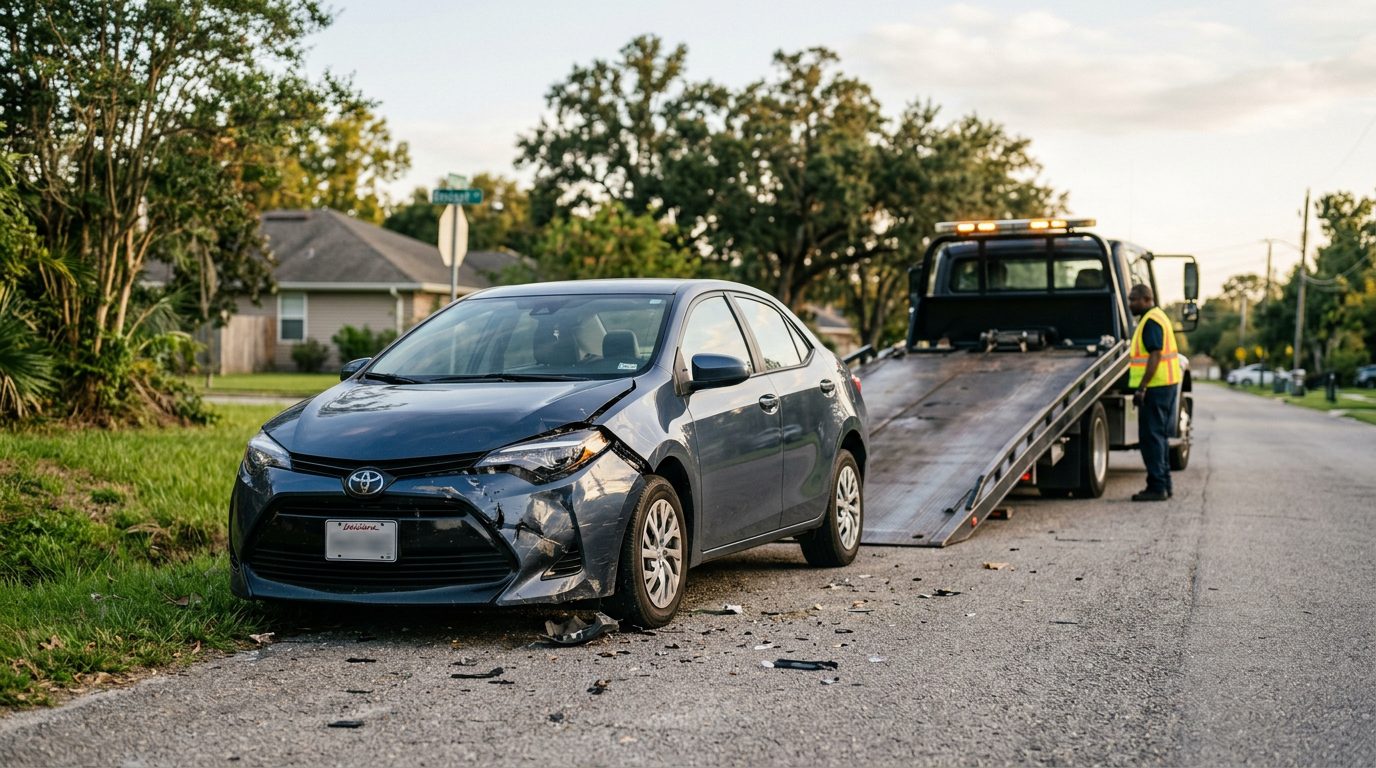
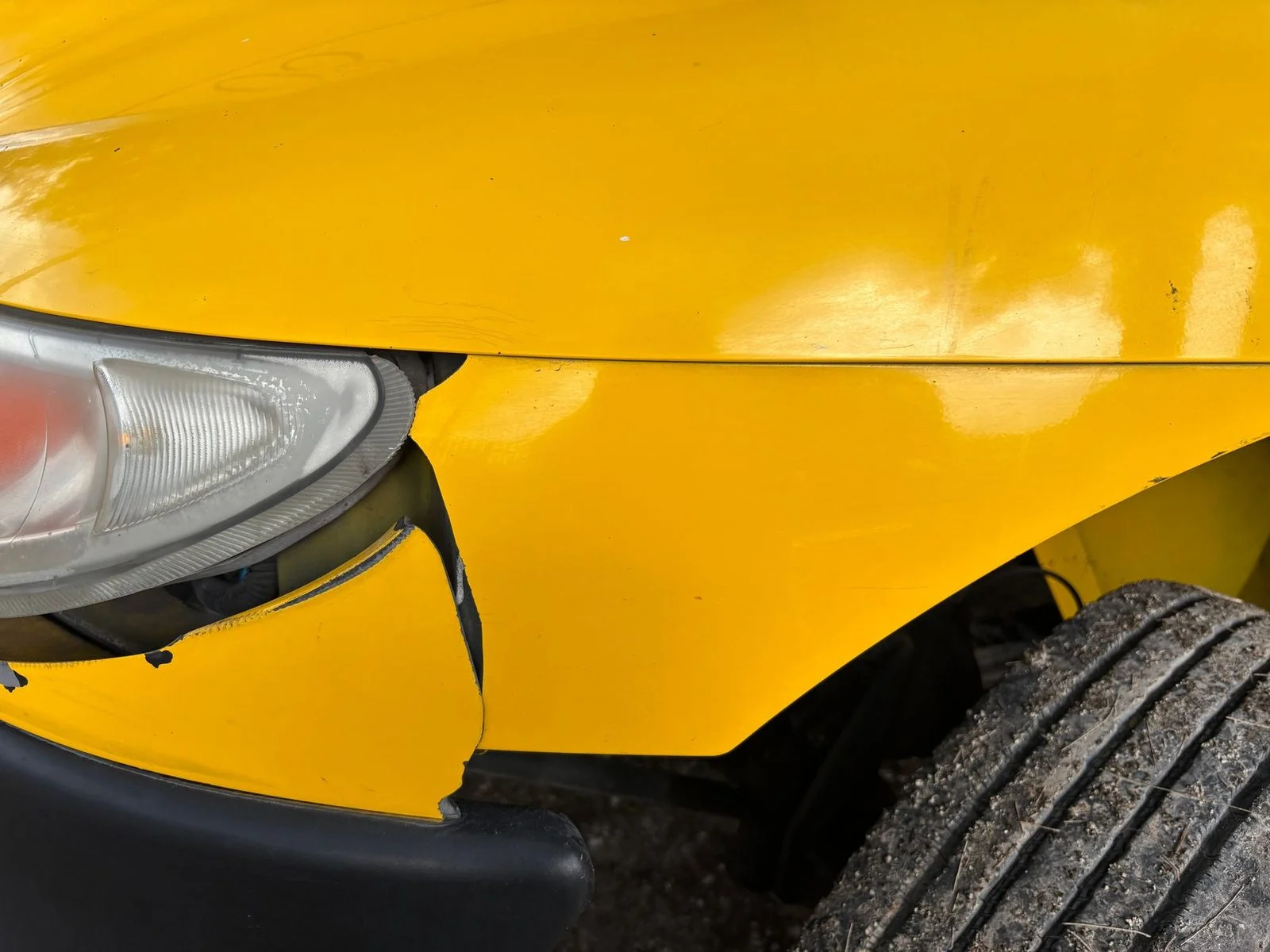
Photograph every vehicle involved, from several angles, including the license plates. Start with wide shots, then take close-ups of specific damage. Close-ups can show dents, cracked glass, broken lights and any airbag deployment points.
Photograph the vehicles’ positions before anyone moves them, if it’s safe to do so. Include the undercarriage and interior only where you can safely see them.
Commercial trucks often carry identifying details. Photograph DOT numbers, company names and other markings on the cab and trailer. These details help identify the vehicle later.
Keep the original photos. Don’t edit, crop or filter them, and leave the date and time data intact. Send copies to yourself or a family member right away, so a lost phone doesn’t mean lost photos.
Loose glass, paint chips and other trace materials can matter too. The Louisiana State Police forensic guide says items like these should be recognized and preserved because they provide objective evidence that stays available for analysis. Note where they fell, and photograph them in place when it is safe.
Documenting the Roadway, Road Conditions and Surroundings
Photograph the intersection or road section wide enough to show the lanes, traffic signals, stop signs, lane markings and crosswalks. A wide shot and a few close shots work well together.
Record road conditions as they were at the time. Note potholes, uneven pavement, construction zones, debris, standing water, and any sign that was missing or blocked by trees, parked cars or other objects.
Capture the weather and lighting. If the crash happened after dark, photograph the scene at night too. Show where the streetlights and traffic signals were.
Look for skid marks, fluid trails and debris. Photograph them before they are cleared away. Write down the time of day, each vehicle’s direction of travel and its approximate position. Memory of these details fades fast, so write them down that same day.
Collecting Witness Names and Contact Information
Get every witness’s full name, phone number and email address. Ask for a good time to reach them, too. Witnesses may leave before police arrive, so ask early.
Write down what each witness says they saw, in their own words. Note where they were: in a vehicle, on foot or at a nearby business. That context helps explain their view of the crash.
Passengers, nearby drivers and bystanders can also be useful to list. They may not have seen every part of the crash, but they may have seen part of it. Write down their details too.
If no witnesses are present, the photos, the crash report and your medical records become especially important. The missing witness does not stop you from documenting the scene. It means the other records carry more weight.
Getting the Police or Crash Report
The police agency that responds to the crash creates the crash report. Depending on where the crash happened, that may be the New Orleans Police Department or the Louisiana State Police.
At the scene, get the report number, the officer’s name and the badge number. Write them down before you leave. Ask the officer how to request a copy.
Louisiana law limits who can see a crash report. Under La. R.S. 32:398, reports are confidential. They are made available only to the parties to the crash, parents or guardians of a minor party, their insurers, or an insurance support organization under contract to provide claims and underwriting, healthcare providers who treated a party, succession representatives, attorneys for the parties, and a news-gathering organization that requests documents related to a specific crash. Upon request, the report must be made available to those people within seven working days after the investigation is completed.
The same statute says police agencies must provide copies of crash photographs and video to any interested person on request. They may charge a reasonable fee for those copies.
Under La. R.S. 32:871, the Department of Public Safety and Corrections keeps records of insurance coverage declared after an accident. An interested person can request that information in writing with a fifteen dollar fee.
Check the report when you get it. Look for errors in names, vehicle details, insurance information, the location and the diagram. If you find an error, raise it with the agency that wrote the report. A report records the officer’s observations, so it works best alongside your photos, witness details and medical records.
Not sure what your next step is?
Talk it through with our team — the first consultation is free, confidential, and carries no obligation.
Keeping Medical Records and Tracking Injuries
Keep every medical record from the first visit onward. That includes emergency room notes, urgent care visits, primary care notes, imaging results, therapy notes and prescriptions.
Start a written symptom journal. Each day, note pain, headaches, dizziness, sleep changes, trouble with memory or concentration, and how these affect work and daily life. Dates matter, because they show how symptoms change over time.
Some symptoms take days to appear. If they show up later, read about delayed concussion symptoms after a New Orleans car accident.
Keep receipts, prescriptions, mileage to appointments and records of time missed from work. Keep your health insurance statements too. Under La. R.S. 9:2800.27, when a health insurer or Medicare paid a contracted provider, recovery of medical expenses is limited to the amount actually paid, plus cost-sharing amounts, and not the amount billed. Cost-sharing means copayments, coinsurance, deductibles, and any other amounts which have been paid or are owed by the claimant to a medical provider. Explanation-of-benefits statements and payment records show those amounts.
Follow the treatment plan your providers recommend. Tell them about every symptom, even small ones.
Organizing Your File and Having It Reviewed
Keep one folder, paper or digital, with your photos, witness details, the report number, medical records, insurance letters and your symptom journal. Keeping everything in one place helps prevent lost papers.
If someone asks for a recorded or written statement about the crash, know this rule. Under La. R.S. 13:3732, a person who takes a written or recorded statement from an injured person must give that person a true and complete copy. The copy must be provided within twenty days of a written demand.
Time limits matter. Under La. Civ. Code art. 3493.1, delictual (fault-based) actions are subject to a two-year deadline that starts on the day the injury or damage is sustained. The law has a narrow exception: the two-year period does not run against minors or interdicts in actions involving permanent disability brought under the Louisiana Products Liability Act or other product liability law, so the deadline should be checked against the facts of each case.
For background on how pain and suffering is considered, see pain and suffering claims in Louisiana. If someone died in the crash, family members have their own records to gather. Read about wrongful death claims in Louisiana.
Przemek Lubecki is the responsible lawyer for this page. Call 855-LUBECKI or request a free case evaluation to have your gathered materials reviewed at our New Orleans office. The first consultation is free, confidential and without obligation. American Trial Lawyer may associate or refer a case to other law firms.
Frequently Asked Questions
What should I photograph after a car accident in New Orleans?
Photograph every vehicle, the damage, the license plates, the road, the traffic signals and the scene. Use wide and close shots, and keep the original files with their date and time data intact.
How do I get a crash report in New Orleans?
Get the report number and officer details at the scene, then ask the responding police agency how to request the report. Under state law, upon request, the report must be made available to authorized people within seven working days after the investigation is completed.
Who can get a Louisiana crash report?
Under La. R.S. 32:398, the parties to the crash, parents or guardians of a minor who is a party, their insurers, or an insurance support organization under contract to provide claims and underwriting, healthcare providers who treated a party, succession representatives of those parties, and attorneys for the parties may obtain the report, and a news-gathering organization may request documents related to a specific crash. Other people generally cannot, except that an insurance support organization under contract to provide claims and underwriting may also receive the report, and a news-gathering organization may request documents related to a specific crash.
How long do I have to file a car accident claim in Louisiana?
For fault-based injury claims, La. Civ. Code art. 3493.1 sets a two-year deadline from the day of injury, with exceptions. Because exceptions exist, check your own timeline promptly.
Your post-crash documentation checklist
Photograph the scene
Take wide and close photos of every vehicle, the damage, license plates, the road surface, traffic signals and signs, and any skid marks or debris. Keep the original files with their date and time data intact.
Exchange information
Write down the other driver's name, contact details, insurance company and policy number, and the license plate and vehicle description. Note the names and badge numbers of responding officers.
Record the report details
Ask for the crash report number and the investigating agency at the scene, and write down where the report can be requested. Save every document you receive from the officers and tow yard.
Identify witnesses
Get the names and phone numbers of anyone who saw the crash or arrived right after it. Write down what each person said while the details are still fresh.
Keep a written account
As soon as you can, write your own timeline: where you were headed, what you saw and heard, weather, lighting and traffic conditions. Do not guess at details you did not observe.
Track your injuries and treatment
Keep every medical visit, prescription receipt, referral and bill. Write a short daily note about pain, sleep, limits on work or daily tasks, and any new symptoms, even minor ones.
Be careful what you post
Avoid posting about the crash, your injuries or your activities on social media, and do not give recorded statements to insurance adjusters before you have talked with a lawyer. Words written in a hurry can be read out of context later.
Talk with Przemek Lubecki about your crash. Our New Orleans office offers a free, confidential first consultation with no obligation to continue.
Related practice areas
- Car Accident Injuries in New Orleans: Fault, Insurance, Medical Care and Your Next Steps
- Died Weeks After Head Injury In Car Crash Louisiana Family Claim
- Both Drivers at Fault in a Louisiana Car Accident