
Car, Truck & Commercial Vehicle Accidents | New Orleans
Waiting on Your Insurance Claim? Here's What's Happening Behind the Scenes
Silence from an adjuster can be hard to live with, especially when bills and medical appointments keep coming. Knowing the usual reasons for delay can make the wait easier to understand.
By Przemek Lubecki · Published November 22, 2026
If you’re waiting on an insurance company after a crash, the silence can be hard to live with. In most cases, a slow claim means the insurer is still checking facts, not that it has said no.
The short answer: most of the wait is investigation
An insurer usually can’t value an injury claim until it has checked fault, coverage, and the injured person’s medical picture. Those checks overlap, and each one takes its own time. Injury claims tend to be the slowest. The full extent of an injury may not be clear for some time after the crash.
Insurers also look at how well the facts are documented. A file with clear records usually moves differently from one where key facts are still being pieced together.
Timelines vary widely from one claim to another, so no single number fits every case. This page is written under the responsibility of Przemek Lubecki, the responsible lawyer for American Trial Lawyer, LLC, whose office is in New Orleans, Louisiana.
If you're waiting on an adjuster after a crash, for yourself or someone you love, you don't have to work through these steps alone. Call 855-LUBECKI to ask about a free consultation with our New Orleans office. Talk it through with our team — the first consultation is free, confidential, and carries no obligation.
What the adjuster has to verify before evaluating the claim
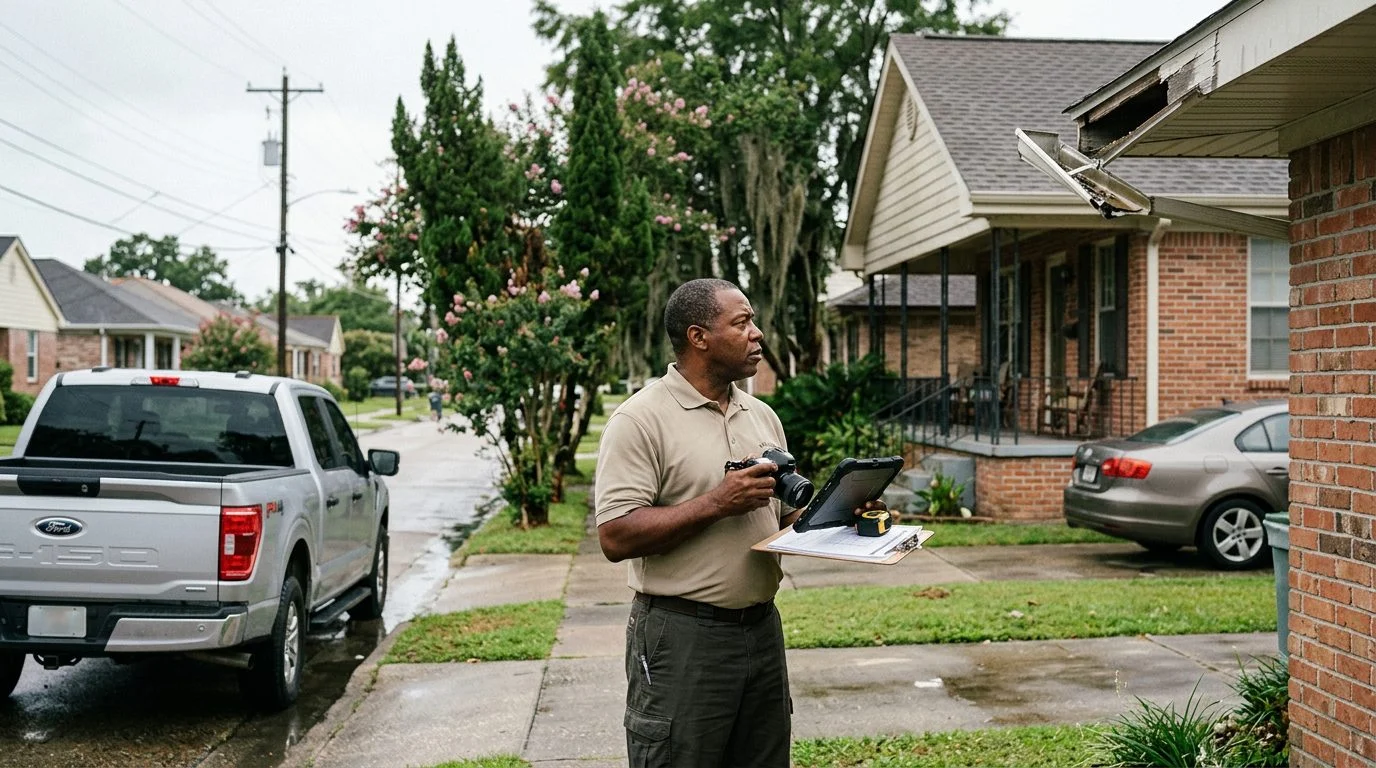
Before an adjuster can evaluate a claim, the adjuster must confirm who caused the crash, what insurance applies, and what the damage cost. Each piece is simple on its own. Together, they set the pace.
Liability. The adjuster reviews the police report, photos, scene measurements, and statements from drivers and witnesses. Louisiana treats crash reports as confidential. Access is limited to people such as the parties, their insurers, their health care providers, and their attorneys. Upon request, the report must be made available within seven working days after the investigation is completed (La. R.S. 32:398). Photos and video can be copied from the investigating agency for a reasonable fee.
The state keeps a record of declared insurance coverage, and an interested person can get it by making a written request and paying a fifteen-dollar fee (La. R.S. 32:871).
Damage. Vehicle damage needs estimates and inspections. Scheduling an inspection, and a second look once repairs begin, can add time.
Medical treatment and records take time
Insurers generally need complete medical records and itemized bills before they can judge an injury. Those documents come from several providers, and each one responds on its own schedule.
Treatment that is still going on means the final scope of injuries and costs may not be known yet. Brain injuries and other conditions that change over time often need more follow-up before an adjuster can judge their extent. Gaps in treatment and missing paperwork are common reasons a file stalls. Keeping appointments and copies of every bill helps.
If Medicare paid for care, timing matters even more.
Louisiana also limits recovery of medical bills. When a health insurer or Medicare paid a contracted provider, recovery is limited to the amount actually paid, plus cost-sharing, not the amount billed (La. R.S. 9:2800.27).
Fault disputes, multiple parties, and Louisiana comparative fault
When each driver blames the other, the insurer must dig deeper before it can assign fault. That takes time.
Louisiana uses comparative fault, which splits fault among everyone involved. Under La. Civ. Code art. 2323, an injured person whose own negligence is fifty-one percent or greater is not entitled to recover damages; however, under paragraph C of that article, a claim is not reduced when the injury results partly from the fault of an intentional tortfeasor. Under La. Civ. Code art. 2323(A)(2), a person whose own negligence is equal to or greater than fifty-one percent may not recover damages, while a person whose negligence is less than fifty-one percent may recover damages reduced in proportion to that negligence. Paragraph C of the same article makes an exception when the injury results partly from the fault of an intentional tortfeasor: in that situation, the injured person’s recovery is not reduced. The amended text, as enacted by 2025 La. Acts No. 15, took effect January 1, 2026. Because of this rule, an insurer may examine the injured person’s own actions, which adds steps.
Crashes with several vehicles or several insurers take longer, because each insurer reviews its own insured’s role. Conflicting witness accounts add interviews and reviews.
Rideshare crashes add a defined step. Under La. R.S. 45:201.8, in a claims coverage investigation, a transportation network company and any insurer potentially providing coverage must cooperate within ten business days of a request for information. That includes exchanging the driver’s log-on and log-off times for the twelve hours before and after the accident.
Negligent security claims can involve a property owner, a security provider, and their insurers. Each party’s coverage and role needs its own review, so those files can take longer too.
Commercial vehicle and truck claims add layers
Truck and commercial vehicle claims usually take longer than a standard car crash claim, because more companies and more records are involved. The driver, the carrier, and sometimes a contractor or lessor may each have coverage to review.
Federal rules add paperwork. Under 49 CFR 391.51, a motor carrier must keep a driver qualification file for each driver it employs.
Duty-status records add another layer. Under 49 CFR 395.8, a carrier must keep records of duty status and supporting documents for at least six months from the date of receipt. Under the same regulation, 49 C.F.R. § 395.8(e)(1), no driver or motor carrier may make a false report in connection with a duty status.
Because these records have set retention periods, asking for them early matters. Electronic logging data, maintenance records, and witness statements all take time to gather and review.
American Trial Lawyer, LLC may associate or refer a case to other law firms, and that may apply to truck and commercial vehicle matters.
How long insurance claims usually take, and what Louisiana law says
Simple property-damage claims often move faster than injury claims, which depend on treatment and records. Timing still varies by claim.
The filing deadline is a separate question. Under La. Civ. Code art. 3493.1, delictual (tort) actions are subject to a two-year period. That period starts on the day the injury or damage is sustained. The article also has exceptions, so the rule isn’t the same for every injury.
An insurance claim is not a lawsuit. The two-year period runs from the injury date, not from the day an adjuster finishes. Write the date of the crash down now so it’s easy to find.
Claims against an at-fault driver’s insurer can take longer in complicated cases. That can happen even when everyone is cooperating.
Not sure what your next step is?
Talk it through with our team — the first consultation is free, confidential, and carries no obligation.

Mistakes that slow a claim, and a practical next step
Most delays people can control come from missing or unclear information. A simple, dated file keeps the claim moving.
A common mistake is giving a recorded statement or signing a release before understanding your injuries and how they may develop. If you gave a written or recorded statement, the person who took it, or anyone holding it, must give you a true and complete copy within twenty days after your written request (La. R.S. 13:3732).
Other slowdowns are simple: missed medical appointments, lost receipts, and posting about the crash online. Each can leave an adjuster with open questions.
Keep a file with the police report number, photos, bills, and every letter or call from the insurer, with dates. Ask for the crash report early, since it’s released once the investigation is complete.
Quick answers
Does a slow claim mean the insurer has denied it?
Usually not. A slow claim most often means the insurer is still checking facts.
How long do I have to file a lawsuit?
Louisiana generally gives two years from the date of injury, with exceptions (La. Civ. Code art. 3493.1).
If you’re waiting on an adjuster after a crash, for yourself or someone you love, you don’t have to sort out these steps alone. Call 855-LUBECKI to ask for a free consultation with our New Orleans office. The first consultation is free, confidential, and carries no obligation to continue.
Common Reasons a Claim Takes Time
Gathering the crash records
Police and crash reports, photos, and witness information often need to be requested and reviewed before an adjuster can form a picture of what happened.
Reviewing medical records
Treatment notes, imaging, and bills may come from several providers, and collecting them complete takes time, particularly when injuries are still developing.
Checking coverage
Insurers may need to confirm which policies apply, including policies held by other drivers, businesses, or vehicle owners.
Evaluating vehicle damage
Inspections, repair estimates, and sometimes independent reviews of the vehicles involved can add weeks to the process.
Working through internal approvals
Large or disputed claims often move through several reviewers, and each step adds time before a decision is made.
Keep a Simple Record of Everything
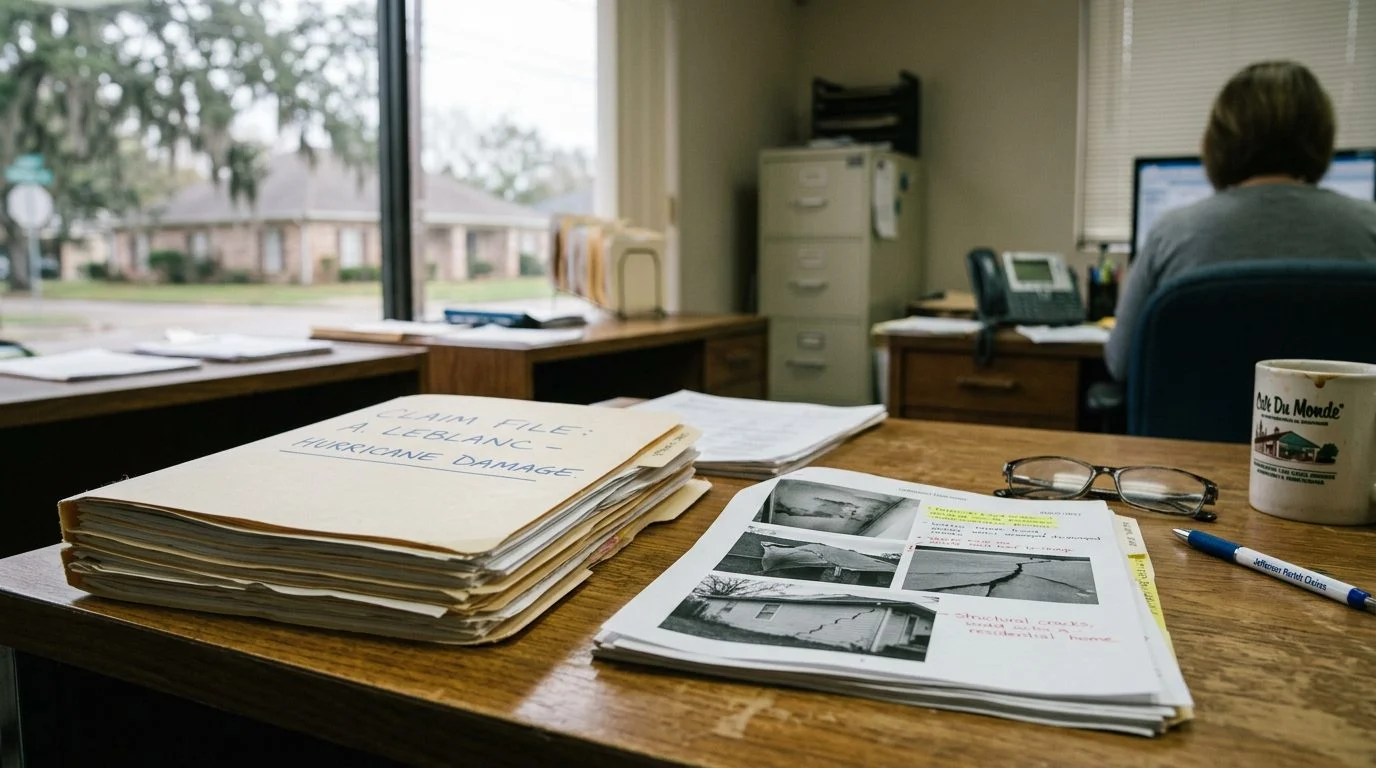
Save letters, emails, text messages, bills, and notes about phone calls, including dates and names. A clear written timeline makes it easier to see what has been requested, what has been received, and what is still open.
Steps You Can Take While You Wait
Track every contact
Write down who called, when, and what was said, and keep a copy of anything you sign or send.
Organize your medical care
Keep appointment notes, prescriptions, and bills in one place so that records are easy to share.
Think before you give statements
Speak carefully with insurance representatives, and ask for written follow-up on anything important.
Ask about next steps
A short conversation with a lawyer can help you understand what is still pending and what questions to raise with the insurer.