
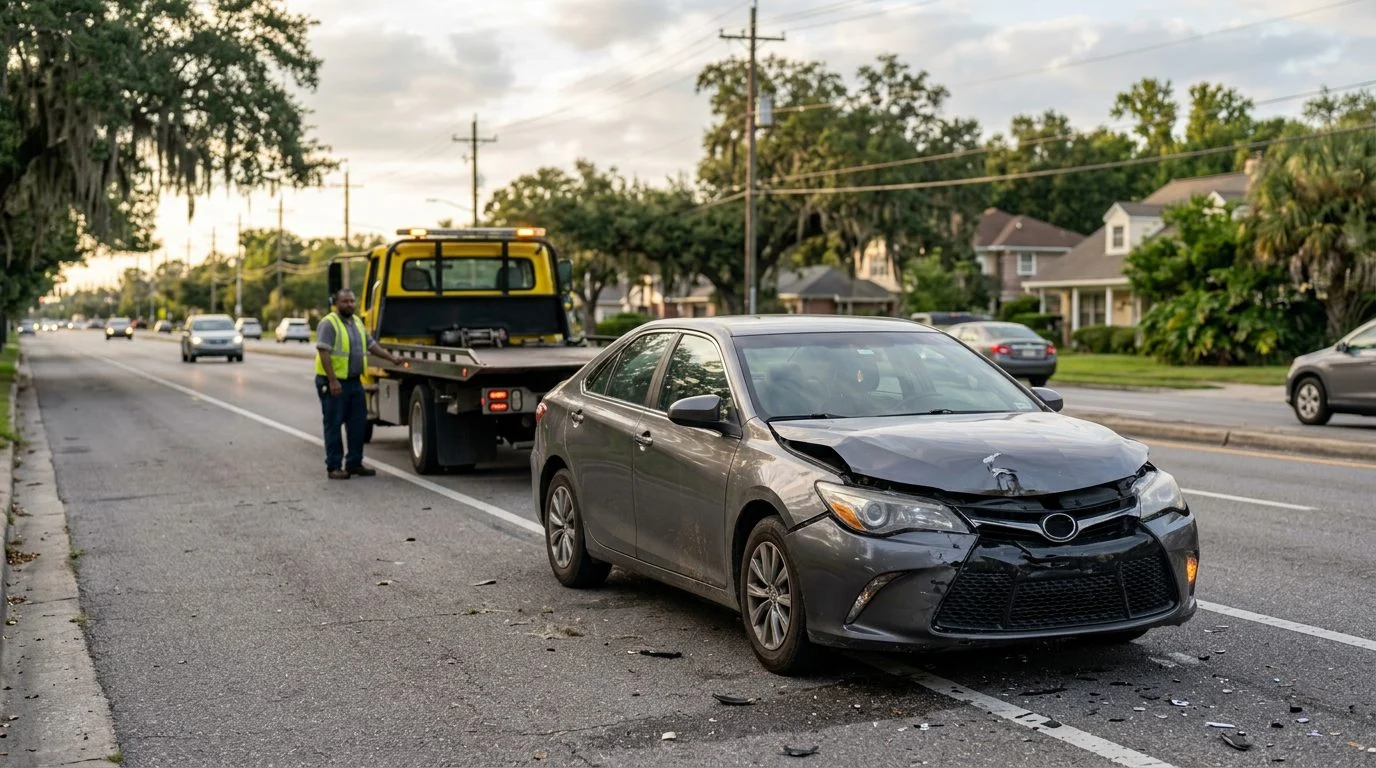
Car Accidents | New Orleans, Louisiana
Rear-End Collisions: Who Is Responsible?
A plain-language guide for people hurt when another vehicle struck them from behind, with practical steps to take next.
By Przemek Lubecki · Published November 12, 2026
If a car hit the back of yours, you may be sore, shaken, and already hearing from an insurance company. Who is usually at fault if a car hits the back of you? After a rear-end crash, many people want to know which driver’s actions caused the collision.
Fault can be shared, and the front driver’s own driving can matter too. This guide explains how that works in New Orleans and across Louisiana.
Is rear ending someone your fault?
In most rear-end collisions, the driver who struck the car in front is treated as the at-fault driver. That is a starting point. The facts of the crash decide whether the front driver shares or carries fault.
Drivers are expected to keep enough room to stop safely. A rear-end impact often points to the rear driver’s conduct, because that driver chose how close to follow and how fast to move. Louisiana law says every person is responsible for damage caused by negligence, imprudence, or want of skill (La. Civ. Code art. 2316).
Whether the front driver shares any blame depends on the facts of the crash. Being hit from behind does not end the question.
If a rear-end crash has left you hurt or unsure who pays, you don't have to sort it out alone. Call 855-LUBECKI or request a free case evaluation; the first consultation is free, confidential, and without obligation. Talk it through with our team — the first consultation is free, confidential, and carries no obligation.
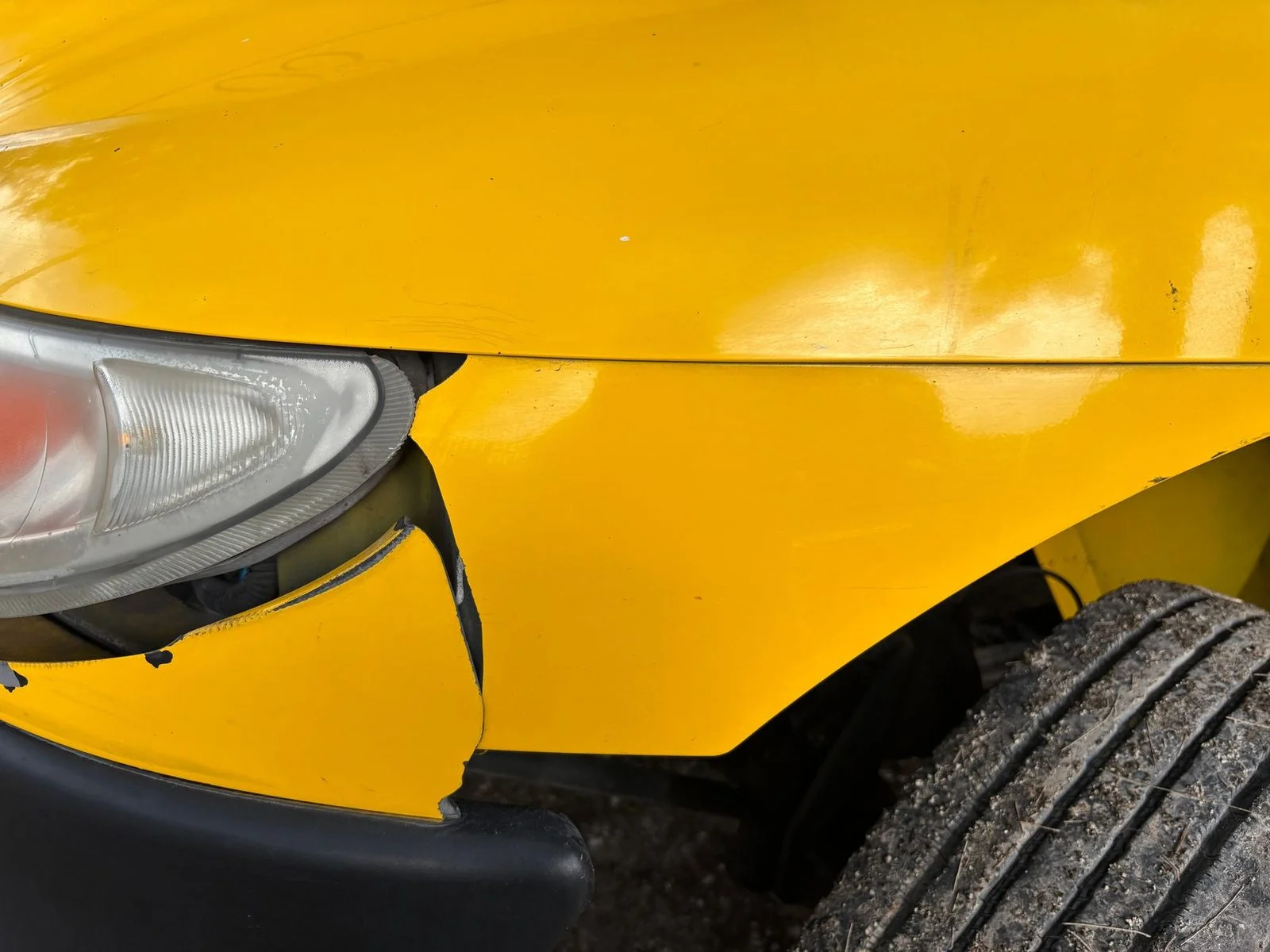
Why the driver behind is usually presumed at fault
Louisiana law says a driver shall not follow another vehicle more closely than is reasonable and prudent (La. R.S. 32:81). The law also ties that duty to the speed of the vehicle, the traffic, and the condition of the road.
Those factors all feed one question. Could the rear driver have stopped in time? If the answer is no, the rear driver’s following distance and attention are usually examined first.
Trucks have an extra rule. Outside a business or residential area, a motor truck shall not follow another motor truck within four hundred feet, though one truck may still pass another under the same statute.
Insurers and courts often begin with the rear driver. That is not the same as an automatic finding. Every person operating a motor vehicle on the public roads of Louisiana also must drive in a careful and prudent manner. Failing to do so is careless operation under La. R.S. 32:58.
When the driver in front can share or carry fault
The driver in front can share fault when their own driving helped cause the crash. This is the main way the starting presumption gets challenged.
Some facts are sometimes examined closely:
- A sudden stop with no clear reason in traffic.
- Brake lights or turn signals that did not work.
- A car that stopped in a travel lane with no warning.
- A cut-in or abrupt lane change right in front of another vehicle.
- A chain-reaction crash with several vehicles, where each driver’s distance is looked at separately.
These are examples of facts that can be reviewed. They are not promises of any result.
How Louisiana’s comparative fault rule affects a claim
Louisiana uses comparative fault, which means shared fault. Under La. Civ. Code art. 2323, fault is figured across everyone who contributed to the injury, even people who are not part of the lawsuit.
For example, if an injured driver were found 20 percent at fault, the damages would be reduced by 20 percent. This is a simple illustration, not a prediction for any crash. The current text of article 2323 took effect January 1, 2026.
Fault under the law is a separate question from what an insurance adjuster says. Keep the two apart when you read a letter from an insurer.
Who is at fault if someone hits you while you’re backing up?
The driver who was backing up often faces the first questions about the crash. Backing up is still driving, so on public roads the duty to drive in a careful and prudent manner still applies under La. R.S. 32:58.
Other common situations look different. A car hit while parked, or a car hit while pulling out of a driveway or lot into traffic, turns on specific facts. Lane position, signals, right-of-way, and where each car was stopped all matter.
Write down what you remember while it is fresh. Note where each car was, the direction of travel, the approximate speed, the weather, and any signals. Memory fades fast, and notes made soon after the crash help keep details straight. Avoid guessing at speeds in a statement you have not reviewed.
What evidence shows who was at fault
Photos, witness information, the crash report, and medical records help show what happened. Under La. R.S. 32:398, crash reports are confidential. They are available only to listed people, including the parties to the crash, their insurers, and the parties’ attorneys. On request, they must be made available within seven working days after the investigation is complete.
Useful photos include vehicle damage, the scene, skid marks, traffic signals, and road conditions. Get the names and contact details of witnesses too. Dashcam footage, phone photos, and nearby business or traffic camera footage help if it still exists.
Truck crashes add another source.
Insurers may ask for a recorded statement quickly. Louisiana law says a person who takes a statement from an injured person must provide a copy, and must do so within twenty days after written demand (La. R.S. 13:3732). You can take time and ask questions before you answer.
Not sure what your next step is?
Talk it through with our team — the first consultation is free, confidential, and carries no obligation.
When injuries, brain injury, or a death are involved
Rear-end impacts can cause neck and back injuries. A head impact can also cause a brain injury, and some symptoms appear days later. Tell a doctor about headaches, dizziness, confusion, or memory changes, even if they seem minor at first. Medical records also become part of the evidence of how the crash affected you.
If a crash causes a death, Louisiana law sets an order for who may sue. It lists the surviving spouse and children first, then parents, siblings, and grandparents in turn, based on who survived (La. Civ. Code art. 2315.2). The same article sets the time limit: one year from the death or two years from the injury, whichever is longer.
Families who lost a child can read our child wrongful death page. For the broader claim process, see Louisiana car accident claims.
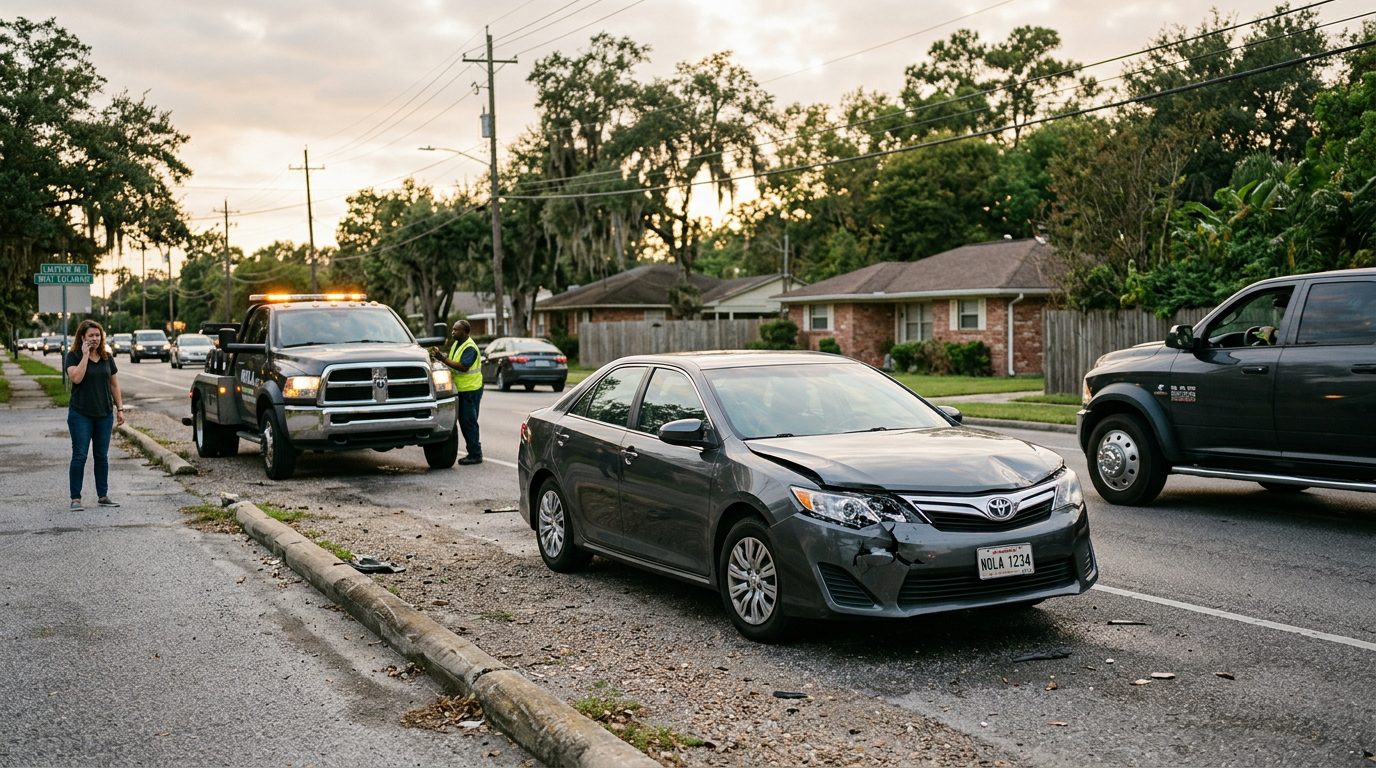
Talk with a New Orleans car accident lawyer about your crash
You may be sore, worried about bills, or helping a family member who was hurt. You may not be ready to hire anyone, and that is a reasonable place to be.
Przemek Lubecki is the responsible lawyer for this page. The firm’s office is in New Orleans. The firm may associate or refer a case to other law firms.
Is the driver who hits from behind always at fault?
No. The rear driver is the starting point, but the facts of the crash decide whether the front driver shares fault.
Can I recover damages if I was partly at fault?
Louisiana reduces recovery by your share of fault (La. Civ. Code art. 2323).
How long does a family have to bring a wrongful death claim?
Louisiana sets one year from the death or two years from the injury, whichever is longer (La. Civ. Code art. 2315.2).
If a rear-end crash has left you hurt or unsure who pays, you don’t have to sort it out alone. Call 855-LUBECKI or request a free case evaluation; the first consultation is free, confidential, and without obligation.
How our team approaches your rear-end crash
Plain answers
We explain how the facts of your crash may bear on fault, in terms you can follow without legal training.
Trial-focused representation
Przemek Lubecki leads each matter with a trial-ready approach, preparing every case as if it may go before a jury.
Office in New Orleans
Our office is in New Orleans, and we serve people across Orleans Parish, the New Orleans metro and Louisiana.
Care for families and drivers
We understand the physical, financial and emotional strain a rear-end collision can place on you and your family.
Before you speak with an insurance adjuster
Insurance companies may contact you soon after a crash. Think carefully before giving a recorded statement or signing anything, and talk with a lawyer about your situation first.
Practical steps after a rear-end crash
Get medical care
See a doctor even if you feel only sore. Some injuries, including brain injuries, may not show up right away.
Document the scene
If you are able, take photos of the vehicles, the road, traffic signals and any visible injuries.
Keep your records
Save medical bills, repair estimates, pay records and notes about missed work or daily limitations.
Talk with a lawyer
Our team can review your crash and answer your questions. Where a case may be referred or associated with other law firms, we will tell you before anything moves forward.