
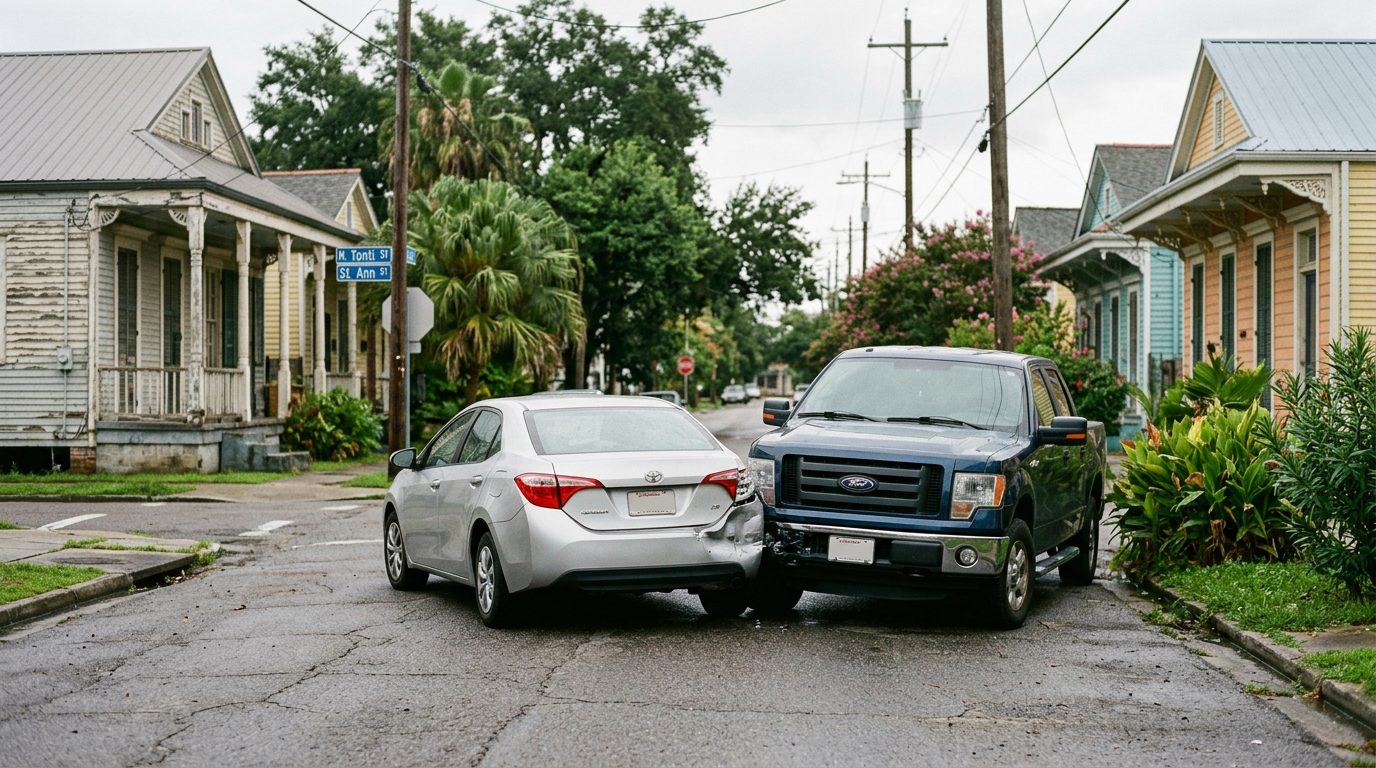
Car, truck and commercial vehicle accidents | New Orleans, Louisiana
Hurt in a Crash You Didn't Cause? Start With These Steps.
The choices you make in the first hours and days can affect your health and your options later. Here is a plain-language guide to help you through it.
By Przemek Lubecki · Published November 21, 2026
Being hit by another driver can leave you shaken, sore, and unsure what to do first. If you’re in an accident that isn’t your fault, the short answer is to protect your health, record the facts, and keep what you say about fault brief.
Louisiana still looks at each driver’s share of fault, and insurers do too. The steps below cover what to do next and why each one matters.
Why a Not-at-Fault Crash Still Creates Decisions
A crash you didn’t cause can still leave you with medical bills, vehicle damage, and insurance claims that need attention. Louisiana’s injury system is built on fault. Under La. Civ. Code art. 2316, a person is responsible for damage caused by his negligence, imprudence, or want of skill. A claim generally depends on showing that another driver’s negligence caused the crash.
Louisiana also uses comparative fault. Under La. Civ. Code art. 2323, a person whose share of negligence is 51% or more is not entitled to recover damages. Paragraph C of the same article provides that, notwithstanding Paragraphs A and B, a claim is not reduced when the injury is partly the result of the fault of an intentional tortfeasor. If the share is less than 51%, recovery is reduced in proportion to that share, unless the injury is partly the result of an intentional tortfeasor’s fault, in which case the claim is not reduced. Fault is weighed among everyone who contributed, including people who are not parties to the suit.
Time matters too. Under La. Civ. Code art. 3493.1, delictual actions are subject to a liberative prescription of two years, and this prescription does not run against minors or interdicts in actions involving permanent disability brought under the Louisiana Products Liability Act or state law governing product liability actions in effect at the time of the injury or damage. It starts running on the day the injury or damage is sustained. Missing that deadline can end a claim.
If a crash that wasn't your fault has left you hurt or weighing an insurance offer, you don't have to figure it out alone, and we're glad to talk it through with you. Talk it through with our team — the first consultation is free, confidential, and carries no obligation.

Right After the Crash: Safety, the Police Report, and Evidence
Your first job is safety. Check everyone for injuries, and call 911 if anyone is hurt. Move vehicles out of traffic only if you can do it without causing more harm.
Next, get the police report. Ask the officer for the report number and name. Under La. R.S. 32:398, police agencies may charge up to five dollars for a crash report of two pages or less.
Under La. R.S. 32:398, the driver of a vehicle involved in a crash resulting in injury to or death of any person, or property damage in excess of five hundred dollars, must give their name, address, and the registration number of the vehicle they were driving to any person injured in the crash or to the driver or occupant of or person attending any vehicle or other property damaged in the crash, subject to the statute’s stated conditions and exceptions. La. R.S. 32:398(A)(3) requires the driver of a vehicle involved in a crash covered by that section to show his or her license or permit to drive, upon request, to any police officer at the scene or investigating the crash.
Gather evidence while it’s fresh. Take photos of both vehicles and their positions, skid marks, traffic signals, road conditions, and any visible injuries. Write down the other driver’s plate and insurance details, plus the time and place. Get witnesses’ names and phone numbers.
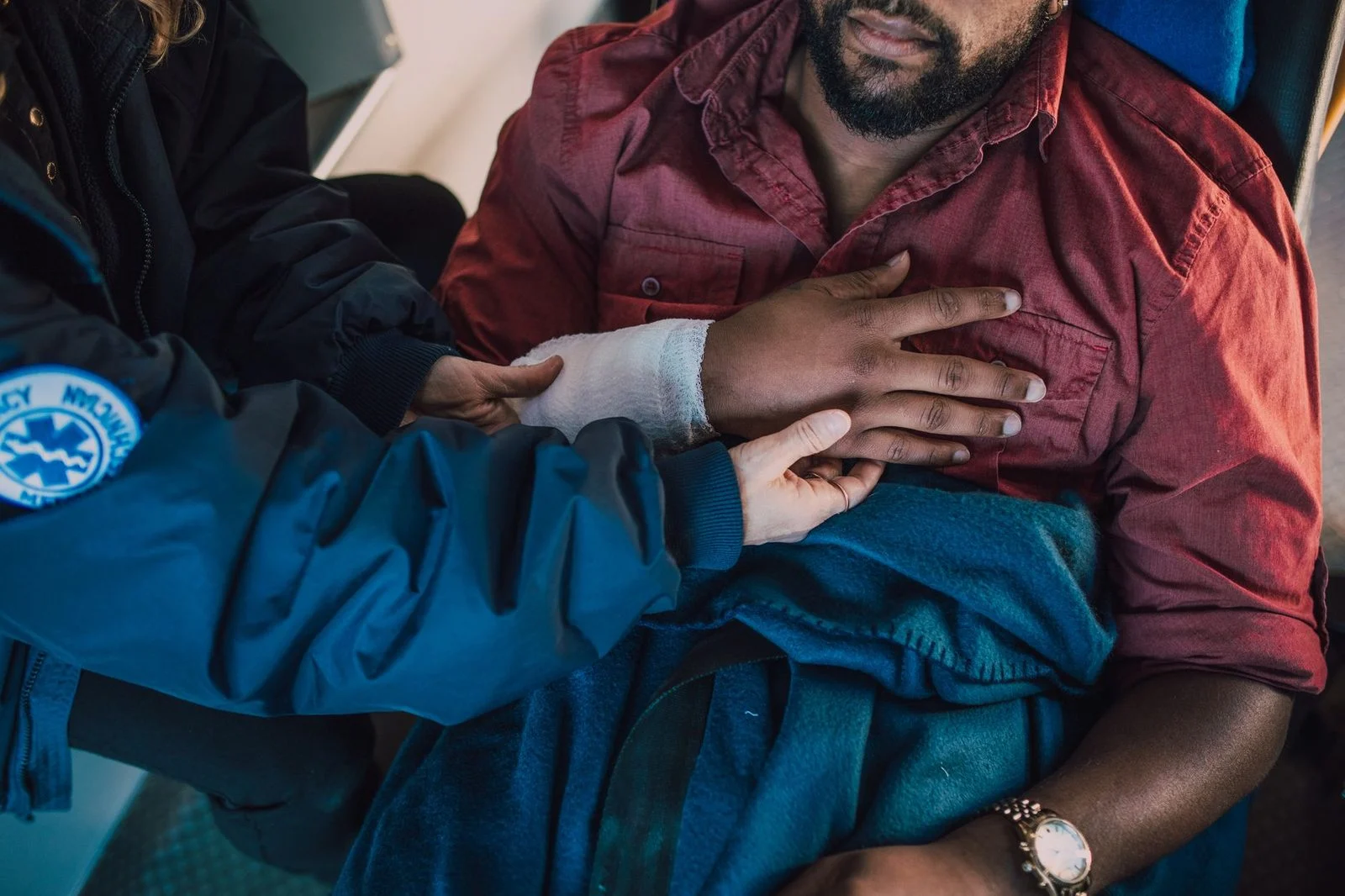
See a doctor promptly. Concussions and neck or back strain may not show symptoms right away. Keep every medical record and bill.
Admitting Fault: What to Say and What to Avoid
Stick to plain facts at the scene, and don’t guess about fault. An apology can be heard as an admission, even when it only expresses sympathy.
Describe what you saw, such as the light color, your lane, and your direction of travel. Skip guesses about speed, distraction, or who should have seen whom. Don’t sign a statement or accept blame for a version of events you don’t recognize.
Write down what the other driver says, too. Their comments can matter, and your notes help you remember them accurately.
If you give a written, recorded, or transcribed statement about your injuries, you’re entitled to a copy.
Think before posting about the crash online. Insurers and others can read public posts, so pause before sharing details.
Calling Your Insurer or the Other Driver’s Insurer
Report the crash to your own insurer, and treat the other driver’s insurer as a separate conversation. Whether a not-at-fault crash changes your premium depends on your policy, your insurer, and your history. Ask your insurer directly, and get the answer in writing if you can.
A call from the other driver’s insurer may ask for a recorded statement, and that request can come quickly. Before you agree, find out what the call covers and what the statement will be used for.
Uninsured motorist coverage can matter when the at-fault driver has little or no insurance. Under La. R.S. 22:1295, an auto liability policy must include uninsured and underinsured motorist coverage at no less than its bodily injury liability limits. The exception is when any insured named in the policy rejects coverage, selects lower limits, or selects economic-only coverage, in the manner provided in Item (ii) of this Subparagraph. Your policy shows which option was chosen.
Keep a file with claim numbers, adjuster names, dates, and every written message.
Evaluating a Settlement Offer Before You Accept
There’s no typical settlement amount that fits every crash, so review any offer against your own facts. What a claim is worth depends on your injuries, your treatment, your lost income, and the evidence.
An early offer may come before the full extent of your injuries is known. Signing a release can close the claim for good. Read any release line by line, and ask what it covers, including future medical care. Under La. Civ. Code art. 2315, damages do not include future medical costs unless they are directly related to a manifest physical or mental injury or disease.
Medical bills work differently too. Under La. R.S. 9:2800.27, when a health insurer or Medicare paid a contracted provider, recovery of medical expenses is limited to the amount actually paid plus cost sharing, not the amount billed.
If you have Medicare, its payments may need to be repaid. The CMS Medicare Secondary Payer overview explains that a conditional payment must be repaid to Medicare when a settlement, judgment, award, or other payment is made.
A common mistake is signing a release or cashing a check before the claim is understood.
When Talking With a Louisiana Injury Lawyer May Help
A lawyer can help you see how comparative fault, deadlines, and medical payment rules apply to your facts. A lawyer can review the police report, photos, medical records, and insurer letters.
American Trial Lawyer, LLC handles truck accidents, car accidents, commercial vehicle accidents, rideshare accidents, motorcycle accidents, wrongful death, brain injury, and negligent security cases. Przemek Lubecki is the responsible lawyer for this page, and the firm’s office is in New Orleans.
The firm may associate or refer a case to other law firms. If that happens, the case may be handled with co-counsel.
For related reading, see our pages on car accident claims in Orleans Parish, head-on collisions in New Orleans, and Airline Highway accident claims.
Should I call the police after an accident that wasn’t my fault?
Yes. If anyone is hurt, call 911, and ask for the report number so you can follow up.
Does a not-at-fault accident affect my insurance?
It depends on your policy and insurer, so ask your insurer directly.
If a crash that wasn’t your fault has left you hurt, dealing with insurance calls, or weighing an offer, you can request a free case evaluation or call 855-LUBECKI. The initial consultation is free, confidential, and without obligation to continue.
How American Trial Lawyer can help
Free first consultation
Your first consultation is free, confidential and carries no obligation to continue.
Trial lawyers who focus on serious injuries
The firm focuses on people seriously hurt in truck, commercial vehicle and car crashes, rideshare and motorcycle accidents, and families in wrongful death, brain injury and negligent security cases.
Based in New Orleans
Our office is in New Orleans. We serve people across Orleans Parish, the New Orleans metro area and Louisiana.
Cases may be shared with other firms
American Trial Lawyer may associate or refer a case to other law firms. Przemek Lubecki is the responsible lawyer for the content of this page.
Be careful before you give a statement
An insurance adjuster may call soon after a crash. Talk with a lawyer before you give a recorded statement or sign any paperwork, so you understand what you are agreeing to.
Key things to remember after a crash
Get medical care
Even if you feel fine, see a doctor promptly. Some injuries, including brain injuries, may not show symptoms right away.
Document the scene
Take photos of the vehicles, the road, traffic signs and your injuries. Write down what you remember while it is still fresh.
Keep your records
Save the police report number, medical bills, repair estimates, and any letters or messages from insurers.
Ask for help early
A conversation with a trial lawyer can help you understand your options before decisions are made for you.