
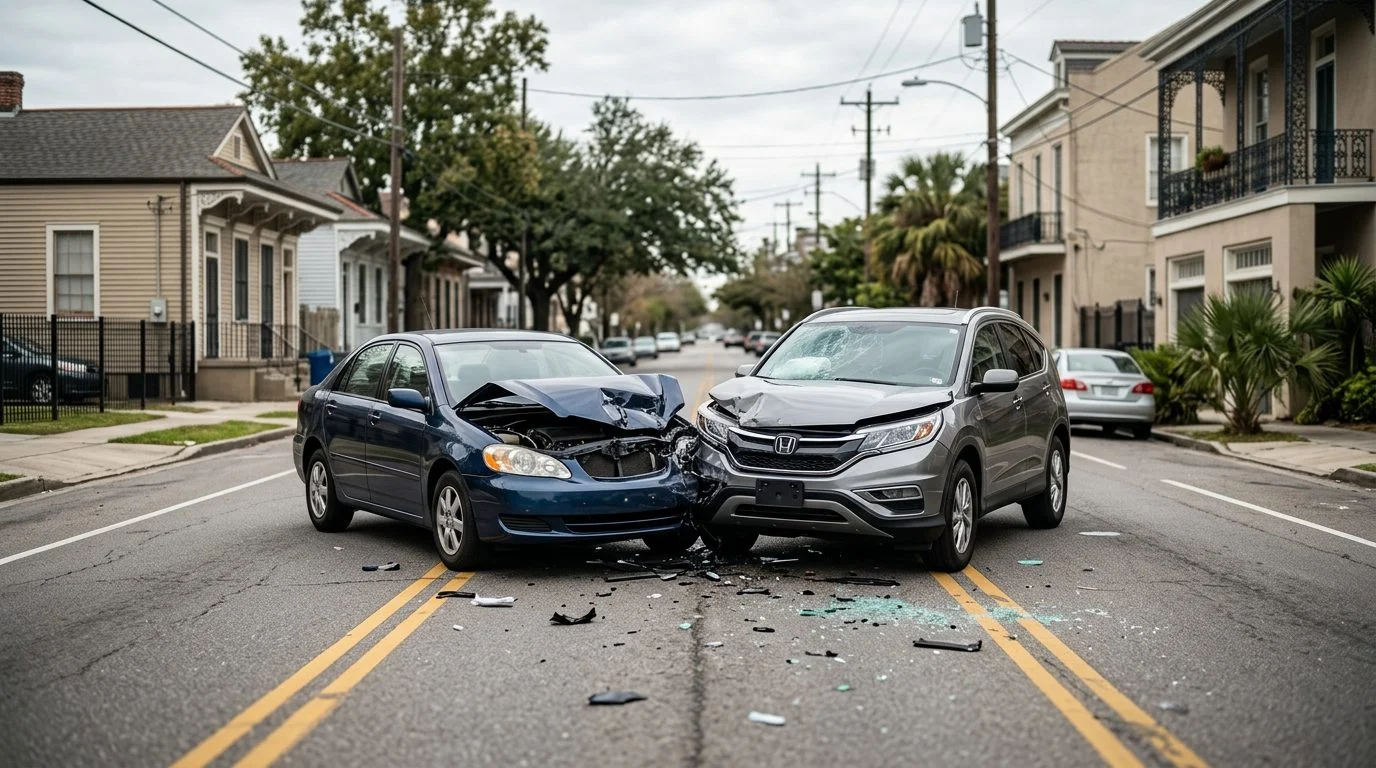
Head-On Collisions | New Orleans, Louisiana
Hurt in a Head-On Collision? Start With These Steps
Trial lawyer Przemek Lubecki and our team represent people seriously injured in head-on crashes across New Orleans and Louisiana. Our office is in New Orleans. Your first consultation is free, confidential and without obligation.
By Przemek Lubecki · Published October 27, 2026
If you were in a head on collision in New Orleans, the first steps matter. Get to safety, call 911, and get medical care, even if you feel fine. This page explains what to do at the scene, what to tell insurers, and how injury claims generally work in Louisiana. It is general information, not legal advice about your crash.
Who This Page Is For and What a Head-On Collision Involves
A head-on collision happens when two vehicles traveling in opposite directions strike each other. These crashes often involve high combined speed, and they can happen on busy roads in Orleans Parish and the surrounding metro area. This page is written for drivers and passengers who were hurt, and for family members reading on someone else’s behalf. The steps below apply whether the vehicle was a passenger car, a truck, a commercial vehicle, a rideshare vehicle, or a motorcycle. A commercial vehicle crash may bring more parties into the claim. Every crash turns on its own facts, so use this as a starting point, not a verdict on your case.
If a head-on crash left you or someone you love hurt, you don't have to work out the next steps alone. Our team will talk through your options. Talk it through with our team — the first consultation is free, confidential, and carries no obligation.
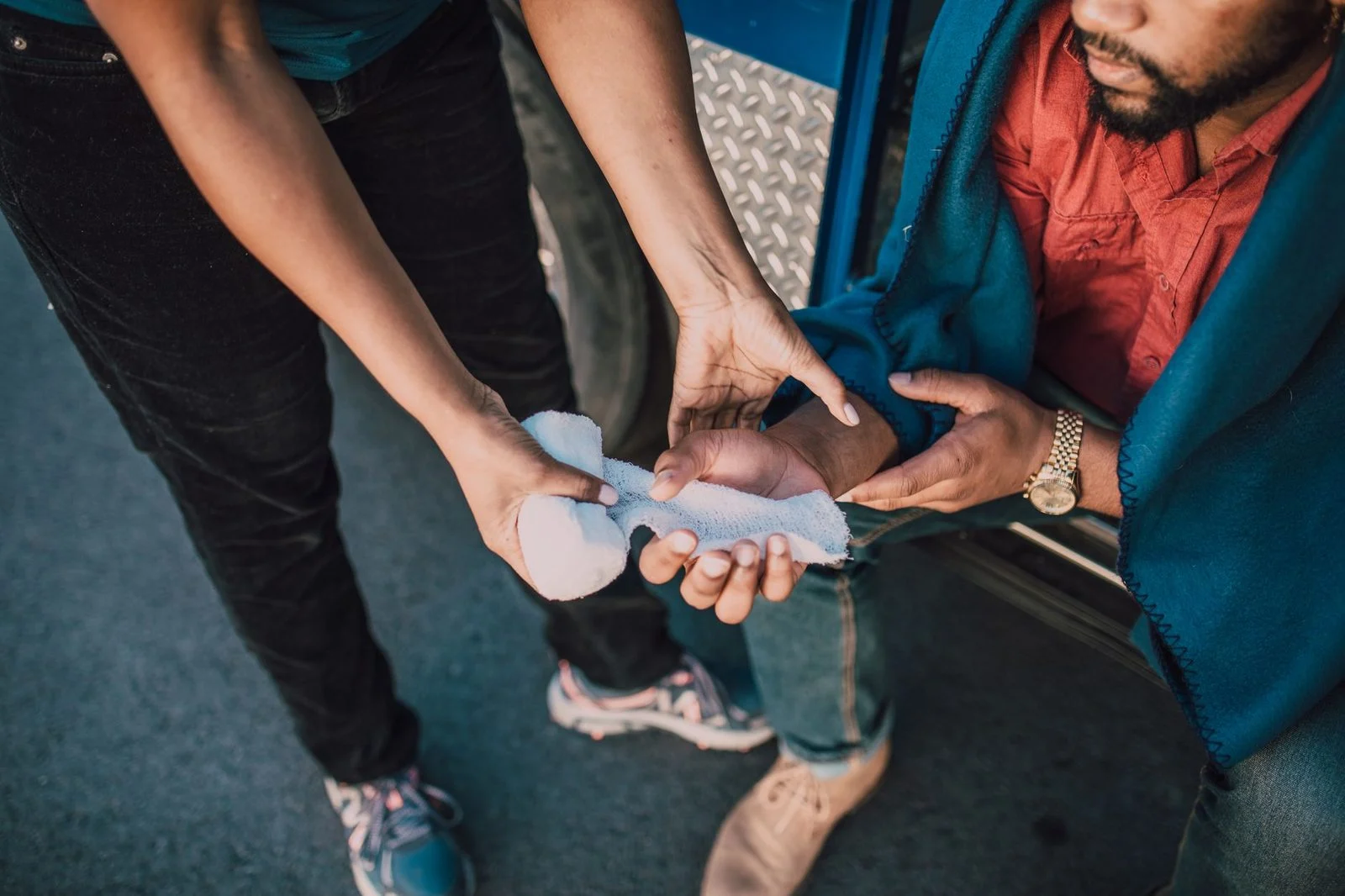
First Steps at the Scene: Safety, 911, and Checking for Injuries
Get to safety first, then call 911, even if no one looks badly hurt. Turn on your hazard lights if your vehicle still runs, and stay out of active traffic lanes. Check on your passengers and the other driver. Don’t move anyone who may have a neck or back injury unless they face immediate danger from fire or traffic. Tell the dispatcher about every injury you notice, including small ones. Police and emergency medical services create the official record of the crash. When officers ask what happened, stick to facts you saw and felt. Don’t admit fault or guess about speed.
Injuries That Can Appear Days Later, Including Brain Injury
Some injuries from a head-on crash don’t show up until hours or days later. Adrenaline can hide pain in the first hour, so feeling calm at the scene doesn’t mean you’re unhurt. Head-on impacts can cause neck and back injuries, broken bones, chest injuries, and internal injuries. A blow to the head can cause a concussion or another brain injury. Warning signs can include headaches, dizziness, memory or concentration trouble, sleep changes, and mood changes. Get checked by a medical provider promptly and follow the treatment plan. Keep copies of diagnoses, imaging, and visit notes. A daily journal of symptoms, missed work, and tasks you can’t do helps show how the crash changed your life.
Documenting the Crash and Getting the Police Report
The evidence you gather early is often the easiest to lose, so start on day one. Photograph vehicle positions, damage, skid marks, traffic signals, road conditions, and visible injuries. Write down the other driver’s name, address, license plate, and insurance details. Collect witness names and phone numbers. Note the time, weather, lighting, and what you remember just before impact.
Under La. R.S. 32:398, the driver of a vehicle involved in a crash resulting in injury to or death of any person, or property damage in excess of five hundred dollars, must give his name, address, and the registration number of the vehicle he was driving. Under La. R.S. 32:398, if the officer investigating a crash has reason to believe a driver has a medical condition that is cause for revocation or suspension of a license under R.S. 32:414(E), the officer must notify the medical/conviction unit of the office of motor vehicles, provided that the officer first consults with his superior officer about his specific observations and the superior officer agrees. Under La. R.S. 32:398, crash reports are confidential. Upon request, crash reports must be made available within seven working days after the crash investigation is completed to the parties, parents or guardians of a minor party, their insurers or an insurance support organization under contract to provide claims and underwriting, healthcare providers who treated them or their agents, succession representatives, the attorneys of the parties or succession representatives, and news organizations asking about a specific crash. Police agencies may charge up to five dollars for a report of two pages or fewer, and up to twenty dollars for longer reports, inclusive of all service fees and other charges.
What Not to Tell the Insurance Company
Keep early calls with insurers short, factual, and free of guesses. You may hear from the other driver’s insurer or your own insurer soon after the crash. You don’t have to speculate about speed, distance, or who was at fault. Don’t call your injuries minor before you know the medical picture. Read any medical authorization or release before you sign it, since it may give access to records you didn’t expect to share.
Louisiana law also covers recorded statements. Under La. R.S. 13:3732, a person who takes a written, recorded, or transcribed statement from an injured person must give that person a true and complete copy, and anyone who has the statement must provide a copy within twenty days after a written demand. After every call, write down the date, the caller’s name, and what was said.
If a Car Is Coming at You Head-On: Basic Evasive Driving
Braking and staying in control matter most when a car is coming straight at you. Brake firmly and early, because slowing lowers impact speed even when a crash can’t be avoided. If there is open space on the shoulder or the right side, and it’s safe to use, steer toward it rather than into the oncoming lane. Avoid sharp overcorrections, which can spin a vehicle into another lane or into traffic. Keep both hands on the wheel and brace. If you’re a passenger, your role is limited, but staying braced and calm still helps. Road shape, traffic, and weather change what’s possible, so these are general principles, not a plan for every road.
Not sure what your next step is?
Talk it through with our team — the first consultation is free, confidential, and carries no obligation.
How a Head-On Injury Claim Is Typically Handled
A head-on injury claim usually involves the at-fault driver and that driver’s insurer, and it runs on firm deadlines. Louisiana generally sets a two-year deadline for personal injury claims under the current text of La. Civ. Code art. 3493.1.
Under La. Civ. Code art. 2323, if the injured person’s share of fault is less than fifty-one percent, the damages recoverable are reduced in proportion to that share. If the injured person’s share of fault is equal to or greater than fifty-one percent, that person is not entitled to recover damages. Under La. Civ. Code art. 2323, if a person suffers injury, death, or loss partly as a result of his own negligence, and that negligence is equal to or greater than fifty-one percent, he shall not be entitled to recover damages.
Wrongful death claims follow their own deadline and eligibility rules under La. Civ. Code art. 2315.2, so families should not wait. When health insurance or Medicare paid a contracted provider, La. R.S. 9:2800.27 generally limits recovery of those medical expenses to the amount actually paid plus cost-sharing amounts.
Typical steps include a free first consultation, evidence gathering, medical records, negotiation with insurers, and a lawsuit if one is needed.
Why Speak With American Trial Lawyer in New Orleans
Przemek Lubecki is the responsible lawyer for this page, and the firm’s office is in New Orleans. The firm handles truck, car, commercial vehicle, rideshare, and motorcycle crashes, wrongful death cases, brain injury, and negligent security matters. It represents people in Orleans Parish, the New Orleans metro (including Metairie, Jefferson Parish, Kenner, St. Bernard Parish, and Slidell), and across Louisiana.
American Trial Lawyer may associate or refer a case to other law firms. The first consultation is free, confidential, and without obligation, so you can ask questions before you decide anything.
Frequently Asked Questions
Should I get checked after a head on collision if I feel fine?
Yes, because some injuries show up later. A medical check also creates a record of how you were doing right after the crash.
Can I speak with the other driver’s insurer?
You can, but keep statements short and factual. Ask for a copy of any recorded statement you give.
What if the other driver has no insurance or leaves the scene?
Report it to police and review your own coverage. Louisiana’s uninsured motorist rules appear in La. R.S. 22:1295, and your options turn on your policy.
Can a passenger make a claim?
Passengers may have claims against the driver or drivers whose fault caused the crash. Who is responsible depends on the facts.
What does the free first consultation include?
It’s a confidential conversation about your situation, with no obligation to continue.
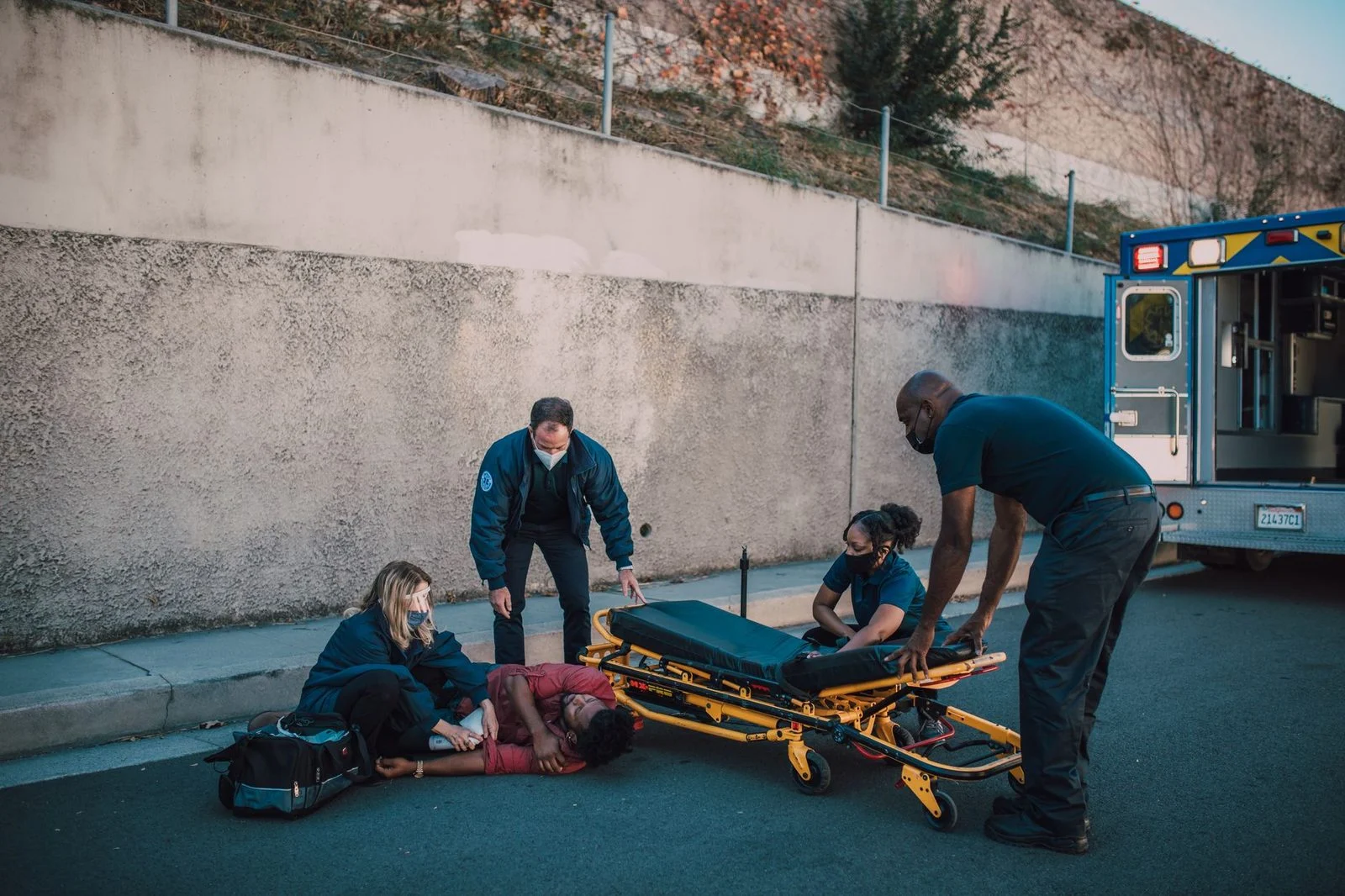
Talk Through Your Head-On Crash With Our Team
If a head-on crash left you hurt, or you’re worried about a family member who was hurt or killed, you don’t have to work out the next steps alone. Share what happened, and our team will explain the options that may apply to your situation. Call 855-LUBECKI for a free consultation, or request a free case evaluation online.
What to Do First After a Head-On Collision
Get medical care right away
Some injuries, including brain injuries, may not show symptoms for hours or days. A medical check also creates a record of how you were doing right after the crash.
Call 911 and make a report
Ask for police to respond so the crash is documented. If you can, note the location, the weather and what you saw before the impact.
Document the scene
Photograph the vehicles, the roadway, lane markings and any visible injuries. Write down the names and contact details of any witnesses.
Be careful with statements
Keep any statement to another driver or insurer short and factual. Ask for a copy of any recorded statement you give.
Important: Possible Referral
The firm may associate or refer a case to other law firms. Call us to discuss your situation.
How We Can Help
Focused on serious crash cases
The firm focuses on truck, car, commercial vehicle and other serious collision cases, including brain injury and wrongful death.
Led by a trial lawyer
Przemek Lubecki is the responsible lawyer for this page and leads the firm's work on these cases.
Office in New Orleans
Our office is in New Orleans. We represent people in Orleans Parish, Metairie, Jefferson Parish, Kenner, St. Bernard Parish, Slidell and across Louisiana.
Free, confidential first consultation
Your first consultation is free, confidential and without obligation to continue.