
Crash Victim Guide | New Orleans, Louisiana
Understanding Fault After a Crash in Louisiana
A crash leaves many questions about who is responsible and what comes next. This plain-language guide walks through the key ideas so you can approach your situation with a clearer picture.
By Przemek Lubecki · Published November 13, 2026
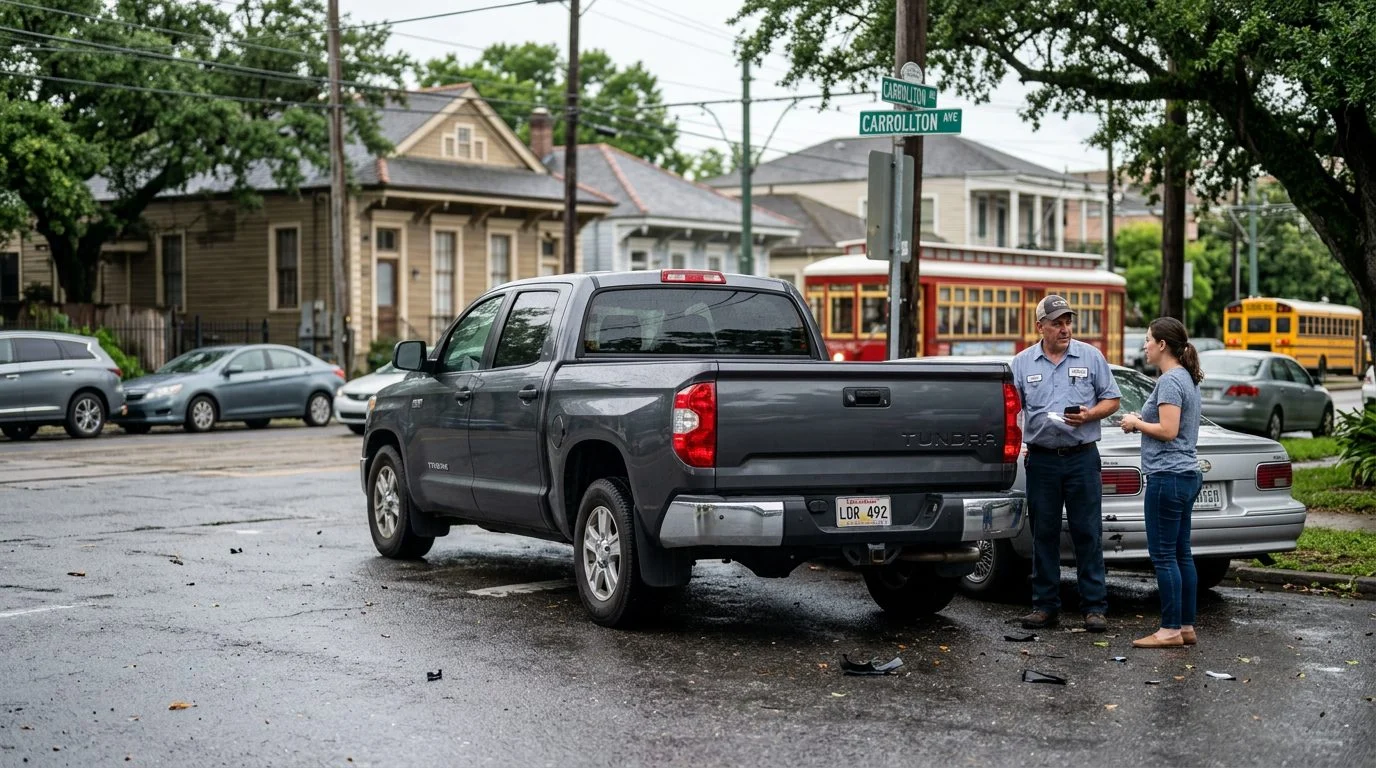
If you were hurt in a crash, or lost someone in one, you may be asking who is responsible. In Louisiana, the negligence law decides who must repair harm caused by careless conduct. This guide explains that rule in plain words and shows how it applies to car, truck, commercial vehicle and rideshare crashes.
What Negligence Means in Louisiana
Negligence means causing harm through carelessness, imprudence, or lack of skill. Louisiana Civil Code article 2316 makes a person responsible for damage caused not only by an act, but also by negligence, imprudence, or want of skill. Article 2315 adds that the person whose fault caused the damage must repair it.
Negligence is a civil concept. It decides who pays for harm, not whether someone faces criminal charges. A police ticket can be one piece of evidence, but it doesn’t settle the civil question by itself.
Car, truck, commercial vehicle, and rideshare injury claims are generally built on this same rule. Ordinary carelessness can count under it, not only reckless conduct. Many people expect a claim to require a serious mistake. The standard is reasonable care, which drivers are expected to use every day.
If you were hurt in a crash or lost a loved one, you may have a claim, and you don't have to sort it out alone. Request a free, confidential consultation with Przemek Lubecki. Talk it through with our team — the first consultation is free, confidential, and carries no obligation.
The Elements a Claimant Must Prove
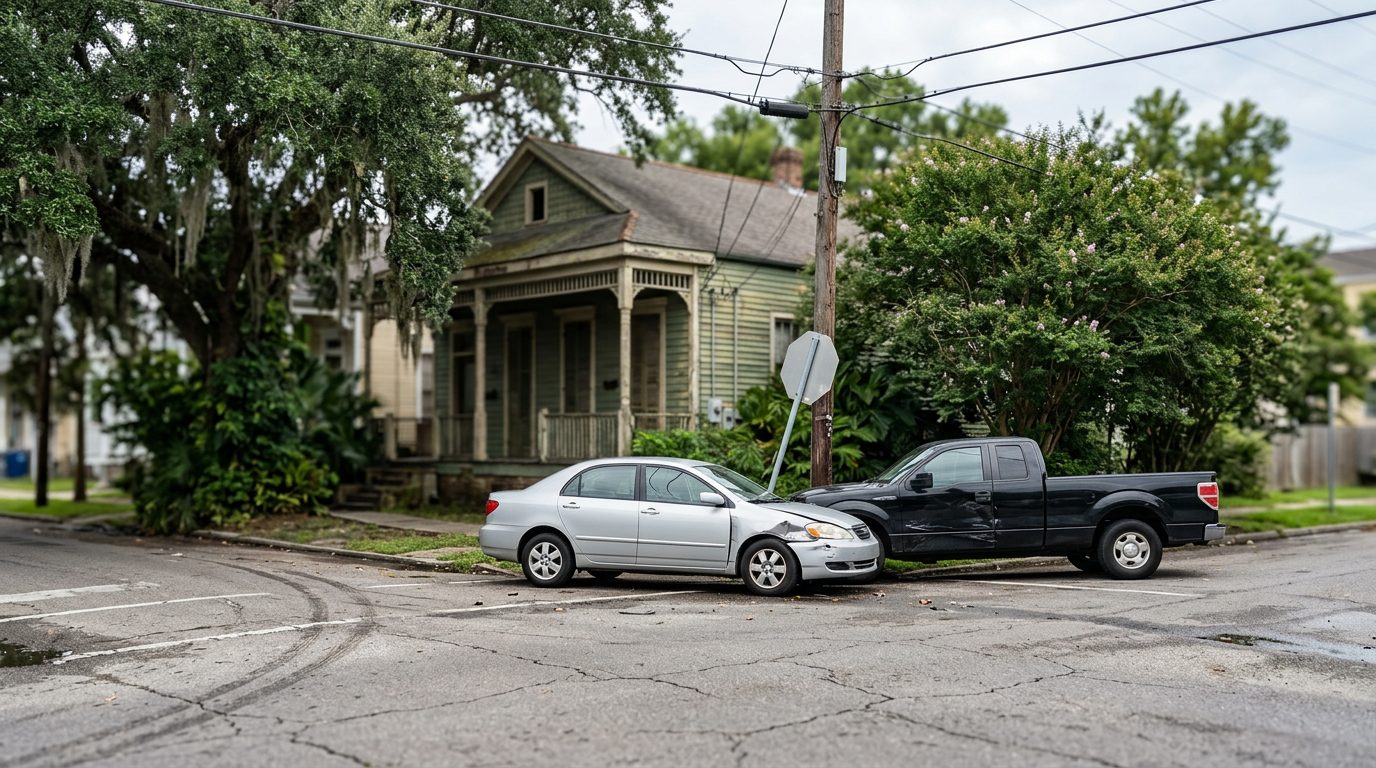
A negligence claim generally requires proof that the other person owed a duty, broke it, and caused real harm.
Duty comes first. Under La. R.S. 32:58, drivers must operate in a careful and prudent manner so as not to endanger the life, limb, or property of others.
Breach means the driver failed to meet that standard. Picture a driver who runs a red light and hits a car carrying a passenger. The driver broke the duty, and the passenger was hurt.
Causation has two parts. The crash must have actually caused the injury. The type of harm a person suffered is one of the facts a lawyer reviews when looking at a claim.
Damages are the real losses, such as medical care and lost income. Evaluating a claim often involves looking at what evidence supports each part of it. Commercial drivers and companies may also be part of the picture, and the facts decide who owed what. Documenting injuries early helps show each part, so it’s worth doing from the start.
How Breach of Duty Is Shown in a Crash Case
Breach is shown with evidence that the driver failed to use reasonable care on the road.
For a commercial vehicle, federal rules can add to the standard. Under 49 C.F.R. § 392.2, a commercial motor vehicle must be operated under the laws where it is driven. If a Federal Motor Carrier Safety Administration regulation imposes a higher standard of care than the state or local law, ordinance, or regulation, the Federal Motor Carrier Safety Administration regulation must be complied with.
Under La. R.S. 32:398, crash reports are confidential. They are available to the parties, their attorneys, and others the statute lists. Upon request, they are made available within seven working days after the investigation is complete.
Other proof matters too. Photos of the vehicles and scene, witness names, and medical notes can all show what happened. Vehicles get repaired, and video can be overwritten, so early steps matter. The other side may dispute breach, which is why early documentation matters.
Comparative Fault: When Both Drivers Share Blame
An injured person who is 51 percent or more at fault cannot recover damages under Louisiana’s comparative fault rule.
If the injured person is less than 51 percent at fault, damages are reduced in proportion to that share. The rule is in Civil Code article 2323.
Picture a total harm value of 100 points. If the injured driver is 20 percent at fault, the recovery is reduced by 20 points, leaving 80.
Fault is assigned to everyone who caused or contributed to the harm. That includes people who are not parties to the case. It doesn’t depend on whether they can pay.
The article was amended in 2025, effective January 1, 2026. Because laws can change over time, the date of a crash is one of the details worth discussing with a lawyer. Insurers and courts may see the same crash differently, so the evidence on fault matters. A common mistake is assuming any share of fault ends a claim. The percentage rule is what counts.
Proving Damages and Causation
The injured person must show the crash caused the injuries, and that the injuries led to real losses.
Medical records are the core proof. Emergency records, follow-up visits, imaging, and a clear treatment timeline connect the injury to the crash. Work records and bills show the losses.
Brain injuries show why follow-up matters. Symptoms can appear or change over time, so consistent medical care and notes help show the link.
Louisiana law limits one category of future costs. Damages do not include future medical costs unless they are directly related to a manifest physical or mental injury or disease, under Civil Code article 2315.
If a crash causes a death, damages may be recoverable by the same respective categories of persons who would have had a cause of action for wrongful death of an injured person, under Civil Code article 2315. A surviving spouse and children come first. Parents follow if there is no spouse or child, then siblings, then grandparents; a parent who abandoned the deceased during minority is deemed not to have survived him. Each group applies only if no one ahead of it survives, under Civil Code article 2315.2.

Time Limits and Your Next Step
Louisiana generally allows two years to file an injury claim, counted from the day the injury happened (La. Civ. Code art. 3493.1).
That two-year rule comes from Civil Code article 3493.1. The law has exceptions, so check your dates against your facts early. For a wrongful death claim, the time limit is one year from the death or two years from the injury, whichever is longer; for medical malpractice actions, the time limit is one year from the death, under Civil Code article 2315.2.
For more on deadlines, read how far back a personal injury claim can be filed. For the broader picture, see car accident claims in Orleans Parish.
Przemek Lubecki is the responsible lawyer for this page, and the office is in New Orleans. American Trial Lawyer, LLC may associate or refer a case to other law firms where it handles a case type.
Can I recover if I was partly at fault?
You can, unless your share of fault is 51 percent or more. Below that, damages are reduced by your share.
How long do I have to file?
Generally two years from the injury for most injury claims, with exceptions (La. Civ. Code art. 3493.1). Delictual actions are subject to a liberative prescription of two years, but wrongful death claims follow the one-or-two-year rule under Civil Code article 2315.2.
If you’re reading this while recovering from a crash, or while helping a relative through a loss, you don’t have to work out Louisiana negligence law alone. Request a free case evaluation or call 855-LUBECKI for a free, confidential consultation with Przemek Lubecki, with no obligation to continue.
How to Start the Conversation
Learn the basics first
Understanding how fault is discussed in Louisiana helps you ask better questions from the start.
Confidential first step
Your first consultation is free, confidential and without obligation to continue.
Responsible lawyer
Przemek Lubecki, a trial lawyer, is responsible for the content of this page. Our team supports every case from our New Orleans office.
Speak with us directly
Call 855-LUBECKI to talk with our office in New Orleans about what happened.
Protect the Evidence Early
Photos, the police report, repair estimates, medical records and the names of witnesses can be hard to gather later. Keeping them together now can make your next conversation easier.
Questions to Bring to Your Consultation
What happened at the scene
Write down what you remember while it is still fresh, including the time, the location and the vehicles involved.
Your injuries and care
Note every doctor, therapy visit and prescription, along with any symptoms that have changed since the crash.
Records and documents
Gather the police report, insurance correspondence, photos and receipts so they are ready to review.
Your questions about next steps
Bring your concerns about work, bills and the road ahead. A consultation is a good place to ask them.