
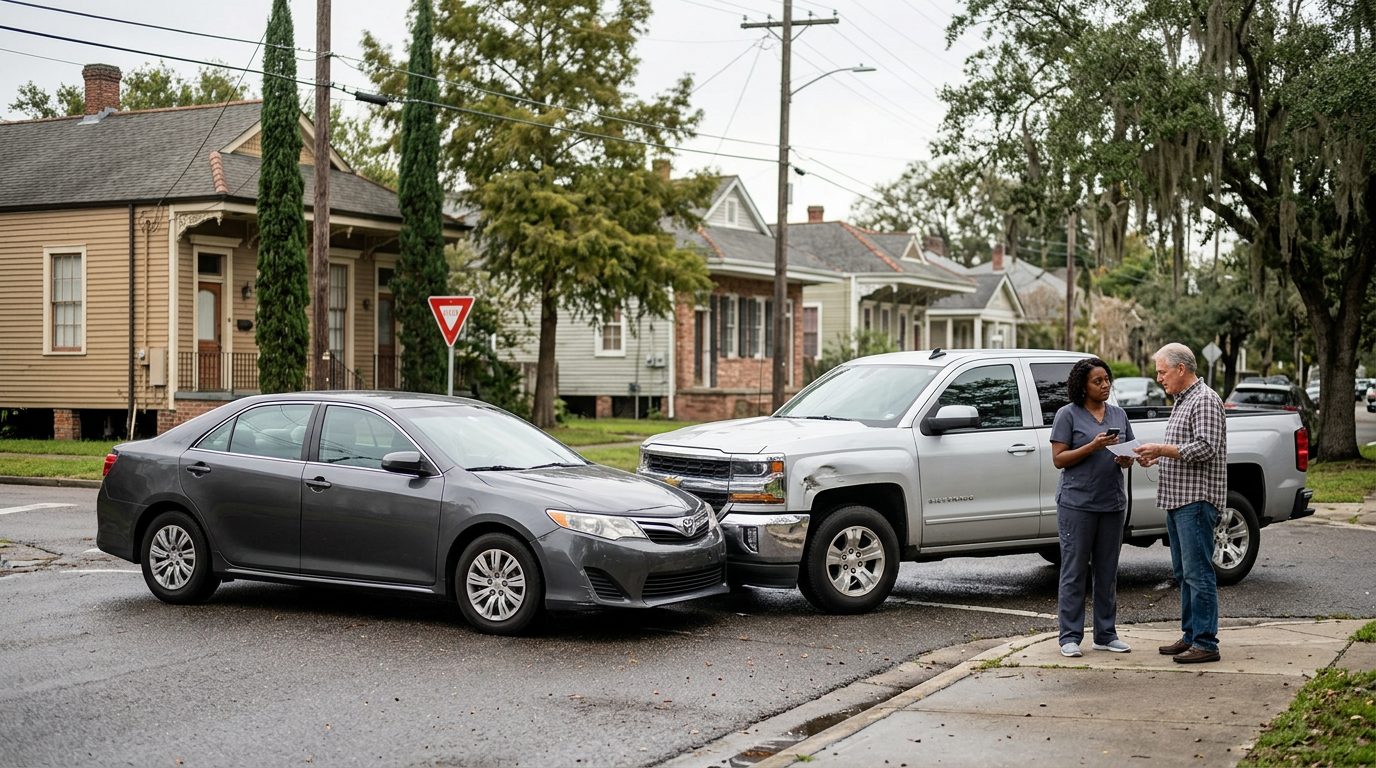
Louisiana Injury Claims | New Orleans Office
Blamed for Part of a Crash? Start With the Facts.
Being told you share the blame can be stressful, especially while you are still recovering. Here is a plain-language guide to what to do next.
By Przemek Lubecki · Published November 14, 2026
You were in a crash, and now someone says you were partly to blame. That can feel unfair, especially if you were hurt and still dealing with medical care.
In Louisiana, partial fault changes how an injury claim works. Blame is divided by percentage, and for some crashes the injured person’s share can bar a claim entirely.
What a partial fault accident means
Partial fault means more than one person’s conduct helped cause the crash. Blame is then divided by percentage among the people involved.
These crashes often happen at intersections, during lane changes, and in rear-end collisions. One driver may have run a yellow light while another was speeding. Or one driver may have stopped suddenly while the driver behind was too close.
Police reports and insurance companies may both assign blame to more than one driver. Hearing that you’re partly at fault is not the final word. It is one view in a process that looks at the facts.
Louisiana law looks at everyone involved. Under La. Civ. Code art. 2323(A), the degree or percentage of fault attributable to all persons causing or contributing to an injury, death, or loss shall be determined, regardless of whether a person is a party to the action or a nonparty.
If the other driver or an insurer says your crash was partly your fault, you don't have to sort it out alone. Our New Orleans team offers a free, confidential consultation to talk through what you're facing. Talk it through with our team — the first consultation is free, confidential, and carries no obligation.
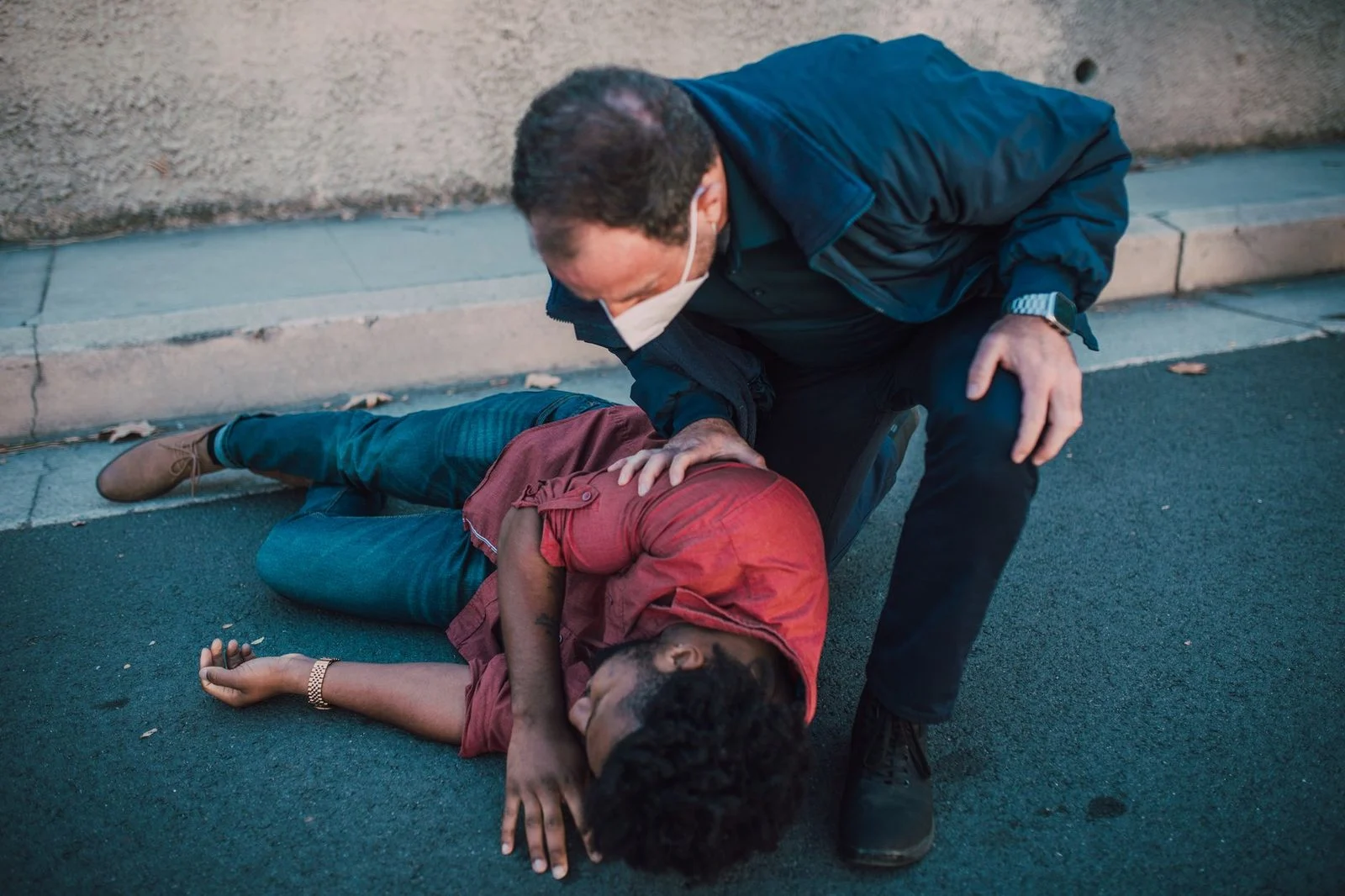
How Louisiana’s comparative fault rule affects an injury claim
Louisiana reduces an injured person’s recovery in proportion to their share of fault when that share is less than 51 percent, unless the fault of an intentional tortfeasor is involved, in which case the claim is not reduced (La. Civ. Code art. 2323). Under La. Civ. Code art. 2323, a person whose own negligence is equal to or greater than 51 percent recovers no damages, unless the fault of an intentional tortfeasor is involved, in which case the claim is not reduced.
If the injured person’s fault is less than 51 percent, damages are reduced in proportion to that share. Louisiana’s comparative fault law, La. Civ. Code art. 2323, provides that a person whose own negligence is equal to or greater than fifty-one percent is not entitled to recover damages. If that negligence is less than fifty-one percent, the damages recoverable are reduced in proportion to the person’s percentage of negligence.
Here is a hypothetical to show the math. Suppose total damages were valued at 100 points. If the injured person were 20 percent at fault, the recoverable amount would drop by 20 percent, to 80. This example shows only the math, not any real outcome.
A claim may seek medical expenses, lost income, and pain and suffering.
How insurance companies and police reports assess fault
A police report is one piece of evidence. An insurer’s fault finding is its own position in a negotiation. Neither one alone sets the final split.
Under La. R.S. 32:398(B), state police or the sheriff’s office investigate crashes outside city limits. City police investigate crashes inside them.
Crash reports are confidential. Upon request, they are made available to the persons listed in the statute, including parties, insurers, healthcare providers, and news-gathering organizations, within seven working days following the completion of the investigation. Photographs and recordings can also be requested, and a reasonable fee may apply under La. R.S. 32:398(E).
Adjusters weigh the report with photos, vehicle damage, witness statements, camera footage, and the driver’s own account. Their view can differ from what a court later decides.
Common partial fault scenarios on Louisiana roads
Partial fault most often appears when two drivers each made a mistake that helped cause the crash.
Rear-end collisions. The lead driver may have braked suddenly, or the following driver may have been too close. Louisiana requires careful driving under La. R.S. 32:58(A). A driver also may not follow more closely than is reasonable and prudent, under La. R.S. 32:81(A). For more on this pattern, read who is usually at fault when a car hits you.
Intersections and left turns. Each driver may say they had the green or yellow light. Witness accounts and camera footage can matter here.
Outside business or residential areas, a motor truck may not follow another motor truck within four hundred feet, under La. R.S. 32:81(B), but this does not prevent one motor truck from overtaking and passing another. Speed, following distance, and vehicle condition may be weighed along with the other driver’s conduct.
Talking to the insurance company after a partly-at-fault crash
Stick to facts you know. Don’t guess about your speed or what you could have done differently. Don’t agree to a percentage before you understand the facts.
Keep a written log. Record the date of each call or letter, the name of the person you spoke with, and what was said or offered.
A claim can also affect your own policy. Any rate effect varies by insurer and policy. The NAIC consumer guide on auto insurance explains bodily-injury liability coverage, the coverage that pays for injuries to others, in general terms.

What happens next: negotiation, court, and timing
Most shared-fault claims start with negotiation. The parties discuss how fault is divided and how damages are valued. If a fair resolution isn’t reached, a lawsuit may be filed.
Timing matters. Under La. Civ. Code art. 3493.1, delictual actions are subject to a liberative prescription of two years that commences to run from the day injury or damage is sustained, and it does not run against minors or interdicts in actions involving permanent disability and brought pursuant to the Louisiana Products Liability Act or state law governing product liability actions in effect at the time of the injury or damage. The period runs from the day the injury occurred. Some exceptions apply, so acting early keeps your options open.
When liability is joint and divisible rather than solidary, a person is not liable for more than their own degree of fault, under La. Civ. Code art. 2324(B).
Can I still recover if I was partly at fault in Louisiana?
Do police decide who is at fault?
A police report records what the officer observed and what drivers said. It is one piece of evidence and does not by itself set the final percentage.
Przemek Lubecki is the responsible lawyer for this page, and the firm’s office is in New Orleans. American Trial Lawyer may associate or refer a case to other law firms when appropriate. Any such arrangement will be disclosed to you.
If you were hurt and the other side says you share the blame, you don’t have to sort this out alone. Call 855-LUBECKI or request a free case evaluation. The first consultation is free, confidential, and comes with no obligation to continue.
How We Approach a Partial Fault Case
We listen first
Every crash has its own facts. We start by hearing your account of what happened and what you have been dealing with since.
We review the evidence
Police reports, photos, witness statements and medical records can all shape how fault is viewed, so we look at them carefully.
Led by Przemek Lubecki
Przemek Lubecki is the responsible lawyer for this content and focuses on trial work for people seriously hurt in truck, commercial vehicle and car crashes, and for families in wrongful death cases.
Clear, honest guidance
We explain your options in plain terms. The first consultation is free, confidential and without obligation. The firm may associate or refer a case to other law firms when that serves the client.
Be Careful What You Say About Fault
Statements made at the scene, to the other driver or to an insurance adjuster can be used later. Before you give a recorded statement or sign anything, talk with a lawyer.
Practical Steps to Protect Your Claim
Document the scene
Photos of vehicles, the roadway and visible injuries, plus names of witnesses, can be helpful later.
Keep your medical records
Attend follow-up appointments and keep copies of bills, prescriptions and notes about how the injury affects daily life.
Track lost income
Save pay stubs, work schedules and any messages showing time missed from work or changed duties.
Get guidance before you decide
Contact our New Orleans office for a free case evaluation so your situation can be reviewed with the facts in hand.